Biohacker Summit 2024 Helsinki
Psychedelics And Peptides Were Cast As A New Frontier For Healthspan
By Teemu Arina · · Updated

At Biohacker Summit In Helsinki, Dr. Del Potter Argued That Mental Health, Inflammation And Longevity Should Be Treated As One Interlocking System
On 3 July 2024 at the Biohacker Summit in Helsinki, Finland, Dr. Del Potter delivered a presentation with an expansive premise and an unmistakably contemporary ambition: to collapse the old borders between mental health treatment, physical recovery and the science of ageing.
His talk, Exploring the Synergy: Psychedelics, Bioactive Peptides, Mental Health & Longevity, proposed that psychedelic compounds and bioactive peptides may not merely sit alongside one another as parallel therapies, but could work in concert, each amplifying the other’s effects on mood, inflammation, cognition and resilience.
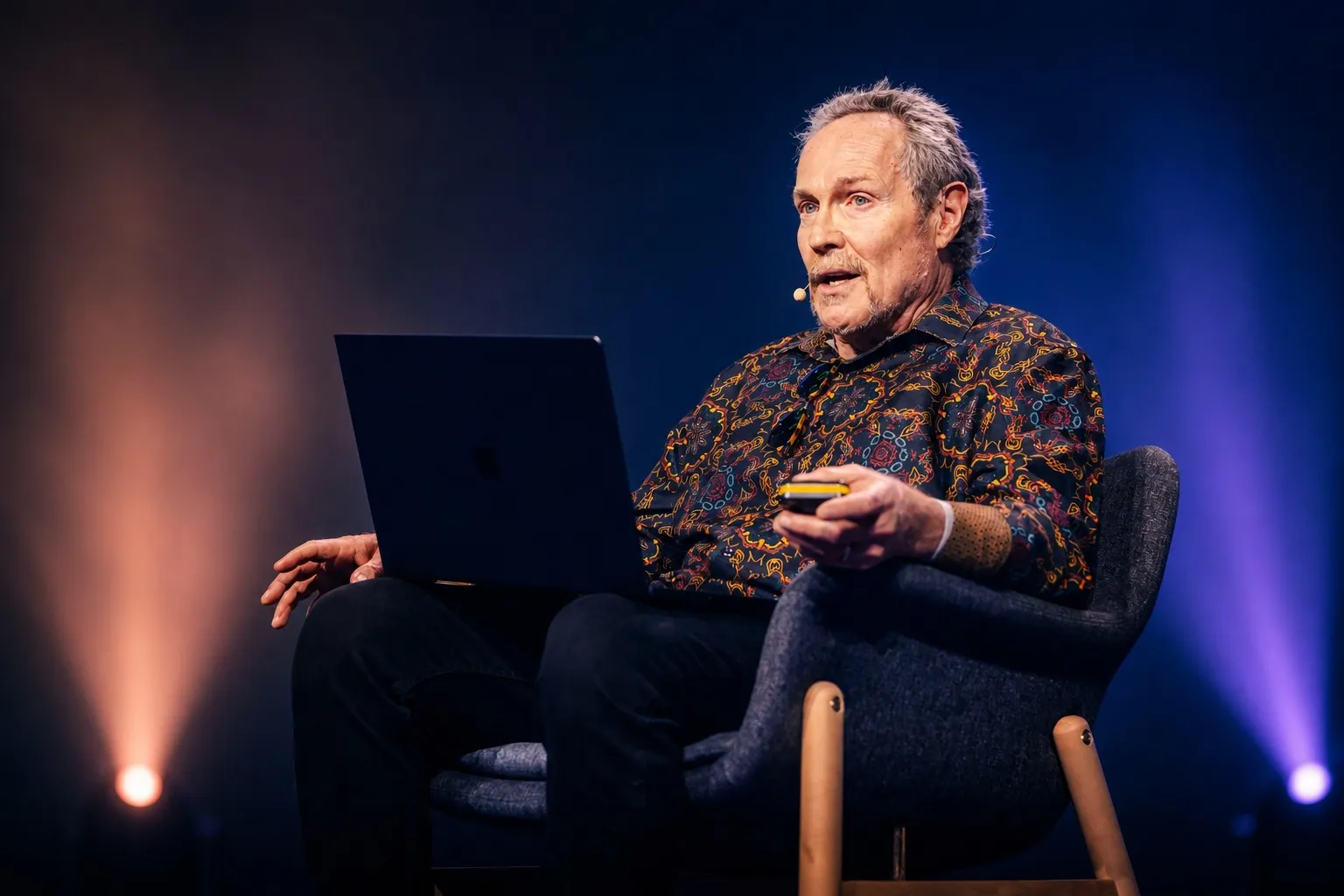
The one-line takeaway was clear enough. Psychedelics and peptides, Potter suggested, were increasingly being understood not as fringe curiosities, but as part of a broader therapeutic toolkit aimed at extending both lifespan and healthspan.
A Case For Treating Mind And Body Together
Potter, founder of Spiritus Bioscience and a researcher with a long history in psychiatric anthropology and pharmacology, framed the issue as one of integration. Psychedelics such as LSD, psilocybin and MDMA, he said, had already shown promise in treating depression, anxiety, PTSD and substance use disorders. Yet their significance, in his telling, reached further.
“Psychedelics act on serotonin receptors, altering consciousness and mood, with therapeutic potential including treating depression, anxiety, PTSD, and substance use disorders,” Potter said.
He argued that the field had underappreciated another dimension of these compounds: their physiological effects beyond the brain. In particular, he pointed to mounting interest in their anti-inflammatory potential, linking psychiatric suffering to wider bodily decline.
“Psychedelics have profound anti-inflammatory properties and can be used in the treatment of inflammatory diseases such as cardiovascular disease and diabetic retinopathy,” he said.
That claim formed one of the central pillars of the session. If chronic inflammation lies beneath a host of modern diseases, then therapies that reduce psychic distress while also modulating inflammatory pathways could, Potter suggested, reshape how clinicians think about prevention and recovery.
Neuroplasticity As The Bridge To Longevity
The presentation repeatedly returned to neuroplasticity, that much-invoked but still potent concept describing the brain’s ability to rewire itself.
Potter described psychedelics as agents capable of reopening “critical periods” of learning and adaptation, windows typically associated with early development. In his account, this made them relevant not only to trauma recovery or depressive illness, but to ageing itself.
“Psychedelics can reopen critical periods of neuroplasticity, leading to youthful changes at the cellular level and increased neurogenesis,” he said.
The claim was sweeping, but it captured the tenor of the session: longevity was not treated as a separate category from mental health. Rather, cognitive flexibility, emotional resilience, sleep quality, immune function and reduced inflammation were presented as mutually reinforcing elements of a longer, healthier life.
Potter’s argument was that treating PTSD, anxiety or depression successfully could set off a chain reaction. Less stress could mean better sleep. Better sleep could mean stronger immune function. Improved mood could encourage better nutrition, exercise and social connection. All of it, he suggested, fed into the same larger system.
“Addressing mental health issues with psychedelics can lead to an overall sense of well being, encouraging healthier lifestyle choices such as better nutrition, regular exercise, and social engagement,” he said.
The Rise Of Bioactive Peptides
If psychedelics supplied the emotional and neurological catalyst, bioactive peptides were presented as the body’s supporting architecture.
Potter described peptides as short chains of amino acids that influence receptors, enzymes and signalling pathways throughout the body. Some, he argued, could aid tissue repair, reduce oxidative stress, support neurotransmission, modulate immunity and protect neurons. In practical terms, he positioned them as tools that could stabilise the body before, during and after a psychedelic intervention.
Among the compounds he highlighted were BPC 157 for healing and inflammation, PQQ for neuroprotection and mitochondrial support, thymolin for immune modulation, and peptides such as C Link and C Max for mood and cognitive support.
The heart of his thesis lay in combination. Psilocybin might unlock emotional or perceptual change, but peptides, he suggested, could help sustain and channel that change biologically.
“Combining psilocybin with C link can lead to a more sustained improvement in mood by continuously supporting serotonin levels and reducing anxiety,” Potter said.
This was not presented as a single protocol so much as an emerging framework: one in which a psychedelic session was no longer a discrete event, but part of a more carefully staged therapeutic process involving preparation, support and integration.
A Bid To Make Psychedelic Therapies More Practical
Potter also used the Biohacker Summit stage to gesture toward the commercial and technological horizon of the field. He spoke of delivery systems designed to reduce barriers to use and improve patient experience, including sublingual sprays and microneedle patches.
That future-facing section of the talk reflected his work at Spiritus Bioscience, which has developed a sublingual psilocin spray now in clinical trials in Australia. The pitch was straightforward: shorter onset, shorter duration and fewer gastrointestinal side effects than conventional psychedelic delivery methods.
For peptides, he outlined a similar aspiration, moving away from subcutaneous injections toward less invasive formats that could make treatment more acceptable and more scalable.
The Promise And The Caution
For all its optimism, the presentation also carried caveats. Potter stated plainly that he was not offering medical advice, and he acknowledged the legal and ethical complexities surrounding psychedelic use. Accessibility, safety and equitable benefit, he said, would matter as much as innovation.
Still, the wider mood of the session was one of frontier science nearing mainstream relevance. The talk drew together indigenous precedent, neuropharmacology, anti-inflammatory research and longevity culture into a single narrative, one that has become increasingly influential in wellness and biotech circles alike.
At Biohacker Summit, Dr. Del Potter did not present psychedelics and peptides as miracle cures. He presented them as converging technologies of care, aimed at an old human wish in newly technical language: to suffer less, function better and remain well for longer.
Frequently asked questions
What was Del Potter's central proposition?
That mental health, inflammation and longevity should be treated as one interlocking system rather than separate fields. Potter, founder of Spiritus Bioscience, argued psychedelic compounds and bioactive peptides belong together in that picture.
How do psychedelics connect to ageing?
Through neuroplasticity. Potter described psychedelics as agents capable of reopening critical periods of learning and adaptation, windows usually associated with early development, which in his account makes them relevant not only to trauma recovery but to ageing itself.
What are bioactive peptides?
Short chains of amino acids that influence receptors, enzymes and signalling pathways throughout the body. Potter argued some can aid tissue repair, reduce oxidative stress, support neurotransmission, modulate immunity and protect neurons, forming the supporting architecture alongside psychedelics.
About the event
This recap is part of the Biohacker Summit 2024 Helsinki series, recorded in Helsinki on 2 and 3 July 2024. Read the summary of the whole event or join the next edition, HOLOLIFE Summit 2026 Amsterdam, on 14 and 15 November 2026.
In this story
Comments
Loading comments…