Biohacker Summit 2024 Helsinki
One Million Hours: Dr. Alka Patel’s Data-Driven Blueprint For A Longer Life
By Teemu Arina · · Updated
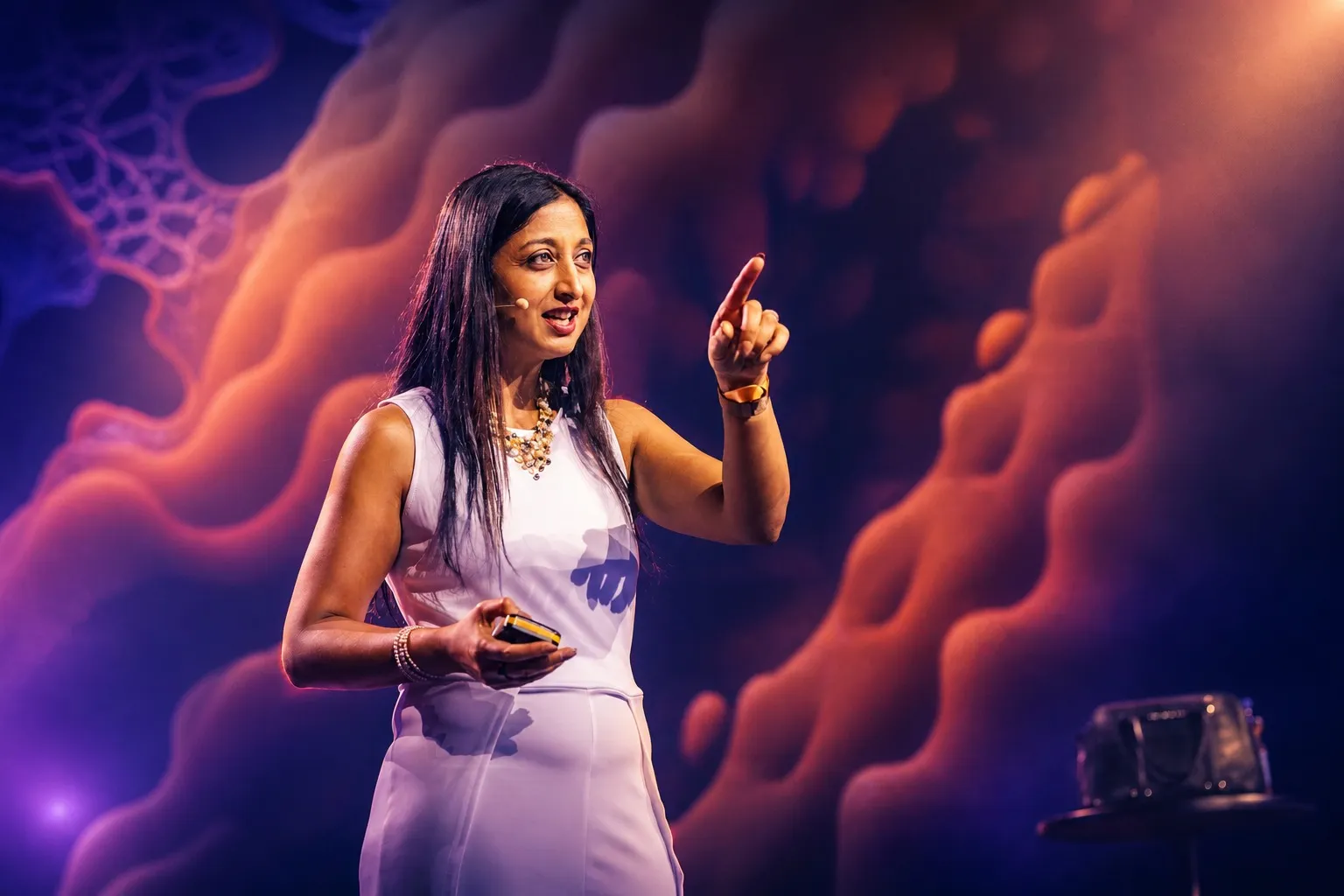
At Biohacker Summit In Helsinki, The Physician And Longevity Advocate Argued That Living To 114 Was Less Fantasy Than Discipline, Measured In Light, Breath, Glucose, Muscle And Time
“Raise your hand if you are alive right now.”
It was a playful opening, but Dr. Alka Patel used it to land a serious proposition at the Biohacker Summit in Helsinki on 3 July 2024. Before an audience primed for optimisation, gadgets and biological upgrades, the lifestyle medicine physician posed a deceptively simple question: how long did they want to stay alive, feel alive and be alive?
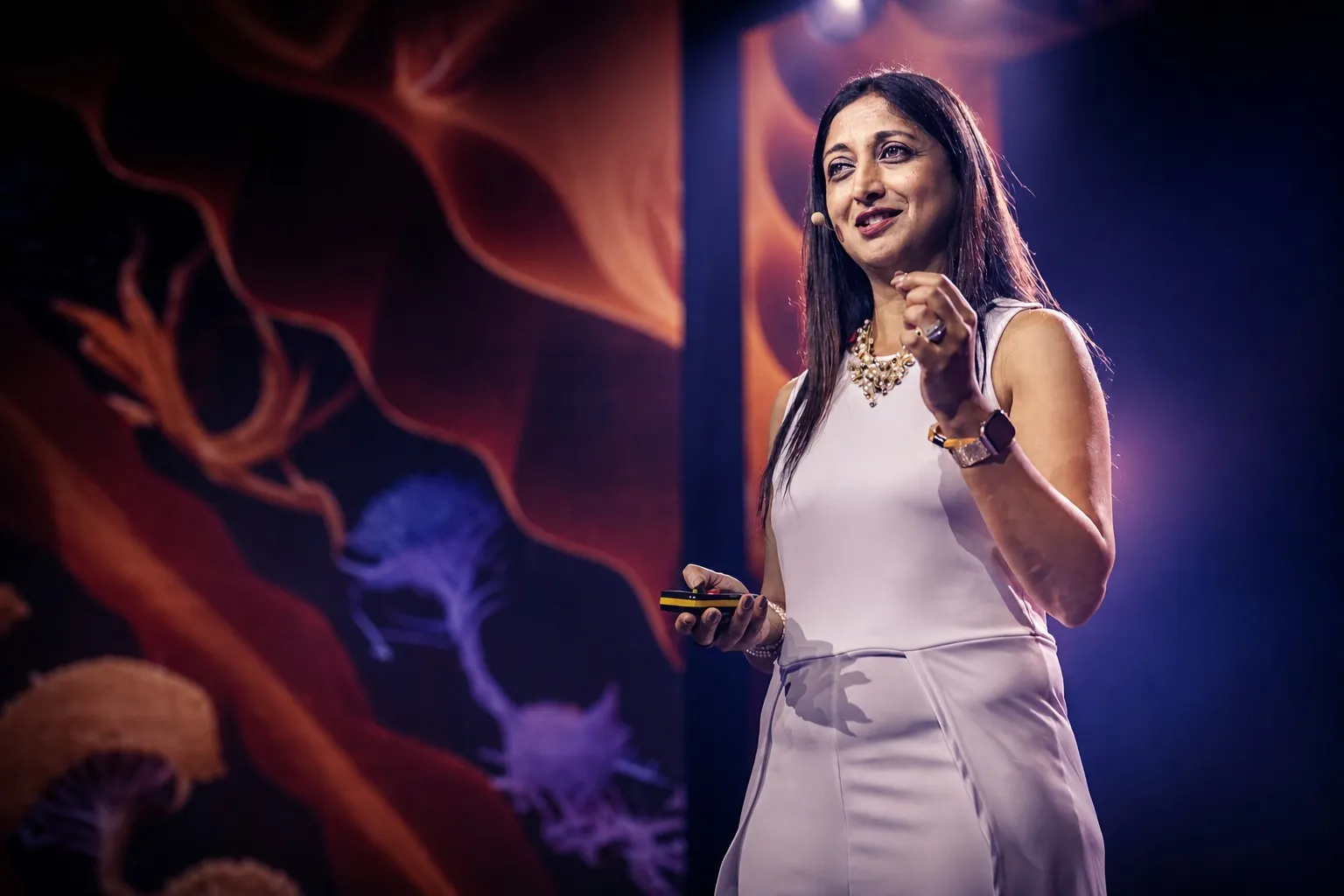
Her answer was characteristically audacious. “My number is one million hours,” Patel said, inviting the room to convert aspiration into arithmetic. One million hours, she reminded them, amounted to 114 years.
That figure gave her talk, 1 Million Hours: The Longevity Hacks Your Doctor Won't Tell You, both its provocation and its organising principle. Patel’s claim was not merely that lifespan could be stretched, but that healthspan could be engineered through what she called “strategic self care”, a disciplined approach built on personalised data, wearable devices and repeatable habits.
A Case For Strategic Self-Care
Patel, founder of The Longevity Concierge and a physician known for translating preventive medicine into practical rituals, framed longevity not as luck or genetics alone, but as a set of decisions made with precision.
“I believe you do it through what I call strategic self care,” she told the summit. “It is the careful curation of your choices, the artful alignment of your actions, and the thoughtful timing of your targeted tactics.”
In that framing, medicine shifted from rescue to rehearsal. The point was not to wait for disease, but to build systems that made health visible early enough to shape it. Her argument rested on a broader cultural appeal too: that data, once the preserve of clinics and elite athletes, had moved into ordinary life, and with it the possibility of greater autonomy.
“Why do you want to do this?” she asked. “So that you can take control. You can take ownership, you can take responsibility and have empowerment over your health.”
Morning Light As Metabolic Instruction
The first of her “hacks” focused on light, though Patel insisted colour alone was the wrong obsession. Timing, she argued, mattered more.
Drawing on cortisol testing from her clients, she described how morning blue light exposure could be energising for those with low cortisol on waking, yet potentially counterproductive for people whose cortisol was already high. Her point was less that blue light was universally good or bad, and more that biological context determined whether a tool helped or harmed.
The language was familiar to the biohacking world, but Patel gave it a medical edge: light, in her telling, was not wellness theatre but hormonal instruction. Used at the right time, morning blue light could sharpen cognition and support alertness. Used badly, it could deepen the chronic stress patterns that feed long-term illness.
The Strange Power Of Stopping Breathing
If light was about activation, breath was about adaptation. Patel urged the audience to practise deliberate breath-holding through what she called the BOLT test, or body oxygen level test. In a room of conference-goers, she led people through a brief breath exercise, asking them to exhale, hold, and silently count until the urge to breathe returned.
The intervention sounded counterintuitive, almost comic. “Here’s something again, most doctors won’t tell you, which is stop breathing,” she said.
Yet her rationale was clear: controlled exposure to mild oxygen deprivation could train efficiency, improve tolerance and stimulate physiological responses linked to better oxygen use. She paired this with a warning about uncontrolled hypoxia, especially sleep apnoea, which she described as an overlooked drain on brain function, energy and recovery.
What emerged was a recurring theme of the talk: a distinction between stress that strengthens and stress that corrodes. Done deliberately, the body adapts. Left unnoticed, it declines.
Creatine, Glucose Monitors And The New Ordinary
Patel’s most practical recommendations came in the tools she treated as underused rather than exotic.
Creatine, she argued, had been unfairly confined to bodybuilding culture. For Patel, it belonged just as much to women, professionals, travellers and anyone interested in cognition. She cited its potential benefits for mental processing, mood and physical resilience, presenting it as one of those rare substances that had become so familiar people overlooked its breadth.
Then came the continuous glucose monitor, perhaps the clearest emblem of her wider philosophy. If nutrition advice had become a swamp of competing orthodoxies, Patel suggested the way out was not another universal diet but individual measurement.
“The real question is, is sugar the enemy for you?” she said.
A glucose sensor, worn on the arm, could reveal how a specific person responded to food in real time. Patel compared its behavioural potential to the pedometer, arguing that glucose tracking might do for metabolism what step counting had done for movement: turn abstraction into daily accountability.
Rewiring Stress Through The Vagus Nerve
No modern longevity talk is complete without a nod to the nervous system, and Patel gave it one of her strongest passages. She focused on the vagus nerve, the long wandering channel of the parasympathetic system, and argued that stress regulation could be trained through breathing patterns and, increasingly, through devices designed to stimulate vagal tone.
Her advice was simple enough to feel almost old-fashioned: slow breathing to six or fewer breaths per minute. In for four, out for six. The result, she said, was reduced stress, improved decision-making and better resilience, reflected in heart rate variability.
That she also reached for gadgets was entirely in keeping with the event. At the Biohacker Summit, the line between nature and technology was not treated as a contradiction but as a collaboration. Breath remained primal; the device merely made adherence easier.
The Metrics That Matter
Patel’s broader thesis depended on making hidden decline measurable before it became irreversible. She urged the audience to track VO2 max, calling it a “new kid on the block” among vital signs and one of the strongest predictors of future mortality. Improve it even modestly, she suggested, and the payoff could be profound.
She made a similar case for annual DEXA scans, not only for bone density but for muscle and fat mass. Here, she touched on one of aging’s less glamorous truths: that muscle loss begins earlier than most people think and progresses quietly. Health, she said, was not a noun but a verb, less about appearance than capacity.
This was one of the talk’s more persuasive refrains. Longevity was not simply about surviving; it was about preserving the power to move, lift, recover and act.
Heat, Toxins And The Pursuit Of Biological Youth
Patel also folded detoxification into her framework, discussing heavy metals and the value of testing for hidden toxic burden. In that context, she endorsed sauna therapy as a practical way to support elimination, while stressing that identifying the source of exposure remained essential.
But the talk kept circling back to one metric above all others: biological age.
“If you want to live longer, you need to live younger,” Patel said. “If there’s only one number you measure, measure your age.”
It was an arresting line, and a fitting distillation of the event’s ethos. Chronological age, in this worldview, was blunt and passive. Biological age was dynamic, negotiable, even hackable.
A Longevity Gospel For The Measurable Self
By the end of her session, Patel had offered not just a list of interventions but a worldview. It was a worldview in which sensors replaced guesswork, annual scans became acts of foresight, and health was recast as an ongoing practice of calibration.
There was, inevitably, something seductive in the promise. A million-hour life. A body rendered legible by data. A future less governed by fate than by feedback. At times, the language of hacks risked making longevity sound deceptively simple. Not everyone has equal access to testing, devices or the luxury of relentless self-optimisation. And not every metric can be controlled into submission.
Yet Patel’s presentation at the Biohacker Summit resonated because it spoke to a powerful modern hunger: not merely to live longer, but to meet aging with evidence, agency and intent.
Her challenge to the audience was ultimately less about gadgets than commitment. Choose a number. Say it aloud. Then begin acting like your future depends on it.
Frequently asked questions
What does Alka Patel mean by strategic self care?
She defined it as the careful curation of your choices, the artful alignment of your actions, and the thoughtful timing of your targeted interventions. Patel, founder of The Longevity Concierge, framed longevity as a set of decisions made with precision rather than a matter of luck or genetics alone.
Is morning blue light good or bad?
Patel argued the answer depends on the person. Drawing on cortisol testing from her clients, she described morning blue light as energising for those waking with low cortisol, yet potentially counterproductive for people whose cortisol was already high. Her point was that timing matters more than colour.
What is the BOLT test?
The body oxygen level test, a deliberate breath-hold that Patel led the Helsinki audience through: exhale, hold, and silently count until the urge to breathe returns. She used it to make the case that breath training is about adaptation rather than activation.
About the event
This recap is part of the Biohacker Summit 2024 Helsinki series, recorded in Helsinki on 2 and 3 July 2024. Read the summary of the whole event or join the next edition, HOLOLIFE Summit 2026 Amsterdam, on 14 and 15 November 2026.
In this story

Comments
Loading comments…