Biohacker Summit 2024 Helsinki
Biohacking’s Moral Reckoning Began In The Amazon
By Teemu Arina · · Updated
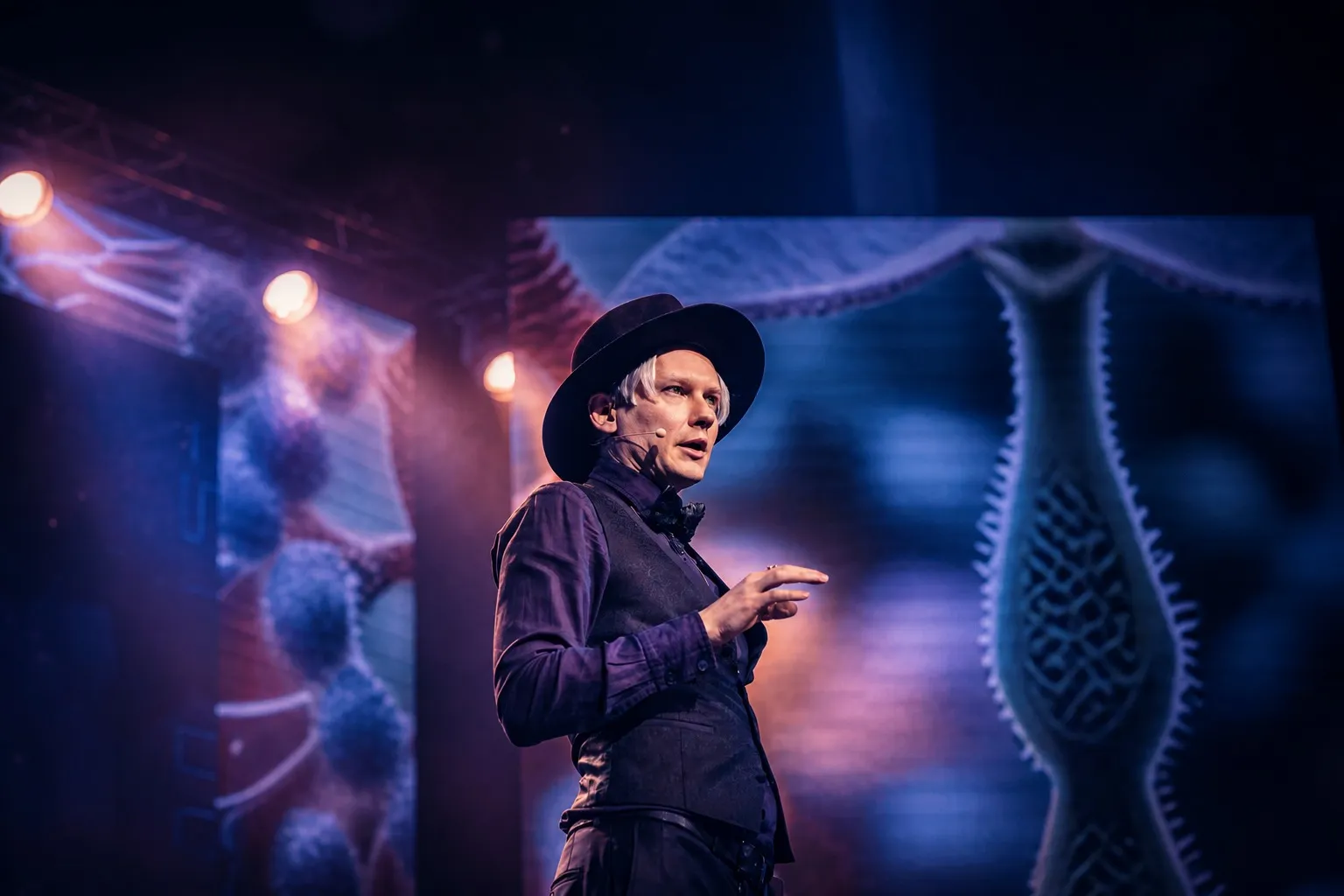
At Biohacker Summit In Helsinki, Teemu Arina Argued That The Future Of Human Optimisation Would Depend Not Only On Technology, But On Whether We Chose To Protect The Forests And Peoples From Which So Much Human Knowledge Had Already Been Drawn
In Helsinki on 3 July 2024, the Biohacker Summit offered the kind of subject that often invites sleek futurism and consumer spectacle: how to live longer, think better, perform harder. But in his presentation, Biohacking: Unity of Science, Technology & Nature, Teemu Arina took the conversation somewhere more difficult, and more urgent.
Rather than celebrating longevity as a private ambition or optimisation as a luxury pastime, Arina framed biohacking as a question of relationship: between humans and tools, between science and ecology, between modern power and indigenous stewardship. His message was clear. If biohacking had become a marketplace of protocols, gadgets and molecular promises, then it had also risked forgetting the deeper system that made all such interventions possible in the first place.
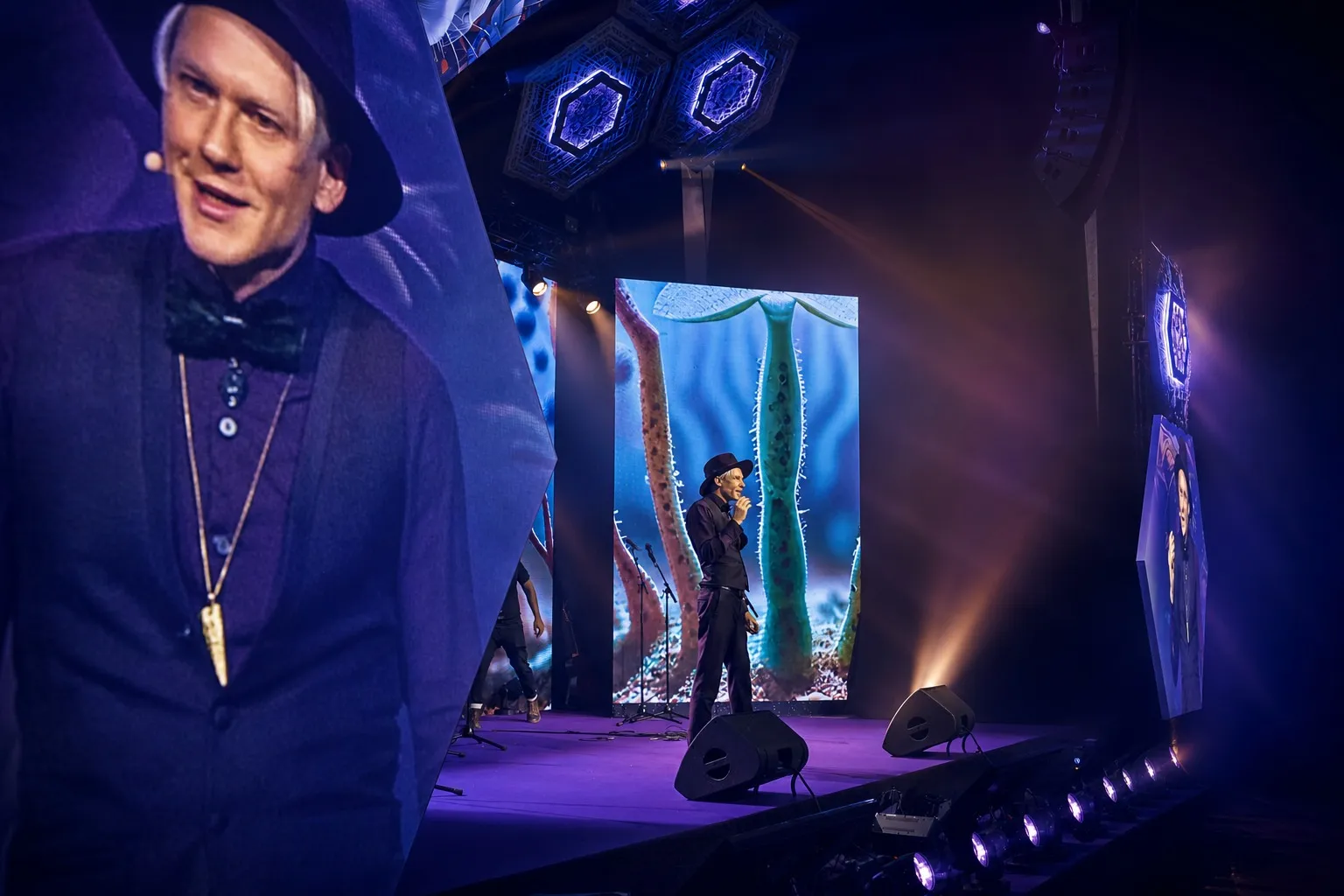
That system, he insisted, was nature.
A Conference Opening That Set The Tone
Arina, a technology entrepreneur, author, co-author of the bestselling Biohacker’s Handbook series, curator of Biohacker Summit and co-founder of the Biohacker Center, began not with metrics or supplements but with story. He spoke of efforts to invite indigenous representatives from the Amazon to the event, tracing a line from an earlier ceremony in Amsterdam to the eventual presence in Finland of members of the Kamanawa community.
What could have been treated as conference pageantry instead became the moral frame of the talk. Arina described remote tribes facing a collision of forces: roads cutting through rainforest, displacement, and the abrupt arrival of mobile connectivity through Starlink. Communities that had not undergone the West’s slow, staggered digital acculturation were being plunged into it all at once.
The disruption, in his telling, was not abstract. Internet access was changing daily rhythms, attention and social life. Devices had arrived in places where the ecological and spiritual fabric of life had long been organised around very different forms of time and meaning.
For Arina, this was not merely a story about the Amazon. It was a compressed parable of modernity itself.
“Nature Is The Ultimate Chemist”
From there, the lecture widened into a meditation on science’s debt to the living world. Arina reminded the audience that many of humanity’s most valuable medicines had their origins in rainforest ecosystems. Compounds derived from plants and traditional knowledge had shaped modern treatment, including substances connected to anaesthesia.
“Nature is the ultimate chemist,” he said.
It was one of the speech’s simplest lines, and among its most arresting. In a conference culture often obsessed with extracting the next usable molecule, Arina asked listeners to pause over the source. The forest was not merely a warehouse of raw material. It was a sophisticated biochemical intelligence evolved over deep time.
That argument carried both scientific and ethical force. If biodiversity was a medical treasury, then deforestation was not only an environmental tragedy. It was a form of civilisational self-harm.
Arina’s point was not anti-science. Quite the opposite. Science, in his account, had extended human life, improved sanitation, enhanced food security and helped decode the structures of reality. But science had flourished by learning from nature, not by escaping it.
“We are the organs of nature,” he said. “We are the extensions of nature.”
Against The Consumer Mania Of Optimisation
The most provocative stretch of the presentation came when Arina turned inward, toward his own field. He challenged the increasingly commercialised idea of biohacking as a sequence of purchasable interventions: peptides, injections, branded protocols, stacks, blueprints and endless routines calibrated down to the minute.
This was not a rejection of experimentation or disciplined self-care. It was a critique of reductionism and vanity. Too much of contemporary biohacking, Arina suggested, had become detached from context, history and place. In the Americanised version of the culture he described, health optimisation had drifted toward product worship.
Set against that was a distinctly northern and European sensibility: sauna, cold exposure, breathwork, herbs, mushrooms, foraging, rhythm, seasonality. These were not sold as miracles. They were woven into culture.
His point was not that one side possessed authenticity and the other fraud. It was that the future lay in integration. Science and molecules had their place. But the governing blueprint should not be a spreadsheet of inputs. It should be the adaptive intelligence of life itself, including the epigenetic dialogue between body and environment.
Technology As Extension, And Threat
Arina’s strength as a speaker has long rested in his ability to bridge the spiritual and the technical without entirely surrendering to cliché. At the Biohacker Summit, he returned to a familiar proposition from media theory: that tools extend the body, and then begin to shape the beings who use them.
“Technology amplifies and extends capabilities. It’s kind of an extension of us,” he said. Then came the warning: “We shape our tools and then our tools start to shape us.”
The line landed because it was grounded in concrete examples. The same digital systems that broadened access and connection could erode attention, distort development and deepen estrangement from the natural world. Arina described mobile phones as “pocket gods”, devices that command reverence, dependence and constant consultation.
His treatment of artificial intelligence followed the same pattern of awe tempered by caution. AI, he argued, could become for complexity what the telescope was for astronomy and the microscope for biology: a tool that lets humans perceive what lies beyond ordinary senses. Yet its power also invited superstition, fear and moral confusion.
Arina did not present AI as something alien to nature. He framed it instead as a continuation of it, silicon-based systems arising from carbon-based beings. Even so, the fact that something emerged from nature did not make it benign. Power still required judgment.
Responsibility As The Ability To Respond
The speech’s moral centre arrived in a phrase Arina repeated with deliberation: “Responsibility is the ability to respond.”
This was more than conference aphorism. He was trying to recast optimisation itself as an ethical practice. To alter one’s biology, to extend life, to manipulate gene expression, to build increasingly powerful tools, all these acts carried consequences beyond the self.
Arina even challenged the audience’s desire for longevity, calling the pursuit of living as long as possible a potentially selfish aim if detached from species-level and planetary concerns. Humanity, he argued, was changing its environment at a pace faster than natural adaptation could easily track. To seek survival without stewardship was to misunderstand the crisis.
The answer, in his framing, was not paralysis but awareness. Meditation, discipline and groundedness in nature were presented as ways of widening the space between stimulus and reaction. Wisdom, as he described it, was not the suppression of power but the cultivation of the capacity to wield it without surrendering to impulse.
The Rainforest As The Real Frontier
By the end of the presentation, the summit stage had ceased to be a venue for discussing performance enhancement and had become a platform for appeal. Arina spoke directly about indigenous communities in the Amazon who were defending rainforest territories against illegal logging, extraction and monocrop expansion. They needed resources, he said, not sentiment alone.
He urged support for efforts including traditional hospitals, clean water infrastructure and land acquisition that could prevent ecologically destructive development. This was where the speech’s rhetoric sharpened into demand. If affluent audiences in the West benefited from medicines, foods and compounds that originated in rainforest ecosystems, then they had obligations that ran in the other direction too.
The logic was hard to resist. Preservation was not charity. It was reciprocity.
A Different Vision Of Biohacking
What Teemu Arina offered at the Biohacker Summit in Helsinki was, finally, a challenge to the ideology of control that so often underpins the wellness and longevity industries. The body was not a machine to be endlessly tuned in isolation from the world. It was a porous participant in a larger ecology, biological, technological and moral.
The speech did not reject progress. It asked what kind of progress deserved the name. One that severed people from forests, sold back fragments of nature as premium products and called that advancement? Or one that recognised interdependence, protected biodiversity, respected indigenous knowledge and used science to deepen rather than deny our belonging?
In an era enthralled by optimisation, Arina’s intervention was notable for restoring an older, sterner truth. Human flourishing could not be built on the destruction of the systems that made it possible.
The future of biohacking, he suggested, would not be decided only in laboratories, clinics or startup ecosystems. It would also be decided in the rainforest, and in whether the modern world finally learned to treat its guardians not as relics of the past, but as partners in the survival of the future.
Frequently asked questions
Why did Teemu Arina open with the Amazon?
He spoke of efforts to bring indigenous representatives to the event, tracing a line from an earlier ceremony in Amsterdam to the presence in Finland of members of the Kamanawa community. It set up his argument that human optimisation depends on protecting the forests and peoples that knowledge came from.
What did he mean by nature is the ultimate chemist?
That many of humanity's most valuable medicines originated in rainforest ecosystems, with compounds derived from plants and traditional knowledge shaping modern treatment, including substances connected to anaesthesia. Science, in his framing, carries a debt to the living world.
What is his critique of commercial biohacking?
Arina challenged the idea of biohacking as a sequence of purchasable interventions: peptides, injections, branded protocols, stacks, blueprints and routines calibrated to the minute. It was not a rejection of disciplined self-care, but of reductionism and consumer mania.
About the event
This recap is part of the Biohacker Summit 2024 Helsinki series, recorded in Helsinki on 2 and 3 July 2024. Read the summary of the whole event or join the next edition, HOLOLIFE Summit 2026 Amsterdam, on 14 and 15 November 2026.
In this story

Comments
Loading comments…