Biohacker Summit 2024 Helsinki
Ancient samurai wisdom meets modern biohacking: the five elements of balance
By Teemu Arina · · Updated

Sensei Zen Takai brings centuries-old Japanese martial philosophy to Helsinki's wellness frontiers
In an age where wellness seekers chase after the latest scientific breakthroughs, one of the most compelling presentations at this year's Biohacker Summit in Helsinki came from a tradition dating back 16 generations. Sensei Zen Takai, descendant of a prestigious samurai and ninja lineage, captivated the audience on Tuesday with his exploration of "5 Elements of the Body" – a philosophy that challenges modern perceptions of martial arts while offering practical wisdom for everyday life.
"How to keep peace? How to avoid the fight? This is the most important strategy," Zen told the packed auditorium, immediately dispelling Hollywood myths about samurai and ninjas as mere warriors. "Stay calm. Keep your inner peace. Keep your balance. That's why you can get the correct information."
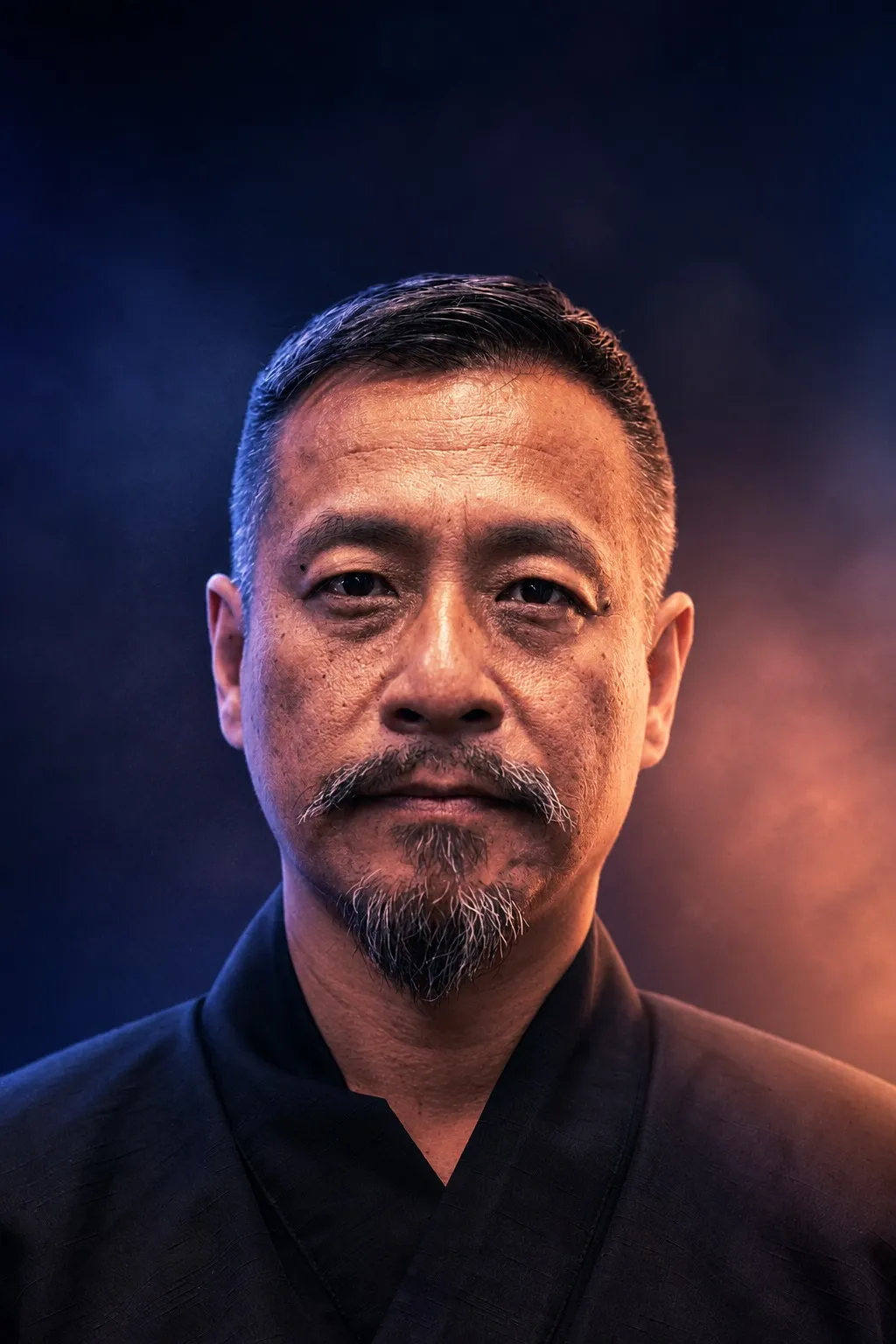
Beyond combat: the samurai's pursuit of peace
The core of Zen's teaching revolves around an often-overlooked truth: traditional samurai philosophy emphasized conflict avoidance rather than confrontation. Far from the shouting, aggressive figures portrayed in popular media, true masters focused on negotiation, relationship-building, and strategic distance – fighting only as a last resort.
"Before fighting, catch the feeling from the opponent and try to make a good relationship. Sometimes, make a good negotiation. Sometimes, create distance and avoid the fight," Zen explained, his calm demeanor embodying the principles he described.
The five elements: a holistic approach to mind-body unity
What makes Zen's approach particularly relevant to the biohacking community is his framework connecting philosophical concepts to physical practice. "Your mind and body are not separate," he emphasized. "If you want to control your body, control your mind. If you want to control your mind, control your body."
The five elements – ground, water, fire, wind, and sky – form the foundation of this mind-body connection, each linked to specific parts of the physical form.
Ground: stability through the pinky finger
Perhaps most surprising to the tech-forward audience was Zen's focus on the pinky finger as the connection to the ground element. By demonstrating how this smallest digit connects to the tandem (three fingers below the navel), Zen showed how proper energy grounding creates stability and balance.
During a practical demonstration, he showed how a sword grip focused on the pinky and ring fingers maintains power and balance, while overusing the index finger and thumb creates instability – a metaphor that extended beyond martial arts to everyday actions.
"Focus on your pinky finger today—when gripping a cup, mobile phone, or opening a door—let your energy naturally go downward and stay grounded," he advised.
Water: the reflective mirror of inner calm
"Bruce Lee said, 'flow like water,' but samurai philosophy is to 'be silent water,'" Zen noted, distinguishing his approach from more familiar martial arts concepts. "Silent water reflects like a mirror. If you clearly understand yourself, you can understand your opponent."
This element, connected to the ring finger and internal organs, emphasizes emotional regulation through physical awareness. Zen guided attendees through exercises to relax tense organs, demonstrating how emotional states can be transformed through bodily practice.
Fire: controlled power through balance, not emotion
Contrary to expectations, the fire element in samurai philosophy isn't about unleashing emotion but rather achieving maximum impact with minimal effort. "Balance and timing: focus on the minimum of feeling to get maximum power," Zen explained. "Don't use muscle or strong emotion but empty mind and connection with the spirit."
In a demonstration that drew gasps from the audience, Zen showed how relaxed, perfectly-timed movements generated far more power than tense, muscular efforts – a principle with clear applications for both athletic performance and energy management in daily life.
Wind: intuition through relaxation
The wind element – connected to the index finger and shoulders – addresses intuition and sensory awareness. "Shoulders serve as antenna," Zen explained. "When tense or scared, shoulders rise, blocking intuition. Relaxed shoulders open intuition."
In an observation particularly relevant to the technology-focused crowd, he noted how constant smartphone use – dominated by index finger interaction – creates tension that blocks intuitive capabilities.
Sky: embracing emptiness and paradox
The final element, connected to the thumb, represents emptiness of mind – a concept familiar to meditation practitioners but given fresh context through Zen's approach.
"Real balance always includes a paradox: you have to attack the enemy but at the same time harmonize with the enemy," he explained. "Keep empty mind, harmonize, and connect deeply."
From ancient battlefields to modern wellness
What made Zen's presentation particularly impactful was his connection of these ancient techniques to contemporary challenges. The practices he shared weren't presented as historical curiosities but as practical tools for navigating modern stresses – from workplace conflicts to personal relationships.
"These methods are not just fighting techniques—they are for daily life: harmonize, understand, and respect each other. This is the most important strategy," he concluded, sharing how his father had encouraged him to spread these teachings globally.
As the Biohacker Summit continues through Wednesday, Zen's integration of ancestral wisdom with practical application stands as a reminder that sometimes the most innovative approaches to wellness aren't found in cutting-edge research but in traditions that have withstood centuries of testing.
For an audience accustomed to measuring wellness through data points and technological interventions, Zen's emphasis on bodily awareness and philosophical depth offered a complementary approach – one where the fingers, shoulders, and breath become pathways not just to physical performance but to deeper understanding of self and others.
Frequently asked questions
What are the five elements in samurai philosophy?
Ground, water, fire, wind and sky. Sensei Zen Takai, a descendant of a samurai and ninja lineage spanning 16 generations, presented them as the foundation of the mind-body connection, with each element linked to a specific aspect of physical and mental practice.
Did real samurai avoid fighting?
That was Takai's central corrective. Traditional samurai philosophy emphasised conflict avoidance rather than confrontation, focusing on negotiation, relationship-building and strategic distance, and fighting only as a last resort. Before fighting, he said, catch the feeling from the opponent and try to build a good relationship.
Why does the pinky finger matter?
Takai connects the smallest digit to the ground element and to the tandem, three fingers below the navel. In a live demonstration he showed how a sword grip focused on the pinky and ring fingers maintains power and balance, which he offered as a practical route to grounding and stability.
About the event
This recap is part of the Biohacker Summit 2024 Helsinki series, recorded in Helsinki on 2 and 3 July 2024. Read the summary of the whole event or join the next edition, HOLOLIFE Summit 2026 Amsterdam, on 14 and 15 November 2026.
In this story
Comments
Loading comments…