Biohacker Summit 2024 Helsinki
Beyond the Veil of Biohacking
By Teemu Arina · · Updated
A One-Line Description
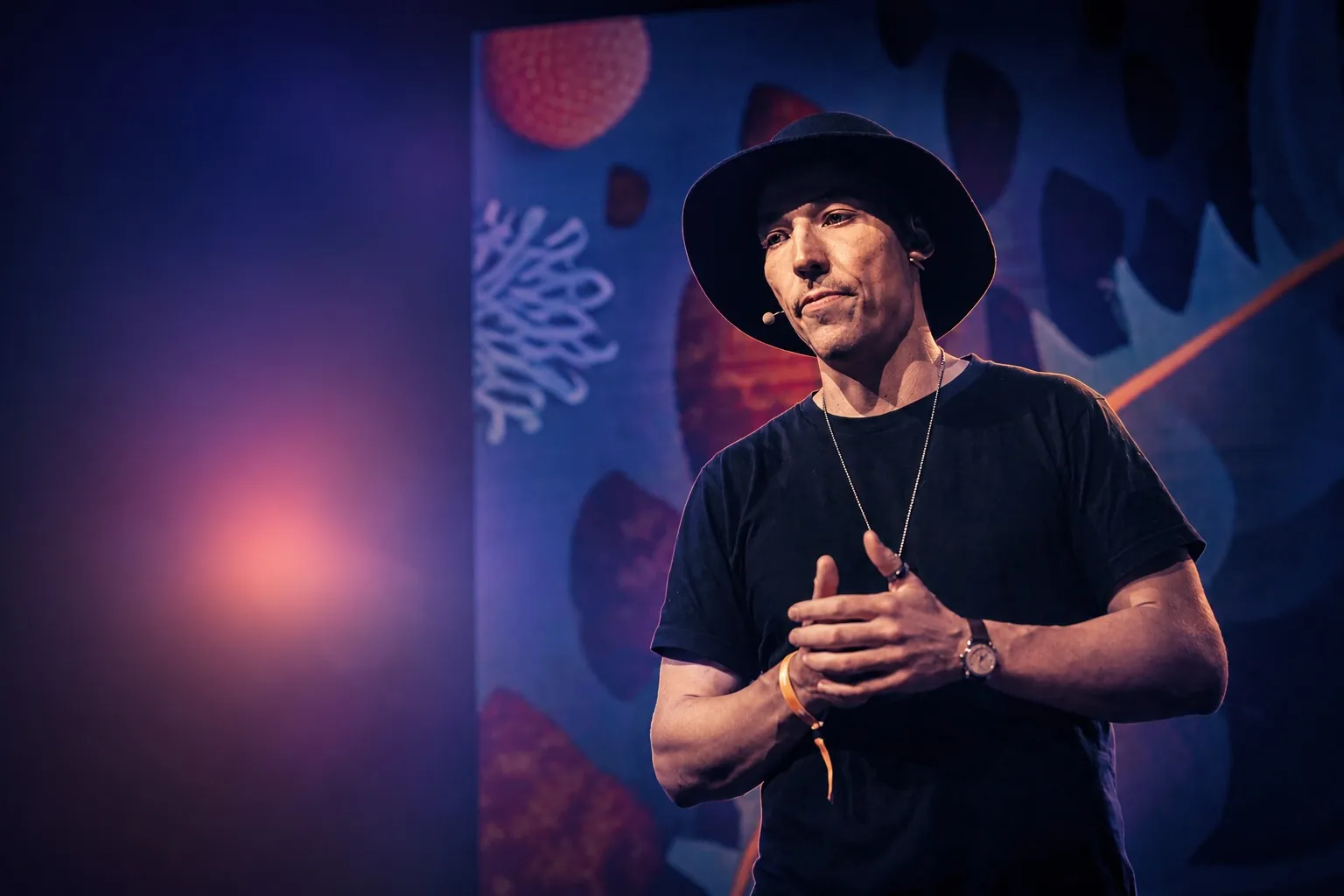
At the Biohacker Summit in Helsinki, Jaakko Halmetoja urged a community obsessed with optimization to ask a harder question: what if the future of health depended less on adding new tools and more on shedding what no longer served us?
The Uneasy Truth Beneath The Glow
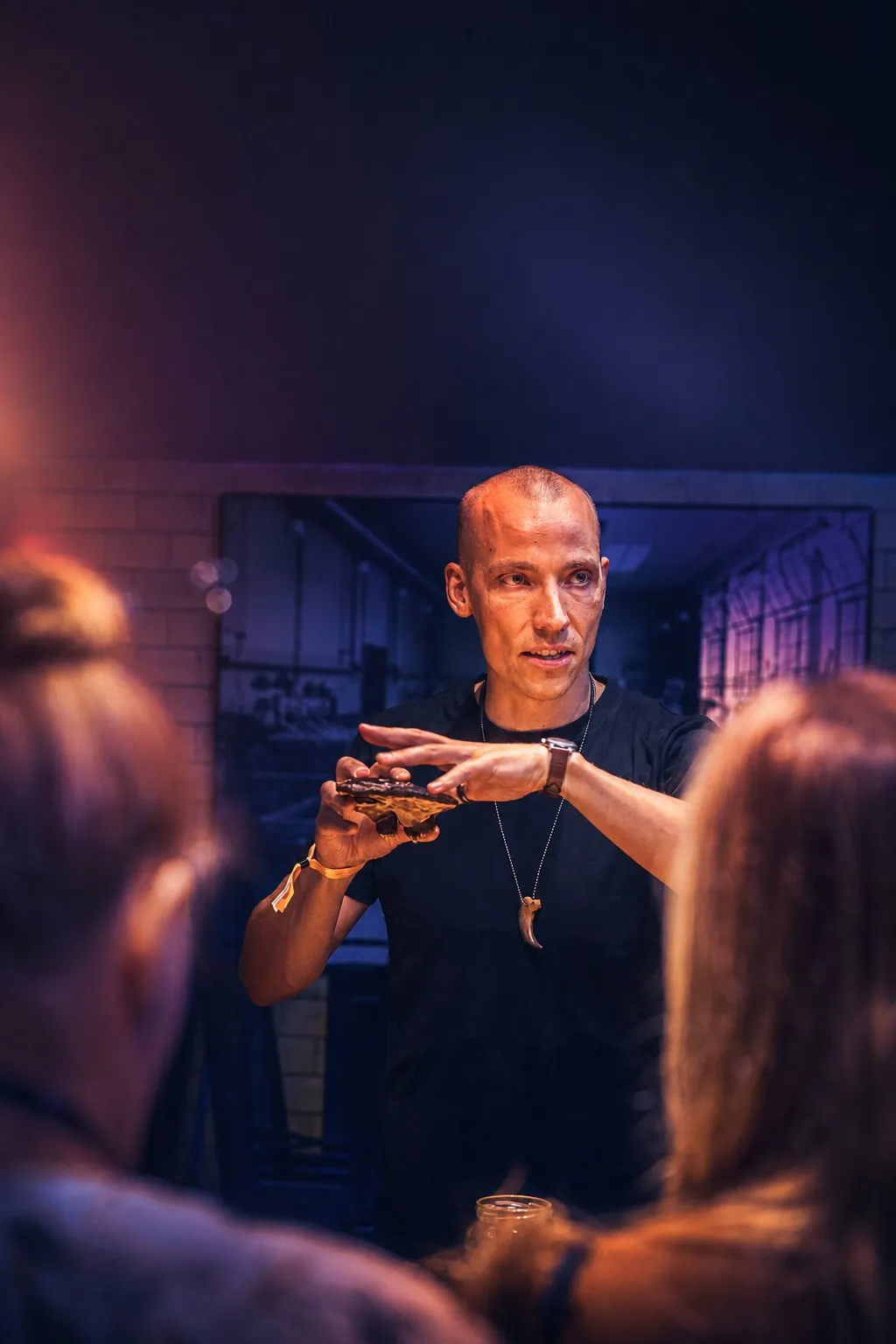
On Wednesday, 3 July 2024, at the Biohacker Summit in Helsinki, Finland, Jaakko Halmetoja delivered a presentation titled Beyond the Veil of Biohacking that felt less like a keynote than a reckoning. In a room built on the promise of sharper minds, longer lives and better metrics, the nutrition expert, Biohacker’s Handbook co-author and Foodin product development manager turned the spotlight away from gadgets and protocols and back onto the people using them.
His opening observation cut through the polished language of wellness culture with uncomfortable precision. “Every single one of you that I’ve had some type of more meaningful conversation during the past days is going through pretty heavy shit.”
It was not a provocation for its own sake. It was a reminder that even among the health conscious, the articulate and the technologically fluent, suffering remained stubbornly present. Behind the quantified self, Halmetoja suggested, stood the wounded self. “We are not near the baseline, most of us,” he said. “That’s the wounded healer syndrome.”
A Community Built On Curiosity, And Pain
The Biohacker Summit has long sold itself on curiosity, connection and future-facing thinking. Halmetoja did not reject that vision. He complicated it. He described a community full of people searching not only for performance but for relief, meaning and some form of medicine to share with others.
That framing gave his talk its moral weight. Biohacking, in his telling, was not merely a toolbox for enhancement. It was often a response to distress. The devices, routines and interventions that filled the halls of the summit could help, certainly. But they could also distract from the deeper question of why people reached for them in the first place.
This was the challenge he placed before the audience: not whether technology worked, but what problem it was truly solving.
The Machine And The Meadow
Halmetoja’s argument moved with unusual agility between the mechanistic and the elemental. He acknowledged the extraordinary promise of emerging technologies, including AI, but resisted the breezy techno-optimism that treats every innovation as inherently neutral. More power, he warned, did not automatically produce more wisdom.
His deeper point was that many biohacking tools attempt to recreate, simulate or manipulate conditions that human beings once encountered naturally: light, temperature, movement, food, rhythms of day and season. In that sense, modern wellness can look faintly paradoxical. We build systems that estrange us from the natural world, then invent ever more sophisticated products to compensate for the estrangement.
The image he returned to was striking. Human beings in modern cities were less masters of their environment than animals in a carefully managed enclosure. In the wild, organisms adapt to their surroundings. In captivity, the environment must be modified to meet the organism. The urban biohacker, in Halmetoja’s account, often resembled “more like an animal in a zoo.”
What If Progress Meant Doing Less?
The most radical line in the talk was also the simplest. “One idea that I want to bring up is that almost a good metric for this type of community would be like, how many more things you don’t do every year?”
In a culture that rewards accumulation, stack-building and ever longer morning routines, the question landed with quiet force. Halmetoja was not dismissing experimentation. He was asking whether maturity might look like subtraction rather than expansion. Which tools had taught their lesson? Which supplements, routines or technologies had become habits without purpose? Which practices survived only because novelty itself had become addictive?
This was not anti-science rhetoric. It was a plea for discernment. The future, he implied, would not be won by the person who collected the most interventions, but by the one who understood which interventions were no longer necessary.
Nature As Teacher, Not Accessory
Halmetoja’s most persistent theme was nature, though he spoke of it in terms more intimate than fashionable. “More time in nature. Not just because it’s a thing that you can do. Use it as your teacher.”
There was, in that line, an implicit rebuke to the way wellness often instrumentalises the natural world, reducing forests, rivers and plants to another category of performance aid. Halmetoja argued instead for relationship: with other people, certainly, but also with other living beings. If social connection sits at the heart of longevity research, then perhaps the human bond with the wider living world deserves a place in the same conversation.
He spoke of “plant blindness,” the tendency to move through living environments without really seeing them. The phrase carried wider resonance. Modern people, his talk suggested, have become fluent in data while growing illiterate in presence. We can track ourselves endlessly and still fail to notice the ecosystems around us, or the emotional realities within us.
Love, Death And The Limits Of Longevity
One of the most affecting turns in the presentation came when Halmetoja reflected on time spent with his dying grandfather. It sharpened the central contradiction in longevity culture. What, after all, was a longer life for, if not for greater depth of living?
He imagined the familiar end-of-life regrets and noted what was often missing from the language of life extension: not simply the desire for more years, but the wish to have loved more openly while those years were still unfolding. The point was not that pursuing health was vain. It was that health detached from love, intimacy and meaning risked becoming hollow.
The body could be optimized. The schedule could be perfected. Yet if the animating force behind those efforts remained unexamined, the entire enterprise might still miss the mark.
“I hope you get the spark for that question,” he said near the close, “that why I’m actually here. What is the driving force?”
The Soft Turn In Biohacking
There was another note in Halmetoja’s speech, quieter but just as revealing: an acknowledgment that the culture around biohacking had changed. What began as a detail-driven, often masculine and heavily mechanistic field had broadened. Art, performance, creativity and emotional expression had entered the frame.
That shift mattered. It suggested that the movement, for all its circuitry and supplements, was beginning to recognise something older and less measurable: that wellbeing cannot be reduced to metrics alone. Human beings do not live by optimization. They live by attachment, beauty, ritual, grief, joy and the difficult work of being honest with themselves.
In that sense, it was fitting that Halmetoja ended not with a protocol but with an invitation to an aesthetic dance party, and then the summit’s closing ceremony. The gesture was playful, but it was also philosophical. A holistic life, his talk implied, is not simply one in which every variable is controlled. It is one in which the body, mind, relationships and spirit are allowed to meet.
The Harder Question After The Hype
By the end of Beyond the Veil of Biohacking, the audience had been offered neither a miracle nor a manifesto. What Halmetoja gave them was more difficult: a framework for self-interrogation.
Spend more time in nature. Simplify. Reduce dependency. Examine what is driving the need to optimize. Deepen human connection. Let fewer things matter more.
In an age intoxicated by upgrades, Jaakko Halmetoja’s presentation at the Biohacker Summit stood out for its insistence that the real frontier might not be enhancement at all. It might be remembering what was essential before the noise began.
Frequently asked questions
What was Jaakko Halmetoja's challenge to the community?
He asked a room built on sharper minds and better metrics to consider that the future of health might depend less on adding new tools and more on shedding what no longer serves us. The nutrition expert and Biohacker's Handbook co-author turned the spotlight away from gadgets and protocols.
What metric did he propose instead?
How many more things you do not do each year. In a culture that rewards accumulation, stack-building and ever longer morning routines, he suggested that subtraction would be a better measure of progress for this particular community.
What is his view of new technology?
Halmetoja acknowledged the extraordinary promise of emerging technologies including AI, but resisted breezy techno-optimism. More power, he warned, does not automatically produce more wisdom, and many biohacking tools are attempts to recreate or simulate conditions nature already provides.
About the event
This recap is part of the Biohacker Summit 2024 Helsinki series, recorded in Helsinki on 2 and 3 July 2024. Read the summary of the whole event or join the next edition, HOLOLIFE Summit 2026 Amsterdam, on 14 and 15 November 2026.
In this story
Comments
Loading comments…