Biohacker Summit 2024 Helsinki
Mapping The Mind’s Narrow Ledge Between Focus And Fear
By Teemu Arina · · Updated

Giancarlo Licata Brought Precision Neuroscience To Biohacker Summit In Helsinki
At the Biohacker Summit in Helsinki on 3 July 2024, Giancarlo Licata posed a deceptively simple question: what could a person achieve in three or four months with more focus and less anxiety?
It was the kind of one-liner that landed not as self-help wallpaper, but as a challenge. In Licata’s telling, focus and anxiety were not vague moods, nor neat diagnostic boxes, but overlapping brain states shaped by circuitry, timing, injury, habit and history. The promise of his talk, titled 3D Brain Mapping: Focus and Anxiety, was not that the brain could be hacked with a single gadget or supplement. It was that it could be understood with greater precision.
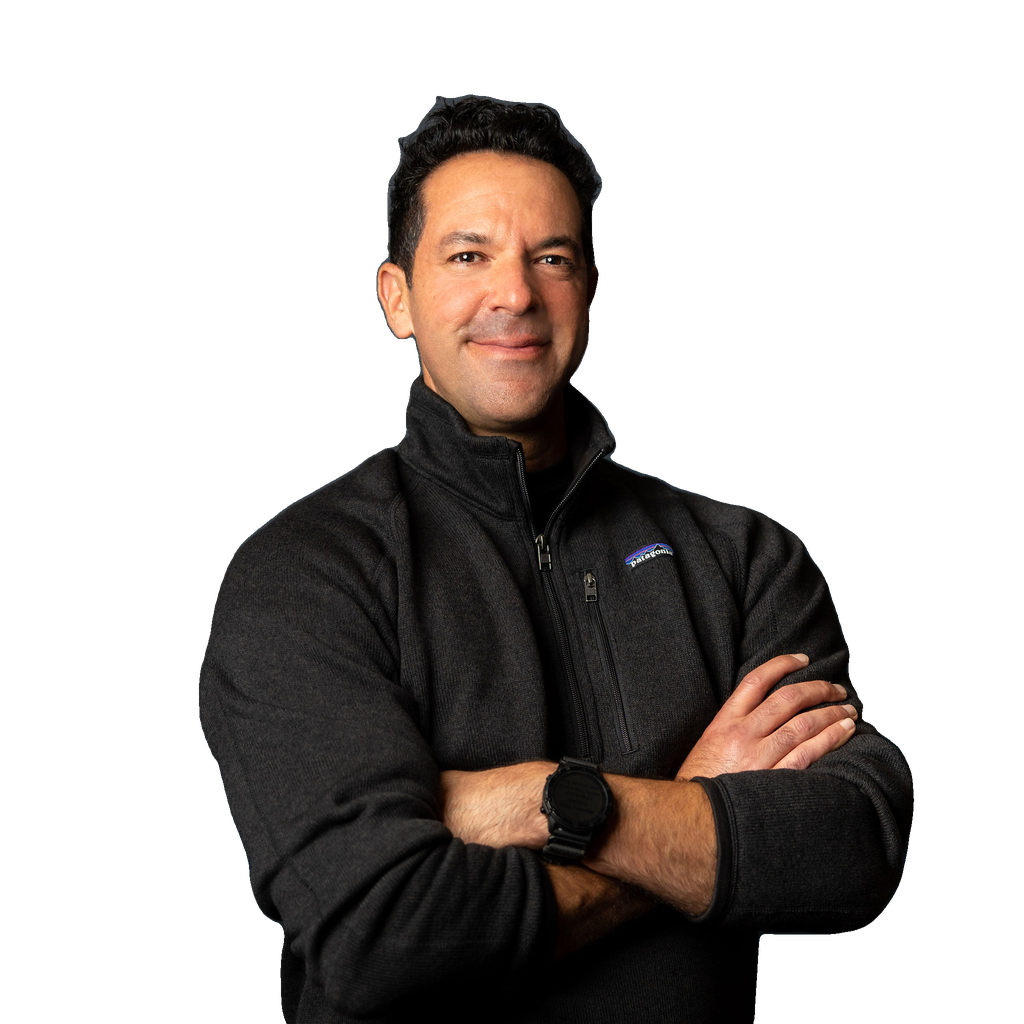
Anxiety And Focus Were Framed As Intertwined, Not Opposed
Licata, founder of Vital Brain Health and Vital Brain Skills in Los Angeles, argued that what people casually call anxiety and what they casually call focus are “actually a lot of things.” That distinction mattered.
Too often, he suggested, people treated poor concentration as a single problem and anxiety as a single feeling. Neuroscience, by contrast, pointed to a messier truth. Different brain regions could produce similar outward symptoms. ADHD-like distraction might emerge from very different underlying mechanisms. Anxiety could mean bodily hyperarousal, obsessive mental looping, or both at once.
His point was not merely semantic. It was clinical. If the causes differed, the tools should differ too.
The Yerkes-Dodson Law Offered A Useful Map
To explain the relationship between focus and anxiety, Licata turned to the Yerkes-Dodson law, the century-old principle that links arousal to performance. Too little arousal and performance sagged. Too much and it crumbled again. Somewhere in between sat the elusive sweet spot.
It was an elegant image for a biohacking audience: low energy, fatigue and underactivation on one side; sympathetic overload and fight-or-flight on the other. In the middle, optimal attention.
Licata used coffee as the everyday metaphor. One cup might sharpen the mind. Another could still help. Too many, and the same person who sought focus could tip into overstimulation and cognitive decline. On the surface, both the underaroused and the overaroused individual might look distractible. But the intervention each needed would be entirely different.
That was one of the central cautions of the session. A label was not a map. A symptom was not yet a mechanism.
Brain Waves Alone Were Not Enough
Licata pushed back against simplified conversations about brain waves, the familiar shorthand of delta, theta, alpha and beta. Asked which wave was “good” for focus or anxiety, he dismantled the premise.
“The brain doesn’t work in alpha,” he said. “Alpha is like a letter in a language.”
It was one of the talk’s most striking lines because it distilled a complicated idea into plain speech. Brain function, he said, was not about one frequency in isolation, but about relationships: regions communicating across networks, patterns synchronising or failing to synchronise, signals arriving too fast, too slowly, too often, or not at all.
In that framework, a brain map was valuable not because it crowned one wave as desirable, but because it could reveal biomarkers, patterns tied to specific kinds of dysfunction. Fast alpha in one person, he noted, might not calm them. It might make them more anxious. Generic tools, however sophisticated their branding, risked missing the point.
Neurofeedback 2.0 Was Presented As A Three-Step Discipline
From there, Licata outlined what he called Neurofeedback 2.0, a more targeted model built on insight, strategy and execution.
First came insight. He described the 19-channel EEG as the minimum standard for rich data, the closest thing to source code for understanding what the brain was doing. The aim was to identify biomarkers, read the raw EEG traces, compare how brain regions related to one another, and understand not only isolated rooms in the mansion, as he put it, but the hallways between them.
Second came strategy. Once patterns were identified, the task was to decide what mattered most. Which problems were major and which were minor? What had to be tackled first? Was the issue trauma, concussion, metabolic dysfunction, overactivation in a specific region, or a network failing to regulate itself? Precision, Licata argued, meant sequencing interventions rather than throwing every possible therapy into the mix.
Third came execution. That might include tailored home neurofeedback, hyperbaric oxygen, trauma therapy, functional medicine or other support, depending on what the map suggested. The key idea was personalization guided by evidence, not broad promises attached to fashionable tools.
“We need to have a more precise understanding of the brain and what it’s doing so that we can have a more precise strategy to get the right tools to help us individually,” he said.
A Case Study Showed How Hidden Patterns Could Shape Performance
The presentation’s emotional centre came through a case study of a 34-year-old entrepreneur who sought help for poor focus. She wanted, Licata said, to grow her business, increase revenue and stop sabotaging herself with chronic distraction. She believed she had ADHD. The assessment found something more specific.
According to Licata, her brain map revealed three biomarkers, including epileptiform discharges, subtle instability in brain activity that may not qualify as seizures and may still sit within what a neurologist considers normal limits. Yet these “sparks in the brain,” as he described them, can interfere with executive function, mood and regulation depending on where they occur.
In her case, the discharges were affecting regions linked to organisation, motivation and forward planning. Through targeted neurofeedback over four months, Licata said, the patterns reduced. Her focus improved. Her anxiety dropped as collateral benefit. She met her revenue goals and opened a second location.
It was a story told not as miracle testimony, but as an illustration of the talk’s underlying thesis: outwardly similar complaints may have deeply different neural signatures, and real progress may depend on finding them.
The Broader Argument Was Against One-Size-Fits-All Brain Hacking
For all its technical language, the session carried a broader cultural rebuke. In a wellness economy that often sells solutions before diagnoses, Licata’s message was that precision should come before intervention. A drill and a saw, he noted, are both useful tools, but only if one knows what needs building.
The same held for the brain. Concussion, trauma, obsessive rumination, bodily hypervigilance, depressive bias and executive dysfunction could overlap and amplify one another. Treating all of them as “focus problems” or “anxiety” flattened the individual into a market category.
Licata’s approach, as presented at Biohacker Summit, suggested a different ethic: measurable goals, careful mapping, staged progress and tools chosen in response to actual patterns rather than generic claims.
“Set a goal, set a target, set something measurable,” he urged early in the talk.
The Most Resonant Question Was Also The Simplest
In the end, the presentation was not really about gadgets, nor even about EEG. It was about discernment. The summer challenge Licata left hanging in the room was less a sales pitch than a provocation.
“What could you achieve this summer with more focus and less anxiety?”
It was a neat closing line because it carried both ambition and restraint. Not a new self. Not total optimisation. Just the possibility that clearer attention and quieter fear, properly understood, might open a door that brute force never could.
Frequently asked questions
Are focus and anxiety opposites?
Giancarlo Licata argued they are intertwined rather than opposed. Both are made of many things, he said, and different brain regions can produce similar outward symptoms, which is why treating poor concentration as one problem and anxiety as one feeling misses what is actually happening.
What is the Yerkes-Dodson law?
The century-old principle linking arousal to performance: too little arousal and performance sags, too much and it collapses again, with a sweet spot in between. Licata used it as a map with fatigue and underactivation on one side and sympathetic overload on the other.
Is there a good brain wave for focus?
Licata rejected the premise. Asked which wave was good for focus or anxiety, he answered that the brain does not work in alpha, and that alpha is like a letter in a language rather than a state. In his Neurofeedback 2.0 model, 19-channel EEG is the minimum standard for useful data.
About the event
This recap is part of the Biohacker Summit 2024 Helsinki series, recorded in Helsinki on 2 and 3 July 2024. Read the summary of the whole event or join the next edition, HOLOLIFE Summit 2026 Amsterdam, on 14 and 15 November 2026.
In this story
Comments
Loading comments…