Biohacker Summit 2024 Helsinki
The Supplement Mirage And The Promise Of Liposomes
By Teemu Arina · · Updated
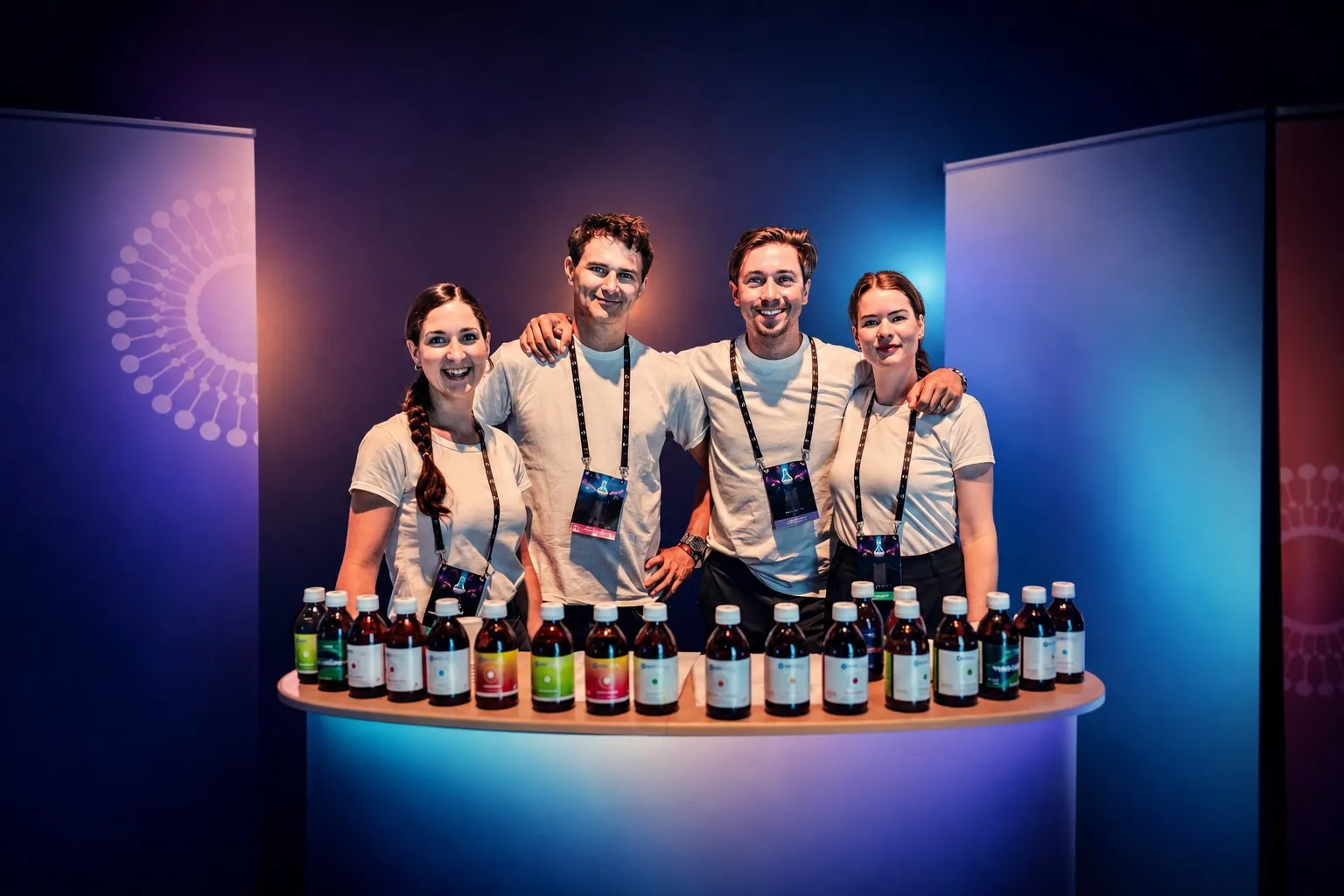
At Biohacker Summit In Helsinki, Jan Braband Argued That The Real Battle In Nutrition Was Not What People Swallowed, But What Actually Reached The Bloodstream
On 3 July 2024 at the Biohacker Summit in Helsinki, Finland, Jan Braband took aim at one of the dietary supplement industry’s most persistent assumptions: that anything consumed by mouth was automatically put to work by the body.
Braband, a researcher and co-founder of ActiNovo Liposomals, built his presentation, titled How Liposome Fluids Transport Substances Into Your Bloodstream, around a blunt challenge to that belief. The supplement market, he suggested, had long thrived on the seduction of interesting ingredients while paying too little attention to a harsher physiological truth: bioavailability.

“There’s this one huge misconception in the dietary supplement industry,” Braband said, “and that is since there are so many super interesting substances, ingredients that everything you put in your mouth will be put to work.”
It was a simple claim, but one with large consequences. If correct, it would mean that much of the industry’s promise rested not on what a product contained, but on what the body could actually absorb.
The Problem Was Not Hype, But Delivery
Braband’s argument did not hinge on whether compounds such as resveratrol or vitamin C were inherently useful. In fact, he acknowledged their scientific appeal. Resveratrol had long been celebrated in laboratory research for its antioxidant properties and its possible role in longevity. Vitamin C remained one of the most widely recognized nutrients in the world, with accepted links to immune function.
The problem, he said, emerged when oral consumption met the body’s digestive barriers.
Resveratrol, he noted, looked impressive in vitro, in cell-based studies, but often disappointed in vivo, in real human use. Vitamin C suffered from a different but equally familiar limitation. While easy enough to swallow in tablets, it did not necessarily pass into the bloodstream in meaningful quantities at high doses. Push too hard, he warned, and the digestive system responded not with enhanced benefit but with distress.
In Braband’s telling, the digestive tract was not a generous gateway. It was a filter, evolved to break food down, regulate uptake and protect the body from overload. That made many supplement claims vulnerable from the outset.
He cited what he described as a rough industry rule of thumb: that 70% of supplement substances had significantly reduced bioavailability, and that 35% were impaired so severely that taking them bordered on futile.
For consumers, the implication was uncomfortable. A product could be expensive, fashionable and chemically promising, and still do very little.
Liposomes Were Presented As A Way Around The Barrier
Braband’s proposed solution was liposomal delivery, a system borrowed from pharmaceutical science and repurposed for nutrition.
Liposomes are microscopic vesicles formed from phospholipids, the same basic material that makes up cell membranes. Because of that structural similarity, Braband argued, they could act as carriers that shield active substances and help ferry them into the bloodstream more effectively.
“It is the taxi into your bloodstream,” he said. “Suddenly, tens of thousands of very, very interesting and powerful substances can be unleashed and can be brought to work.”
The appeal of this model was obvious. If traditional oral supplements failed because the digestive system degraded, blocked or excreted too much of the active ingredient, then a liposome could serve as what Braband repeatedly described as a Trojan horse, disguising the payload and helping it pass biological checkpoints.
He pointed to the wider scientific legitimacy of the technology, noting that liposomes had been used in pharmaceutical applications for decades and that lipid-based delivery systems had also been central to mRNA vaccines.
For Braband, this was the critical leap. Liposomal delivery did not merely improve convenience. It redefined what kinds of substances might become practically useful.
“Liposomal formulations really open up a new universe of possibilities,” he said, “because you can go beyond these 70, 35% rule.”
Why Fluid Mattered More Than Marketing
One of the sharpest parts of Braband’s presentation concerned form. He insisted that true liposomal products had to be fluid, not powdered, because water was essential to the very structure of a liposome.
Phospholipid bilayers, he explained, formed in the presence of water. Remove the water and the delicate sphere that protected the active ingredient could not simply remain intact. In that sense, he argued, powdered liposomes were not merely a technical variation but a contradiction.
“To be able to make a liposome what a liposome needs to be, and that is a trojan horse, to get the substance into your bloodstream, it needs to be fluid,” Braband said.
This was more than a manufacturing footnote. It was an attempt to draw a line between scientific mechanism and commercial branding. In a crowded supplement market, terms such as liposomal could easily become labels of aspiration rather than proof of function. Braband’s warning was that consumers should not confuse the language of advanced delivery with the chemistry required to make it real.
He also urged buyers to inspect formulations for unnecessary technical additives and to prefer cleaner ingredient lists where possible.
Better Absorption Did Not Mean Infinite Safety
If Braband’s presentation carried a note of excitement, it also carried a note of caution. A supplement that finally reached the bloodstream, he said, demanded more responsibility, not less.
During the audience discussion, a question was raised about whether highly effective liposomal glutathione might disrupt the body’s natural balance if taken excessively. Braband’s response widened the warning beyond any single compound. The issue, he said, was not unique to glutathione. Once absorption improved, overdosing became a more serious concern.
His message was direct: use the brain, follow the bottle, work with a doctor when necessary, and do not assume that more is better simply because the technology is more efficient.
That caution mattered. Liposomal delivery, in Braband’s framing, solved a longstanding problem of under-absorption. But by doing so, it also removed a false sense of harmlessness that often surrounded poorly absorbed supplements. If old formulations sometimes failed because the body could not use them, newer ones might require more precision precisely because they could.
A Wider Reckoning For The Supplement Industry
What Braband offered at the Biohacker Summit was not merely a technical explanation of phospholipid vesicles. It was a critique of an industry that too often sold hope through ingredients lists while avoiding harder questions about physiological effect.
“Bioavailability with liposomal formulation is no longer a limitation,” he said. “It’s nothing you need to worry about anymore, because you get the stuff into your blood.”
That claim, bold as it was, captured the central tension of the talk. Liposomes were presented as a way to close the gap between laboratory promise and lived biological impact. They could, in theory, transform compounds dismissed as impractical into substances worth taking seriously again.
But the larger takeaway was less promotional than it first appeared. Braband’s argument asked consumers to become more skeptical, not less. To ask not whether a substance sounded impressive, but whether it could survive digestion, enter circulation and act where it mattered.
In a supplement economy built on abundance, that was a radical simplification. The question was no longer what was in the capsule. It was whether the body ever truly saw it.
Frequently asked questions
What is the supplement mirage?
Jan Braband's term for the assumption that anything swallowed is automatically put to work by the body. The co-founder of ActiNovo Liposomals argued at the Helsinki summit that the real battle in nutrition is not what people take, but what actually reaches the bloodstream.
What are liposomes?
Microscopic vesicles formed from phospholipids, the same basic material that makes up cell membranes. Because of that structural similarity, Braband argued, they can act as carriers that shield active substances and help ferry them into the bloodstream more effectively.
Why must a liposomal product be fluid?
Because water is essential to the structure. Phospholipid bilayers form in the presence of water, Braband explained, so removing the water means the delicate sphere protecting the active ingredient cannot simply remain intact. On that reasoning, powdered liposomal products are suspect.
About the event
This recap is part of the Biohacker Summit 2024 Helsinki series, recorded in Helsinki on 2 and 3 July 2024. Read the summary of the whole event or join the next edition, HOLOLIFE Summit 2026 Amsterdam, on 14 and 15 November 2026.
In this story
Comments
Loading comments…