Zen eating: rediscovering humanity's ancient bond with nature through mindful meals
By Teemu Arina · · Updated
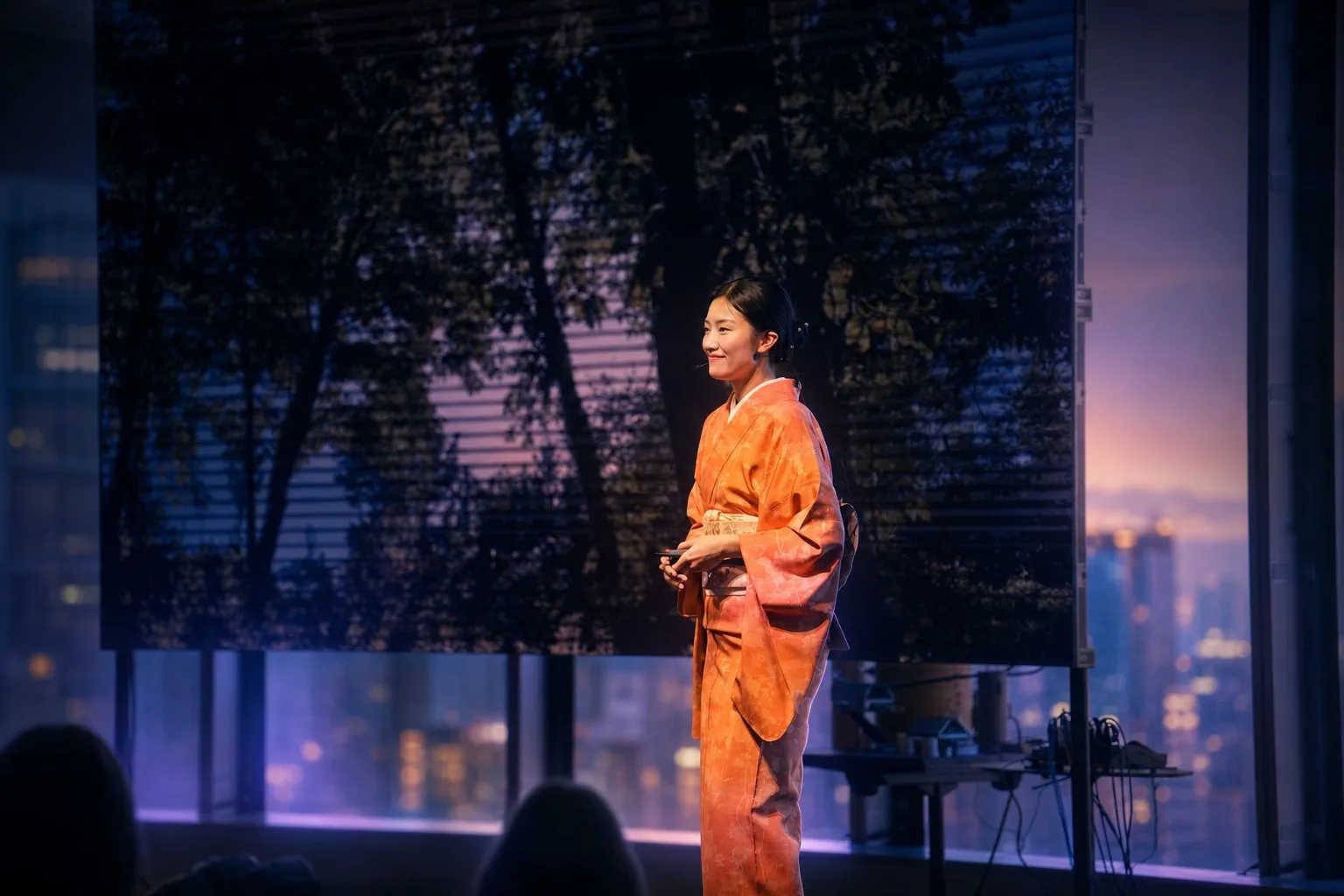
At the Hololife Summit 2025 in Tokyo, Momoe Saito offered a meditation on food, gratitude and the 3.8 billion year lineage connecting every meal to the origins of life itself
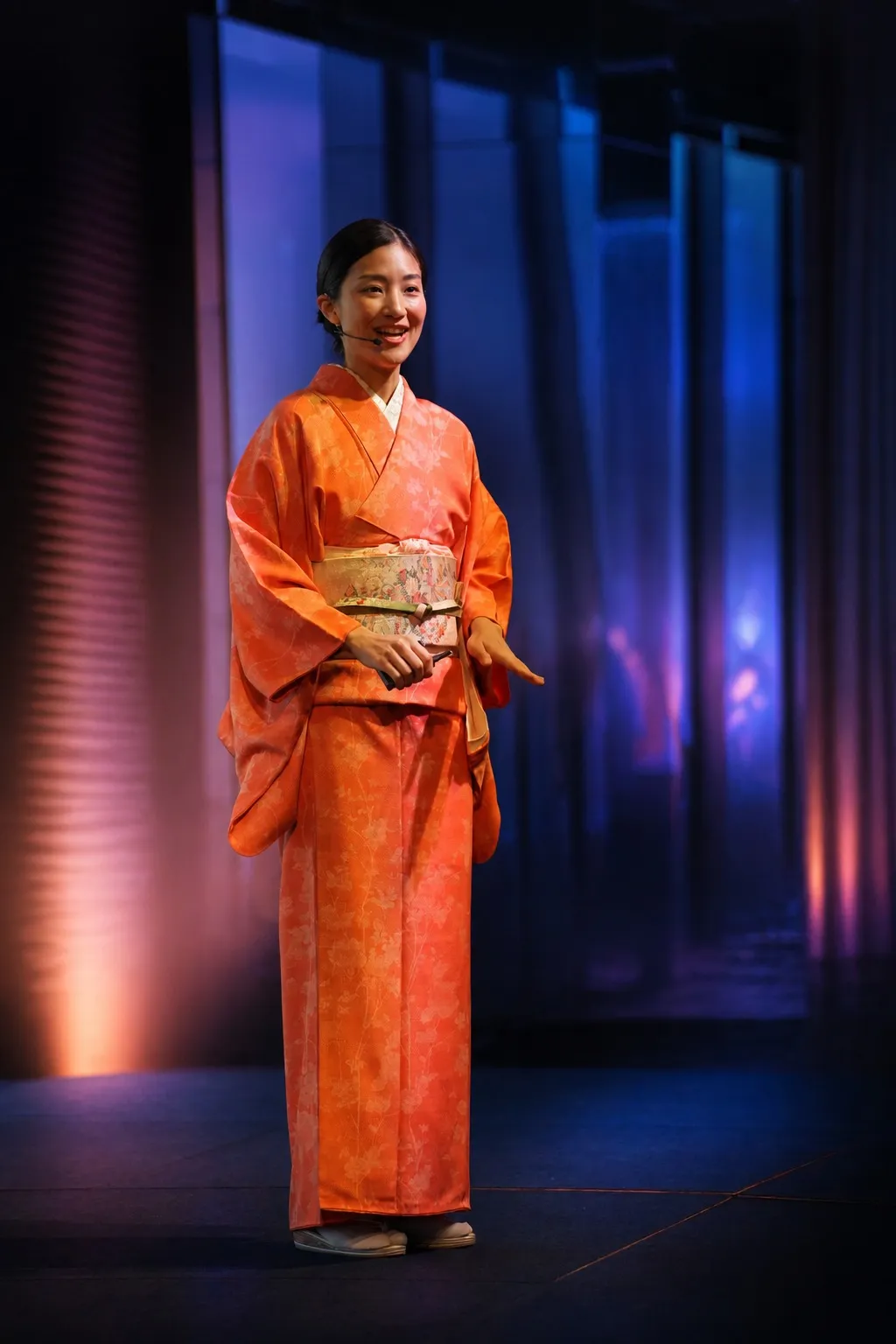
The forgotten connection
In a conference room in Tokyo, Momoe Saito began her presentation not with statistics or slides, but with an invitation to remember. "Every bite we eat is connected with the entire Earth," she told attendees at the Hololife Summit 2025. What followed was a deeply personal exploration of how modern life has severed our sense of belonging to nature, and how the simple act of eating might restore it.
Saito's childhood in Tokyo shaped her understanding of disconnection. "I grew up in this modernized city, surrounded by concrete, not trees," she recalled. "My forest was traffic lights." Her elementary school stood beside a noisy railway, an environment where children seemed perpetually restless, perhaps affected by invisible electromagnetic waves and constant noise. At nine years old, she felt no sense of connection, no particular passion for life.
Yet something sparked her curiosity: the food chain. "Small insects nourished by plants, eaten by little birds and then by bigger birds and bigger animals—the unbroken cycle of life," she explained. "A girl who never felt connected with her classmates learned the true meaning of connection through the food chain."
The silent hunt
Saito's true education came later, at her grandfather's mountain retreat three hours from Tokyo. At twenty-nine, she returned there alone, hoping to witness the dramatic hunt of animals—a tiger taking down deer, an eagle seizing a snake. She never did.
Instead, what she found was more subtle and profound. Sitting meditatively in the forest, she discovered a fallen tree trunk on the forest floor. The upper side remained firm, but underneath it was crumbling into soil. At first she thought the tree was dying, but mushrooms sprouted from its decay. "What I thought was dying was full of life," she said. "The trunk was not dying; it was transforming into new forms."
This was the silent hunt she had been seeking all along—not the violent drama of predator and prey, but the quiet transformation of decay, the merging of tree and soil. It was a process invisible in conventional illustrations of the food chain.
Nature as it truly is
The experience led Saito to examine the very concept of nature itself. She shared insights from Daisetsu Suzuki, the scholar who introduced Zen to the Western world, about the original Japanese word for nature: jinen. "Jinen means 'things as they truly are in their original state,'" she explained, "and the nuance is slightly different from English."
The crucial difference: jinen inherently includes humans in nature. There is no separation, no division, no distinction. The Latin-derived word "nature," by contrast, implies an objective existence set apart from ourselves, belonging to the world of relativity. Jinen is neither objective nor relative—it is subjective and possesses an absolute quality.
As time passed, the pronunciation shifted from jinen to shizen, and even native Japanese speakers forgot the original meaning. The word came to carry the Western sense of separation: human versus nature. "To be ourselves truly," Suzuki concluded, "there is no other way but to return to jinen."
The practice of ki awareness
But how to practice this return? Saito turned to the Japanese wisdom of ki energy—living energy that permeates words like genki (vitality), kibun (feeling), kimochi (emotion), and kizuku (awareness). The word kizuku literally means "ki energy arriving" or "ki energy reaching."
She led attendees through a brief exercise, asking them to feel their ki energy reaching to fingertips, heart, hara, thighs, feet. "You are 'ki-ful' now," she told them. Then she asked them to send ki energy to someone in their vision. "Ki reaching means being aware. This is the meaning of living in great ki energy: you are aware, and your ki energy is reaching your entire body and around you."
Receiving 3.8 billion years
The practice of eating, Saito proposed, offers a way to expand the dimension of this ki energy. When we eat, we receive not only nourishment—fibers, vitamins, protein—but also life energy from the food.
She asked attendees to imagine eating a grain of rice, to picture how it grew freely and vibrantly from earth, sun, rain, soil, and air. "When you are receiving food, you are ritually receiving the life energy from the earth."
Then she invited them deeper: imagine the rice grain as the baby of a plant, sparkling with the life energy to grow tall. This baby had parents, and parents of parents, on and on. "When you trace that lineage, we can trace back to 3.8 billion years ago," Saito said. "Life today is a continuation of life from 3.8 billion years ago, from the very first single-celled organisms."
Even through five mass extinctions, life has never been interrupted. Every person in the room, like every grain of rice, is 3.8 billion years old—crystallized life, an unbroken thread of existence. "When you receive food, you are receiving 3.8 billion years of history and life energy. Isn't it a miracle?"
The ritual of gratitude
Saito named her practice Zen eating—a way to reconnect ourselves to our 3.8 billion year old body and 3.8 billion years of food nourishment. She guided attendees through the traditional Japanese meal prayer, itadakimasu, which means "I humbly receive."
With hands placed before their chests, the room spoke together: "I humbly receive—itadakimasu." Then they bowed to themselves and the food, a prayer of gratitude.
She invited them to imagine eating with all five senses: smell, aroma, taste, texture, temperature. To notice internal perceptions: saliva, the feeling of food running through the throat, descending to the stomach. To enjoy the aftertaste and imagine the journey of the food as a life—how many days, what environment, and 3.8 billion years of existence.
"This is the practice of Zen eating," she said, "and we can practice it every day with our own meal."
The miracle of thanks
Saito concluded by examining the deeper meaning of gratitude itself. The Japanese word for thank you, arigato, originates from arigatai, meaning "rare to exist." When Japanese speakers say arigato, they are really saying "it's a miracle"—a mantra, an everyday affirmation.
"Every time we say thank you (arigato), we are attuning ourselves to the sense that we are part of an unbroken miracle," she explained.
Her offering to attendees was simple: make eating conscious, an everyday ritual of meditation. Remember, each time you say itadakimasu before eating, each time you say arigato, that you are attuning to miraculous life.
Savouring existence
Instead of ending with "thank you," Saito chose different words: "It's a miracle." The room echoed the Japanese: "Arigato."
In an age of nutritional science, dietary trends, and food as optimised fuel, Saito's presentation offered something different—a return to food as participation in the cycle of life, as communion with 3.8 billion years of unbroken existence. Not humans conquering nature, but humans remembering what the word jinen always knew: we are nature, as we truly are in our original state.
The practice requires no special equipment, no expensive ingredients. Only presence, awareness, and the willingness to receive each meal as what it truly is: a continuation of the miracle that has survived five mass extinctions and countless transformations, silently hunting its way through decay and rebirth, arriving finally on our plates, asking only to be recognised for what it has always been.
Frequently asked questions
What is Zen eating?
Momoe Saito's name for a practice that treats a meal as reconnection rather than fuel. She asks people to receive the life energy of the food along with its nutrients, and to reconnect with what she calls the 3.8 billion year lineage running from the origins of life to the body eating now.
What does the Japanese word jinen mean?
Saito drew on Daisetsu Suzuki, the scholar who introduced zen to the Western world, to explain jinen: things as they truly are in their original state. The nuance differs from the English word nature, which tends to place humans outside it rather than within it.
Why does arigato mean more than thank you?
Saito traced arigato to arigatai, meaning rare to exist. Said properly, it comes closer to saying this is a miracle, an everyday affirmation that attunes the speaker to being part of an unbroken chain. She closed the session not with thank you but with those words.
About the event
This recap is part of the HOLOLIFE Summit 2025 Tokyo series, recorded in Tokyo on 10 and 11 October 2025. Read the summary of the whole event or join the next edition, HOLOLIFE Summit 2026 Amsterdam, on 14 and 15 November 2026.
In this story
Comments
Loading comments…