Biohacker Summit 2024 Helsinki
From Trauma to Transformation: How Ancient Practices Rewire the Brain
By Teemu Arina · · Updated
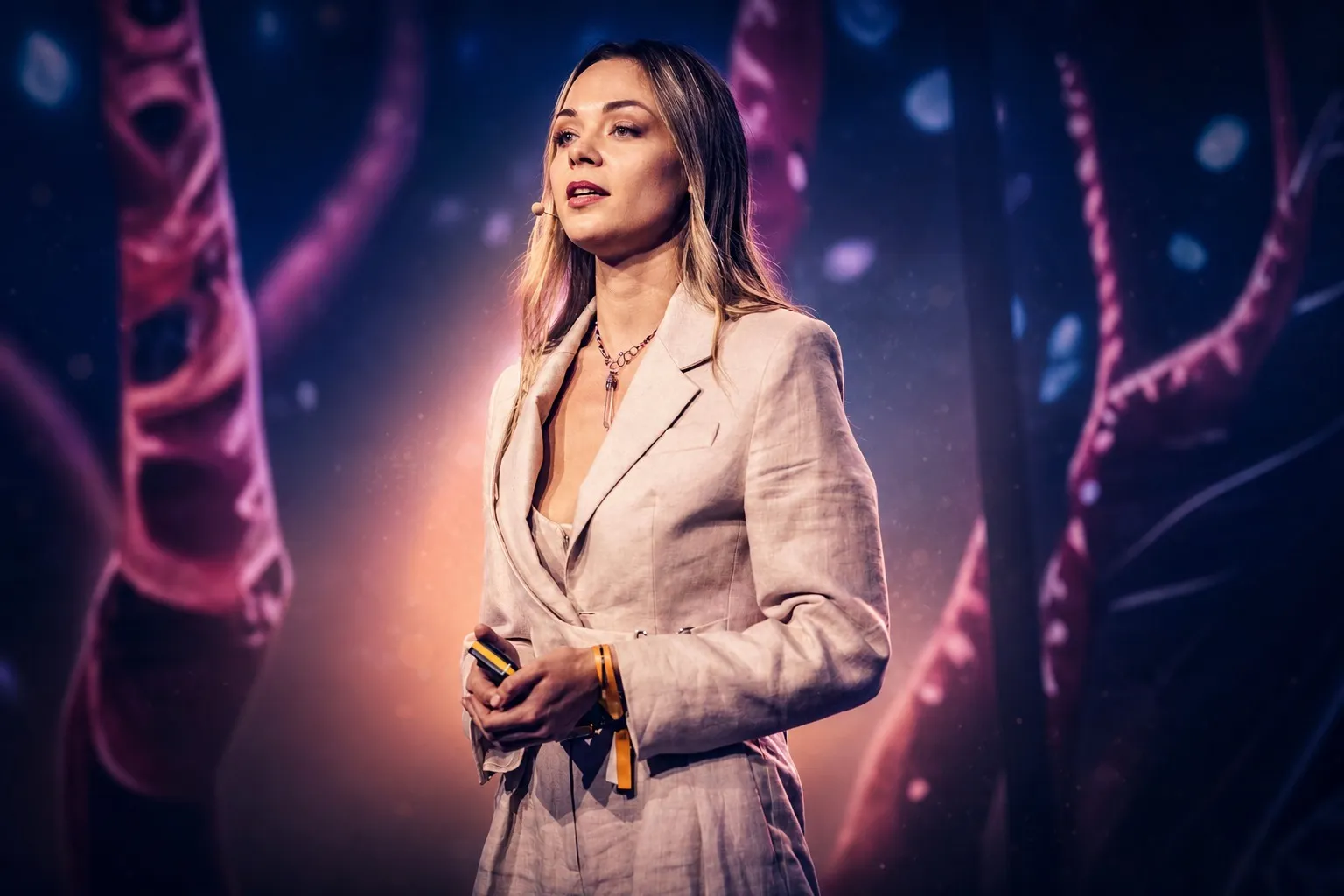
Survivor of human trafficking shares her journey from captivity to healing through meditation, breathwork and yoga
At the Biohacker Summit in Helsinki, therapist Elina Kadaja reveals how traditional healing practices saved her life after being trafficked to Iraq, and how they might help others overcome trauma.
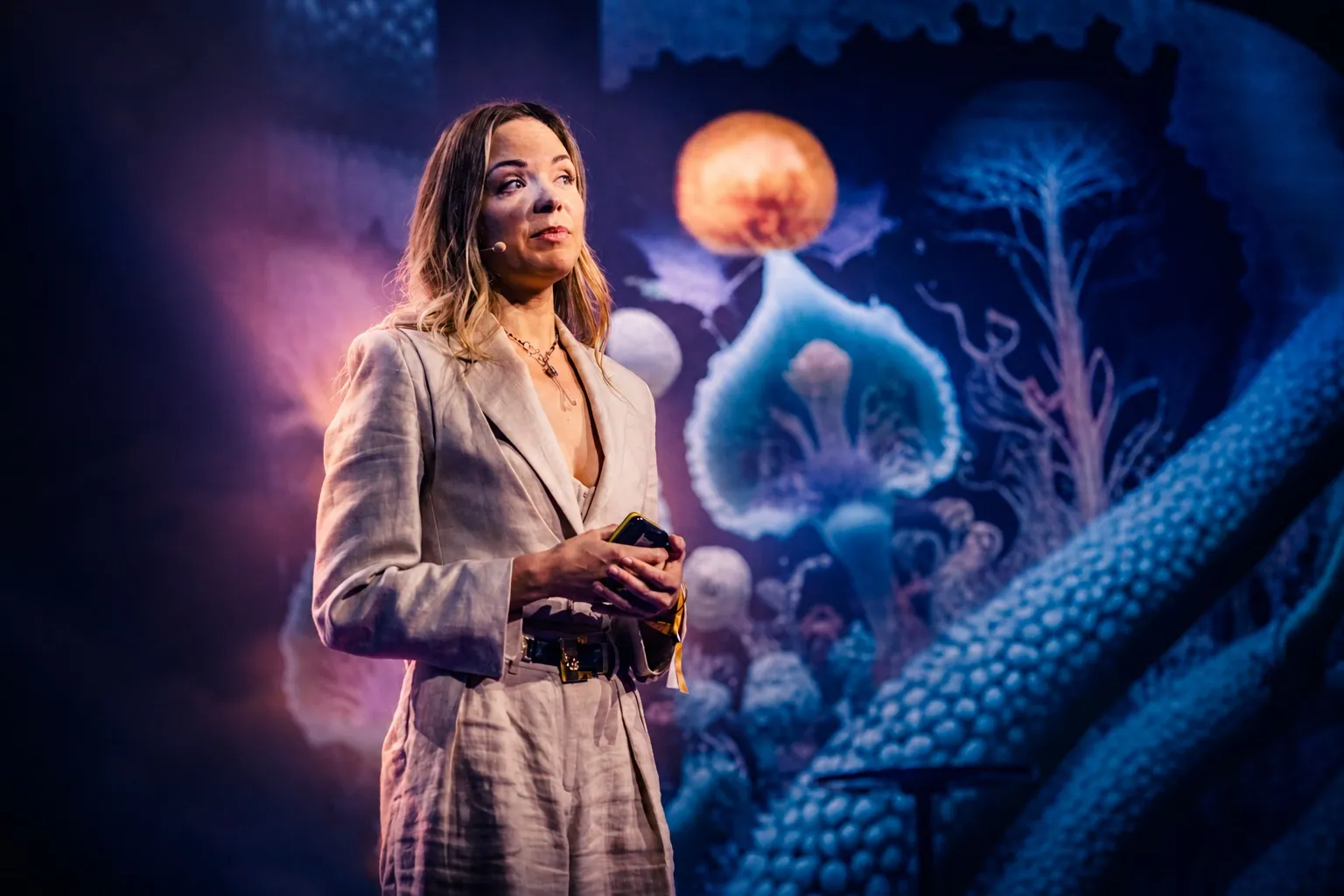
When Elina Kadaja steps onto the stage at Helsinki's Biohacker Summit, her first words acknowledge the physical reality of trauma that remains with her even years later: "My entire body is firing into fight or flight right now. So the best thing for me to do is move slowly, speak authentically."
It's Tuesday, 2 July 2024, and the packed audience at one of Europe's premier biohacking conferences sits in rapt attention as Kadaja begins to share a story of extraordinary survival and transformation.
The trauma that changes everything
At 23, Kadaja was trafficked into Iraq under the pretense of building a refugee camp. The perpetrator, who falsely claimed to be a CIA agent, was actually constructing a weapons factory. Through manipulation, sexual coercion, and threats of military intervention, he maintained control over Kadaja and other victims for nearly two years.
"He would prison my colleagues to stay in a compound with ISIS people," Kadaja explains, her voice steady despite the weight of her words. "I had every reason to believe that he would fulfill his threats to hurt me if I told anybody."
The psychological trauma was severe. When Kadaja sought help for her constant headaches and emotional distress, doctors prescribed antidepressants. "I stopped executing my escape plan," she recalls. "Nothing mattered anymore. I wasn't afraid. I wasn't excited. I wasn't happy. I was just ready to die."
The discovery that changed everything
It was a copy of Eckhart Tolle's "The Power of Now" that first introduced Kadaja to meditation. "Every time he would do his drilling sessions on me, I would just come out as a third person and not take it personally," she explains. "This meditation thing, it's really something. It helps."
Kadaja believes meditation ultimately helped her escape the situation, even when her captor eventually tried to kill her. Though she was not permitted to share her experience — discouraged by colleagues, therapists, and others who feared for her safety — she desperately needed techniques that would "release trauma from my body."
The science of embodied trauma
"Trauma is not what happens to you, but what happens in your body as a response to the event," Kadaja tells the audience. "It restricts your ability to feel, to be present and to be flexible."
This understanding aligns with cutting-edge trauma research from experts like Dr. Bessel van der Kolk, whose seminal work "The Body Keeps the Score" has transformed trauma treatment approaches. Kadaja's experience illustrates how psychological trauma manifests physiologically, becoming stored in the body's tissues and nervous system.
After her escape, Kadaja dedicated her savings and time to studying yoga, becoming a certified yoga and meditation teacher. Her motivation was clear: "I wanted to get behind the curtains. I wanted to know why it works."
The healing protocol
During her presentation, Kadaja outlines the three-part approach that facilitated her healing:
Breathwork: "In trauma release breathing, your belly and chest breathe at the same time," she explains, demonstrating how the entire torso should expand "360 degrees" with the spine as an anchor. The rhythm of breath should be circular and even.
Movement: "If you want to have a release response, you need to move slowly," Kadaja emphasizes, showing how the entire spine should be engaged. "All your vertebrae from the tailbone all the way up into your skull," since the nervous system runs through them.
Authentic expression: Allowing emotions to manifest through facial expressions, sounds, and movements completes the protocol. "Express authentically," she urges. "We can express with facial expression, with breathing, make the sound the emotion would make."
Justice and transformation
In a poignant update, Kadaja reveals that just two months prior to her presentation, her abuser was sentenced to 70 years in prison. The audience erupts in applause at this news, but Kadaja's response is unexpected.
"When I found out the sentence, all I could feel actually is gratitude," she says. "On a soul level, we all play a role in each other's lives. And he was the one to push me to this trauma release path."
This perspective—finding meaning in suffering and transforming victimhood into strength—reflects what psychologists call post-traumatic growth, a phenomenon where some trauma survivors experience profound positive personal development.
The broader implications
Having personally guided over 2,000 people through trauma release, Kadaja now conducts weekly group healing sessions. Her approach mirrors ancient wisdom traditions that recognized the mind-body connection long before Western science caught up.
For attendees at the Biohacker Summit, many of whom are accustomed to cutting-edge technologies and supplements for optimizing human performance, Kadaja's presentation offers a different kind of biohack—one that has been available for millennia yet remains underutilized.
"Once you practice this a couple of times," she tells the audience, "when a stressful situation or the same trigger happens afterwards, they just breathe and they're done. They don't stay in the loop."
As she concludes her presentation, Kadaja reminds the audience of perhaps the most crucial element: "Never skip integration. This is where the magic happens."
In an era increasingly defined by technological advances in wellness, Kadaja's powerful testimony serves as a reminder that some of humanity's oldest practices—mindful breathing, movement, and emotional expression—may still be our most potent tools for healing our deepest wounds.
Frequently asked questions
What happened to Elina Kadaja?
At 23 she was trafficked into Iraq under the pretense of building a refugee camp. The perpetrator, who falsely claimed to be a CIA agent, was actually constructing a weapons factory, and through manipulation, sexual coercion and threats maintained control over her and other victims for nearly two years.
How does she define trauma?
Trauma is not what happens to you, she told the Helsinki audience, but what happens in your body as a response to the event. It restricts your ability to feel, to be present and to be flexible, a framing that aligns with the work of Bessel van der Kolk.
What is her healing protocol?
A three-part approach beginning with breathwork. In trauma release breathing, she explained, the belly and chest breathe at the same time, with the entire torso expanding 360 degrees around the spine as an anchor, and the rhythm kept circular and even.
About the event
This recap is part of the Biohacker Summit 2024 Helsinki series, recorded in Helsinki on 2 and 3 July 2024. Read the summary of the whole event or join the next edition, HOLOLIFE Summit 2026 Amsterdam, on 14 and 15 November 2026.
In this story

Comments
Loading comments…