Biohacker Summit 2023 Amsterdam
Unlocking Dietary Success Began By Ending The Food Wars
By Teemu Arina · · Updated
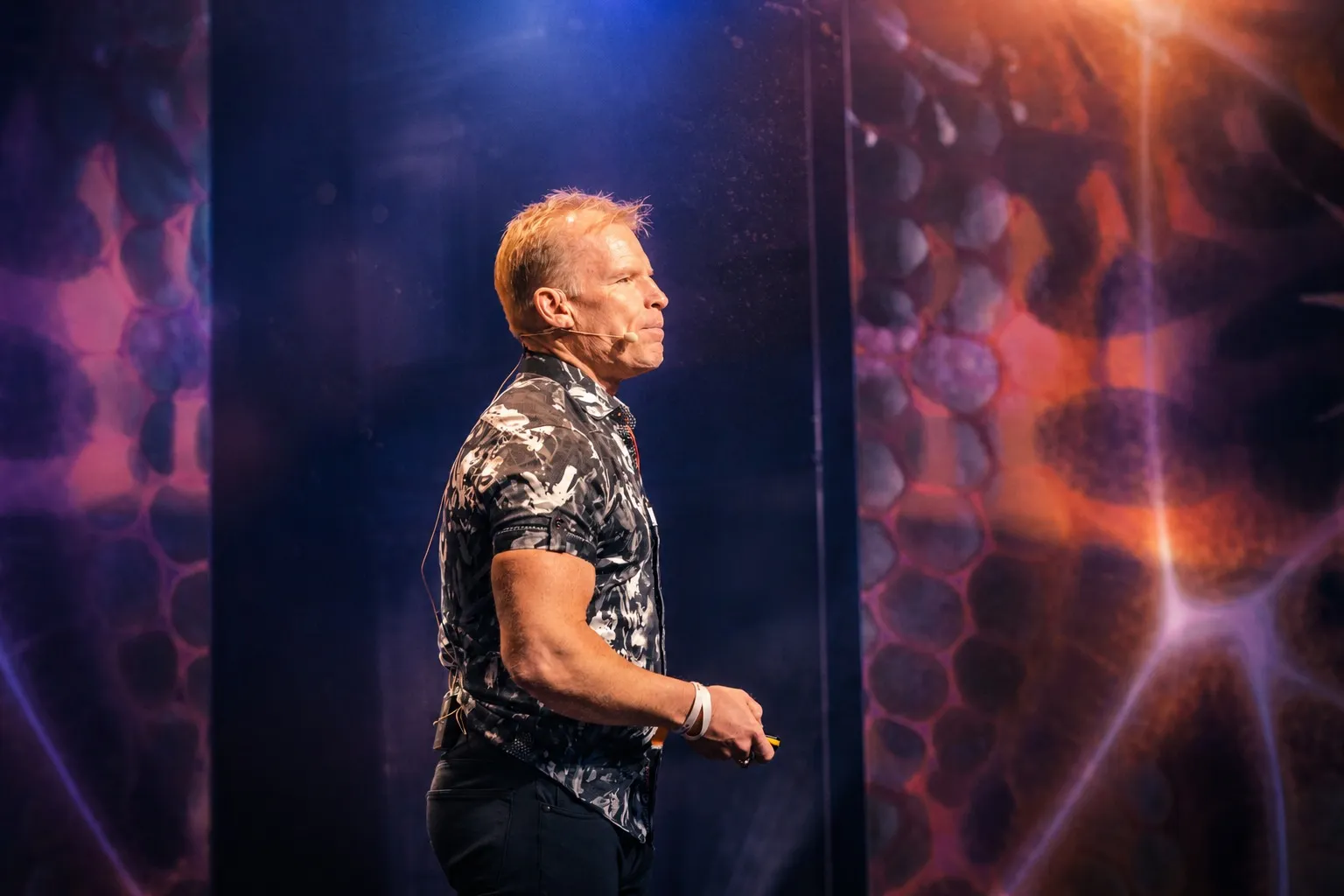
Wade Lightheart’s Amsterdam Talk Argued That Health Was Never Meant To Be A Tribal Identity
At Biohacker Summit 2023 Amsterdam, held in Amsterdam, Netherlands, on Saturday, 14 October 2023, Wade Lightheart delivered a brisk and provocative presentation titled Unlocking Dietary Success - Insights, Genetics & Your Unique Path to Health. His message was pointed from the outset: most people were failing not because they lacked discipline, but because they had been taught to treat diet like dogma.
Lightheart, a certified sports nutritionist, co-founder of BIOptimizers, and a three-time National Natural Bodybuilding Champion, used the stage to challenge one of wellness culture’s most entrenched habits: dietary tribalism. Keto versus plant-based. Fasting versus frequent feeding. Carnivore versus vegan. In his telling, these battles had become less about biology and more about belonging.
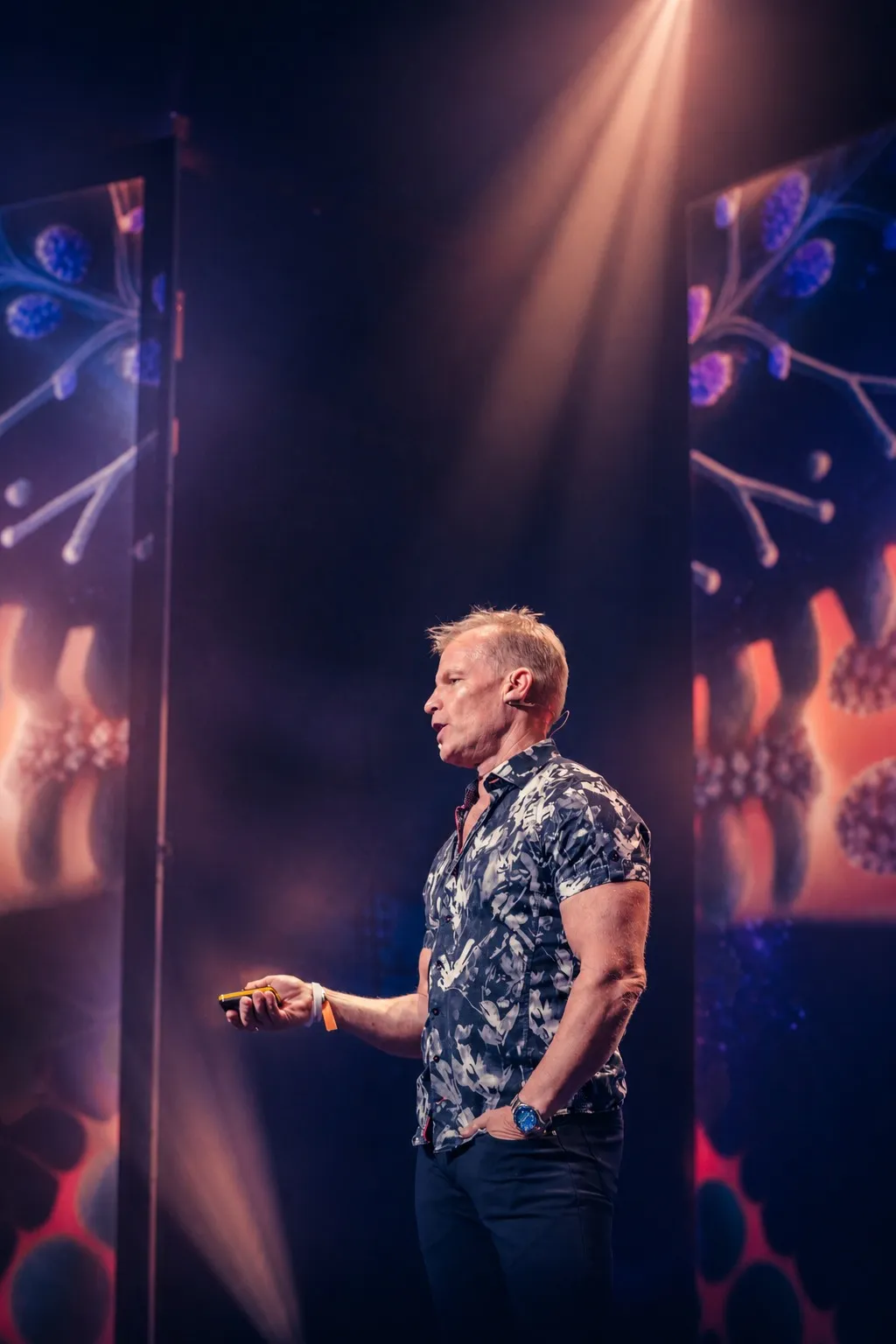
“Dietary tribalism is a tendency that often holds us back from experimenting with the diet strategies and tools that are actually going to help us succeed,” he said.
The Real Failure Was Not Willpower But Uniformity
The talk’s most arresting claim was also its bleakest. “Ninety-seven percent of dieters regain everything they lost because they are not developing a diet based on their individuality,” Lightheart said, framing the modern diet industry as one built on repetition, relapse and false universality.
He described a world in which nutrition advice arrived in waves, each trend promising salvation, each collapse deepening confusion. The problem, he argued, was not that people were trying too little, but that they were trying too many borrowed systems. More than half of people globally, he noted, had attempted at least six diets. Nearly everyone had been asked to choose a camp before understanding their own body.
Behind this cycle, Lightheart placed evolutionary biology. Human beings, he said, were not designed for the aesthetics of contemporary dieting. They were designed for survival. Mechanisms that once protected against famine now encouraged overeating, fat storage and rebound weight gain when the body sensed deprivation. Crash diets, severe restriction and social-event starvation plans were, in this model, less a path to control than a trigger for backlash.
A Bodybuilder’s Confession Became The Core Of The Argument
Lightheart’s authority on the subject came not only from science but from autobiography. He spoke as a longtime plant-based, drug-free athlete who had spent decades pushing against his own genetic limitations. He had competed at the IFBB Mr. Universe and the INBA Natural Olympia by the age of 31, later returning at 50 to win both the Open Men’s and Grand Master’s categories at the INBA Ironman International.
Yet his most useful story was not victory but collapse. After competing at Mr. Universe in 2003, he said, he gained 42 pounds of fat and water in just 11 weeks. The experience became a cautionary tale about what happened when a diet achieved a short-term outcome while ignoring the biology that followed.
For Lightheart, bodybuilders were “the original biohackers” precisely because they tried to override two deep evolutionary imperatives at once: the tendency to store fat and the limits on muscle growth. Their successes could teach discipline and strategy. Their failures could reveal what happened when human physiology was pushed without a plan for sustainability.
Health, He Insisted, Had To Fit The Person Before It Fit The Trend
If the old model of dieting was built on obedience, Lightheart proposed a hierarchy built on alignment. At the base were spiritual and cultural commitments. A diet that violated faith, identity, family custom or social life, he argued, was unlikely to last, however effective it looked on paper.
“If you are following a diet that goes against your cultural and social values, it is not going to work. You must understand your own psychological and emotional needs,” he said.
That insistence gave the talk some of its most humane texture. He spoke candidly about the social isolation of a two-year raw food diet and the emotional realities of eating. Some people needed structure without breaks. Others needed flexibility, treats or routine comfort. A person who binged under stress, he suggested, did not simply have a food problem but an unresolved emotional one.
This was not the language of moral purity. It was the language of compatibility.
Genetics, Macronutrients And The Gut Replaced One-Size-Fits-All Advice
From there, Lightheart turned to bio-individuality. Nutrigenomics, food sensitivities, environmental triggers, vitamin status and macronutrient metabolism all mattered, he said, because not every body handled the same foods in the same way.
Some people, he explained, metabolised carbohydrates efficiently and struggled with high-fat diets. Others might fare better in the reverse. Some had genetic tendencies that affected methylation, detoxification, muscle-building potential, fasting tolerance or nutrient needs. Even where goals overlapped, methods might need to differ.
“Even if you have suboptimal genetics for building muscle or regulating your weight, do not let that determine you from being your best self,” he said.
The point was not genetic fatalism but informed adaptation. Pick a primary goal, he urged, whether muscle gain, fat loss, athletic output, cognitive performance or longevity, and build a diet around that objective rather than around ideology. Trying to maximise every outcome at once was, in his framing, another route to failure.
Digestive Health Emerged As The Silent Crisis Beneath Nutrition
One of the most practical sections of the presentation focused on the gut. Lightheart argued that digestive distress had become so common that it was no longer a side issue but a central barrier to health. He cited gastrointestinal illness as accounting for 12 per cent of emergency hospital visits in the United States and suggested that many people were struggling not simply with what they ate, but with how well they digested and absorbed it.
His recommendations were targeted rather than evangelical: use enzymes appropriate to the diet, support the microbiome with suitable probiotics, and consider hydrochloric acid support with age, as natural production often declined over time. Supplements, he said, should not be treated as miracle fixes but as tools to compensate for gaps created by genetics, preference or dietary exclusions.
For a vegetarian such as Lightheart, that meant additional B vitamins and algae-derived essential fatty acids. For someone else, the missing pieces would differ. The principle remained constant: support the diet you could actually live with.
The Most Radical Idea Was Permission
Perhaps the strongest note of the session was also the simplest. Lightheart urged the audience to abandon the need to convert others and to stop measuring success against another person’s metabolism, psychology or beliefs.
“Pick the system that is right for you and follow your own journey. Recognize that you have your own unique needs and be okay with whatever path works for you,” he said.
In a wellness culture that often rewarded certainty more than nuance, that sounded almost rebellious. There was no final winning tribe in his account, no universal menu, no clean moral split between right eaters and wrong ones. There was only the difficult, often humbling work of paying attention to one’s own biology, values and habits long enough to build something sustainable.
Beyond The Diet Wars, A More Personal Future
By the end of Unlocking Dietary Success - Insights, Genetics & Your Unique Path to Health, Lightheart had offered less a diet than a framework. Reject extremism. Avoid hyper-restriction. Build muscle before chasing rapid fat loss. Address the emotional roots of overeating. Test for sensitivities. Respect genetics without surrendering to them. And above all, choose a system that could survive real life.
It was a message well suited to Biohacker Summit 2023 Amsterdam, an event often drawn to optimisation and edge. Lightheart’s intervention was different. He suggested that the breakthrough was not a harsher protocol or a purer label, but an end to the fantasy that one prescription could fit everyone.
In a field crowded with absolutes, he made a case for something rarer: nutritional humility.
Frequently asked questions
Why do most diets fail, according to Wade Lightheart?
Not for want of discipline. Ninety-seven percent of dieters regain everything they lost because they are not developing a diet based on their individuality, he said, framing the modern diet industry as one built on repetition, relapse and false universality.
What is his own athletic background?
Lightheart spoke as a longtime plant-based, drug-free athlete who competed at the IFBB Mr. Universe and the INBA Natural Olympia by the age of 31, and returned at 50 to win both the Open Men's and Grand Master's categories at an INBA Ironman international event.
What sits at the base of his hierarchy?
Spiritual and cultural commitments. A diet that violates faith, identity, family custom or social life is unlikely to last however effective it looks on paper, he argued, which puts alignment with a person's actual life ahead of nutritional theory.
About the event
This recap is part of the Biohacker Summit 2023 Amsterdam series, recorded in Amsterdam on 14 and 15 October 2023. Read the summary of the whole event or join the next edition, HOLOLIFE Summit 2026 Amsterdam, on 14 and 15 November 2026.
In this story

Comments
Loading comments…