Biohacker Summit 2023 Amsterdam
Nature Deficit Disorder And The Lost Art Of Belonging
By Teemu Arina · · Updated
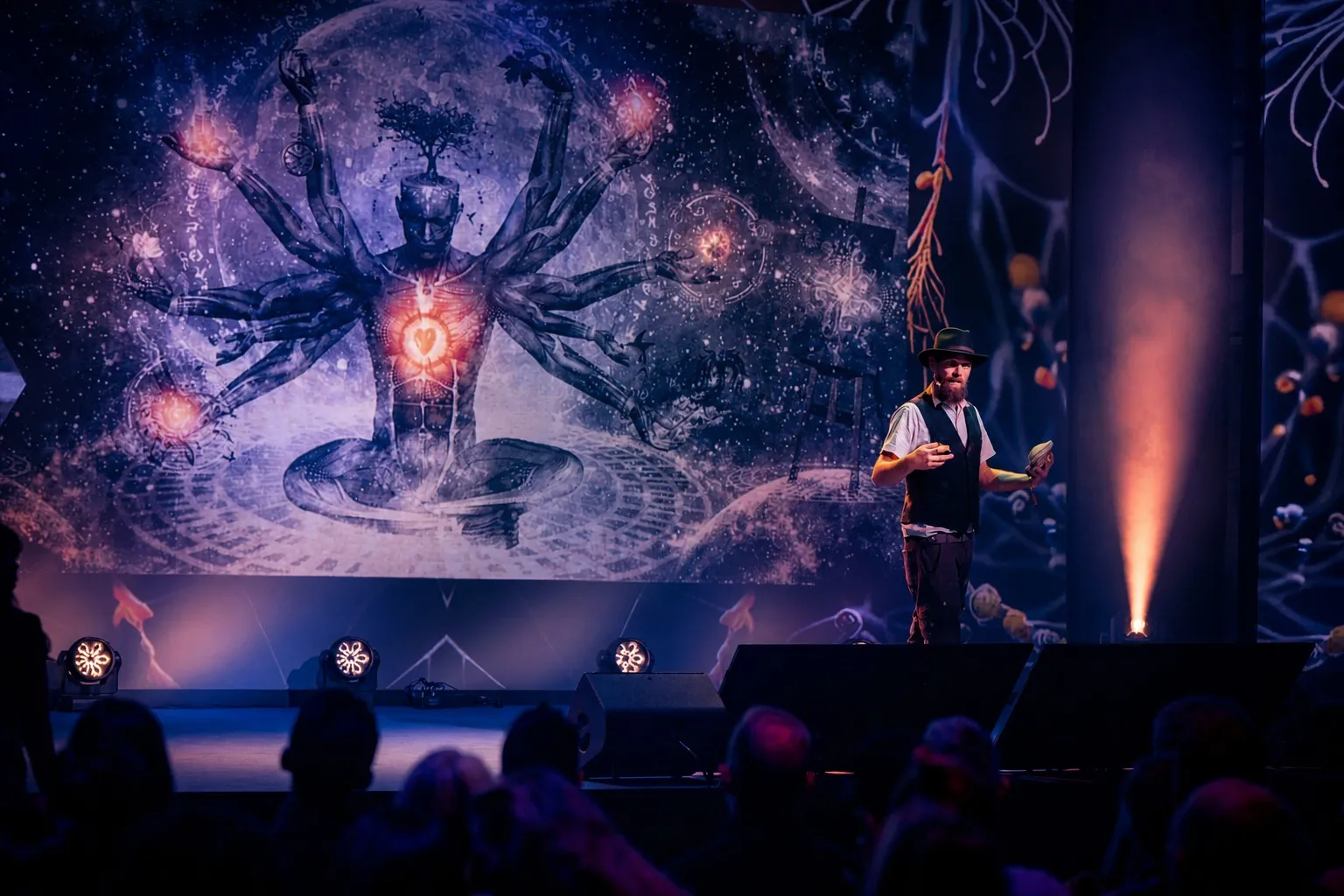
At Biohacker Summit 2023 Amsterdam, Yarrow Willard Made A Case Against A Life Lived Only In The Head
In a conference hall in Amsterdam, amid the familiar language of optimisation, cognition and human potential, Yarrow Willard offered something more elemental. Speaking at Biohacker Summit 2023 Amsterdam on 14 October 2023, the clinical herbalist and founder of Harmonic Arts argued that one of modernity’s deepest wounds was also one of its least clinically named: Nature Deficit Disorder.
His talk, Nature Deficit Disorder - Rebuilding Connection with the Natural World, did not unfold as a conventional wellness lecture. It was part warning, part lament, part invocation. Willard’s central claim was that beneath anxiety, stress, fragmentation and spiritual fatigue lay a more primitive rupture: the severing of human beings from the living systems that once held them in place.
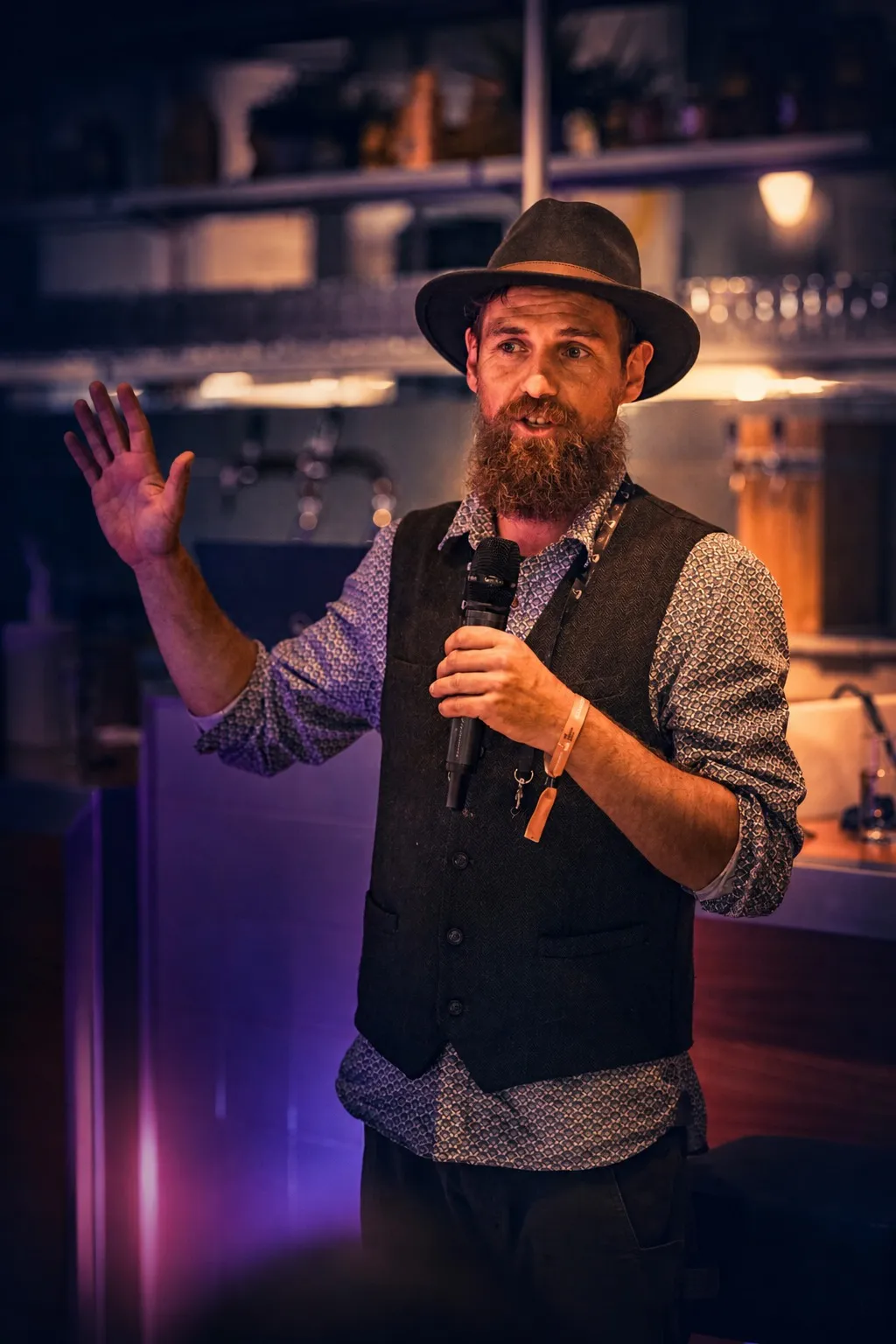
“This is the root cause of much of our suffering,” he said, describing modern distress not simply as a biochemical or psychological problem, but as a crisis of relationship.
The Great Forgetting
Willard named that rupture “the great forgetting”, a phrase that carried both historical and emotional force. In his framing, modern people had inherited access to information without inheritance of belonging. They could search anything, cite everything, analyse endlessly, yet still lack the felt knowledge that comes from intimacy with land, plants, animals and ancestral practice.
That was the paradox at the heart of his argument. The contemporary self was flooded with data and starved of connection.
He described a culture of over-intellectualisation with a deliberately provocative phrase, warning against what he called “mental masturbation”. Knowledge, he suggested, had become performative. Facts were collected, displayed and repeated, but too rarely digested into lived experience.
For Willard, healing did not begin with more information. It began with a descent.
From Brain To Heart
Again and again, Willard returned to the distinction between thinking and sensing, between analysis and embodiment. The trouble, he said, was not that the brain had no role, but that it had seized the throne.
“When the heart is our primary organ of perception, the brain will naturally entrain,” he told the audience. “The brain wants to be second in command, not first. When we lead with the heart, the electromagnetics of the brain tune to the heart’s rhythm.”
It was a line that captured the spirit of the session. Willard was not rejecting science so much as pushing against the tyranny of abstraction. He called on listeners to trust the intelligence of the body, to move from cognition into relationship, to remember that healing was not manufactured by thought alone.
The body, in his telling, already knew.
Anxiety, Stress And The Cost Of Disconnection
Willard linked Nature Deficit Disorder to a wide field of contemporary ailments: anxiety, depression, mood swings, stress, weakened immunity, poor focus, lethargy and a broader sense of psychic fracture. The diagnosis was expansive, perhaps intentionally so. He treated alienation from nature not as a niche concern, but as a civilisational condition.
His critique extended to digital life. Smartphones became “pocket gods”, objects of worship not because of their hardware but because of the attention surrendered to them. The issue was not merely screen time as such. It was the gradual outsourcing of perception, the habit of seeking affirmation from devices rather than from the inner and ecological rhythms of life.
The result, he suggested, was a diminished sensorium: eyes overstimulated, body underused, wonder flattened into content.
Forest Bathing As Resistance
If the diagnosis was sweeping, the remedies Willard proposed were remarkably simple. Reduce screen time. Go outside. Walk slowly. Touch things. Smell them. Taste them carefully. Learn the names of species. Tell stories about the land.
One of the talk’s most practical sections focused on Shinrin Yoku, or forest bathing, the Japanese practice of immersive time in wooded environments. Willard described it not as exercise and not as efficient movement toward a destination, but as deliberate meandering. The point was to wander, to let curiosity replace haste.
He urged listeners to try “fox walking”, stepping toe first rather than heel first, allowing the body to assess the ground and shifting perception away from visual dominance. He also described a simple grounding exercise through the five senses: identify five things you can see, four you can touch, three you can hear, two you can smell and one you can taste.
None of this was presented as quaint escapism. For Willard, such acts were technologies of return.
Rosemary In The Mouth, The Netherlands On The Tongue
In one of the talk’s most memorable moments, rosemary was passed through the crowd. Audience members were asked to hold a sprig, roll a single needle between their fingers, smell it, place it on the tongue, and only then nibble.
The gesture distilled the larger argument. It was not enough to know rosemary’s properties, history or biochemical profile. The point was encounter.
“This plant holds the wisdom of the Netherlands,” Willard said, inviting the audience to consider the herb not as an object of consumption but as a bearer of place, memory and relationship.
The act was modest, almost liturgical. In a room full of people accustomed to metrics and interventions, he offered sensation as a form of knowledge.
Fear, Curiosity And The Edge Of Experience
Willard also gave fear a central role in the drama of disconnection. Beneath fear, he said, was curiosity.
“Right underneath the layer of fear is connected curiosity,” he said. “Get comfortable with your fear and ask where it sits in your body. If you didn’t have that fear, where would you go next? What would you do?”
It was one of the more psychologically acute moments of the presentation. Rather than treating fear as pathology, he framed it as a threshold. If people could stay with it long enough, they might pass through into wonder.
That language of enchantment mattered to him. “To step into magic and belonging is to allow yourself to be enchanted by the moment,” he said. “When we are enchanted with something, we find flow state, connection, and a deepened sense of embodied belonging.”
For a culture embarrassed by reverence, it was a striking insistence. Willard was asking his audience to risk sincerity.
At The Edges, Clarity
One of the most resonant metaphors of the session came in Willard’s reflection on edges. Ecologically, he noted, edges are where biodiversity thrives. Perceptually, they are where nuance returns.
“Look to the edges, because that is where the clarity is,” he said. “At the edges of every ecosystem is where we find the most biodiversity, and at the edges of our experience is where we find those powerful, meaningful moments.”
He paired that idea with a practical exercise in wide-angle vision, asking listeners to soften central focus and attend to peripheral sight. The technique, he argued, helped people shift out of narrow visual control and into a fuller sensory field. Whether taken as neurophysiology, contemplative practice or metaphor, the point landed cleanly: a life overfocused on targets misses the living world at its margins.
Relationship, Not Achievement
Willard’s strongest point was also his simplest. Human flourishing, he said, could not be measured only by accomplishment. It had to be measured by relationship.
“It is not the sum of our accomplishments that defines us, but the relationships we build with all living systems,” he said. “Reclaiming this connection is the most fundamental piece of expanding our consciousness.”
It was a rebuke to the culture of optimisation, but not a dismissal of aspiration. Rather, it suggested that expansion without belonging risked becoming another form of estrangement. The self could be improved endlessly and still remain homeless.
In Amsterdam, at an event devoted to the future of human performance, Yarrow Willard reached for something older than performance and more difficult than productivity. He asked people not merely to think differently, but to perceive differently. To slow down. To feel. To remember.
By the end, his message had become clear in its own stubborn way: if the modern crisis is one of disconnection, then the remedy may begin not in the next breakthrough, but in the oldest act of all, returning to the living world and learning, once again, how to belong.
Frequently asked questions
What is the great forgetting?
Yarrow Willard's phrase for a rupture in which modern people inherited access to information without inheritance of belonging. They can search anything and analyse endlessly, yet lack the felt knowledge that comes from intimacy with land, plants, animals and ancestral practice.
What does he mean about the heart and the brain?
That the brain has seized a throne it was not meant to hold. When the heart is our primary organ of perception, Willard told the audience, the brain will naturally entrain. The brain wants to be second in command, not first.
What does he link nature deficit disorder to?
A wide field of contemporary ailments: anxiety, depression, mood swings, stress, weakened immunity, poor focus, lethargy and a broader sense of psychic fracture. The diagnosis is deliberately expansive, treating alienation from nature as a civilisational condition rather than a niche concern.
About the event
This recap is part of the Biohacker Summit 2023 Amsterdam series, recorded in Amsterdam on 14 and 15 October 2023. Read the summary of the whole event or join the next edition, HOLOLIFE Summit 2026 Amsterdam, on 14 and 15 November 2026.
In this story
Comments
Loading comments…