Biohacker Summit 2023 Amsterdam
Optimizing Health And Productivity By Rethinking The Modern Chair
By Teemu Arina · · Updated

At Biohacker Summit 2023 Amsterdam, Veli-Jussi Jalkanen Made The Case That Sitting Well Was Not A Luxury But A Daily Health Intervention
For most of modern working life, sitting has been treated as a neutral act, a background condition of productivity rather than a force shaping the body hour by hour. At Biohacker Summit 2023 Amsterdam, however, Finnish inventor and preventive health advocate Veli-Jussi Jalkanen argued that this assumption had long obscured a mounting physiological cost.
In his presentation, Optimized Sitting as One of the Healthiest Habits, delivered on Saturday, 14 October 2023 in Amsterdam, Jalkanen laid out a sweeping and highly practical thesis: that more than 30 distinct “sitting disorders” had become embedded in daily life through poor workstation design, static posture and a culture that confused stillness with efficiency.

His central claim was not simply that bad sitting caused discomfort. It was that the wrong posture quietly disrupted circulation, strained spinal structures, compressed sensitive tissues, impaired breathing and, over time, eroded both energy and long-term health.
A Life Spent Studying The Physiology Of Sedentary Life
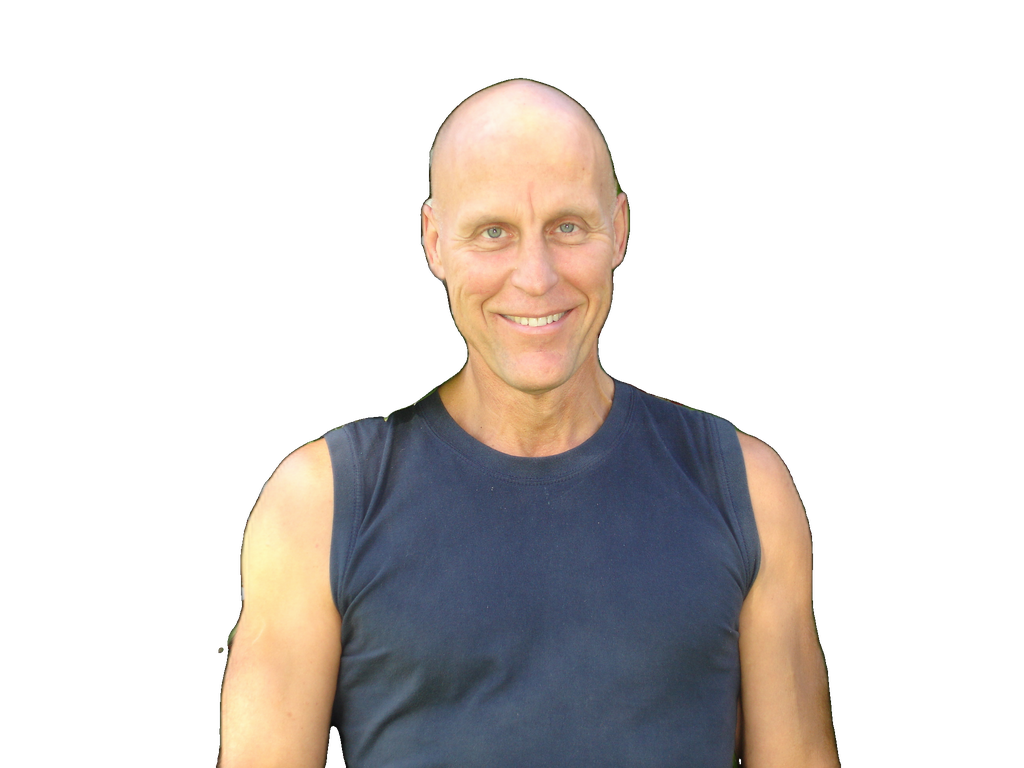
Jalkanen, often known as Vessi, arrived at the subject not as a passing ergonomics enthusiast but as a self-described lifelong health optimiser. A sitting health development pioneer from Finland, he has spent decades designing what he described as an optimum sitting health concept, informed by a long interest in preventive health, movement and the mechanics of the human body.
That personal thread gave the talk an unusual texture. It was technical, often intensely anatomical, but grounded in the speaker’s own account of ageing, resilience and experimentation. At 72, he told the audience he still ran his companies and had returned to activities such as volleyball and tennis through preventive and holistic measures rather than surgery.
From that vantage point, he invited the room to stop treating the work environment as a secondary concern. Nutrition, exercise and sleep, he suggested, were well-established pillars of health. The workstation belonged in the same category.
“Awareness Is The Key”
If the presentation had a refrain, it was consciousness. Not the abstract, fashionable language of wellness branding, but a more rigorous self-observation. “Awareness is the key,” Jalkanen said. “You need to be self-aware to understand what is happening in your lower back, your circulation, and your posture.”
That line captured the deeper challenge of sedentary life. Sitting injuries do not always announce themselves dramatically. They accumulate. The body adapts to pressure, reduced movement and poor angles until fatigue, pain or degeneration appear as if from nowhere. Jalkanen’s argument was that they rarely came from nowhere at all.
He urged listeners to pay attention not only to what the outside world sold as normal, but also to what the body reported quietly every day: the slump in the lower back, the heaviness in the legs, the tension in the neck, the breath that never seemed to fully arrive.
The Hidden Damage Of The Ninety-Degree Chair
At the heart of the talk was a critique of the conventional seated posture: hips and knees bent to roughly 90 degrees, pelvis tucked, spine rounded, body largely fixed. Jalkanen presented this arrangement as a biomechanical failure masquerading as standard office design.
Traditional sitting, he said, encouraged a chain of dysfunctions. It compromised macro- and microcirculation, reduced mobility in the core and hips, increased pressure on the lower back and placed harmful stress on the joints. It also contributed to fatigue in a way many workers had learned to dismiss as ordinary.
By contrast, his preferred model of “optimized sitting” relied on a divided saddle chair that opened the hip angle, preserved the spine’s natural curves and supported the body through the sitting bones rather than through soft pelvic tissue.
“Make your sitting smart by supporting yourself on the sitting bones,” he said. “When you use the correct support, you achieve a natural posture and better health.”
Why Standing Was Not A Simple Answer
In an era that often markets standing desks as the obvious antidote to desk work, Jalkanen offered a more complicated view. Standing, he argued, was better than static collapse into a chair only in limited doses. The joints, he said, were built to love walking, not standing still.
“Our joints have a unique structure; our knees and hips love walking, but they hate standing,” he said. “To maintain healthy circulation, we must keep moving.”
His warning was directed particularly at the knees and hips, where static pressure could, in his telling, contribute to cartilage thinning over time. The point was not to reject standing outright, but to resist replacing one static posture with another. The body, throughout his presentation, emerged as a system designed not for fixed positions but for motion.
Movement As A Circulatory Necessity
That emphasis on movement ran through every section of the talk. Jalkanen described circulation not as a passive background process but as something continually assisted by breathing, muscular activity and changes in posture.
“We need movement in the chair and to walk at least once an hour,” he said. “When we have sedentary work, use a chair that follows your movements to keep your core muscles active.”
This was one of the presentation’s clearest practical recommendations. The ideal chair, in his model, was not a static throne but a responsive tool, one that allowed subtle swinging, rolling and shifting so the large muscles of the hips and legs could continue to do some of the body’s pumping work. Even small motion, he suggested, helped move blood and lymph through delicate vascular networks that immobility could slow or obstruct.
Breathing, Posture And The Engine Of Energy
If movement was one pump, breathing was another. Jalkanen repeatedly returned to the rib cage, diaphragm and lungs as central players in circulation and vitality.
“Breathing is the engine for good circulation,” he said. “When we sit in a good posture, the lungs activate properly and the whole rib cage expands.”
The image was simple but persuasive. A collapsed seated posture narrows the body. It compresses the chest, invites shallow breathing and subtly diminishes oxygenation and internal motion. A more upright, natural spinal position, he argued, restored expansion. It gave the lungs room to work and supported a more energised state that workers might feel first as clarity and stamina before understanding the anatomy behind it.
In this sense, the talk was about productivity as much as pathology. Jalkanen’s claim was that a better seat was not merely protective. It was performance-enhancing.
The Spine, The L4-L5 Disc And The Cost Of Slumping
Among the most vivid parts of the presentation was Jalkanen’s explanation of spinal mechanics, especially in the lower back. He argued that preserving lumbar lordosis, the natural inward curve of the lower spine, was essential to protecting the discs and facet joints that support the back under daily load.
He paid particular attention to the L4-L5 disc, a region he described as especially vulnerable. Prolonged poor posture, he suggested, accelerated degeneration there by combining pressure, poor alignment and insufficient movement. By sitting in a way that more closely resembled standing, with an open hip angle and stable pelvic support, the body could better maintain healthier spinal geometry.
For an audience accustomed to hearing lower back pain described as an inevitable cost of modern work, his message was more direct: what feels normal may simply be widespread injury.
A More Frank Conversation About Pelvic Health
The talk also moved into territory many workplace health discussions avoid. Jalkanen spoke bluntly about pelvic and genital pressure, arguing that standard chairs placed sustained force on some of the body’s most sensitive tissues.
His preferred divided saddle design, he said, reduced that pressure by creating a gap through the centre of the seat and shifting support to the sitting bones. This, he argued, improved circulation, reduced heat build-up and avoided compression in areas that standard seating often ignored.
Some of his recommendations, especially on underwear and intimate hygiene, were unusually explicit for a conference stage. Yet they were consistent with the broader thesis of the session: that sedentary design had consequences far beyond the back and shoulders, and that social discomfort had prevented a fuller reckoning with them.
The Workstation As Preventive Medicine
There was something quietly radical in Jalkanen’s framing. He was not asking people to think of chairs as furniture. He was asking them to think of them as health devices, with the power either to sustain or undermine the body over thousands of hours each year.
He extended that thinking to other elements of the environment, including screen quality, neck support during sleep and the importance of regular movement breaks. The common thread was prevention. Instead of waiting for pain, degeneration or exhaustion to force change, he urged people to redesign the ordinary conditions of work before damage became entrenched.
That argument resonated because it addressed a paradox of modern life. The spaces where people are most productive are often the spaces where they are least physically well. Jalkanen’s lecture challenged the notion that this trade-off was unavoidable.
A Modest Habit With Systemic Consequences
By the end of the session, the title of the talk no longer sounded exaggerated. To describe optimized sitting as one of the healthiest habits was, in Jalkanen’s view, not marketing language but biological realism. If people spent 10 or more hours each day seated, then the mechanics of that position were bound to shape circulation, breathing, musculoskeletal health and energy in profound ways.
His closing message was less about buying into a doctrine than about recognising a neglected daily choice. Sitting, he suggested, was never passive. It was always doing something to the body. The real question was whether that something was restorative or harmful.
At Biohacker Summit 2023 Amsterdam, Veli-Jussi Jalkanen’s answer was clear: smart sitting was not a minor ergonomic tweak. It was a form of preventive health, hidden in plain sight.
Frequently asked questions
Why does Veli-Jussi Jalkanen treat sitting as an intervention?
Because for most of modern working life sitting has been treated as a neutral background condition rather than a force shaping the body hour by hour. Jalkanen, a Finnish inventor and preventive health advocate, argued that this assumption has long obscured a mounting physiological cost.
What is his central instruction?
Awareness is the key, Jalkanen said. You need to be self-aware to understand what is happening in your lower back, your circulation and your posture. His point is that sitting injuries accumulate quietly rather than announcing themselves.
What is wrong with the ninety-degree chair?
Jalkanen presented the conventional seated posture, hips and knees bent to roughly 90 degrees with the pelvis tucked and spine rounded, as a biomechanical failure masquerading as standard office design, compromising macro- and microcirculation and restricting movement.
About the event
This recap is part of the Biohacker Summit 2023 Amsterdam series, recorded in Amsterdam on 14 and 15 October 2023. Read the summary of the whole event or join the next edition, HOLOLIFE Summit 2026 Amsterdam, on 14 and 15 November 2026.
In this story
Comments
Loading comments…