Biohacker Summit 2023 Amsterdam
Heart-Based Cognition And The Quiet Intelligence Of Plants
By Teemu Arina · · Updated
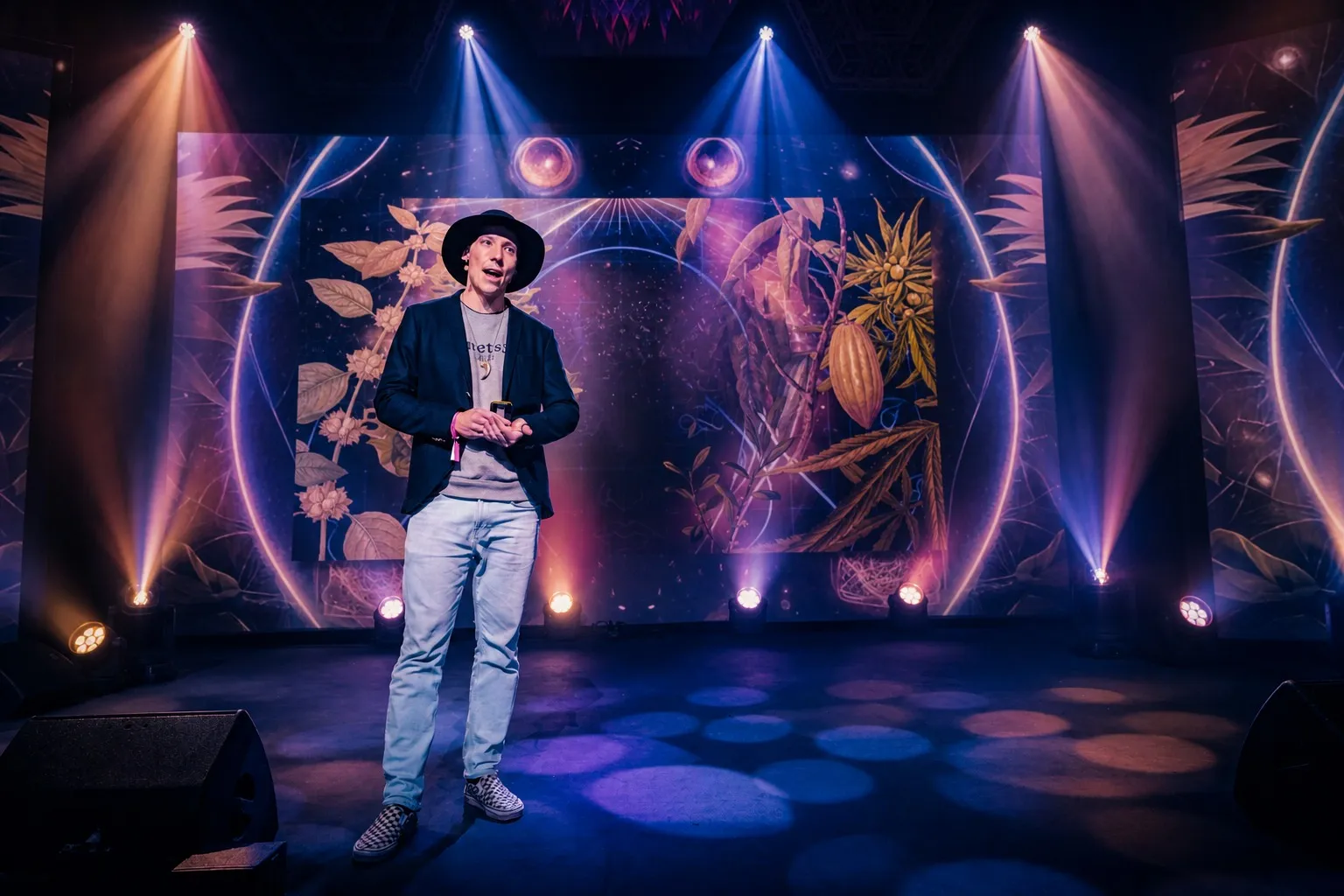
Beyond Psychedelics, A Biohacker Made The Case For Relationship Over Consumption
At Biohacker Summit 2023 Amsterdam, held in Amsterdam, Netherlands, on 14 October 2023, the Finnish nutrition expert and biohacker Jaakko Halmetoja stepped away from the conference circuit’s usual fixation on optimization, compounds and performance metrics. In his talk, Teacher Plants - Beyond the Psychedelic Experience, he offered something more intimate and, in its own way, more radical: the suggestion that the modern human problem was not merely a lack of data, but a failure of attention.
Halmetoja’s central idea arrived in a single, arresting line: “When sensory input takes place of internal chatter.”
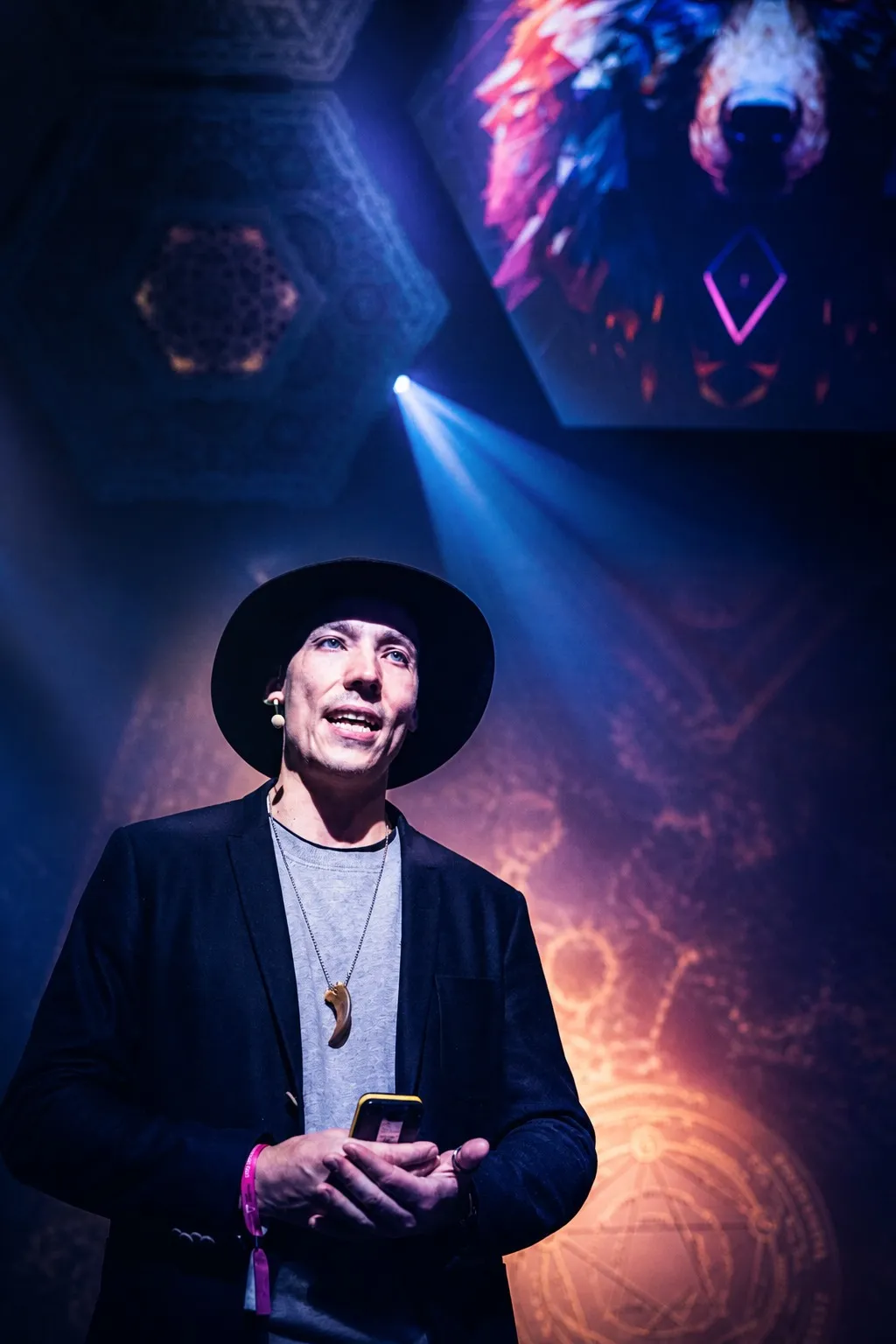
It was less a slogan than a diagnosis. The mind, he implied, had become too loud to hear the world.
A Different Kind Of Knowledge
Halmetoja, who has spent years working across nutrition, wellness, product development and the culture of biohacking, described plants not as passive ingredients but as living carriers of memory. “Whenever you consume a plant, it is carrying the knowledge of its ancestry and history,” he said. “We are integrating with a part of a culture that can be thousands or millions of years old.”
That reframed even the most ordinary acts. Coffee was no longer just caffeine. Cacao was no longer just a functional superfood. To ingest a plant, in Halmetoja’s telling, was to enter into one of the most intimate exchanges available to a human being, to take the “geometrical structure of another organism” into oneself.
The point was not to romanticise consumption. It was to challenge the sterile language through which wellness culture often speaks about nature. Plants were not merely stacks of active compounds. They were presences, histories, teachers, allies.
Facts Were Not The Same As Friendship
One of the talk’s sharpest distinctions was between knowing about a plant and knowing a plant. Halmetoja was unsparing about the limits of abstraction.
“I can know facts about something, but it is like looking at somebody’s CV and saying that I know that person.”
For an audience steeped in supplements, protocols and evidence hierarchies, it was a quietly destabilising critique. Halmetoja argued that intellectual mastery, by itself, could become a barrier to perception. He suggested that real understanding came through time spent growing, wild-harvesting, observing and listening.
The lesson extended beyond botany. The same impoverishment, he suggested, haunted modern relationships more broadly. Information had become a substitute for intimacy.
From Habit To Ritual
Again and again, Halmetoja returned to intention. The difference between habit and ritual, he said, lay not in the outward act but in the quality of attention brought to it.
“That is the difference between habits and rituals: the intention behind it.”
It was a line that carried weight in a room likely full of people who already drank ceremonial cacao, tracked biometrics and experimented with nootropics. Halmetoja’s challenge was more demanding than simply adding another protocol. He urged people to “start the conversation with the plants that you already have a stronger connection with”.
That could mean cacao, coffee, yerba mate, coca, medicinal herbs or even the houseplants sitting quietly on a windowsill. The point was not potency. The point was relationship.
In this worldview, everyday botanicals became training grounds for attention. If one learned to sit with a cup of coffee as more than a stimulant, to feel rather than merely consume, one might begin recovering a lost perceptual language.
The Lost Art Of Asking
Perhaps the most moving part of Halmetoja’s presentation concerned permission. He described travelling into remote northern Finland, entering landscapes where plants had grown far from human disturbance, and feeling clearly that one did not approach such life carelessly.
In Finnish, he said, there is an old term, “puntikultori”, a culture of asking or requesting. Historically, it shaped the way people hunted, fished and foraged. One asked before taking.
That idea stood in stark contrast to the extractive reflexes of modernity. The scientific mind, Halmetoja suggested, often assumed a right to seize first and interpret later. But asking changed the moral texture of an encounter. It transformed collection into relationship.
It also transformed solitude. “If you go to an ecosystem and you do not know any organism, you feel alone,” he said. “If you have relationships with the organisms around you, they are your friends and you feel safe.”
What he described was not sentimentality but orientation: a way of belonging in the world that had become rare enough to sound almost utopian.
Wild Water, Superior Herbs And Subtle Messages
Halmetoja widened his frame beyond the better-known “teacher plants” of psychedelic culture. He spoke of “wild water” from springs as an elemental ally, something capable of changing internal language and softening mental noise. He spoke, too, of the “superior herbs” named in systems such as Ayurveda and Traditional Chinese Medicine, botanicals regarded not only as remedies but as foundational teachers.
These, he suggested, were ways into a subtler literacy. Western culture, he said, often preferred the “double espresso” route to transcendence, chasing the strongest openings because it had lost sensitivity to quieter signals. But the messages, he argued, were already present. In dreams, in metaphor, in synchronicity, in shifts of mood and language, in the body’s sensory response before thought could intervene.
For Halmetoja, heart-based cognition meant precisely this recalibration. It meant allowing sensory and relational intelligence to outrun the ceaseless commentary of the mind.
Learning To Hear The Living World
There was, beneath the language of allies and plant intelligence, a practical invitation. Grow the mushroom before seeking revelation from it. Observe the herb before encapsulating it. Sit with the spring before theorising about water. Ask questions. Listen actively. Wait.
In the end, Halmetoja’s talk at Biohacker Summit 2023 Amsterdam was not really about psychedelics, although it moved around their edges. It was about recovering a faculty that industrial life had steadily dulled: the ability to meet the living world as something other than raw material.
His argument was that biohacking, at its best, should not end in dependency on ever more tools. It should move towards enough self-knowledge, enough sensitivity, that the tools could eventually fall away.
That was the deeper provocation of Teacher Plants - Beyond the Psychedelic Experience. Not that plants had wisdom. Many traditions had said that for centuries. It was that modern people, even those most obsessed with enhancement, might need to relearn how to receive it.
Frequently asked questions
How does Jaakko Halmetoja describe plants?
Not as passive ingredients but as living carriers of memory. Whenever you consume a plant, he said, it is carrying the knowledge of its ancestry and history, which means we are integrating with part of a culture that can be thousands or millions of years old.
What is the difference between knowing about a plant and knowing one?
Halmetoja was unsparing about the limits of abstraction. I can know facts about something, he said, but it is like looking at somebody's CV and saying that I know that person. The distinction between information and relationship ran through the talk.
What separates a habit from a ritual?
Intention. The difference lies not in the outward act but in the quality of attention brought to it, Halmetoja argued. He extended the same principle to gathering, describing the practice of asking permission before taking anything from a landscape.
About the event
This recap is part of the Biohacker Summit 2023 Amsterdam series, recorded in Amsterdam on 14 and 15 October 2023. Read the summary of the whole event or join the next edition, HOLOLIFE Summit 2026 Amsterdam, on 14 and 15 November 2026.
In this story

Comments
Loading comments…