Biohacker Summit 2023 Amsterdam
Psychedelic Advantage, Rituals, And The Search For Olympic Flow
By Teemu Arina · · Updated
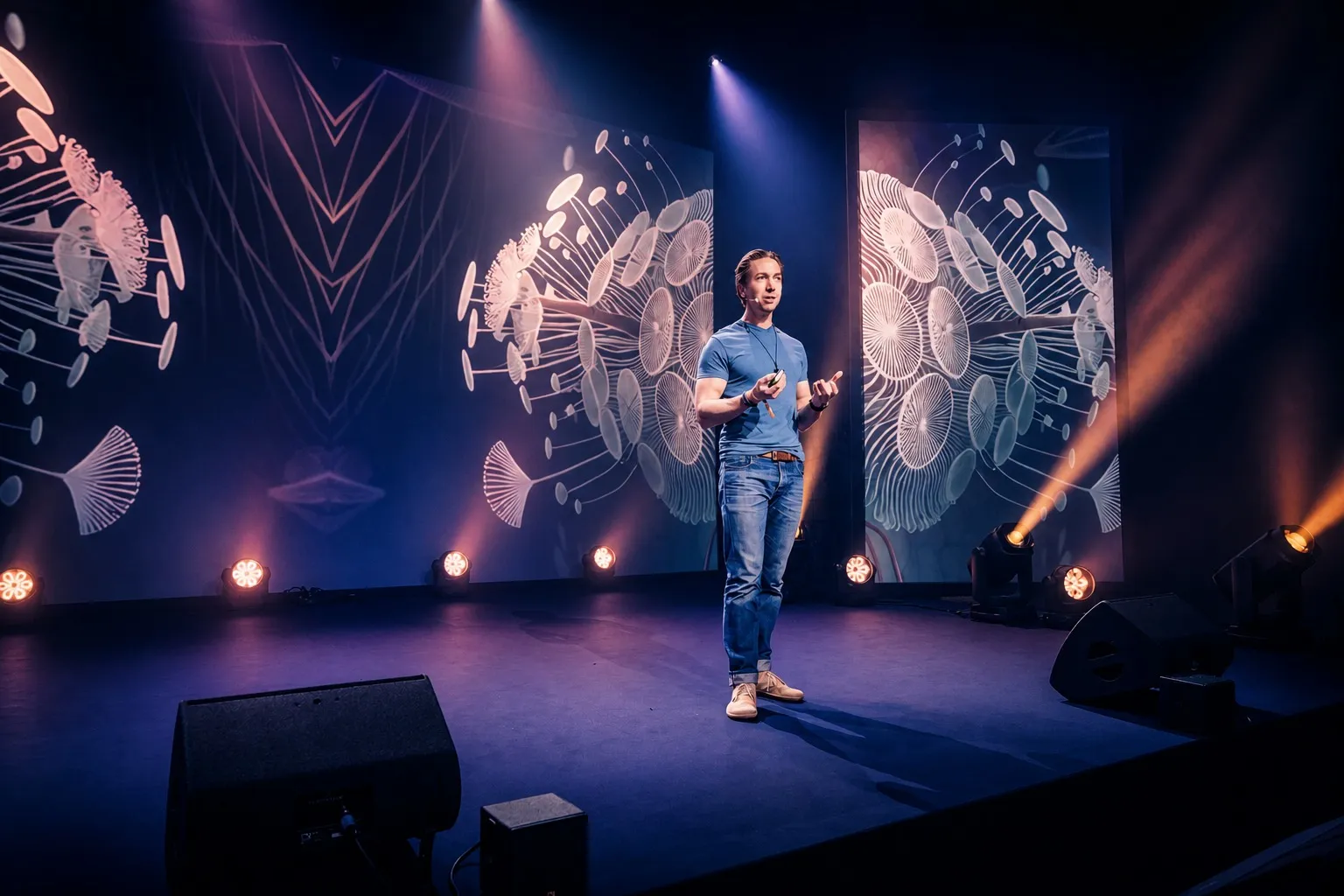
At Biohacker Summit 2023 Amsterdam, Olympian And Biohacker Govert Viergever Argued That Peak Performance Begins With A Changed State Of Mind
In a talk that moved between locker-room candour, neuroscience, and provocation, Govert Viergever took the stage at Biohacker Summit 2023 Amsterdam to argue that elite performance was never only about muscle, mileage, or mechanics. The former Olympic rower, speaking on Saturday 14 October 2023 in Amsterdam, suggested that the decisive frontier in sport lay elsewhere: in consciousness itself.
His presentation, Psychedelic Advantage: Olympic Glory Through Altered States, Rituals & Flow, was less a conventional fitness lecture than a challenge to modern assumptions about performance. Viergever, an Olympian, biohacker, certified personal trainer, and founder of Human Upgrade, framed athletic excellence as a problem of access, not merely effort. Human beings, he said, did not simply fail because they lacked talent. More often, they lived beneath their capacities, trapped in patterns of underperformance that became so familiar they were mistaken for identity.
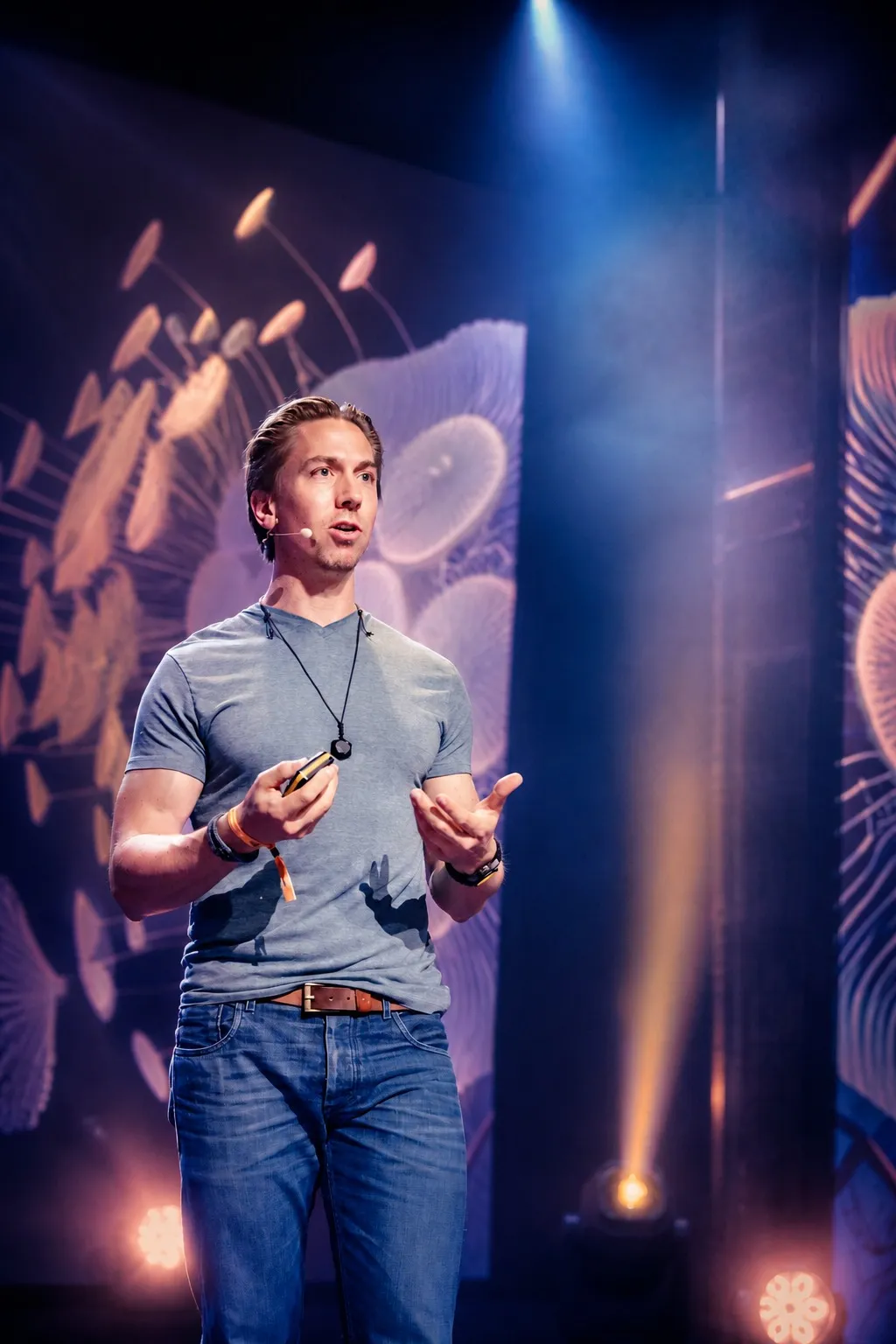
“The human individual lives usually far within its limits and possesses powers of various sorts which he habitually fails to use,” he said, invoking William James. It was a line that functioned as both diagnosis and accusation.
Beyond Training Plans And Split Times
Viergever’s central claim was stark. To solve a problem that had been created at one level of consciousness, a person had to rise to another. In sport, that might mean breaking a record, overcoming fear, or becoming capable of something once felt impossible. In life beyond sport, it might mean escaping stale habits, self-limiting narratives, or the quiet resignation that settles around untapped potential.
He spoke from the peculiar authority of someone who had known elite sport from the inside. As a teenage athlete, he said, he had heard older competitors describe moments in competition when they seemed to pass into strange mental territory. Later, he experienced those states himself. Yet, he noted, such experiences were rarely discussed in public, partly because they sounded too odd for television and too subjective for respectable analysis.
That tension, between lived experience and mainstream acceptability, hovered over the talk. Viergever referred to his recent appearance in a Dutch television series about biohacking, describing the backlash that followed. Even mentioning magnesium, he said, had provoked fierce reactions from parts of the medical and scientific establishment. Biohacking, in his telling, remained a field both popular and suspect, tolerated at the edges and mocked in the centre.
Still, he seemed to relish the discomfort. If biohackers spoke only to one another, he argued, they would never test or expand what they knew.
Why Rituals Matter More Than They Look
The most persuasive section of Viergever’s talk came when he turned to ritual. Athletes, he said, had always understood something that outsiders often dismissed as superstition. The repeated gestures, the fixed routines, the particular clothing, the lucky object, the careful arrangement of bottles on a baseline, these were not meaningless tics. They were technologies of attention.
He pointed to examples ranging from the haka to Olympic ceremonies to the famously meticulous habits of Rafael Nadal. Such rituals, he argued, signalled importance to the brain. They activated what he described as the salience network, heightening noradrenaline and helping release a wider neurochemical cascade involving dopamine, serotonin, and endorphins. The result was not magic but orientation: a sharpening of attention, a sense that this moment mattered more than ordinary time.
At the Olympics, he said, the process was amplified to an almost theatrical scale. The opening ceremony, the music, the choreography, the flame, the knowledge that billions were watching, all of it combined to create a state in which the athlete no longer felt that they were simply passing through another day. The brain received a message of urgency and meaning: pay attention now.
In Viergever’s account, rituals did not merely calm nerves. They prepared the athlete for entry into flow.
The Elusive Mechanics Of Flow
Flow, as he described it, remained one of performance’s most desired and least controllable states. It was the place where pain receded, focus sharpened, time behaved strangely, and action seemed to unfold with an ease that ordinary effort could not summon. Every athlete wanted it. No athlete could force it.
That paradox sat at the heart of his argument. Flow could not be bullied into existence. It emerged when attention was fully immersed in the present task. One could not enter it while ruminating on failure, reputation, or tomorrow’s obligations. Yet one of the great obstacles to flow was precisely the fear that came before it: the fear of losing control, of entering the unknown, of looking foolish, of failing publicly.
Rituals, he suggested, offered one way through that threshold. They narrowed awareness toward the now. They reduced noise. They made the leap into uncertainty feel less chaotic.
The Controversial Promise Of Microdosing
Then came the part of the presentation most likely to divide a room and linger in memory.
Viergever proposed that microdosing psilocybin could function as what he called a legal flow trigger. In high doses, he acknowledged, psilocybin could produce a loss of psychic and bodily control, sometimes pleasant, sometimes deeply uncomfortable. But in very small doses, he argued, the substance might do something more subtle: lower resistance to the unknown without impairing motor control.
In biochemical terms, he described microdosing as involving tryptamine molecules attaching to serotonin receptors, reducing negativity and easing fear of consequences. For an athlete, that mattered. If fear of losing control was what blocked the flow state, then a microdose, combined with ritual, might make entry into that state more predictable.
He was careful to frame the scenario through a “hypothetical athlete”, but the implication was plain. In the Netherlands, where psilocybin in certain forms is legal, and given that it was not banned by professional sports federations, its use would not necessarily violate sporting rules. For Viergever, this opened a provocative possibility: a performance-enhancing method hidden in plain sight, not in the muscles or blood but in the athlete’s willingness to cross into a different mental state.
It was an argument pitched not as psychedelic mysticism but as competitive strategy.
Performance As Identity Change
Yet Viergever’s talk was not finally about substances. It was about identity.
The deeper point, he said, was that expanded states of consciousness could allow a person to meet a version of themselves they had not known how to become. A stronger self. A calmer self. A less fearful self. A self no longer constrained by old excuses about age, metabolism, personality, or destiny.
This was the real drama of performance in his telling. Improvement was not only physiological. It was existential. To progress, one had to let part of the old self die. That process, he warned, could be painful. The previous identity, however limiting, also contained familiarity and comfort. Letting it go required recovery and integration, much like the body required recovery after intense training.
“You have to go inward and tap into qualities that you thought you didn’t possess before,” he said. “You don’t yet know who this better version of you is, but you can learn how to become them.”
That line landed because it translated the language of elite sport into something broader and more human. The plateau, in this formulation, was not just athletic. It was psychological. It was social. It was personal.
A Radical Thesis Wrapped In Familiar Questions
There was, throughout the presentation, an unusual blend of earnestness and insurgency. Viergever spoke as someone at ease with both biomarkers and altered states, with both neuroscience and ritual theatre. He described consciousness as hackable, the brain as trainable beyond conventional methods, and performance ceilings as often self-imposed.
Some of his claims invited scrutiny, especially where neuroscience, pharmacology, and sporting ethics met. But that was part of the charge of the event itself. Biohacker Summit 2023 Amsterdam was built for ideas that pressed against institutional caution, and Viergever’s talk did exactly that.
His closing advice was simple, almost disarmingly so. When facing a problem that cannot be overcome at one level of being, expand consciousness. It was the kind of sentence that could sound mystical, practical, or dangerous, depending on the listener.
At its core, however, the talk returned again and again to the same unsettling proposition: many people are not defeated by a lack of capacity, but by the habits of mind that keep that capacity inaccessible. Rituals may open the door. Flow may carry a person through it. And altered states, whether reached through ceremony, pressure, or chemistry, may reveal that the limits once taken for reality were only ever rehearsal.
Frequently asked questions
What is Govert Viergever's claim about elite performance?
That it was never only about muscle, mileage or mechanics. The former Olympic rower argued the decisive frontier in sport lies in consciousness itself, and that solving a problem created at one level of consciousness requires rising to another.
Why do athletes' rituals matter?
Because they are technologies of attention rather than superstition. Viergever pointed to the repeated gestures, fixed routines, particular clothing and carefully arranged objects that outsiders dismiss as tics, and argued they do real work in preparing a state.
Can flow be forced?
No, and that paradox sat at the heart of his argument. Flow is the place where pain recedes, focus sharpens and time behaves strangely, he said. Every athlete wants it and no athlete can summon it on command, which is why the conditions around it matter.
About the event
This recap is part of the Biohacker Summit 2023 Amsterdam series, recorded in Amsterdam on 14 and 15 October 2023. Read the summary of the whole event or join the next edition, HOLOLIFE Summit 2026 Amsterdam, on 14 and 15 November 2026.
In this story
Comments
Loading comments…