Biohacker Summit 2024 Helsinki
Opening Ceremony With Kamanawa People Of The Jaguar Brought Ancestral Prayer To Biohacker Summit
By Teemu Arina · · Updated
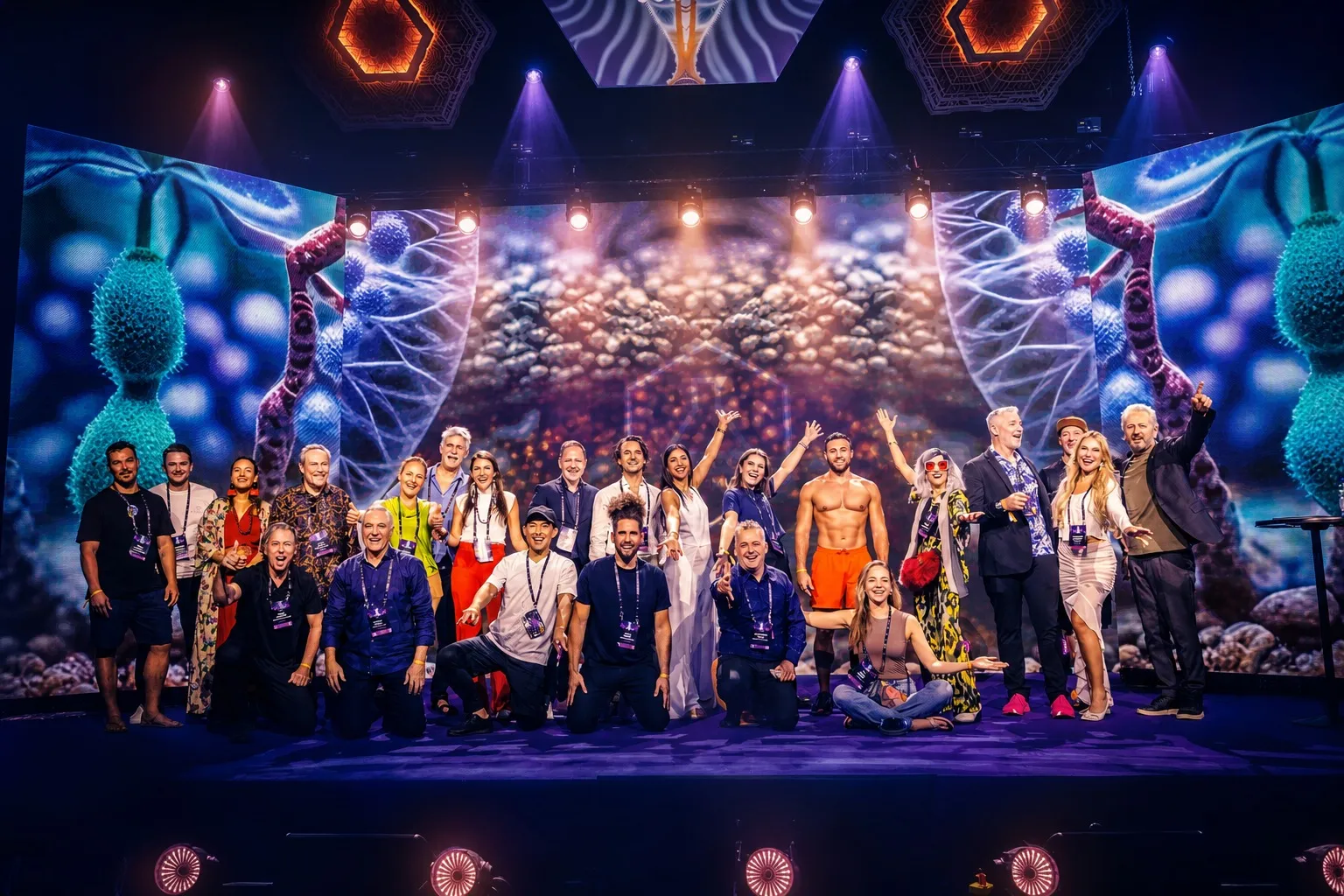
In Helsinki, A Gathering Devoted To Human Optimisation Began With A Ritual That Asked A Different Question: How Should We Belong To The Earth?
At the Biohacker Summit in Helsinki, Finland, on Tuesday, 2 July 2024, the event did not begin with metrics, machines or the glossy certainty of self-improvement. Instead, the opening ceremony, titled Opening Ceremony with Kamanawa People of the Jaguar: Ancestral Prayers & Sacred Songs, unfolded as an invocation of breath, land, ancestry and spirit.
It was an unusual and striking threshold for a conference better known for longevity science, performance culture and the rhetoric of upgrading the human system. Here, the language of optimisation gave way to something older. Finnish folk poetry met rainforest prayer. Sacred song met spoken word. The elemental compass of wind, water, fire and earth was placed beside references to neuroplasticity, entheogenic medicine and technological transformation.
The effect was not merely theatrical. It was ideological. Before a summit devoted to hacking biology, the ceremony insisted on humility before life itself.
Mikko Hakimpojka And Vaskilindu Opened The Space With Finnish Folk Tradition
The ceremony began with Mikko Hakimpojka introducing himself alongside Vasque Linto, also referred to in the transcript as Vaskilindu. Together, they opened with a song composed from old Finnish folk-poem archives, anchoring the morning in local tradition before widening the circle outward.
That choice mattered. In a gathering where the future is often treated as a frontier to be engineered, the opening moments looked backward, not out of nostalgia, but in search of continuity. The Finnish poetic inheritance was not presented as a museum piece. It was treated as living material, capable of carrying ritual into the present.
From there, Vaskilindu led the audience into a ceremonial opening of the directions, asking people to stand and orient themselves physically and symbolically to the world around them.
The Six Directions Became A Map Of Human Dependence
The ritual moved first to the east, where the rising sun and the element of wind were linked to breath. As one line from the ceremony put it: “The element of the wind represents our breath; the first breath that we take, the last one, and all the breaths in between.”
It then turned south to water, evoking both origin and vulnerability: “We all come from the waters, from the waters of our mother’s wombs, and without the water there is no life.”
West brought fire, described as “the life-giving force of the sun, making life possible on the earth.” North called in earth, “the place of our ancestors, the mother who carries our bodies.” Hands were then lifted to Father Sky, before lowering to Pachamama, Mother Earth. The crowd was invited to sound the word “Ma”, identified during the ceremony as the Finnish word for earth.
It was simple, almost austere. Yet in that simplicity lay the ceremony’s force. In a culture saturated with abstraction, the invocation restored the body to orientation. Breath was not productivity. Water was not resource. Earth was not platform. Each was named as relation.
Spiritual Leaders From The Brazilian Rainforest Brought Prayers For Protection And Transformation
The ceremony then shifted from Finnish tradition to the spiritual leadership of the Brazilian rainforest. A speaker introduced Pajekaku as a spiritual leader of the Nokequin people and of the Kamanawa family, saying he had come to “call the force of the spirit of the jungle”, invoke the ancestors and ask the Great Spirit for protection.
The intention of the prayer was made explicit: not only protection, but “transformation in our heart, in our spirit to have more respect for the Mother Nature and also for all the ancestral tradition.”
That phrasing revealed the ceremony’s moral center. Nature here was not framed as backdrop, supplement or wellness accessory. It was something before which one ought to be changed. The prayer suggested that ecological respect was not a policy preference or branding exercise, but an interior discipline, a reordering of the heart.
Pajekaku was followed by younger representatives of the same tradition: his son Panakamanawa, described as a young leader of the Nokequin people from the village of Varintoka, and his sister Mommy, introduced as a female leader representing “this force and feminine voice of Amazonia.”
Their presence carried a quiet significance. The ceremony was not only about heritage, but continuity. Tradition was not frozen in elder authority alone. It was being voiced across generations.
A Spoken Word Performance Bound Biohacking To Mysticism
If the prayers gave the ceremony its spiritual spine, the spoken word segment gave it its most startling register. The performance moved rapidly through images of Scandinavian wellness culture, psychedelic vocabulary, cosmic metaphysics and technological transcendence, blending irony, reverence and incantation.
Its core refrain was a declaration of interdependence: “I am you, you are me. We are free to be, to breathe, feel what is real, surrender, and see.”
Around that refrain swirled a torrent of references to entheogenic supplements, cellular ceremony, sacred geometry, altered states and the “Helsinki trinity” of nature, science and technology. In weaker hands, such language might have collapsed into parody or incoherence. But within the architecture of the ceremony, it served another purpose. It exposed the summit’s own spiritual vocabulary, whether acknowledged or not.
Biohacking often speaks in the language of systems, data and enhancement. Yet beneath that lexicon lies an ancient desire: to transcend limitation, to remake the self, to touch the invisible forces that shape consciousness and mortality. The spoken word performance did not reject science. It folded science into a mystical frame, suggesting that neuroplasticity and shamanism now circulate in the same cultural bloodstream.
Don William Chadena Morayari Closed The Ceremony With An Ikaro And Prayer
Near the end, Neela introduced Don William Chadena Morayari from Peru, alongside her daughter Shanti. Morayari was presented as a curandero, ayahuasca shaman and master plant healer with more than 35 years of experience.
He closed the opening ceremony with a traditional ikaro and prayer. After the density of symbols and speeches that came before, the conclusion returned to a single repeated word: gratitude.
“Gracias, padre. Gracias, madre.”
The repetition stripped the room back to first principles. Thank the father. Thank the mother. Thank what gives life.
The Ceremony Revealed A Tension At The Heart Of Contemporary Wellness
What made this opening at Biohacker Summit so compelling was not simply its multicultural pageantry, nor even its sincerity. It was the tension it made visible.
Here was a conference shaped by modernity’s most advanced promises, yet it opened by kneeling, figuratively and literally, to ancestral knowledge. Here was a gathering organised around human control, yet it began with surrender to forces larger than the self. Here was a community fluent in supplementation, optimisation and upgrade, confronted at the outset with a more difficult proposition: respect.
The ceremony did not resolve that tension. It illuminated it.
And perhaps that was enough. In Helsinki, before the talks, devices and protocols took over, the Biohacker Summit allowed another kind of intelligence to enter the room, one carried in prayer, song and breath. For a brief opening hour, the future was asked to make space for the ancient, and to remember that no amount of innovation can exempt humanity from its oldest dependencies: air, water, fire, earth, sky, and one another.
Frequently asked questions
How did the Biohacker Summit open?
Not with metrics or machines, but with an invocation of breath, land, ancestry and spirit. The opening ceremony on 2 July 2024 featured ancestral prayers and sacred songs, an unusual threshold for a conference better known for optimisation.
Who led the Finnish part of the ceremony?
Mikko Hakimpojka, introducing himself alongside a performer referred to as Vaskilindu. They opened with a song composed from old Finnish folk-poem archives, anchoring the morning in local tradition before the circle widened outward.
What did the six directions represent?
A map of human dependence. The ritual moved east to wind and breath, described as the first breath we take, the last, and all the breaths in between, then south to water, evoking the waters of our mother's wombs, before continuing around and beyond the horizon.
About the event
This recap is part of the Biohacker Summit 2024 Helsinki series, recorded in Helsinki on 2 and 3 July 2024. Read the summary of the whole event or join the next edition, HOLOLIFE Summit 2026 Amsterdam, on 14 and 15 November 2026.
In this story
Comments
Loading comments…