Biohacker Summit 2024 Helsinki
Altered States Need A Way Home
By Teemu Arina · · Updated
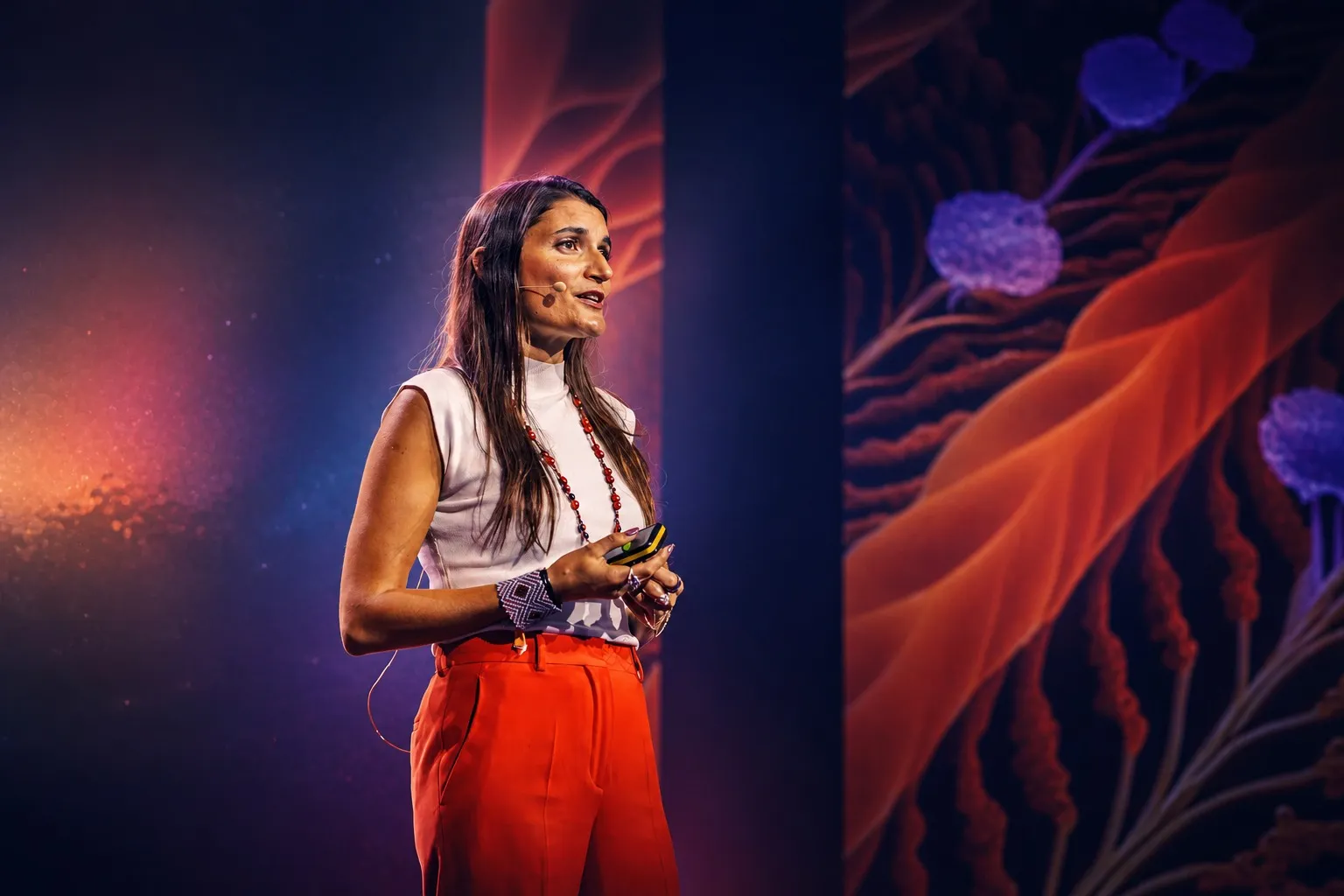
At Biohacker Summit In Helsinki, Amánda Efthimiou Argued That Psychedelic Experiences Only Matter If They Are Woven Back Into Ordinary Life
At the Biohacker Summit in Helsinki on 2 July 2024, Amánda Efthimiou delivered a clear challenge to an audience fascinated by human optimisation, altered consciousness and the promise of transformation. Her presentation, Altered States of Integration & the Psychedelic Myth, was not an ode to transcendence. It was a warning against mistaking intensity for healing.
Her central point was as elegant as it was unsparing: extraordinary experiences, whether psychedelic, meditative or mystical, do not redeem a life on their own. What matters is what happens after.
“Altered states of consciousness and psychedelic experiences can change lives, though not in the ways we might believe,” Efthimiou said.
The Seduction Of The Next Breakthrough
Efthimiou, a neuroscientist, coach and founder of Integra, grounded her talk in a story that felt less like an anecdote than a diagnosis of a wider cultural condition. She described a client carrying trauma and recovering from addiction who sought relief through an ayahuasca ceremony in Costa Rica. But relief soon became pursuit. One retreat led to another. Vipassana, breathwork, darkness work, 5-MeO-DMT, then back again to ayahuasca. Months passed in a blur of peak experiences.
Nothing changed.
The problem, Efthimiou suggested, was not a lack of courage or openness. It was the absence of integration. The client had learned how to leave himself, but not how to return. He had become fluent in altered states, yet estranged from daily life.
In Efthimiou’s framing, this is the modern temptation: to confuse accumulation with insight, and novelty with repair. A person can spend a small fortune chasing revelation while avoiding the quieter labour of recovery, routine and truth.
Integration Is The Work After The Awe
Efthimiou offered one of the day’s most resonant images when she described a psychedelic peak as standing atop a mountain. From there, everything seems visible. The self softens. Meaning sharpens. Possibility arrives with almost supernatural clarity.
But no one lives on the summit.
“A peak experience from an altered state is like being at the top of a mountain,” she said. “The real truth is, at some point, we all have to climb down that mountain, and integration is the journey back home.”
That descent, in her telling, is where transformation either takes root or evaporates. Without integration, the experience becomes memory, then story, then myth. Something once luminous fades into anecdote.
“Integration is how we translate transformational moments into meaningful reconnections with ourselves, with others, and with the world we live in,” she said.
The Neuroplastic Window And The Risk Of Wasting It
Efthimiou’s argument drew force from neuroscience as well as lived practice. She noted that psychedelic experiences can coincide with periods of heightened neuroplasticity, when the brain is more capable of forming new connections and reshaping entrenched patterns. This period, often described as an afterglow, may last from hours to weeks. Some evidence, she said, suggests a window of up to four weeks in which change can be more effectively consolidated.
That window matters. If it is not used intentionally, insights can fade before they become action. Habits remain untouched. Old coping mechanisms return. Trauma may resurface without support. The experience that promised liberation can instead become another unresolved event lodged in the psyche.
Efthimiou named the dangers plainly: missed opportunities for change, spiritual bypass, retraumatisation and, perhaps most damningly, no change at all.
“Integration is essentially a movement towards wholeness of mind, body, and spirit. Integration is not a product. It’s a process,” she said.
Against The Myth Of The Magic Pill
If there was a villain in Efthimiou’s talk, it was not psychedelics themselves but the myth that they alone can save us. This myth has flourished in an age that markets both suffering and its remedies with equal fluency. Psychedelics are often sold, implicitly or explicitly, as shortcuts to healing, creativity, resilience or enlightenment.
Efthimiou rejected that fantasy.
Psychedelics, she argued, do not erase the need for discipline, support, reflection or grief. They do not absolve anyone from the slow and unglamorous work of changing a life. A profound experience may ignite something, but ignition is not arrival.
“Altered states experiences are not the only medicine,” she said. “We are the medicine that we seek.”
It was a line that cut through the contemporary language of optimisation with unusual moral seriousness. In a culture eager to outsource transformation to substances, protocols and performance tools, Efthimiou returned responsibility to the individual and the community around them.
Five Principles For Coming Back Changed
Rather than offering a formula, Efthimiou outlined principles. Integration, she insisted, is personal, but it is not arbitrary. It requires rhythm, embodiment and intention.
First came consistency. Practices must be repeated if they are to accumulate meaning. A single insight rarely survives a chaotic life. A routine can.
Second was harmony between mind, body and spirit. Efthimiou pushed against any model that treats cognition as separate from physiology or emotion. Real change, she implied, must be inhabited, not merely understood.
Third was nature. She spoke of sunlight, circadian rhythm, nervous system regulation and the restorative force of forest bathing. Nature was not framed as lifestyle décor, but as teacher and stabiliser.
Fourth came multidisciplinarity. Effective integration may require neuroscience, psychology, somatics, mindfulness, nutrition, traditional wisdom and ecology. No one framework is sufficient for the complexity of human change.
Fifth was community. Healing, in her account, is not only an inward act. It becomes durable when it is witnessed, shared and placed in relation to others.
These principles surfaced again in her practical examples. One client integrated through sauna and breathwork. Another through yoga and qigong. Another through music and gut health. Another through meditation, writing and speaking to a close friend. The methods differed. What united them was consistency, intentionality and accountability.
The Industry’s Blind Spot
Efthimiou also turned her attention to the psychedelic sector itself, where she has worked as a consultant and educator. There, she said, she saw an industry increasingly focused on access, legality and delivery systems, but far less interested in what follows the experience.
That omission is not trivial. It is structural. A market can monetise a drug, a clinic and a protocol more easily than it can monetise patience, community or moral repair. Integration, because it is relational and ongoing, resists commodification. Yet it is precisely the part that determines whether change lasts.
Her founding of Integra emerged from that gap, as an attempt to support people through the meaning-making that follows life’s transformative moments.
Science, Sacred Traditions And The Ethics Of Use
One of the strongest sections of Efthimiou’s talk came when she widened the lens beyond individual wellness. Drawing on her experience with a nonprofit supporting biocultural conservation and indigenous territories in the Brazilian Amazon, she spoke about the traditional roots of psychoactive plant medicines and the Western tendency to extract them from their cultural and ethical context.
In many indigenous communities, she noted, the concept of integration scarcely exists because life itself is organised around an integrated relationship between healing, spirituality, ecology and community. What the West now names as a specialised post-ceremony practice may once have been embedded in the structure of daily existence.
This sharpened her critique of commercialisation. The psychedelic boom risks turning sacred knowledge into trend, and stewardship into branding. Ancient practices are repackaged for affluent markets while the communities that carried them are sidelined or erased.
She invoked the story of María Sabina, the Mazatec healer whose encounter with outsider fascination helped open psilocybin to the West, while bringing little justice to her community. The implication was unmistakable: innovation without memory is another form of exploitation.
A More Difficult, More Honest Hope
There was no cynicism in Efthimiou’s address. But there was a refusal of easy hope. She did not deny that altered states can be life-changing. She insisted they can be. What she denied was the fantasy that revelation exempts us from responsibility.
The lasting value of these experiences, she argued, lies in whether they can be translated into how one sleeps, works, loves, grieves, speaks, rests and belongs. Whether they deepen service rather than ego. Whether they create not merely heightened moments, but altered lives.
At Biohacker Summit, where the language of enhancement often risks outrunning the language of meaning, Amánda Efthimiou offered something sterner and more useful: the reminder that transcendence is only the beginning, and that the real test of insight is whether it survives the return home.
Frequently asked questions
What is the psychedelic myth in this talk?
The belief that psychedelics alone can save us. Efthimiou, a neuroscientist, coach and founder of Integra, argued that extraordinary experiences only matter if they are woven back into ordinary life, and warned against mistaking intensity for healing.
What does she mean by integration?
The work after the awe. She described a psychedelic peak as standing atop a mountain, where everything seems visible and possibility arrives with supernatural clarity, then made the obvious point that nobody lives on the summit. Integration is what happens on the way down.
What is the neuroplastic window?
Efthimiou noted that psychedelic experiences can coincide with heightened neuroplasticity, when the brain more readily forms new connections and reshapes entrenched patterns. This afterglow may last from hours to weeks, with some evidence suggesting a window of up to four weeks in which change is easier.
About the event
This recap is part of the Biohacker Summit 2024 Helsinki series, recorded in Helsinki on 2 and 3 July 2024. Read the summary of the whole event or join the next edition, HOLOLIFE Summit 2026 Amsterdam, on 14 and 15 November 2026.
In this story
Comments
Loading comments…