Biohacker Summit 2024 Helsinki
Inner Wisdom Session - Master Of Change: A Journey Into Future Visioning And Presence
By Teemu Arina · · Updated
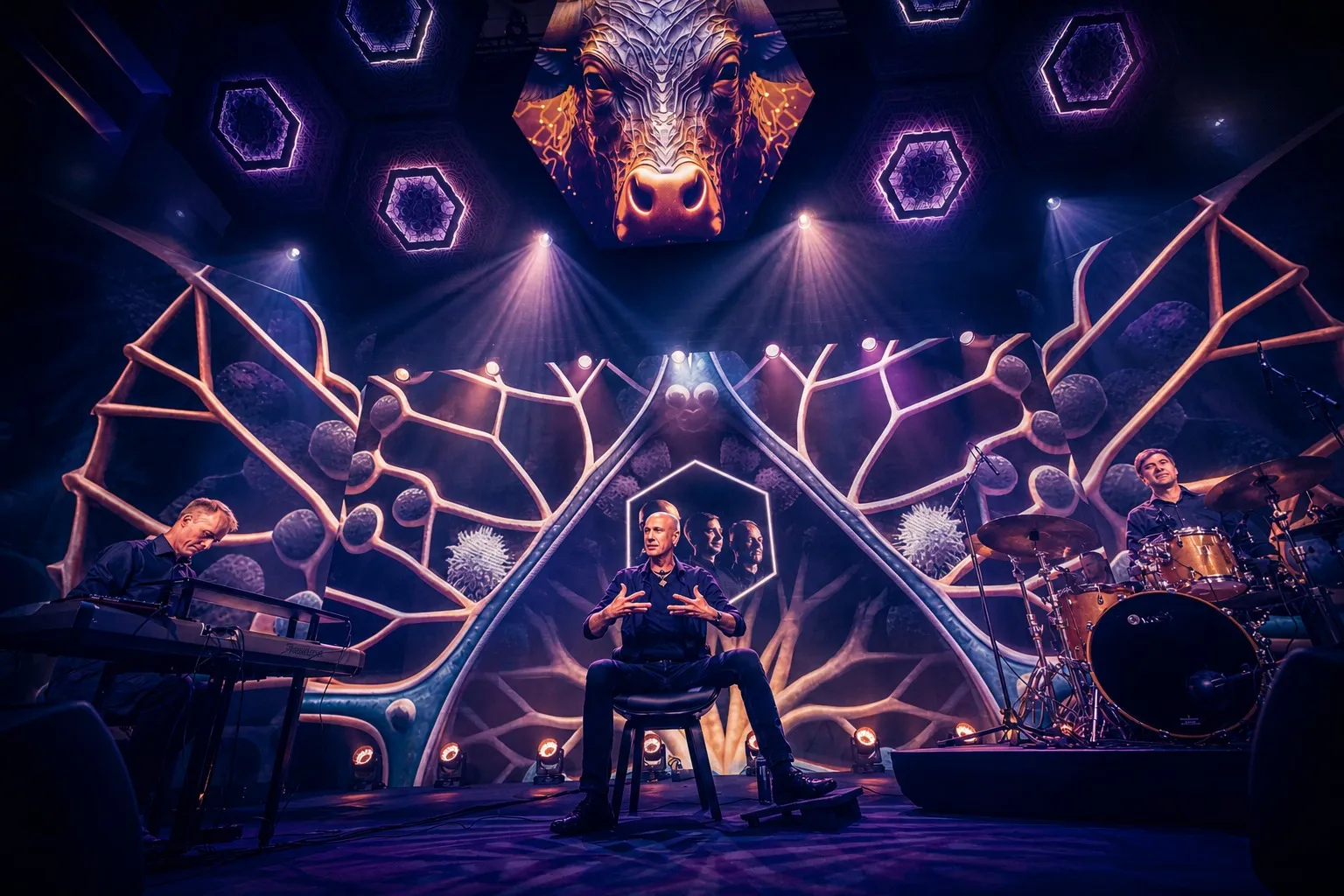
At The Biohacker Summit In Helsinki, Peep Vain Turned A Conference Hall Into A Space For Reckoning
In a conference setting more commonly associated with performance metrics, supplements, and physiological upgrades, Peep Vain offered something at once softer and more radical at the Biohacker Summit in Helsinki on 2 July 2024: stillness, introspection, and a disciplined encounter with the future.
His session, Inner Wisdom Session - Master of Change, presented under the Muutus banner, invited participants not to optimise another data point, but to listen inward. Muutus, the Estonian collective led by Vain alongside musicians Raun Juurikas and Ahto Abner, has built its practice around improvised music, hypnotic frequencies, and guided inquiry. In Helsinki, that method became a compact but resonant meditation on time, adaptation, and the moral seriousness of how one chooses to live.
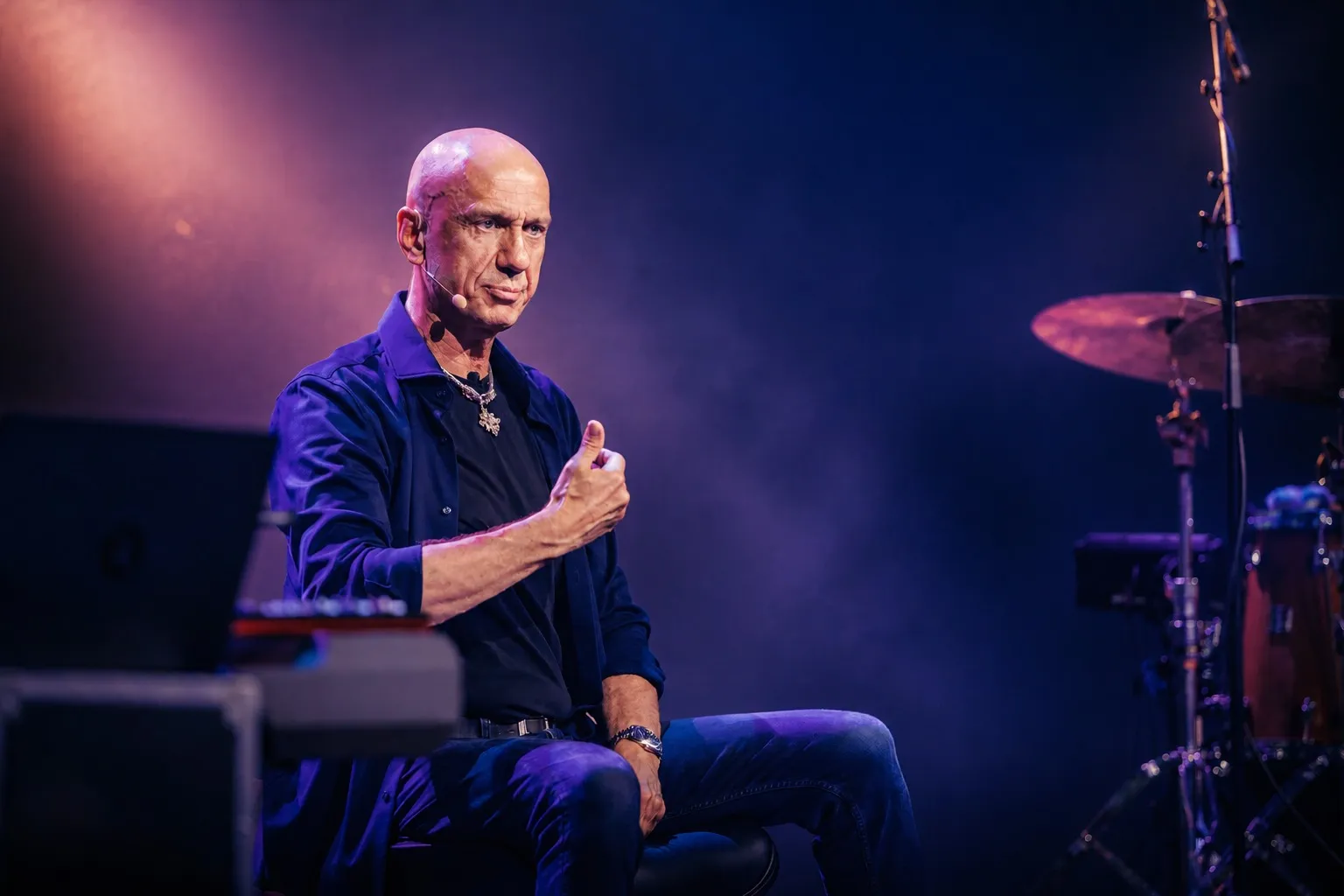
Vain’s premise was disarmingly simple. Change, he suggested, is not mastered through force of will alone. It begins with accurate seeing, with the courage to ask what must end, what must begin, and who one hopes to become if given enough time to do the work honestly.
Music As Method, Presence As Technology
The session unfolded as a music-driven inner journey. Vain framed it as an exercise in “inner wisdom”, shaped by two decades of work with meditation, teaching, and psychedelic inquiry. He acknowledged the influence of Dr Ralph Metzner and described the practice as a form of “alchemical divination”, an evocative phrase for a pragmatic human need: asking difficult questions and receiving usable answers.
The mechanics were spare but intentional. Sit upright. Stay alert. Relax fully. Breathe in rhythm, extending the exhalation beyond the inhalation. Let the body soften while the mind sharpens.
The live improvised score from Juurikas and Abner did not function as background music so much as a co-guide. Vain described it as the session’s “psychedelic”, a way of amplifying perception without chemical intervention. In that atmosphere, the room shifted from audience to participant, from spectatorship to shared interior labour.
This was not escapism. It was structured attention.
The Central Question: What Must Change?
At the heart of Vain’s talk was a pair of questions that carried the force of a life philosophy.
“What must I change?” he asked.
Then, crucially: “What is a better alternative to the things I need to change?”
That second question gave the session its depth. It is one thing to identify dissatisfaction, delay, or private pain. It is another to imagine, with specificity, a more truthful replacement. Vain did not encourage vague self-improvement rhetoric. He asked for discernment. What in one’s relationships, habits, work, health, or emotional life had been postponed too long? What had been neglected, endured, or misnamed? And what, exactly, should take its place?
Before any leap forward, he urged participants to begin with clarity. “Ask to see things as they are,” Vain said. “If you look at them skewed and get the wrong starting position, you will end up in the wrong place.”
It was a line that landed with unusual weight in a culture saturated with aspiration. The future, in his telling, is not built on fantasy. It is built on accuracy.
A Ten-Year Horizon Against The Tyranny Of The Immediate
The most arresting move in the session was temporal. Rather than asking participants to imagine next month or even next year, Vain pushed them ten years ahead, into the summer of 2034.
There was wisdom in the scale of that leap. “We underestimate the changes that can be achieved in ten years and tend to overestimate what can be changed in one year,” he said.
In a single sentence, he named one of modern life’s central distortions. People often demand transformation at an impossible speed, then lose faith in what slow, deliberate commitment can actually produce. By extending the horizon, Vain restored proportion. A decade is long enough for children to grow, careers to turn, bodies to fail or strengthen, relationships to deepen or disappear, values to harden or mature.
Participants were asked to survey that imagined future across several domains: family, intimate relationships, parents, children, work, money, home, and health. The exercise was not merely visualisation in the pop-psychological sense. It was moral cartography. What kind of life, seen from ten years on, would feel coherent? What accomplishments would matter? What forms of wealth would prove meaningful?
On money, Vain was notably unsentimental. “The main point of having big money is to do bigger things in life and create a bigger impact,” he said.
That line redirected ambition away from accumulation and toward consequence. Wealth, in this view, was not an end-state but an instrument.
Looking Toward 2049 And The Shape Of A Whole Life
If 2034 was a test of near-future seriousness, 2049 was something deeper: a confrontation with life stages, mortality, and unrealised potential.
Vain asked the audience to travel a generation ahead, roughly 25 years into the future. In doing so, he framed human life in three acts: the formative years up to 30, the productive years up to 60, and the elder years beyond that. The provocation was clear. Most of the room, he suggested, was still living in the middle movement, still in the years when one’s deepest structures are being built.
His challenge was bracing rather than comforting. “Make the next twenty-five years the most important years of your life to reach your full potential and have it made.”
There was urgency in that appeal, but not panic. Vain’s point was that time passes with or without coherence. Technology will change, laws will change, bodies will age, wars may come and go. The deeper question is whether a person will arrive in that later chapter more themselves or less.
By asking listeners to imagine 2049, he offered a frame in which today’s confusions could be resized. The current conflict, the postponed decision, the private fear, the unspoken longing, all of it could be measured against the shape of a life rather than the pressure of a week.
Healing, Visioning, And The Return To The Present
For all its future orientation, the session remained anchored in the present tense of embodiment. Vain described the purpose of such journeys in four parts: healing, visioning, practicing presence, and problem-solving. The destination was never the dream alone. It was the return.
Participants were invited back gradually through breath, touch, and physical awareness: rubbing palms together, warming the face, massaging the head and ears, feeling the body in the room again. The ritual was simple, even gentle, but it underscored the larger principle of the session. Insight must be integrated. A vision that cannot be carried home is only theatre.
By the close, the language of mastery had been subtly redefined. To be a “master of change” was not to dominate uncertainty or eliminate vulnerability. It was to become, as Vain suggested, more capable of steering one’s own life through intention and attention. Not omnipotent, but awake. Not invincible, but responsible.
A Quietly Powerful Intervention
What made Inner Wisdom Session - Master of Change at the Biohacker Summit memorable was not novelty for its own sake. It was the seriousness with which Peep Vain treated the inner life in a public setting often dominated by external fixes.
His message was neither anti-technology nor anti-ambition. It was a corrective to the fantasy that a person can optimise their way out of existential confusion without asking better questions. Change, he argued, requires both surrender and precision. It demands gratitude for what is already good, honesty about what is broken, and a willingness to imagine a future that is larger than immediate discomfort.
In Helsinki, with Muutus shaping the room through improvised sound and guided stillness, that proposition felt less like a workshop exercise than a civic act of attention.
The future, Vain suggested, is not something one merely enters. It is something one rehearses, interrogates, and, with enough courage, helps create.
Frequently asked questions
What happened in Peep Vain's inner wisdom session?
A music-driven inner journey, presented under the Muutus banner and shaped by two decades of work with meditation, teaching and psychedelic inquiry. Vain acknowledged the influence of Dr Ralph Metzner and described the practice as a form of alchemical divination.
Why did he ask participants to look ten years ahead?
Because of a familiar distortion in how people plan. We underestimate the changes that can be achieved in ten years and tend to overestimate what can be changed in one year, Vain said, before pushing the room forward into the summer of 2034.
What are the four purposes of such a journey?
Healing, visioning, practicing presence and problem-solving. Vain framed the destination as the return rather than the dream, bringing participants back gradually through breath, touch and physical awareness, because a vision that cannot be carried home is only a vision.
About the event
This recap is part of the Biohacker Summit 2024 Helsinki series, recorded in Helsinki on 2 and 3 July 2024. Read the summary of the whole event or join the next edition, HOLOLIFE Summit 2026 Amsterdam, on 14 and 15 November 2026.
In this story
Comments
Loading comments…