Biohacker Summit 2023 Amsterdam
Holohabits Promised A New Frontier In Longevity, Built One Habit At A Time
By Teemu Arina · · Updated
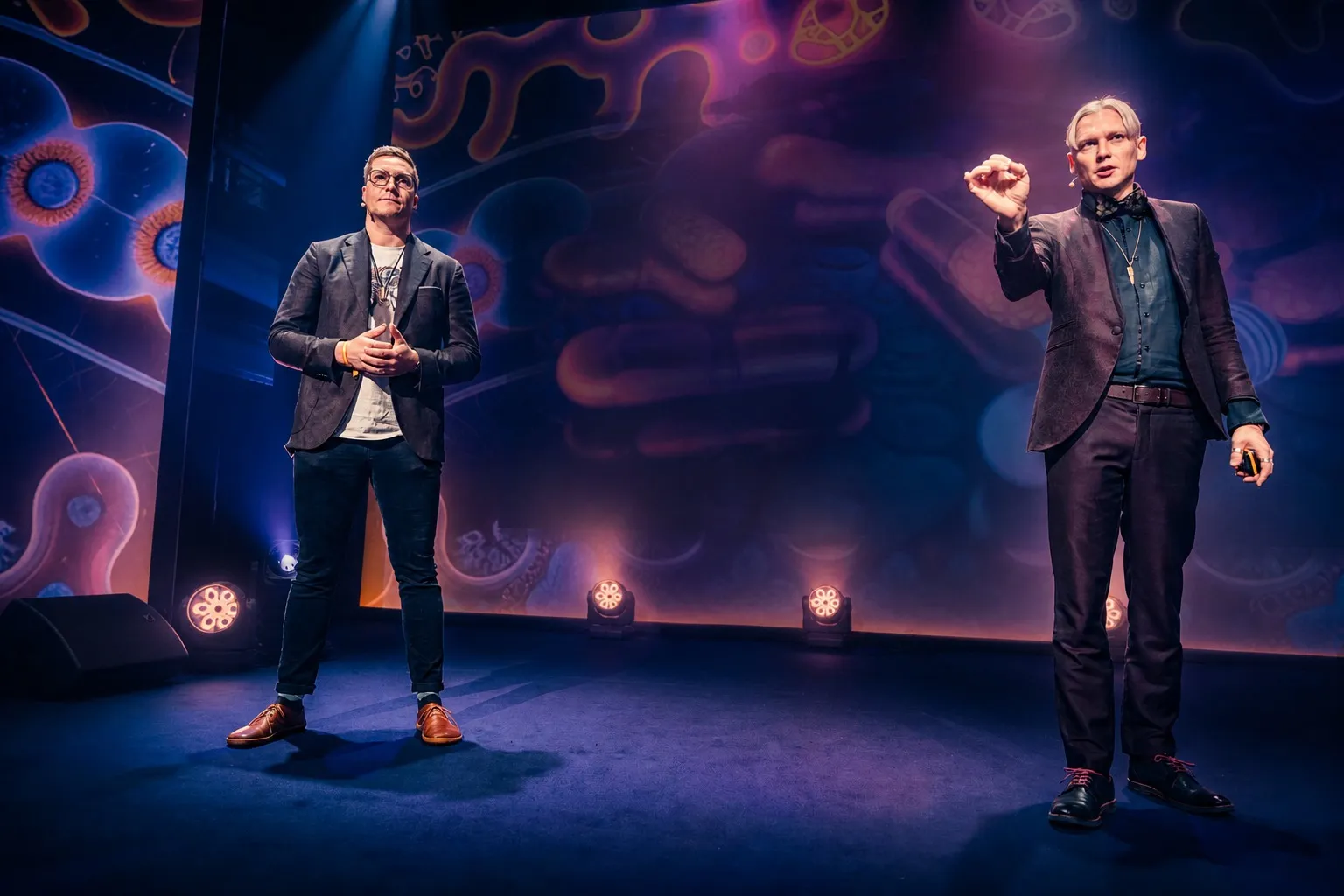
At Biohacker Summit 2023 Amsterdam, Dr. Olli Sovijärvi And Teemu Arina Argued That The Future Of Health Did Not Lie In Quick Fixes, But In Data, Community, And The Slow Architecture Of Daily Change
In a world saturated with wellness advice, miracle compounds and the seductive promise of optimization, Dr. Olli Sovijärvi and Teemu Arina arrived at Biohacker Summit 2023 Amsterdam with a simpler, more radical proposition: healthspan was not transformed in a clinic, a capsule or a fleeting burst of motivation, but in the stubborn, repeated rituals of everyday life.
Their presentation, Holohabits - Expanding Healthspan One Habit at a Time, unfolded on Saturday, 14 October 2023 in Amsterdam, Netherlands, as both a diagnosis of modern healthcare’s failures and a launch of what they framed as an answer. The answer was HoloHabits, a platform designed to identify an individual’s healthspan bottlenecks through blood, DNA and other biomarker data, then translate those findings into habits that could actually stick.
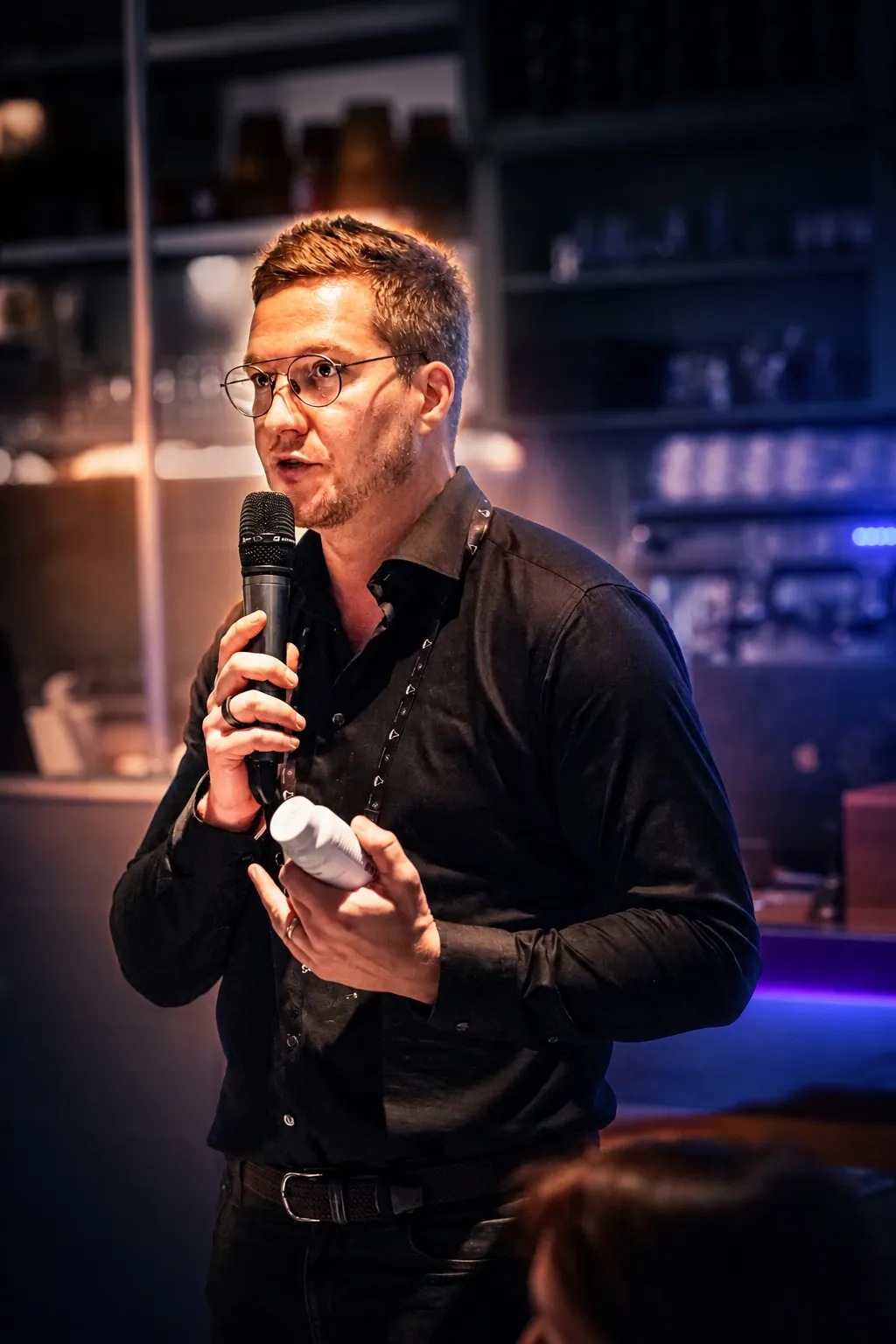
The pitch was part manifesto, part technological unveiling. Yet beneath the app launch sat a deeper frustration with a system that, in their telling, had become expert at treating decline and woefully inadequate at preventing it.
A System Geared Toward Sick Care, Not Prevention
Sovijärvi, a physician and co-founder of Biohacker Center, grounded the argument in blunt clinical reality. He recalled days in practice so overloaded that meaningful intervention became nearly impossible. “In a day my record is ninety four,” he said, describing consultations compressed into five-minute encounters. “If you think how much you can do in that short time, it’s literally nothing.”
For him and Arina, that compression captured the central weakness of traditional medicine. The greatest drivers of chronic illness were not mysteries of diagnosis so much as failures of behavior, adherence and sustained support. Patients wanted solutions, they suggested, but often in the form of prescriptions rather than personal transformation.
That disconnect mattered because the stakes were vast. Chronic disease, they argued, had become the dominant architecture of modern ill health. Heart disease, metabolic dysfunction, neurodegeneration and respiratory illness all shared common roots in low-grade inflammation, oxidative stress, insulin resistance and what they described as an energy crisis in the body.
Arina widened the lens further, calling modern healthcare “sick care” and arguing that its economic burden rose relentlessly with age. Longevity, he suggested, had advanced dramatically over the industrial era, but healthspan had not kept pace. People were living longer, yet too often spending their final years in decline.
Why Good Advice So Often Fails
If the problem sounded familiar, their diagnosis of its mechanics was sharper still. A large share of patients, Sovijärvi said, fail to follow through on interventions, particularly when those interventions involve lifestyle change. The doctor-patient relationship assumes compliance. Real life routinely breaks that assumption.
“It is not really about willpower; there is something deeper going on,” the speakers argued. “It is about intelligently changing behavior so the adherence problem becomes less of an issue and we get the results we seek.”
That sentence carried the force of their entire presentation. For decades, the wellness and self-help industries had sold discipline as salvation. Grind harder. Try again. Want it more. But Sovijärvi and Arina insisted that human beings were less heroic than habitual, creatures of loops, cues and rewards. Behaviour repeated over time became biology’s preferred pathway.
Sovijärvi described habit formation through the familiar circuitry of trigger, routine and reward. Some habits, he noted, might take hold quickly. Others could take months. But on average, sustainable change demanded patience.
“On average it takes six to eight weeks to create a new sustainable habit,” he said. “You have to find your own way to do it and be consistent because that is when you start to create real changes.”
Consistency, in this framing, was not glamorous. It was structural. The body and brain were not persuaded by aspiration. They were persuaded by repetition.
The Body As Data, The Self As A System
What made the Holohabits proposition distinct was its insistence that habits should not be generic. They should be personal, biologically informed and responsive to measurable signals.
Arina and Sovijärvi described a model in which health optimization began not with broad advice but with data. Intracellular NAD, amino acids, fatty acids, vitamins and genetic markers could, they said, reveal the weak links in an individual’s system. Those weak links, or bottlenecks, would then guide interventions.
The ambition was to move beyond standard laboratory medicine and toward nutritional and functional insight, identifying where the body lacked key building blocks and where targeted changes might yield disproportionate benefit. In essence, HoloHabits promised to translate complex biomarker data into concrete actions.
That translation mattered because information alone rarely changes anyone. Yet the act of measurement, Arina suggested, could itself become a lever of transformation.
“Once you start to observe your movement, diet, sleep, and exercise, it becomes a mirror,” he said. “The faster the feedback loops, the faster the learning and the faster the change.”
It was an old idea recast in contemporary language: what we attend to, we begin to alter. Tracking did not merely produce numbers. It redirected consciousness. Sleep became less abstract once monitored. Movement became less accidental once counted. The quantified self, in this view, was not narcissism but feedback.
Community As The Missing Ingredient
Still, the most striking feature of the talk was not technological but social. Again and again, both speakers returned to the same conclusion: people change more easily when they do not change alone.
“The highest points in your life and the most important experiences are those that are shared,” Arina said. “It is much easier to change your behaviors when you are surrounded by a community on the same path.”
That line pushed against one of biohacking’s central tensions. The field often markets itself through solitary mastery: the lone optimizer armed with wearables, protocols and purified discipline. But Sovijärvi and Arina argued that isolation undermined endurance. Human beings imitate one another, regulate one another and draw reinforcement from one another. A healthy practice mocked by friends is harder to sustain. A difficult challenge shared by peers becomes meaningful.
HoloHabits was therefore pitched not just as a personalised recommendation engine but as a social ecosystem. Users could join challenges, document routines, share progress and receive reinforcement from others attempting the same shifts. Morning hydration, breathwork, movement, nutrition and recovery would not remain private intentions. They would become communal acts.
The logic was plain enough. Motivation flares and fades. Social belonging lasts longer.
Holistic Health Beyond The Buzzword
The language of “holistic” health has often been emptied by overuse, but Arina sought to refill it with substance. “Holistic means you are expanded and connected to the environment, the people you interact with, and nature,” he said. “All of that is part of the change you are making.”
This was not merely a branding exercise. Their account of habit formation included nervous system regulation, circadian rhythm, environmental stress, social context and even periods of heightened neuroplasticity after intense experiences. Biology, psychology and surroundings were presented as inseparable layers of the same system.
In that sense, HoloHabits was less a health app than a theory of change disguised as one. It assumed that prevention failed not because people were lazy or uninformed, but because interventions were too fragmented, too impersonal and too detached from the settings in which actual life is lived.
The Launch Of A Platform And The Larger Question It Raised
By the time the speakers revealed the app itself, the audience had been led to see it as a culmination of years of thinking rather than a sudden product launch. HoloHabits, they explained, would allow users to purchase tests, interpret their biomarkers, access educational content, follow expert-led routines and participate in group challenges aimed at the critical six-to-eight-week window in which habits can take root.
The sales pitch was undeniable. So was the sincerity. Sovijärvi and Arina were not simply offering another digital tool in an already overcrowded health marketplace. They were making a larger claim about the future of prevention: that sustainable longevity would come from integrating personal biology with behavioral design and communal support.
Whether HoloHabits could deliver on that promise remained, as ever, an empirical question. Yet the deeper force of the presentation lay elsewhere. It named a truth that modern medicine, despite all its sophistication, still struggles to accommodate: most of what determines health does not happen under a doctor’s fluorescent lights. It happens in kitchens, bedrooms, streets, gyms, workplaces and friendships. It happens in mornings. It happens in repetitions. It happens, as they insisted, one habit at a time.
At Biohacker Summit 2023 Amsterdam, Dr. Olli Sovijärvi and Teemu Arina offered a vision of longevity not as an elite fantasy of endless extension, but as a disciplined return to balance. In that vision, health was not hacked so much as practiced. And practice, however intelligent the software behind it, remained irreducibly human.
Frequently asked questions
What is the Holohabits proposition?
That healthspan is not transformed in a clinic, a capsule or a burst of motivation but in the stubborn, repeated rituals of everyday life. Olli Sovijärvi and Teemu Arina argued for habits that are personal and biologically informed, responsive to measurable signals rather than generic advice.
Why does Sovijärvi say the system fails at prevention?
He grounded it in clinical reality, recalling days so overloaded that meaningful intervention became nearly impossible. In a day my record is ninety four, he said, describing consultations compressed into five-minute encounters in which, by his own account, almost nothing can be done.
Why does good health advice so often fail?
Because compliance is assumed and real life breaks the assumption. A large share of patients fail to follow through, particularly on lifestyle change. It is not really about willpower, Sovijärvi said; there is something deeper going on.
About the event
This recap is part of the Biohacker Summit 2023 Amsterdam series, recorded in Amsterdam on 14 and 15 October 2023. Read the summary of the whole event or join the next edition, HOLOLIFE Summit 2026 Amsterdam, on 14 and 15 November 2026.
In this story
Comments
Loading comments…