HOLOLIFE Longevity Côte d'Azur
From Nanocarbon to Longevity
By Teemu Arina · · Updated

At Hololife Longevity Côte d'Azur, Dr. Chris Bachtsetzis Made The Case For A New Preventive Medicine Built On Light, Carbon, And Clinical Pragmatism
Longevity has often been sold as fantasy: a glossy promise wrapped in elite supplements, futuristic devices, and the oldest human desire of all, to outrun decline. But at Hololife Longevity Côte d'Azur in Nice, France, on 12 March 2026, Dr. Chris Bachtsetzis brought the conversation back to earth.
In his presentation, From Nanocarbon To Longevity: Clinical Applications Of Fullerene C60 & Light Therapy, Bachtsetzis, a lifestyle and longevity medicine physician, framed the field not as an indulgence in speculative immortality but as something more grounded, more useful, and more urgent: prevention.
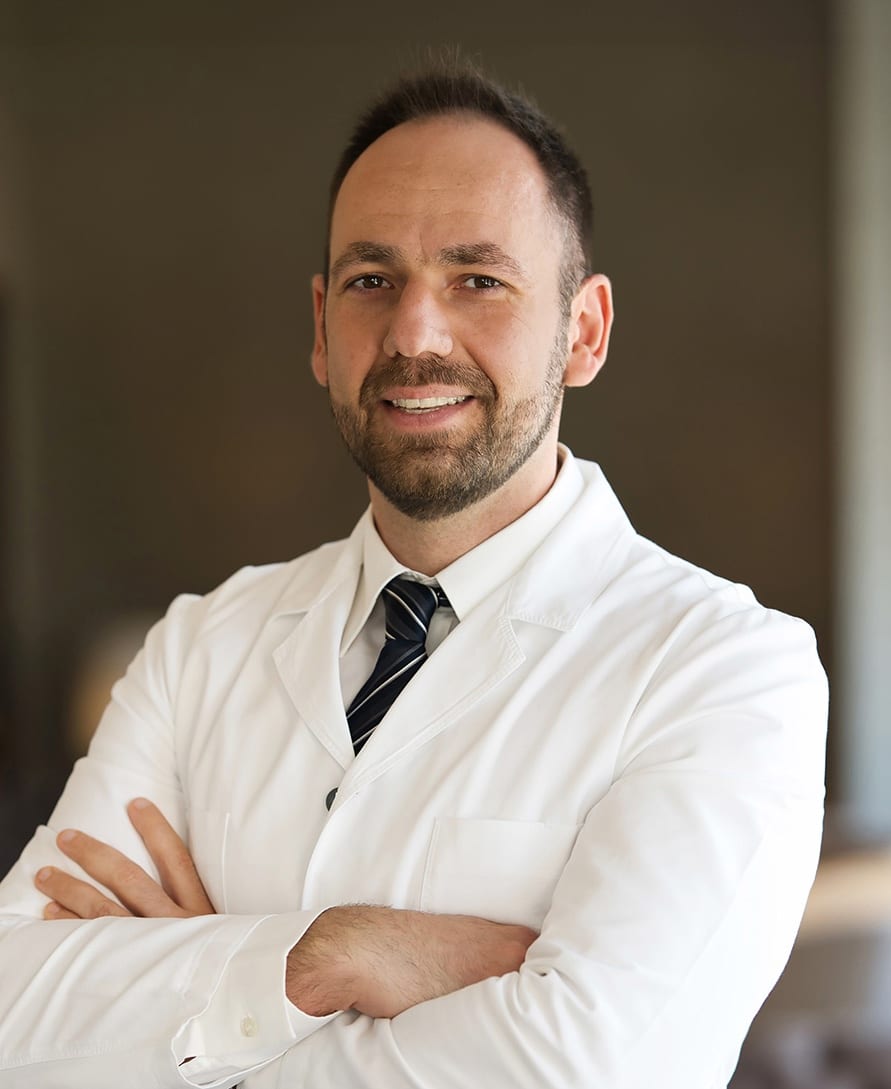
“I am a clinician,” he told the audience, signaling from the outset that this would not be a sermon on miracle cures. It would be a report from daily practice, where evidence, patient response, and modesty still mattered.
A Molecule That Looked Like A Football And Entered Medicine By Another Door
At the center of Bachtsetzis’s talk was Fullerene C60, a nanocarbon structure discovered in 1985 and later associated with Nobel-winning research. Shaped like an icosahedron, it has long fascinated scientists for its geometry alone. But in Nice, its allure was not mathematical. It was biological.
Bachtsetzis described Fullerene C60 as a powerful antioxidant with protective effects against radiation and oxidative stress. “Fulleren C60 is more antioxidative than vitamin C or vitamin E,” he said, emphasizing its superior photostability and potential as a protective agent in both skincare and optical filtering.
The appeal here was not simply that C60 sounded advanced. It was that it had been adapted into products claiming to intervene in the ordinary damage of modern life: inflammation, fatigue, tissue stress, LED overexposure, and skin degradation. In an age saturated with artificial light and chronic metabolic strain, the molecule was presented as less a curiosity than a tool.
The Promise Of Photobiomodulation
If Fullerene C60 supplied the molecular intrigue, photobiomodulation gave the talk its clinical backbone.
Bachtsetzis devoted much of his presentation to the Bioptron Hyperlite, an FDA-approved and EC-approved light therapy device that, he said, operated across a broad spectrum from 350 to 3,400 nanometers. That range distinguished it, in his view, from the narrower red-light devices now fashionable across wellness culture.
“Photobiomodulation helps with regenerating tissues, provides anti-inflammatory benefits, and boosts the power of mitochondria to bring fantastic results on a cellular level,” he said.
The line between wellness trend and medical intervention can often blur beyond usefulness. Bachtsetzis tried to sharpen it. He noted that photobiomodulation was not a recent fad but a decades-old field, born partly from failed cancer experiments that unexpectedly revealed benefits in tissue repair and inflammation control. Science, as ever, had advanced through detour and accident.
What mattered in Nice was the claim that broad-spectrum light could do more than soothe. It could accelerate healing, support recovery, and reduce pain in measurable ways.
Where The Device Met The Patient
The strongest moments of the presentation came not in the technical explanation but in the human detail.
Bachtsetzis described using the technology in sports medicine, injury rehabilitation, wound care, autoimmune pain management, dermatology, and even dental practice. He spoke of periodontitis, implant-related discomfort, mucosal pain, and inflammatory conditions such as rheumatoid arthritis. The point was not that light replaced medicine, but that it might reduce dependence on it.
“In daily practice, it is a success when patients can live pain-free and reduce their medication by using targeted light technology for rehabilitation and recovery,” he said.
That sentence captured the ethic of the talk. There was little utopian language, and notably little overclaiming. He explicitly rejected gimmickry. The products, he said, would not protect anyone from cancer or make them smarter. They would not work identically for every person. But they had shown enough value in practice to deserve serious attention.
There was, in that restraint, a degree of credibility often absent from the longevity marketplace.
Light, Filtered Before It Became Fatigue
The presentation then shifted from therapy to exposure, from treatment to the conditions of contemporary living. Bachtsetzis introduced eyewear built with Fullerene C60 filters, designed to alter incoming light before it reached the eye.
“These filters harmonize light before it reaches your eyes, reducing negative wavelengths and keeping the beneficial parts to increase mental focus and prevent fatigue,” he said.
The claim was especially pointed in relation to LED light, which he identified as particularly harmful in the 400 to 480 nanometer range. In a world of screens, office lighting, phones, dashboards, airports, and insomnia, this was not a peripheral concern. It was one of the ambient injuries of modernity.
The glasses, he said, preserved beneficial wavelengths while reducing harmful ones. Their function was not merely protective but performance-oriented. Bachtsetzis cited improved focus, reduced fatigue, and better endurance in athletes and night drivers. In another context such claims might have sounded inflated. Here, framed as incremental improvements in visual and cognitive comfort, they felt more plausible.
Skincare As Barrier Medicine
Perhaps the most quietly radical part of the talk was Bachtsetzis’s discussion of skincare. In much of consumer culture, skincare is sold as vanity. Here it was presented as barrier medicine.
By incorporating Fullerene C60 into topical formulations, he argued, it was possible to reinforce the skin’s structural resilience, improve flexibility, and provide antimicrobial and anti-radiation support.
“By applying the biophysical properties of nanocarbon, we enhance the functionality of the skin to make it stronger and more flexible, acting as a protective layer for the body,” he said.
He returned to the language of filtration and selectivity. The skin, like the eye, was not simply a passive surface. It was an intelligent boundary. “The skin is like a sponge,” he suggested, describing how C60-based products could help the body absorb what was beneficial while guarding against what was not.
In that formulation, skincare ceased to be cosmetic excess and became part of a larger preventive logic: fortify the body’s interfaces with the world.
A Different Language Of Longevity
What set Bachtsetzis apart at Hololife Longevity Côte d'Azur was not just the content of his presentation but its tone. He treated longevity neither as luxury branding nor as transhumanist myth. He treated it as disciplined maintenance.
That perspective matched his broader biography. As a physician focused on lifestyle medicine, metabolic health, chronic disease reversal, and evidence-based personalized care, he occupied a space between research and clinic, aspiration and practicality. His message in Nice reflected that balance.
Longevity, in his telling, was not the denial of ageing. It was the reduction of preventable suffering. It was wound healing that happened faster, inflammation that quieted sooner, medication that could sometimes be lowered, skin that defended itself better, eyes that tired less quickly, and patients who returned smiling.
The seduction of the field lies in its grand promises. But the dignity of medicine lies elsewhere, in smaller victories. A woman with less pain. A recovering athlete. A patient who sleeps better after less visual strain. A treatment that helps without pretending to be salvation.
Prevention, Not Prophecy
By the close of From Nanocarbon To Longevity, Bachtsetzis had drawn a clear line through his subject. Nanocarbon, light therapy, filtered eyewear, and C60-infused skincare were not magic. They were instruments. Their value would depend on context, evidence, and use.
That may have been the most important message of the day.
In a sector crowded with exaggerated language and commercial mystique, the most persuasive argument was the simplest one: prevention works best when it is honest about its limits.
And so in Nice, amid the glow of longevity discourse, Dr. Chris Bachtsetzis offered something rarer than hype. He offered proportion.
Frequently asked questions
What is fullerene C60?
A carbon molecule of 60 atoms shaped like a football, discussed by Bachtsetzis as a nanocarbon with antioxidant properties that entered medicine through materials science rather than pharmacology.
How did he frame photobiomodulation?
As light used at specific wavelengths to support cellular energy and repair, something he applies in clinical practice alongside filtered light and skincare that treats the skin as a barrier organ.
Is this longevity medicine or prevention?
Bachtsetzis called it prevention, not prophecy: practical, measurable tools a physician can use today, rather than promises of radically extended lifespan.
About the event
This recap is part of the HOLOLIFE Longevity Côte d'Azur series, recorded in Nice on 12 March 2026. Read the summary of the whole day or join the next edition, HOLOLIFE Summit 2026 Amsterdam, on 14 and 15 November 2026.
In this story
Comments
Loading comments…