Biohacker Summit 2023 Amsterdam
Expand Your Breath, Expand Your Consciousness
By Teemu Arina · · Updated
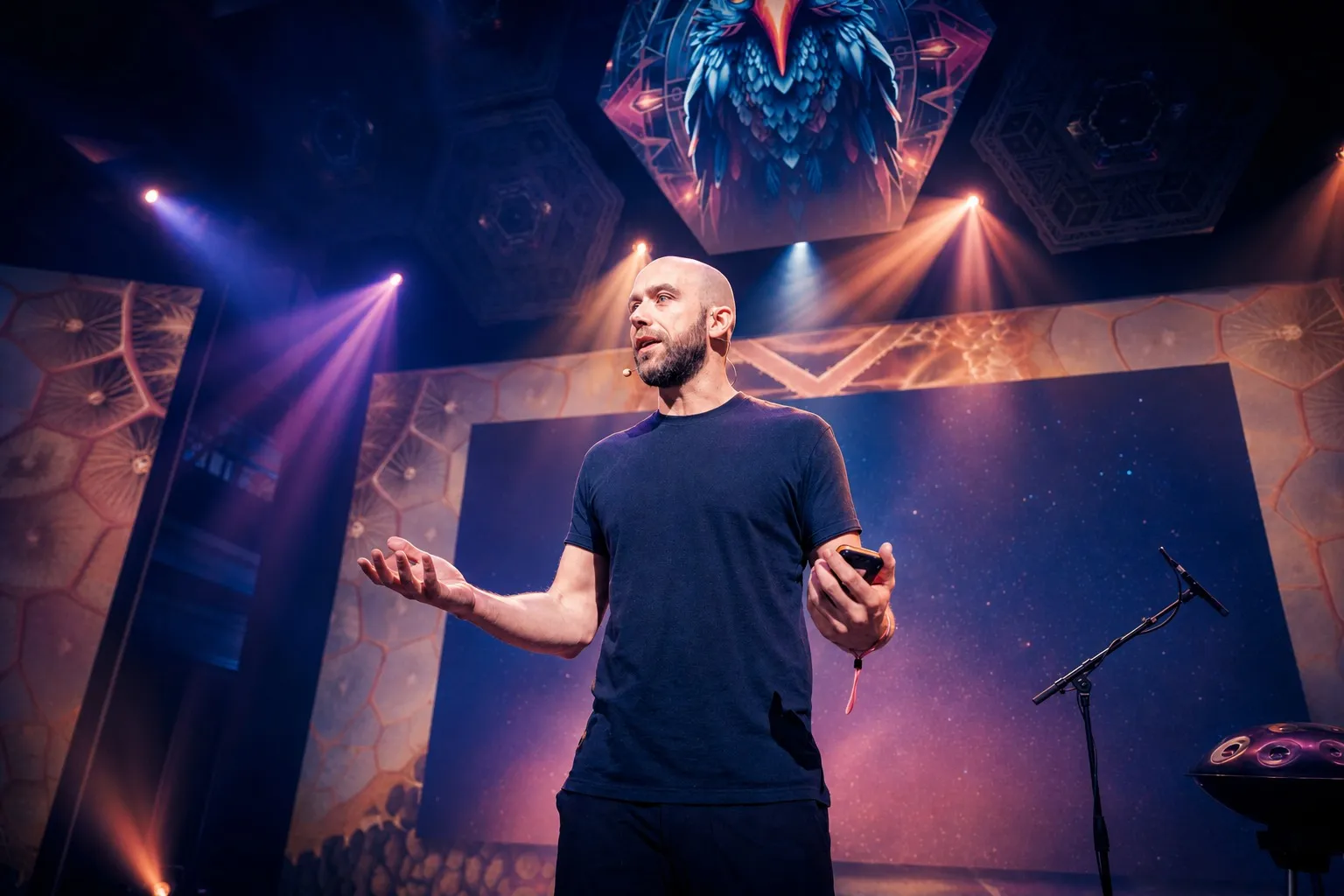
At Biohacker Summit 2023 Amsterdam, Kasper Van Der Meulen Reframed Biohacking As A Practice Of Service, Not Vanity
In a wellness culture often intoxicated by metrics, gadgets and the seductive promise of becoming somehow more than human, Kasper van der Meulen offered a quieter, sharper provocation at Biohacker Summit 2023 Amsterdam. The Netherlands-based breathwork specialist, science teacher and musician did not reject optimization. He asked what it was for.
“The whole point of optimizing yourself is to ask: what can I do with that self for the world?” he told the audience on Saturday, 14 October 2023, in Amsterdam. “If you change your own biology, it allows you to be inspiring to other people.”
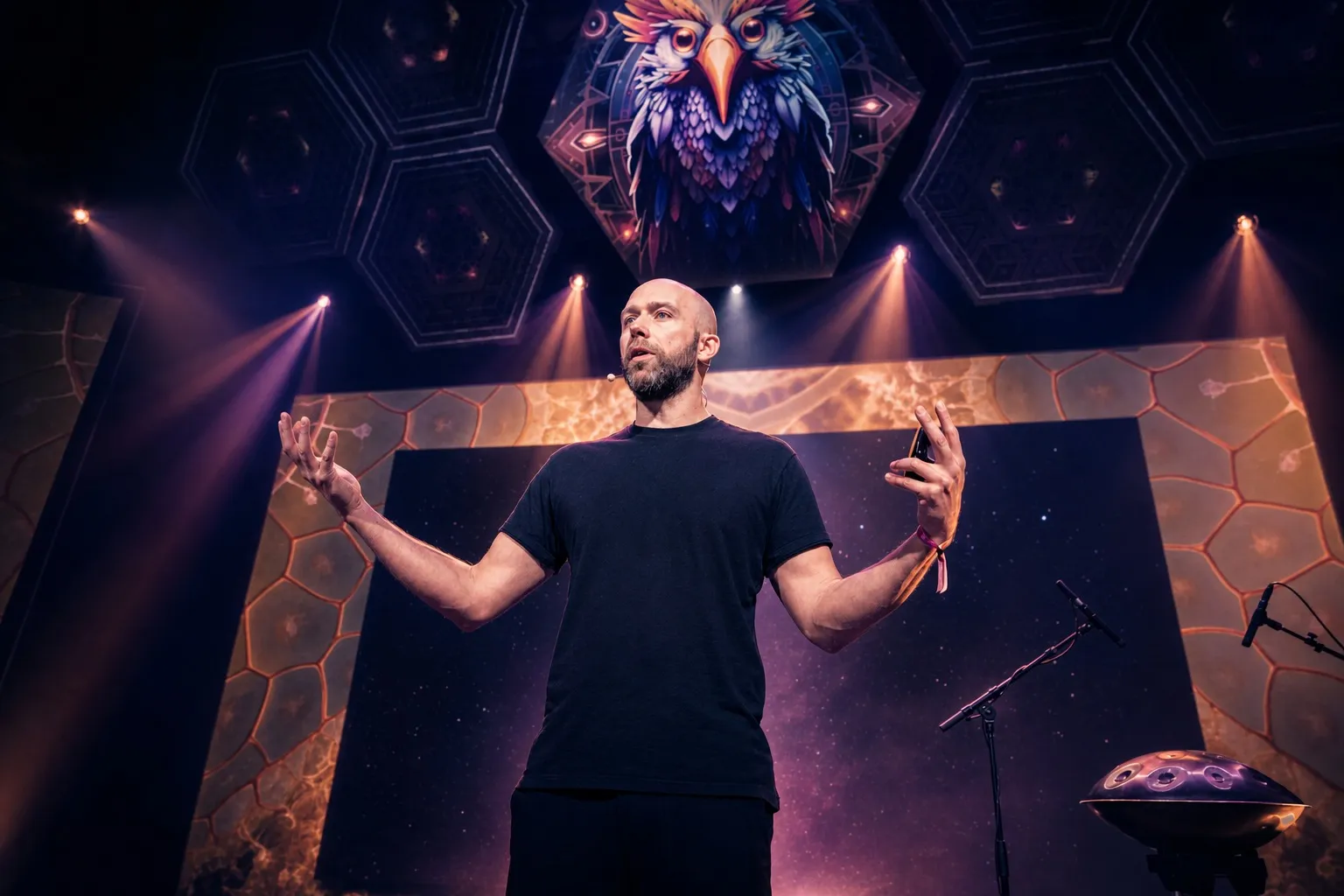
It was the kind of line that cut through the glossy excesses that can cling to the biohacking world. In van der Meulen’s telling, the point was not self-mythology. It was usefulness. Not the worship of performance, but the cultivation of presence, compassion and collective coherence.
Breath As The Nervous System’s Remote Control
Van der Meulen began not with theory but with practice, guiding the room through a simple breathing exercise. Inhale for four. Exhale for four. Hold. Pause. Listen inward. The effect was immediate and democratic. Hundreds of people, in a conference setting usually dominated by stimulation and noise, were invited into a shared internal rhythm.
For van der Meulen, this was not a mystical flourish but a biological one. Breathwork, he argued, functioned as “the remote control of your nervous system”. Change the breath, and you could change the state of mind and body. Do it together, and something larger became possible.
When groups breathed in synchrony, he suggested, they did more than calm themselves. They aligned physiology. They created a rare collective state in a culture that often rewarded individual striving over communal attunement.
That distinction mattered. Biohacking, he said, too easily became “self centered” and “ego centered”. Breath, by contrast, could become a way back to each other.
A Rebuke To The Superhuman Fantasy
There was another strand running through the presentation, one aimed at the mythology of transcendence that often shadows health culture. Van der Meulen challenged the urge to chase the identity of the “superhuman”, a figure produced as much by marketing as by aspiration.
“Being human is enough,” he said. “Just the fact that you are alive is a miracle. The deeper you understand your biology as it is now, the more you start to realize that it is already spectacular.”
It was a notable inversion. Rather than treating the body as an inadequate machine in need of endless upgrading, he urged the audience to see it as an astonishing system already worthy of study, gratitude and care. The task was not to escape humanity but to inhabit it more fully.
This also meant resisting what he effectively cast as the consumer trap of modern wellness, the drift from biohacking into “buy-o-hacking”: a culture of supplements, devices and branded fixes that could distract from the oldest and least glamorous interventions. Sleep. Movement. Time outdoors. Kindness. Slow breathing. Honest self-reflection.
The Science Against The Hype
Van der Meulen’s authority in the room rested partly on his willingness to puncture cherished claims, including those made within his own field. He spoke as someone shaped by a decade in biohacking, and as someone wary of the certainty that charismatic expertise can project.
“Don’t believe anything I say, especially not because I say it,” he told the audience.
That skepticism extended to the physiology of intense breathwork itself. Many of the most popular narratives around hyperventilation protocols, he suggested, had been scientifically sloppy. Profound experiences were often described as the result of “more oxygen” in the body, or even linked to dramatic claims about endogenous DMT. But van der Meulen pointed instead toward the harder, less romantic mechanics of altered blood gases, shifts in blood pressure and reduced oxygen delivery to the brain.
The point was not to diminish the experience. It was to describe it honestly.
Such scrutiny matters in a field where spiritual language, personal testimony and commercial incentive can easily outrun evidence. Van der Meulen did not argue against wonder. He argued against false explanation.
Chasing The Low, Not The High
Perhaps the most striking turn in the talk was his refusal of the perpetual peak. In a culture that prized highs, breakthroughs and elevated states, he urged the opposite.
“Instead of chasing the high, we should start chasing the low,” he said. “We should look at the shadows within ourselves that allow us to be kinder, more compassionate, and more present with the people around us.”
This was not a call to misery, but to depth. Expanded consciousness, in his framing, was not valuable because it delivered spectacle. It was valuable if it helped people face what they habitually avoided: vulnerability, confusion, grief, ego, need. The work was not merely to feel transcendent, but to become more humane.
Van der Meulen framed this with unusual humility for a stage often populated by high-performance rhetoric. “Who is the person that knows the way on the mountain the best?” he asked. “It is the person who got lost on that mountain the most. I see myself as just another human trying to learn from his mistakes.”
The line gave the talk its moral center. The guide was not the flawless expert but the fallible practitioner, someone who had mistaken intensity for wisdom before learning that the harder task was self-honesty.
Back To First Principles
A recurring theme in the presentation was the need to move beyond branded methods and polarized camps by returning to foundational biological principles. In a crowded health landscape, van der Meulen argued, people could easily get lost in competing tribes: medical versus holistic, scientific versus spiritual, technology versus tradition.
His answer was not to pick a side but to look beneath them. Follow any technique, he suggested, down to its source and one eventually arrived at the same terrain: physiology, neurochemistry, environment, attention, behavior, meaning.
That approach allowed for discernment without cynicism. It invited practitioners to ask not whether a method belonged to a preferred ideology, but whether it cohered with how human beings actually worked.
Meeting Yourself Where You Are
The deepest promise of breath, in van der Meulen’s account, was neither ecstasy nor efficiency. It was self-attunement.
“Simply meet yourself where you are and give yourself what you need,” he said. “Connect to your breath, go inward, and ask: who am I in this moment? Acknowledge the human that you are and give yourself what you need from there.”
It was an unexpectedly tender conclusion for a biohacking summit. Yet perhaps that was precisely why it landed. In an era that had monetized optimization to the point of exhaustion, van der Meulen offered something both older and more radical: the possibility that consciousness expanded not when people conquered themselves, but when they stopped fleeing themselves.
At Biohacker Summit 2023 Amsterdam, Kasper van der Meulen did not merely speak about breathwork as a tool for better performance. He presented it as a discipline of truthfulness, a bridge between science and interior life, and a way of turning personal regulation into collective care.
The message lingered because it refused the easiest fantasy. The body did not need to become superhuman to matter. It needed to become understood.
Frequently asked questions
What question does Kasper van der Meulen ask of optimization?
What it is for. He did not reject optimization but pressed the room on its purpose, reframing biohacking as a practice of service rather than vanity in a culture often intoxicated by metrics and the promise of becoming more than human.
Why does he reject the superhuman framing?
Because it is produced as much by marketing as by aspiration. Being human is enough, he said, adding that just the fact that you are alive is a miracle, and that understanding your biology as it actually is beats chasing an identity sold to you.
How did he handle his own authority on stage?
By undercutting it. Don't believe anything I say, especially not because I say it, he told the audience, speaking as someone shaped by a decade in biohacking and wary of the certainty that charismatic expertise can project, including within his own field.
About the event
This recap is part of the Biohacker Summit 2023 Amsterdam series, recorded in Amsterdam on 14 and 15 October 2023. Read the summary of the whole event or join the next edition, HOLOLIFE Summit 2026 Amsterdam, on 14 and 15 November 2026.
In this story
Comments
Loading comments…