Biohacker Summit 2023 Amsterdam
Elemental Breathwork: The Respiritual Awakening And The Power Of Conscious Breathing
By Teemu Arina · · Updated
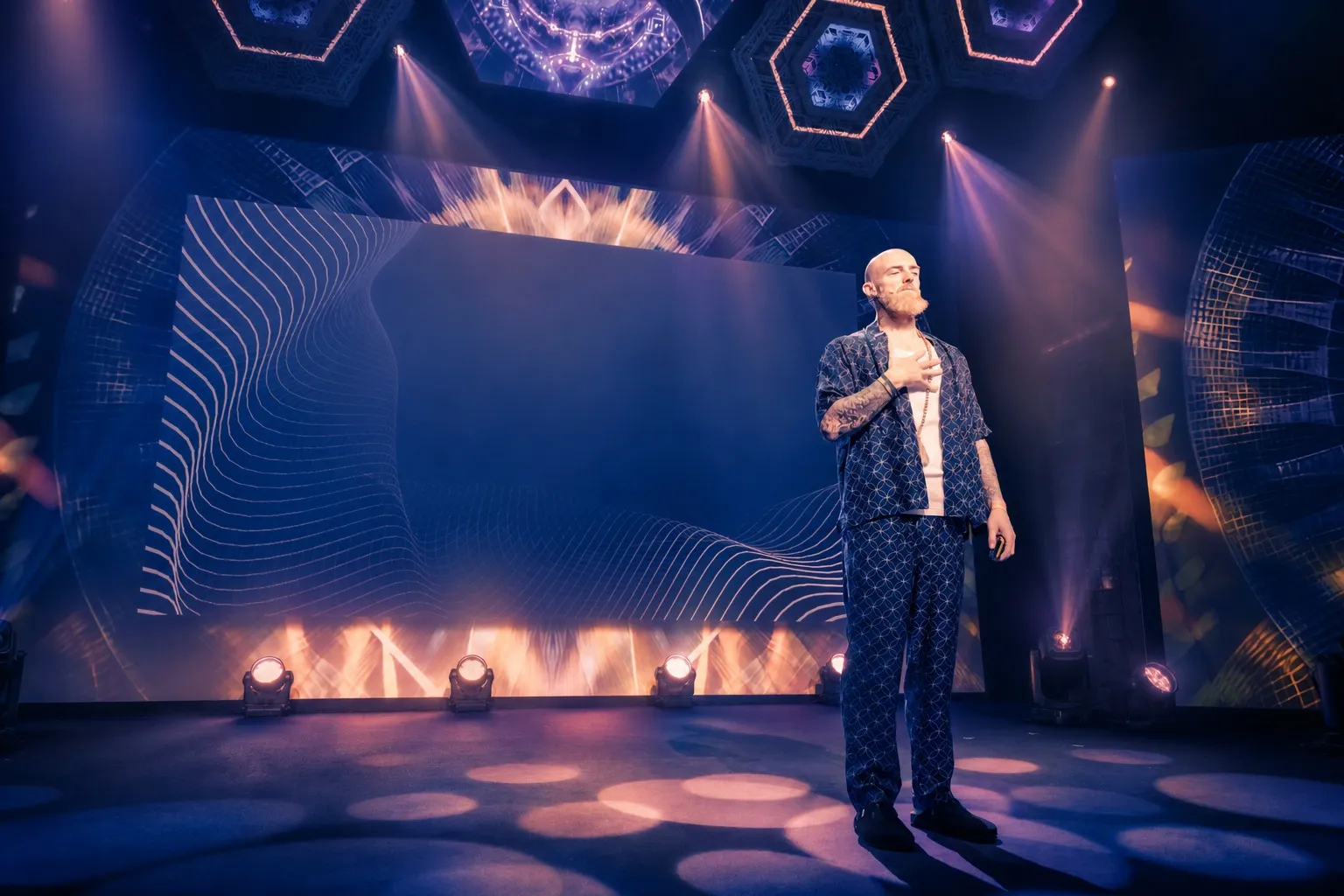
At Biohacker Summit 2023 Amsterdam, Leigh Ewin Asked A Radical Question Hidden In Plain Sight
On Saturday, 14 October 2023, at Biohacker Summit 2023 Amsterdam in the Netherlands, Leigh Ewin took to the stage with a proposition so simple it bordered on the subversive: the most important technology available to human beings was already inside them.
The presentation, titled Elemental Breathwork, unfolded less like a lecture than a collective recalibration. Ewin, an Australian author, breathwork facilitator, educator, freediver and founder of Cold Exposure Finland and Nasal.io, did not begin with performance metrics, bio-data or cold exposure protocols. He began by asking the room to close its eyes.

In a summit built around optimisation, enhancement and the endless sharpening of human capacity, Ewin turned attention toward the oldest rhythm of all. Breath, he argued, was not merely automatic. It was neglected. It was the bridge between body and mind, physiology and awareness, the individual and the group.
“You are already an expert at breathing,” he told the audience. “But ask yourself, how many of those thousands of breaths are you actually aware of and how many are you actually conscious of?”
The Forgotten Mastery Of 25,000 Daily Breaths
The force of Ewin’s talk lay in its ability to make the familiar feel astonishing. Humans, he reminded the audience, breathe about 25,000 times a day. Multiplied across years, the figure becomes immense, almost absurd in scale. Yet expertise, in the usual sense, is absent. Repetition has not guaranteed awareness.
That gap, between what the body does and what the mind notices, was the core tension of the session.
Breath, in Ewin’s framing, was not an ornamental wellness practice. It sat at the centre of energy production, hormone regulation and nervous system function. Without oxygen, the body could not convert food into usable energy. Without awareness, the breath itself became vulnerable to circumstance, shaped by stress, distraction and the pressures of the external world.
His message was direct: if breathing remained unconscious, then the environment would do the breathing for us.
Balance Was Not A Destination But A Moving Bridge
Ewin was sceptical of the language of perfect equilibrium. “Balance is not a static thing,” he said. “We are constantly moving about, trying to make adjustments. I believe there is a way to find balance on the bridge created between the physical breath and the mind.”
It was one of the defining ideas of the presentation. Breath was both mechanical and mysterious. It required muscular action, air drawn into the lungs, oxygen delivered into the body. Yet that same process changed mood, sharpened awareness and altered mental state. Somewhere in the sequence between inhale and exhale, Ewin suggested, a kind of lived balance emerged.
Not stillness, exactly. Not control in the rigid sense. Rather, a dynamic negotiation between physiology and consciousness.
This was where his work often departs from both clinical language and vague spiritual cliché. Ewin fused scientific reference with etymology, metaphor and embodied practice, making the case that breath was at once measurable and meaning-laden.
The Ancient Meanings Encoded In Breath
A large part of the session was devoted to language itself. Ewin traced the Latin root spirare, to breathe, and showed how deeply breath is woven into words that govern human aspiration, meaning and connection.
Respire, inspire, aspire, conspire, suspire, expire.
In his hands, these were not decorative linguistic coincidences. They became evidence of an older intuition, that breath and spirit, energy and intention, had long been understood as inseparable.
“Aspire means to breathe upon or breathe towards,” he said. “What are your aspirations? You need to breathe to the top of your field, your subject, and your passion.”
The line landed because it made ambition feel less abstract. Aspiration was no longer only psychological or professional. It became biological, lived through the body, pursued one breath at a time.
The Oxygen Mask As A Moral Instruction
Ewin’s metaphors were often disarmingly practical. One of the strongest came from the most routine of public safety briefings.
“The metaphor for life is right there in the airplane seat before you,” he said. “When the shit hits the fan, put the oxygen mask on yourself before you help anybody else.”
It was both a joke and a principle. Self-regulation, in Ewin’s account, was not selfishness. It was responsibility. To breathe well was to stabilise oneself before trying to stabilise the world.
That argument resonated beyond the usual self-care script. It pointed toward something more durable: an ethics of groundedness. If breath could shift the nervous system from reactivity to intention, then conscious breathing became a way of reclaiming agency in a culture of permanent overstimulation.
A Room Breathing Together Became Something Else
Then the theory gave way to practice.
Ewin led the audience through rhythmic breathing, inviting them into a four-second inhale and four-second exhale. He compared the action to drawing a bow, not with force, but with controlled ease. The effect was immediate. The room changed pace.
Later, he moved further, asking participants to pair up and breathe while embracing, introducing the term “suspire” as breathing under, a state of safety, support and held presence. For those unwilling to hug, self-embrace was offered. For those who joined in, the awkwardness quickly dissolved into laughter, softness and visible relief.
“This health journey can be lonely,” Ewin said. “But we are here to find the others. There is a bonding and uniting factor that happens when groups of people start breathing together as one.”
That was the emotional hinge of the talk. What began as an inquiry into respiration widened into a meditation on belonging.
From Aspiration To Conspiration
Ewin’s most compelling move was to recast “conspire”, a word that modern usage has darkened, as something intimate and communal: breathing together.
He drew parallels with choir singing, shared chanting and the Maori haka, pointing to the way collective rhythm can synchronise not just sound, but feeling. In his view, breathing in unison did more than create atmosphere. It altered biology, bringing people into alignment through nervous system resonance and hormonal shifts.
Whether framed scientifically, spiritually or socially, the implication was the same. Humans do not regulate only alone. They regulate with one another.
That idea carries particular force in a moment when health culture often slips into isolation, individual tracking and private optimisation. Ewin’s intervention at Biohacker Summit 2023 Amsterdam offered a corrective. The breath, he suggested, was not only a self-improvement tool. It was a social instrument.
Every Breath Counted Because Every Life Did
By the end, the room was vocalising together, exhaling in a long communal sound, hands linked, breathing as one. It was part ritual, part experiment, part release.
Ewin closed by returning to another breath-rooted word: expire, the final breath.
It gave the session its sharpest edge. Conscious breathing, in his telling, was not merely about calm, clarity or performance. It was about mortality. About refusing to sleepwalk through the thousands upon thousands of breaths that make a life.
“Make every single breath count,” he urged the crowd.
At a conference devoted to future health, longevity and biological upgrade, Leigh Ewin’s presentation was striking for its restraint. It did not ask the audience to become something other than human. It asked them, instead, to inhabit humanity more fully.
And for a few minutes in Amsterdam, that looked like a room full of strangers remembering the oldest act they shared.
Frequently asked questions
How many breaths do we take each day?
About 25,000, a figure Leigh Ewin used to make the familiar feel astonishing. Multiplied across years it becomes immense, yet expertise in the usual sense is absent. That gap between what the body does and what the mind notices was the core tension of the session.
Is balance a fixed state?
Ewin was sceptical of perfect equilibrium. Balance is not a static thing, he said; we are constantly moving about, trying to make adjustments. He proposed finding balance instead on the bridge created between the physical breath and the mind.
What does language reveal about breath?
Ewin traced the Latin root spirare, to breathe, and showed how deeply breath runs through words governing human aspiration and connection: respire, inspire, aspire, conspire, suspire and expire. The etymology carried much of the session's argument.
About the event
This recap is part of the Biohacker Summit 2023 Amsterdam series, recorded in Amsterdam on 14 and 15 October 2023. Read the summary of the whole event or join the next edition, HOLOLIFE Summit 2026 Amsterdam, on 14 and 15 November 2026.
In this story
Comments
Loading comments…