The zen of letting go: how a Kyoto temple is fusing ancient practice with contemporary art
By Teemu Arina · · Updated
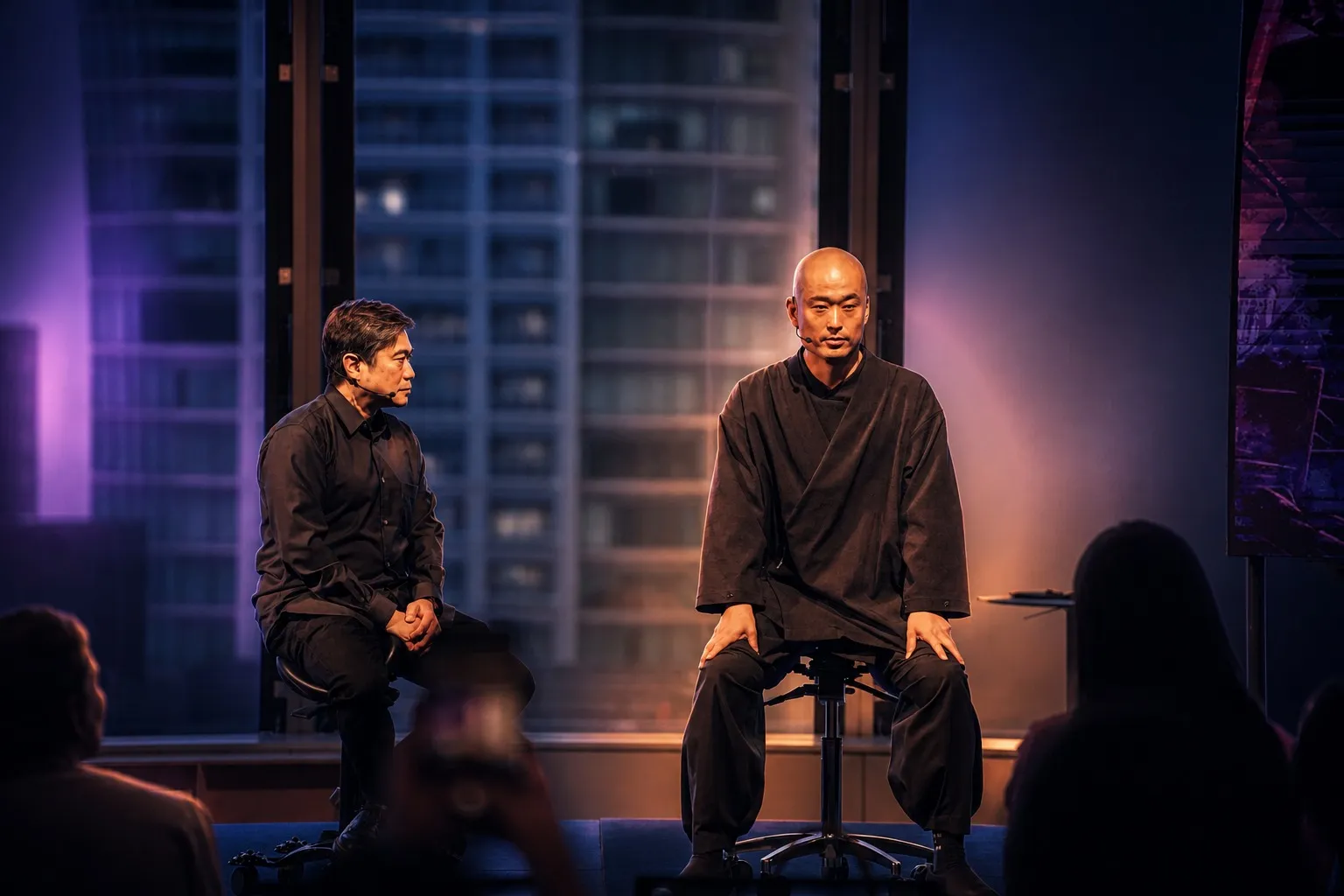
Vice abbot Toryo Ito discusses the challenging work of keeping traditional Japanese aesthetics alive in the modern world
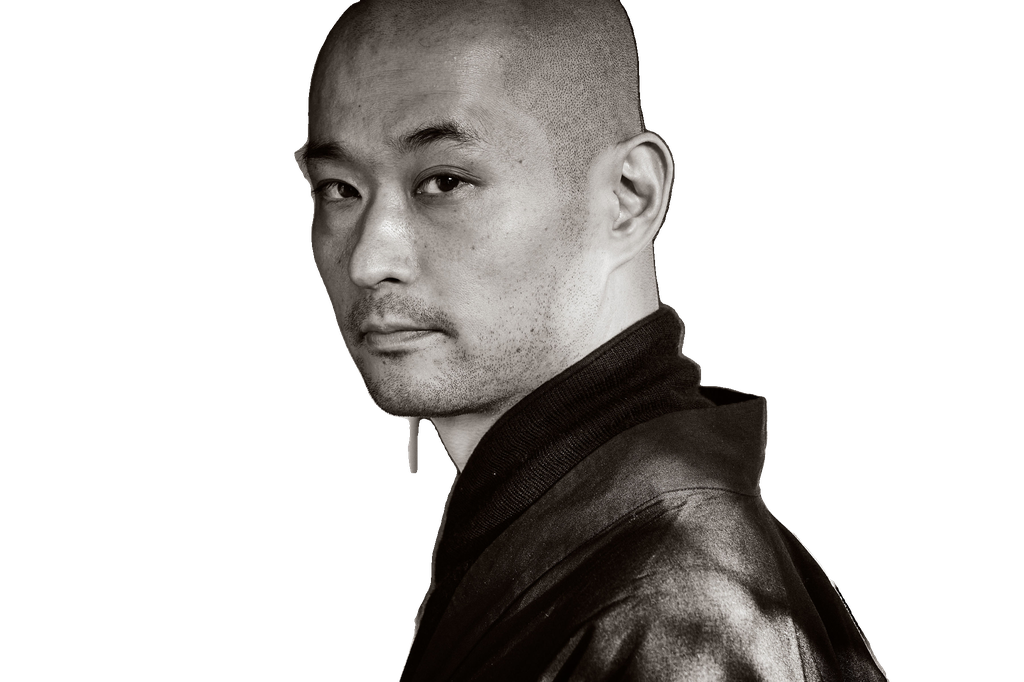
At a historic Kyoto temple with over 660 years of history, Toryo Ito has spent more than two decades trying to make zen practice accessible to contemporary audiences. But the vice abbot of Ryosokuin temple isn't simply teaching meditation in traditional forms. Instead, he's creating something far more unusual: inviting contemporary artists to live, create and exhibit within the temple grounds, whilst grappling with fundamental questions about how ancient spiritual practices can remain relevant in an age of technology and distraction.
Speaking at the Hololife Summit 2025 in Tokyo, Ito outlined an approach to zen and Japanese aesthetics that refuses easy categorisation. Rather than treating the temple as a museum for past achievements, he described it as an active site of creation, where artists share meals of rice porridge, participate in tea ceremonies, and absorb Japanese aesthetic sensibilities before producing new work that sometimes becomes part of the temple's permanent collection.
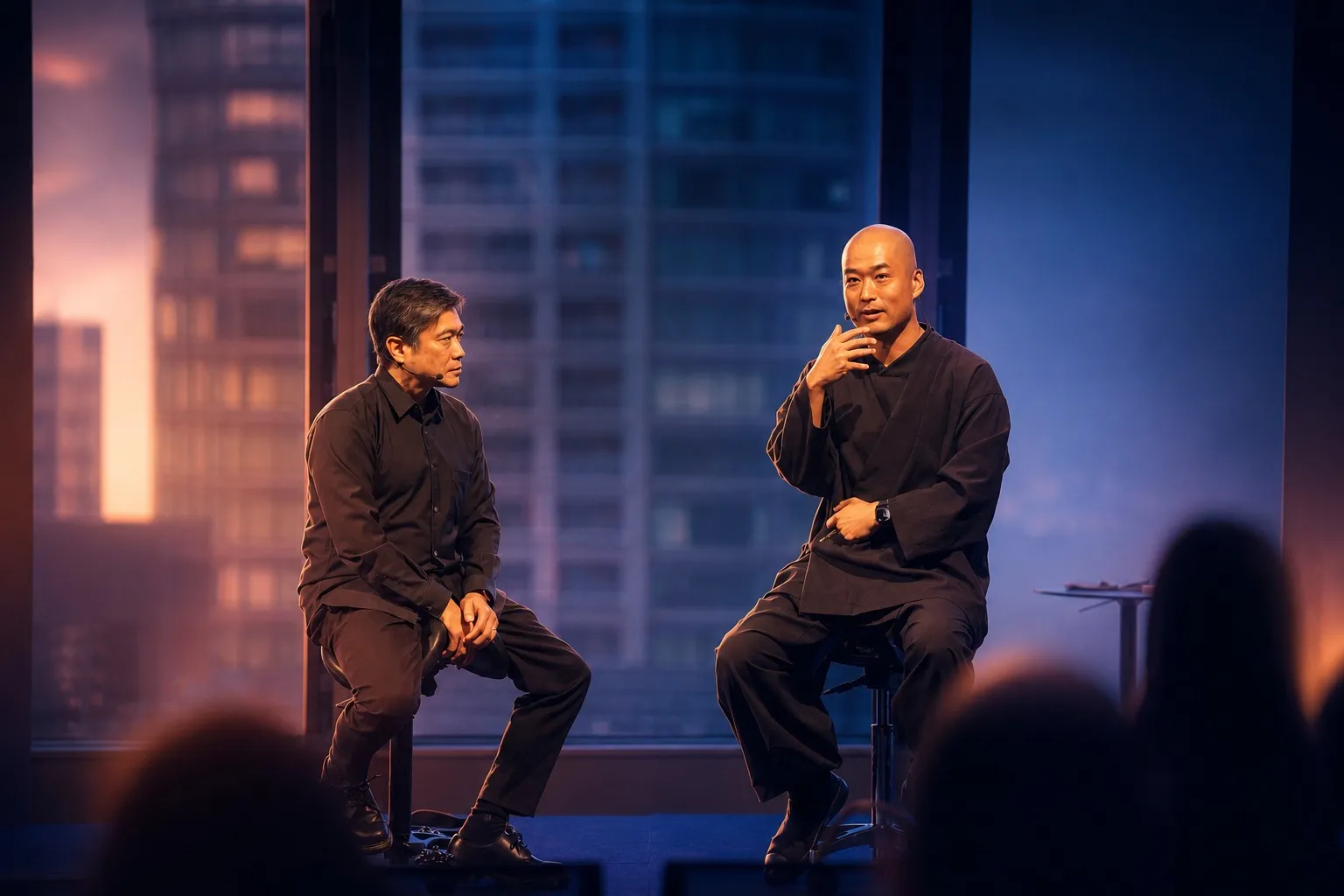
Beyond surface beauty
The concept of aesthetics in Japanese culture, Ito explained, extends far beyond the English word's association with cosmetics or superficial beauty. At its heart lies a profound respect for the natural world, for other people, and for human-made objects. "We must live with respect and reverence," he said. "Respect for nature, respect for people, and respect for the tools and objects that people create."
This attitude of reverence connects directly to zen practice, which Ito described as fundamentally concerned with releasing attachment. The challenge, he suggested, lies in distinguishing between beneficial habits and mere attachments. "The important thing in zen teaching is liberation from attachment," he explained. "Attachment lurks even in the habits we continue daily. Whether something is a good habit or just an attachment is a difficult boundary."
Contemporary art, in this framework, serves a specific spiritual function. It offers new perspectives and stimuli that can help practitioners recognise and release unnecessary attachments. "Art often gives suggestions about this, adds perspectives we've never had before, and through receiving stimulation, creates opportunities to break away from habits and reduce wasteful attachment," Ito said.
The paradox of tea and possessions
This philosophy creates an apparent paradox within traditional Japanese tea culture, where practitioners often develop extensive collections of valuable tea implements and create carefully curated spaces. When asked about this tension between zen non-attachment and the collector culture surrounding tea ceremony, Ito acknowledged the complexity.
"There is a part where aesthetic consciousness and collector culture are somewhat separated in terms of spirituality," he said. Whilst tea rooms and their implements can facilitate the careful, mindful practice of ichigo ichie (one time, one meeting), they can also become objects of possession and pride. "When you try to create your own worldview, the tea room space itself feels like self-owned property, and you can become obsessed with the works you own."
The original spirit of tea, Ito suggested, should allow any space to become a tea room and any paper cup to serve as a tea vessel. This flexibility and adaptability, rather than rigid adherence to specific forms, represents the true intersection of zen and tea practice.
The challenge of tradition
Both zen and tea ceremony face significant challenges in remaining vital traditions. Tea ceremony, which took its modern form around 600 years ago through masters like Murata Juko and Sen no Rikyu, was originally conceived as a reform movement, simplifying and refining Buddhist practice. Yet over centuries, both zen and tea have developed their own elaborate structures and hierarchies.
"The essence of zen is about how to strip away Buddhism that had become too inflated and return to its origins," Ito explained. "It's about deconstructing things that have been over-constructed and gathering important transitions once again." By this logic, authentic zen practice should continually evolve rather than crystallise into fixed forms.
The difficulty lies in balancing preservation of essential teachings with necessary adaptation. Traditional transmission methods in zen rely heavily on intensive one-to-one relationships between teacher and student, focused on subtle physical and experiential understanding that resists standardisation. This approach creates deep knowledge but narrow reach.
"This is a major challenge," Ito acknowledged. "Lineage has valued deep one-on-one physical sensory exchanges, but this inevitably tends to create narrow communities and leads to personnel shortages."
Technology as potential ally
Rather than rejecting modern technology as antithetical to zen practice, Ito sees potential value in digital tools. Whilst some contemporary movements use technology to extend life indefinitely or optimise every aspect of existence, zen traditionally moves in the opposite direction, towards acceptance and release. Yet these approaches might not be entirely incompatible.
"Technology can also help us view ourselves objectively, so in that sense, I think there's a possibility it could bring us closer to an egoless sense of values," Ito suggested. He noted that tea itself was once considered a form of biohacking, a technology for altered consciousness. "At that time, tea was also technology. I think we should actively incorporate proper technology."
Digital platforms and tools might help lower initial barriers to practice, making regular meditation or tea practice more accessible. Apps that support habit formation or provide guided instruction could serve genuine spiritual purposes, as long as they facilitate rather than replace direct physical experience.
The irreplaceable body
Despite this openness to technology, Ito emphasised the irreplaceable importance of physical presence and bodily experience. Speaking about his experience creating a small tea room at university, he reflected on how physical proximity and shared activity create connections that virtual interaction cannot replicate.
"The important thing is really physical experience," he said. "By spending time together at a physical distance, harmony of mind and body is born." Architectural spaces themselves function as a kind of technology, shaping experience through material means. The tea room's intimate scale, the practice of removing shoes, the specific postures and movements all contribute to an embodied understanding that resists pure intellectual transmission.
This emphasis on physical experience creates tension with the need to expand access and reach new audiences. The challenge becomes finding ways to invite people into genuine practice without diluting its essence or overwhelming sacred spaces with casual tourism.
Opening closed doors
Ryosokuin temple itself reflects this tension. Rather than opening freely to all visitors, Ito maintains careful control over access to preserve the possibility of deep, meaningful encounters. "If we suddenly open up, everything will be crushed by tourism," he explained. Yet he remains committed to creating opportunities for authentic engagement, suggesting that interested individuals contact the temple directly.
The temple's approach includes practices like walking meditation, which Ito finds more accessible than extended seated practice for many people. "If everyone just sits, it becomes too difficult, so I guide walking meditation as well," he noted.
Looking forward, Ito sees the need for Japanese zen practice to absorb energy and perspectives from abroad. He noted that in some cases, international practitioners of Japanese martial arts or tea ceremony maintain more rigorous standards than contemporary Japanese practitioners. This external enthusiasm and commitment might prove vital for renewal.
Continuous transformation
Throughout the conversation, Ito returned repeatedly to the idea that authentic zen cannot become static. "When we decide 'this is zen' and stop there, in my mind it's no longer zen," he said. Rather than defending a fixed tradition, his practice involves continuous questioning about what constitutes genuine spiritual wealth in contemporary circumstances.
This approach requires courage to challenge inherited forms whilst maintaining connection to essential teachings. It means engaging seriously with contemporary art, technology, and global exchange whilst preserving spaces for deep contemplative practice. It accepts that the precise forms these practices take will and should continue evolving.
"I want to keep changing rather than absolutely wanting to do it in this form," Ito said. This commitment to transformation, grounded in the fundamental principle of releasing attachment, might itself represent the most authentic form of traditional practice.
For those willing to remove their shoes and enter with genuine curiosity, Ryosokuin temple offers something increasingly rare: a living tradition actively wrestling with how ancient wisdom can address contemporary life, neither frozen in historical forms nor dissolved into fashionable approximation.
Frequently asked questions
Who is Toryo Ito and what does he do at Ryosokuin?
Toryo Ito is the vice abbot of Ryosokuin, a Kyoto temple with over 660 years of history. For more than two decades he has worked to make zen practice accessible to contemporary audiences, including by inviting contemporary artists to live, create and exhibit within the temple grounds.
Why does the temple limit public access?
Ito keeps careful control over who comes in, on the grounds that opening up suddenly would let tourism crush the very thing visitors come for. He would rather preserve the possibility of a deep, meaningful encounter, and asks interested people to contact the temple directly instead.
Can technology sit alongside zen practice?
Ito thinks it can, up to a point. He sees value in digital tools that help people view themselves objectively, even though zen moves towards acceptance and release while much of the optimisation movement moves towards endless extension. What technology cannot replace, he insisted, is physical experience: time spent together in a physical space creates connection that virtual interaction does not.
About the event
This recap is part of the HOLOLIFE Summit 2025 Tokyo series, recorded in Tokyo on 10 and 11 October 2025. Read the summary of the whole event or join the next edition, HOLOLIFE Summit 2026 Amsterdam, on 14 and 15 November 2026.
In this story
Comments
Loading comments…