Rethinking time and longevity through Japanese wisdom and modern science
By Teemu Arina · · Updated

Ancient philosophy meets cutting-edge biohacking at Tokyo summit
At the Hololife Summit 2025 in Tokyo, Tateki Matsuda challenged Western assumptions about time, testosterone and human optimization, offering a uniquely Japanese perspective on longevity that transcends mere life extension.
Time as visitor, not resource

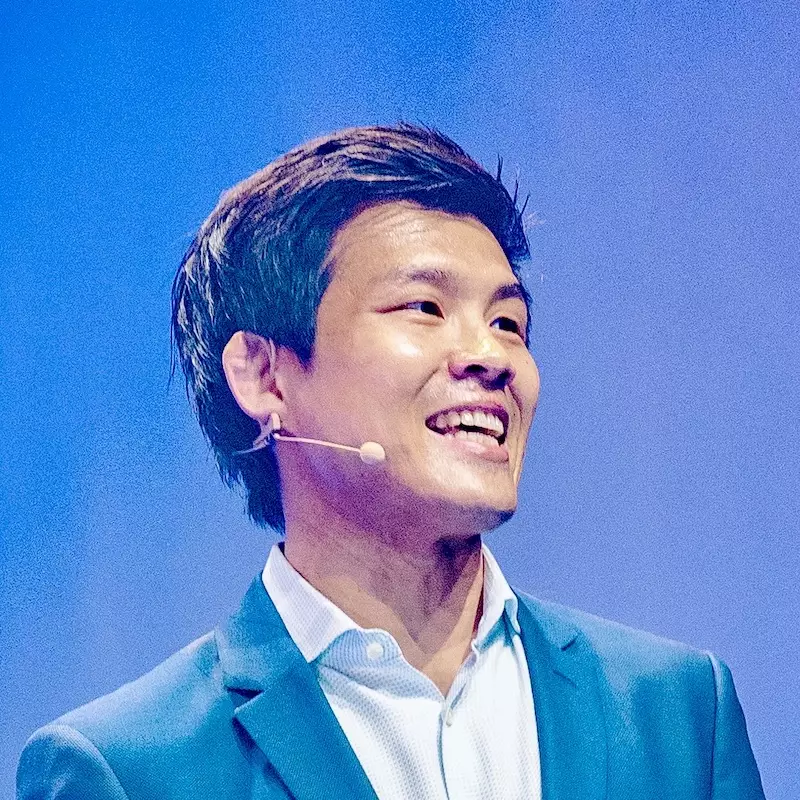
Matsuda, founder of HOLOLIFE Center Japan and former UFC fighter, opened his presentation with a striking philosophical contrast. Before the Meiji era, Japanese culture conceived of time not as something to be travelled through, but as something approaching the individual. This stands in stark opposition to the Western notion of time as a resource to be managed and controlled.
"Time is not absolute; novelty expands subjective time, so when you stop noticing, you stop stretching the time," Matsuda explained, drawing on both Einstein's relativity and developmental psychology. For a three-year-old child, one year represents a third of their entire existence, making time feel expansive. For a thirty-year-old, that same period constitutes merely a fraction of accumulated experience, causing time to seemingly accelerate.
This perception has profound implications for those pursuing longevity. If life extension simply means more years of diminished presence and awareness, Matsuda suggested, we may be extending quantity whilst sacrificing quality.
The burnout of future-chasing
The health consultant, who holds degrees in sports movement science and applied nutrition, warned against the modern tendency toward relentless optimization. "Optimization without reflection leads to acceleration but not evolution; we are not human beings, but human becomings—we are what we repeat," he said.
His critique targeted the productivity-obsessed mindset that treats every moment as an opportunity for improvement, arguing that constantly chasing the future inevitably sacrifices the present. For those planning to live to 120 or even 200 years, this creates a paradox: the very strategies employed to extend life may diminish the capacity to actually experience it.
Respecting biological rhythms
Matsuda devoted considerable attention to circadian and infradian rhythms, emphasizing that effective biohacking must respect these fundamental biological cycles rather than attempting to override them. He detailed the 24-hour circadian rhythm, from morning cortisol spikes that raise blood glucose to the evening strength peaks and nighttime melatonin production triggered by morning sunlight exposure.
More provocatively, he highlighted how mainstream health research has largely ignored female infradian rhythms. Women experience hormonal cycles spanning 28 to 36 days, yet most drug research uses male subjects, creating a knowledge gap about female biology. True optimization, he argued, requires acknowledging and working with this biological variability rather than applying one-size-fits-all protocols.
The testosterone question
Whilst discussing hormonal health, Matsuda touched on the global decline in testosterone levels, noting that modern men average about 100 points lower than their counterparts from thirty years ago. This decline, he suggested, has implications beyond physical health, affecting motivation, social behavior and mental wellbeing.
"Testosterone boosts strength, energy, focus, confidence, and mood, enhancing persistence and intensity of focus," he noted, adding that it "increases motivation for status and competition, encouraging you to be the best in your social context."
The former fighter connected this hormonal shift to broader societal patterns, including increased risk aversion and declining social engagement, particularly among young men.
Silicon and cellular health
Matsuda also discussed emerging research on silicon-based agents that generate hydrogen in the intestines over 24 hours. These molecules neutralize harmful hydroxyl radicals, potentially preventing age-related diseases and improving conditions ranging from dermatitis to diabetes.
The mechanism represents a novel approach to reducing oxidative stress, a major factor in chronic disease and aging. By keeping oxidative damage below the body's repair threshold, such interventions might extend both lifespan and healthspan.
The social time curve
Perhaps most poignantly, Matsuda addressed what he called the "social time curve." As humans age, time spent alone typically increases whilst time with friends and family decreases. For those pursuing radical life extension, this presents a challenge: are we prepared for the potentially profound solitude of living to 120 or beyond?
"Good relationships make people happy and healthy; the clearest factor in a satisfying life is time spent with loved ones," he said, citing long-term research on wellbeing. Yet every social interaction, he suggested, deepens one's "inner time mass," the accumulated weight of meaningful experience that gives life texture and significance.
Lessons from the cage
Drawing on his experience as a mixed martial artist and former UFC fighter, Matsuda spoke about presence and the dissolution of time in moments of complete engagement. In the cage, he explained, there is no future or past, only immediate response to the present moment. React too late, and you get knocked out.
This fighter's mindfulness, he suggested, offers a model for living at any age. The Zen meditation practice that has long been part of Japanese culture quiets mental noise and reduces stress, but Western efficiency culture often pulls people away from such contemplative practices.
Synchronization over control
Matsuda's central thesis emerged most clearly in his closing remarks. Rather than attempting to master or control time through ever more sophisticated optimization techniques, he advocated for synchronization with natural rhythms. He invoked his mother's name, Kazuko, meaning "harmonize," as emblematic of Japanese cultural expertise in working with rather than against natural patterns.
"Science decodes the structure of time, while culture shapes how we use it and returns us to the moment," he said. "Live not just longer, but deeper. Synchronize with time, don't chase it."
A different longevity
For an audience gathered to learn about extending human lifespan through biohacking and technology, Matsuda's message offered a corrective perspective. The tools of longevity science—from wearable devices monitoring circadian rhythms to supplements supporting hormonal health—remain valuable, but only when employed within a broader philosophical framework that values presence, harmony and depth of experience.
As the first generation seriously contemplating radical life extension confronts the reality that there are no 120-year-old biohackers yet to serve as guides, Matsuda's integration of ancient Japanese wisdom with modern science suggests a path forward. True longevity may require not just better biochemistry, but better relationship with time itself.
The question, ultimately, is not simply how long we can live, but how deeply we can experience the years we have. For Matsuda, born and raised in Tokyo but calling Boston his second home, the answer lies in neither purely Eastern nor Western approaches, but in a thoughtful synthesis that honors biological reality whilst cultivating presence and meaning.
Time, after all, approaches whether we are ready or not. The choice is whether to meet it with grasping anxiety or receptive awareness.
Frequently asked questions
How did pre-Meiji Japan think about time?
Matsuda contrasted the Western idea of time as a resource to be managed with the older Japanese conception of time as something approaching the individual rather than something we travel through. He added that novelty expands subjective time, so when you stop noticing, you stop stretching time.
Why can longevity without presence be a bad trade?
For a three-year-old, a year is a third of everything they have lived, so time feels expansive; for a thirty-year-old it is a small fraction, so time appears to accelerate. Matsuda's warning is that extending life without attention adds years of diminished presence, and that optimisation without reflection produces acceleration rather than evolution.
What is the social time curve?
Matsuda's term for the way time spent alone tends to rise with age while time with friends and family falls. He put the question to anyone planning to reach 120: are we prepared for that solitude? His answer leaned on long-term wellbeing research showing the clearest factor in a satisfying life is time spent with loved ones.
About the event
This recap is part of the HOLOLIFE Summit 2025 Tokyo series, recorded in Tokyo on 10 and 11 October 2025. Read the summary of the whole event or join the next edition, HOLOLIFE Summit 2026 Amsterdam, on 14 and 15 November 2026.
In this story
Comments
Loading comments…