The overhacking trap: Health expert warns against complexity in pursuit of longevity
By Teemu Arina · · Updated
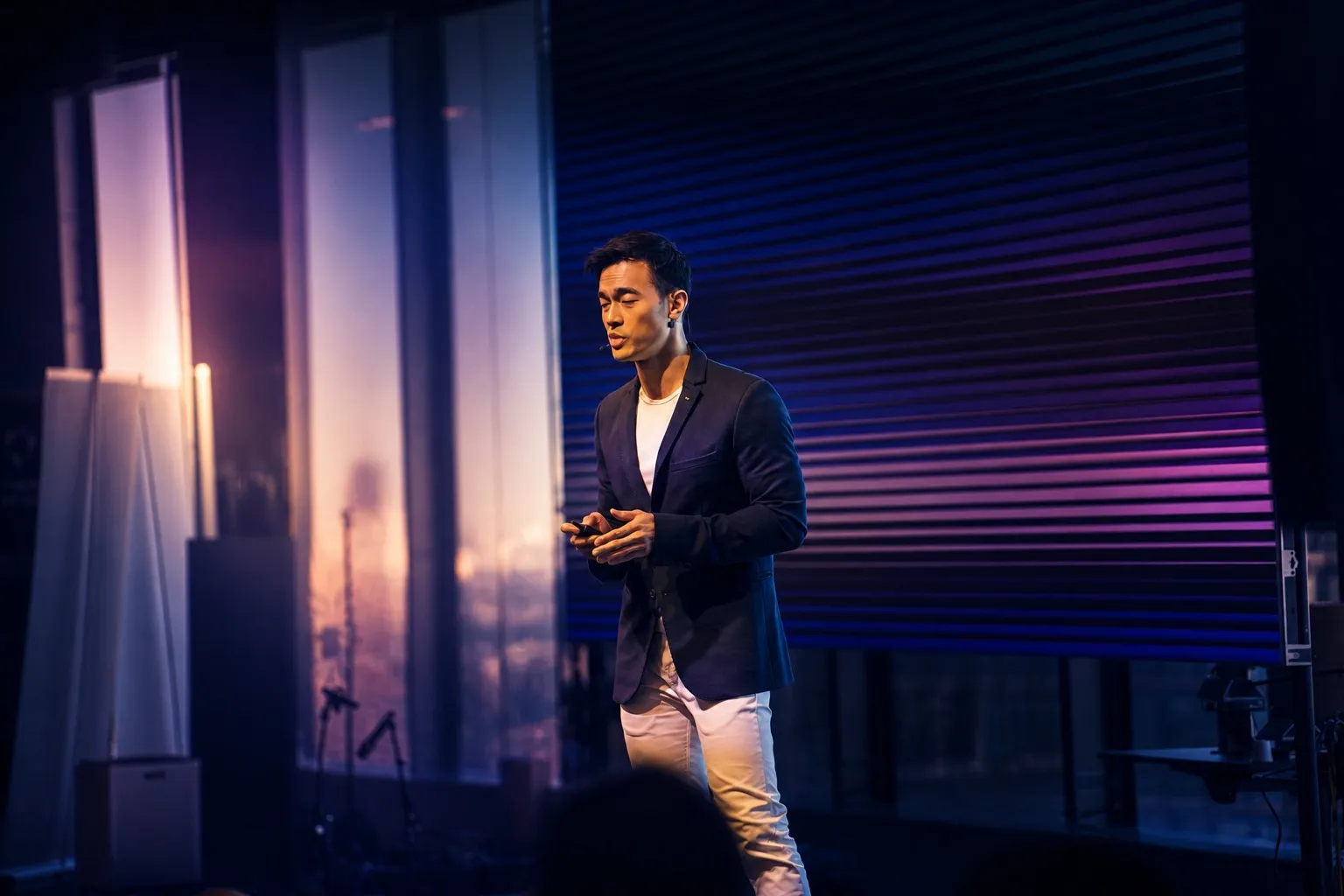
At Tokyo's Hololife Summit, nutrition specialist Kit Mah challenged the biohacking community to embrace simplicity over extravagant interventions

The wisdom of Sakichi Toyoda
When Kit Mah took to the stage at the Hololife Summit in Tokyo last Thursday, he began not with cutting-edge technology or revolutionary treatments, but with the story of a Japanese carpenter's son from the 1800s.
"Sakichi Toyoda revolutionized the textile industry with a wooden loom that stopped automatically when threads broke," Mah told the audience gathered at the summit's opening day. "While the whole world was focused on complexity, he had clarity rooted in simplicity and fundamentals."
This historical reference set the tone for Mah's provocative presentation titled "Are We Overhacking?" – a critical examination of the biohacking movement's increasing fixation on complex, expensive interventions at the expense of proven fundamentals.
The four pillars overlooked by biohackers
Drawing on his experience as a nutritional and functional medicine practitioner, Mah argued that the most effective health interventions aren't the latest supplements or specialized protocols, but rather four essential pillars: exercise, lifestyle, diet, and nutrition.
"These principles have stood the test of time," Mah said. "If there is one thing that consistently moves the needle in health, it is these four fundamental areas – not overhyped treatments or miracle cures."
In an era where biohackers often sport continuous glucose monitors and follow elaborate supplement regimens, Mah's message was refreshingly straightforward: the basics still matter most.
Environmental toxins: the overlooked health threat
A significant portion of Mah's talk addressed environmental chemicals that disrupt endocrine function, contributing to chronic disease. He specifically highlighted phthalates – chemicals commonly found in fragranced personal care products – as a significant concern.
"An 82-year-old male with stage four prostate cancer showed elevated levels of xenoestrogens and phthalates, despite his claim to avoid plastics," Mah shared as a case study. "These endocrine-disrupting chemicals are also found in personal care products, especially those with fragrances."
The presentation emphasized how exposure routes include not just oral ingestion but inhalation of indoor air pollutants and dermal absorption through skincare products – pathways often overlooked in health optimization discussions.
The supplement quality crisis
Perhaps most alarming was Mah's critique of the supplement industry, where he claimed many products fail to contain their advertised ingredients and often include harmful additives.
"Not all supplements are trustworthy," he warned. "Some contain harmful fillers and coatings, such as titanium dioxide – a possible carcinogen banned in food in some countries but still present in many supplements, pharmaceuticals, and cosmetics."
Mah advised summit attendees to seek products with third-party certificates of analysis and consider compounded supplements to minimize unnecessary additives and fillers.
Beyond the basics: emerging therapies with promise
Despite his emphasis on fundamentals, Mah didn't dismiss advanced interventions entirely. He highlighted peptides as showing particular promise, sharing examples from his practice where they've "healed leaky gut, skin issues, and even helped patients avoid surgery."
"Gene therapies, stem cells, and advanced technologies will continue to unfold," Mah acknowledged. "There will always be complexity and discovery ahead."
The presentation struck a balance between advocating for foundational practices and remaining open to evidence-based innovation.
The Toyoda lesson for modern health seekers
Mah concluded by returning to Sakichi Toyoda, suggesting that the inventor was "ahead of his time, mastering 'biohacking' by optimizing systems for their intended outcome before the term even existed."
The message resonated with attendees at the three-day summit, which continues through Saturday with further presentations on health optimization, longevity, and biotechnology.
As the biohacking movement gains mainstream attention, Mah's call to prioritize time-tested fundamentals over complex interventions serves as a timely reminder: sometimes the most powerful hack is returning to what we already know works.
Frequently asked questions
What are the four pillars Kit Mah says matter most?
Exercise, lifestyle, diet and nutrition. Kit Mah, a nutritional and functional medicine practitioner, argued at the Tokyo summit that these four fundamentals consistently move the needle in health, and that chasing the newest supplement or specialised protocol usually adds complexity without adding benefit.
Why did he warn about titanium dioxide in supplements?
Mah told the summit that not all supplements are trustworthy: some carry harmful fillers and coatings such as titanium dioxide, a possible carcinogen banned in food in some countries yet still present in many supplements, pharmaceuticals and cosmetics. His wider point was that a poor-quality product can undo the benefit it was bought for.
What was the Sakichi Toyoda lesson about biohacking?
Sakichi Toyoda, a carpenter's son from the 1800s, built a wooden loom that stopped automatically when a thread broke. Mah used him as the model biohacker: while the rest of the world chased complexity, Toyoda optimised a system to perform exactly as intended. The lesson is that clarity and fundamentals beat extravagance.
About the event
This recap is part of the HOLOLIFE Summit 2025 Tokyo series, recorded in Tokyo on 10 and 11 October 2025. Read the summary of the whole event or join the next edition, HOLOLIFE Summit 2026 Amsterdam, on 14 and 15 November 2026.
In this story
Comments
Loading comments…