HOLOLIFE Summit 2026 Amsterdam
Why I breathed hydrogen through my eyes
By Teemu Arina ·
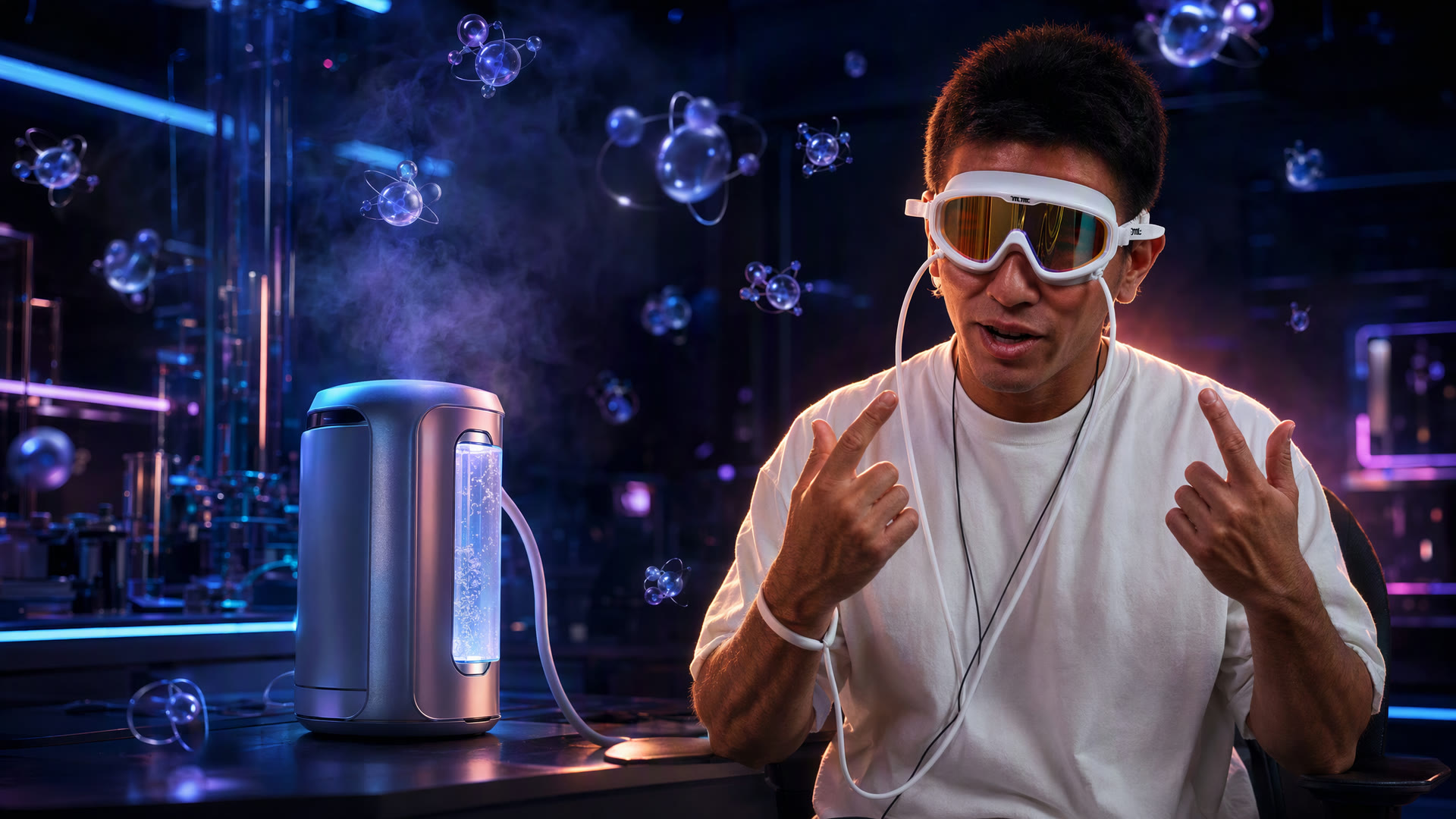
I recorded my latest podcast wearing white goggles with tubes coming out of them. A machine hummed next to me for the whole hour.
No, I wasn't going to the slopes. I was breathing atomic hydrogen. Through my nose, and through my eyes.
My guest was Masahisa Miwa, vice president of Miwa Kankyo, the Japanese family company behind the My Mother HHO inhaler. His mother Yuko founded the company and holds the patent. Today their machines run in more than 200 clinics in Japan. We talked for an hour on the new Biohacker's Podcast episode, Atomic Hydrogen With Masahisa Miwa. Listen here.
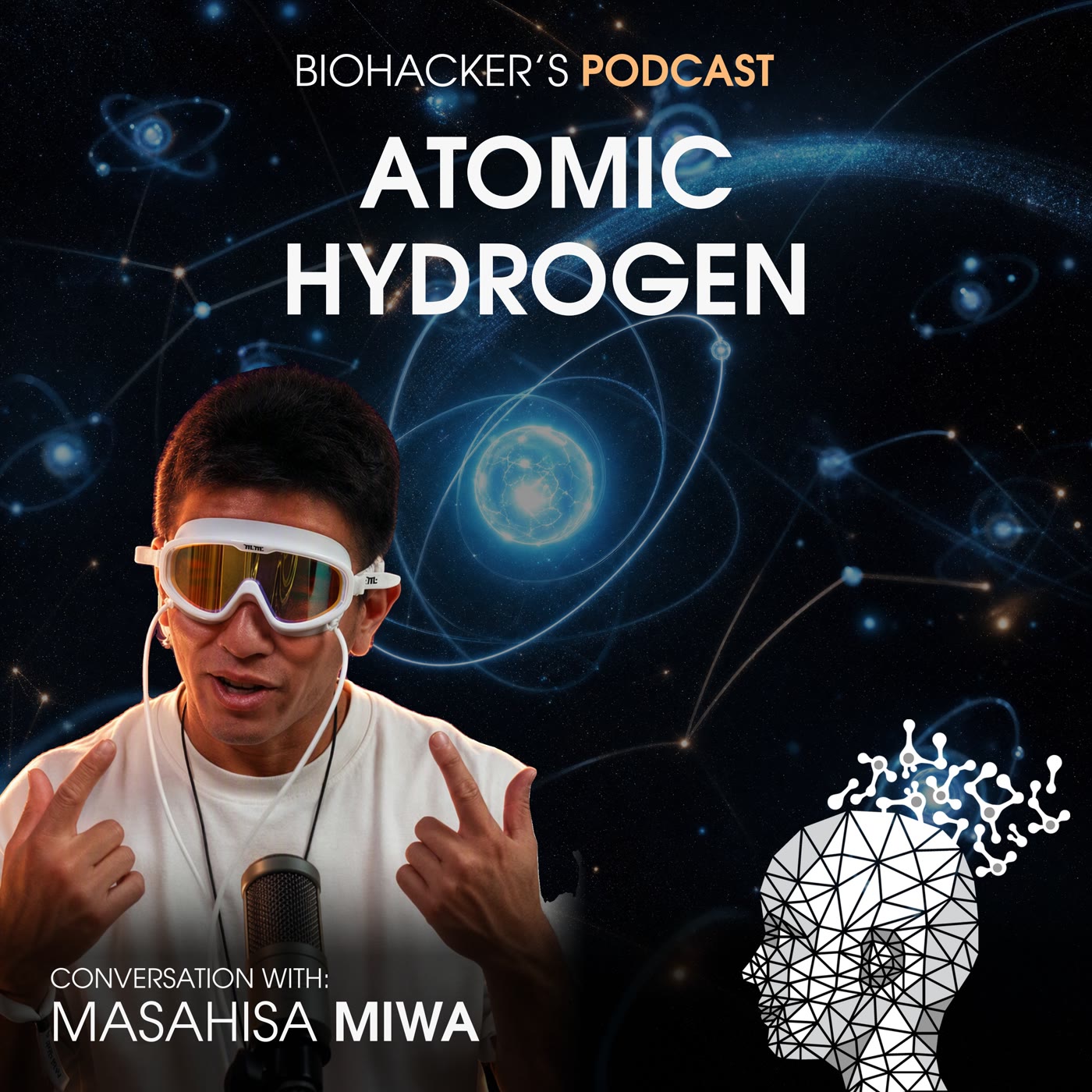
Here are five things I took from the conversation.
1. It's not the hydrogen you think
The machine splits water. What you breathe is about 66% hydrogen and 33% oxygen, not the pure molecular hydrogen most biohackers know.
Masahisa's case is about size. His company measured its particles at 50 to 150 nanometers, and he argues that smaller, charged particles get further into the cell. Otherwise, "it's just going to bounce off the, the wall, just like you take a big balloon from the gym like this and you throw it to the window."
He doesn't dismiss molecular hydrogen. He takes hydrogen supplements himself and calls it "a great technology for if you want to have great gut health."
2. Through the eyes, toward the brain
"The goggles are penetrating through the cornea and in the eyes and through the brain."
His example is a Japanese university volleyball team at a three-day national tournament, where sun glare off the sand burns the cornea. With goggles and a hydrogen bath after day one, he says the players were fully recovered on day two. Both the men's and the women's teams went on to win.
So I asked for myself. After 10 hours of vibe coding, will this help my eyes? "This is definitely gonna help you out." In summer he even puts ice in the bottle for a cooling effect.

3. Quality is not a detail
The market is full of cheap hydrogen bottles. Masahisa explained the difference between submerged "wet cell" electrodes and his company's patented "dry cell" design, and he warns that stainless steel electrodes "will disappear" over time. "I'm not in a business of saying negative things about other companies, but I would like people to be very careful and do the due diligence."
I added my own rule: if something mobilises heavy metals, pair it with binders.
4. A bigger battery, not a magic pill
"We don't see the hydrogen machine as like, take this pill, take this thing, and you go to the space." What he wants is "this extra oomph or extra battery, you know, for your camera," the kind of energy that makes you skip the train, the bus and the cab, and walk.
His view of the mechanism runs through the mitochondria. They run on protons, a proton is an H, and more H means more fuel for making ATP. He wants every doctor who uses the machine to measure it with an ATP meter, before, during and after.
5. Why "My Mother"?
When you're five, sick, maybe bullied, and your father is never home, who do you think about? "My Mother is there to help you."
We ended on the real meaning of ikigai. In the West it has become "being paid to do what you want and be useful." In Japanese, "iki means to live, and then gai means the purpose to live." Masahisa told the story of a gardener who sweeps the same floor every day because he wants to see the trees flourish. In Japan, he says, that purpose is "already there. They don't even realize."
Parts of the research are still early, and Masahisa says so himself. But it is a rare look at how seriously Japan takes this technology, and at the craftsmanship behind it.
Masahisa will be at HOLOLIFE Summit in Amsterdam on 14 and 15 November. Bring your questions and try the goggles yourself.
The full conversation is 59 minutes. Listen on Spotify, Apple Podcasts or Amazon Music, and watch the short clip on Instagram.
In this story


Comments
Loading comments…