The 120-year lifespan: How AI and epigenetics are revolutionising human longevity
By Teemu Arina · · Updated
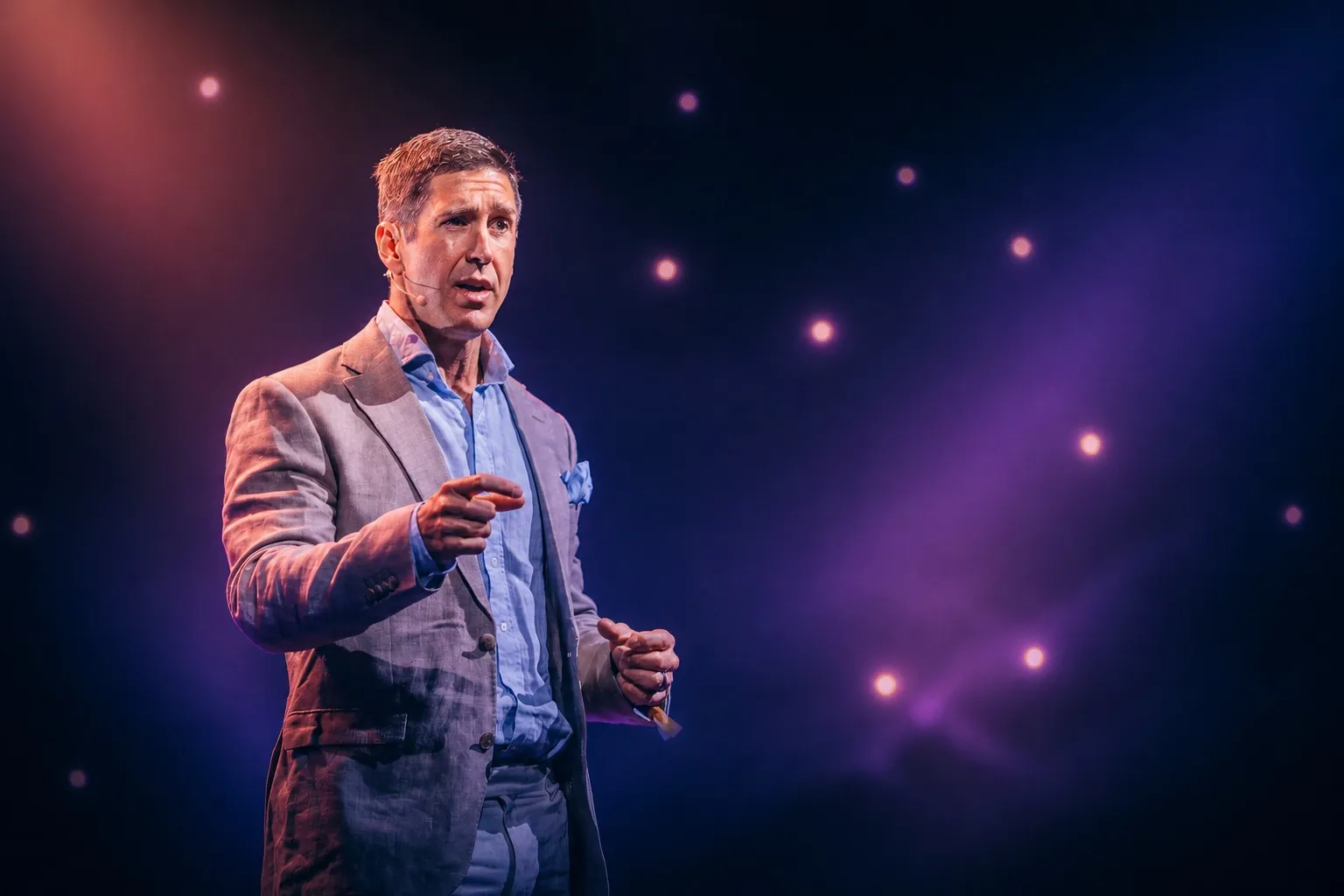
Dr. Matt Dawson unveils groundbreaking approach to extending healthspan at HOLOLIFE Summit in Estonia
At the cutting edge of longevity science, a revolution is quietly unfolding. Last week in Tallinn, Estonia, attendees at the HOLOLIFE Summit 2025 witnessed what might be remembered as a pivotal moment in humanity's quest to extend healthy life.
Dr. Matt Dawson, CEO of TruDiagnostic and a specialist in precision medicine, delivered a compelling presentation demonstrating how the convergence of artificial intelligence and epigenetics is transforming our understanding of ageing – and potentially extending human lifespan beyond what many thought possible.

"Every health problem is a data problem," Dr. Dawson told the rapt audience at the Tallinn gathering. "If you're sick, I need data about what's going on with you, so I know what to do about it. If you're not sick, I need to know your risk factors and how to prevent those to optimise your health now."
From personal tragedy to scientific breakthrough
Dawson's journey into longevity science began with a personal tragedy – watching his grandmother suffer from Alzheimer's disease. When his mother was subsequently found to carry genetic risk factors for dementia, he embarked on a data-driven approach to her health that yielded remarkable results.
"Over about three months of implementing this extremely personalised, data-driven plan, she lost forty pounds, reversed her insulin resistance, and told me that she felt twenty years younger," Dawson explained.
The problem, he acknowledged, was accessibility. The comprehensive testing regimen cost approximately $40,000 annually – far beyond the reach of most people. The breakthrough came with the realisation that AI combined with epigenetic testing could provide similar insights at a fraction of the cost.
The epigenetic revolution
Epigenetics – the study of how behaviours and environment affect how genes work – has emerged as a powerful tool for health prediction and monitoring. Dawson described how his company has developed over 1,600 epigenetic biomarkers that can predict health outcomes, with over 60% performing better than traditional medical tests.
"We can effectively give you tens of thousands of dollars worth of data – up to $100,000 worth of data – for hundreds of dollars. That's a 99% reduction in cost," Dawson said.
The most compelling application lies in measuring biological age – not how many years you've lived, but how quickly your body is ageing. Using what Dawson calls the "Pace of Aging" test, individuals can measure how interventions affect their rate of ageing in real time.
"The best predictor for how much longer you have to live is biologic age, measured by validated epigenetic clocks. What gets measured gets managed, and aging rate can be changed through personalised interventions," he noted.
AI as the interpreter
The challenge with vast amounts of health data is interpretation – knowing what actions to take based on hundreds of biomarkers. This is where artificial intelligence enters the equation.
Dawson demonstrated an AI platform that synthesises all available health data – from genetics and epigenetics to workout patterns and sleep – to provide highly personalised recommendations. In one striking example, he described how the AI system detected a potentially fatal heart condition in an otherwise healthy 43-year-old former athlete.
"The AI, looking at the data, recommended a deep dive into his cardiovascular health and suggested a CTA, which I wouldn't have done," Dawson recounted. "Radiology found 90% blockage in his LAD, the 'widowmaker' artery. He got immediate treatment and probably avoided a fatal heart attack."
Beyond technology: the human connection
Perhaps most surprising in a talk focused on cutting-edge technology was Dawson's emphasis on human connection as the most powerful longevity factor.
"A Harvard study on healthy aging found that the single greatest predictor of longevity and happiness is the strength of your social relationships," Dawson said. "More important even than smoking, diet, or exercise is the power of connection: with yourself, your food, something bigger than you, and with other people."
A future of extended healthspan
The implications of Dawson's work extend beyond individual health optimisation. If these technologies become widely accessible, they could fundamentally alter our approach to medicine – shifting from treating disease to preventing it entirely through early detection and personalised intervention.
Some attendees at the HOLOLIFE Summit expressed scepticism about the 120-year lifespan prediction, noting that similar promises have been made throughout human history. Others questioned the ethics of life extension and whether such technologies would exacerbate existing healthcare inequalities.
Dawson acknowledged these concerns but remained optimistic about democratising access to these technologies. "William Gibson said, 'The future is here, it's just unevenly distributed.' That's our mission – to distribute this technology more evenly," he said.
As the three-day summit continued in Tallinn, discussions around longevity science highlighted both its promise and its challenges. What seemed clear to many participants was that regardless of whether humans ultimately live to 120, the convergence of AI and epigenetics is already transforming our understanding of health and ageing in profound ways.
Whether Dawson's vision of extended lifespans materialises remains to be seen, but his closing words resonated with many: "I'm here to tell you that 120 years is not just possible – it's what you and everyone you love completely deserves."
Frequently asked questions
What started Matt Dawson's work on longevity?
Dawson began after watching his grandmother suffer from Alzheimer's disease and then learning that his mother carried genetic risk factors for dementia. Over about three months on an extremely personalised, data-driven plan, she lost forty pounds.
What can epigenetic testing measure?
Dawson said his company has developed over 1,600 epigenetic biomarkers that can predict health outcomes, with over 60% performing better than traditional medical tests. He framed the output as tens of thousands of dollars worth of data from a single test.
What does AI add to all that data?
Interpretation. With hundreds of biomarkers, the hard part is knowing what to do next, so Dawson demonstrated a platform that synthesises genetics, epigenetics, workout patterns and sleep into personalised recommendations. He still named human connection as the most powerful longevity factor.
About the event
This recap is part of the HOLOLIFE Summit 2025 Europe series, recorded in Tallinn on 14 and 15 June 2025. Read the summary of the whole event or join the next edition, HOLOLIFE Summit 2026 Amsterdam, on 14 and 15 November 2026.
In this story

Comments
Loading comments…