Biohacker Summit 2023 Amsterdam
The Heart Is The Key: Indigenous Wisdom And Saving The Rainforest
By Teemu Arina · · Updated
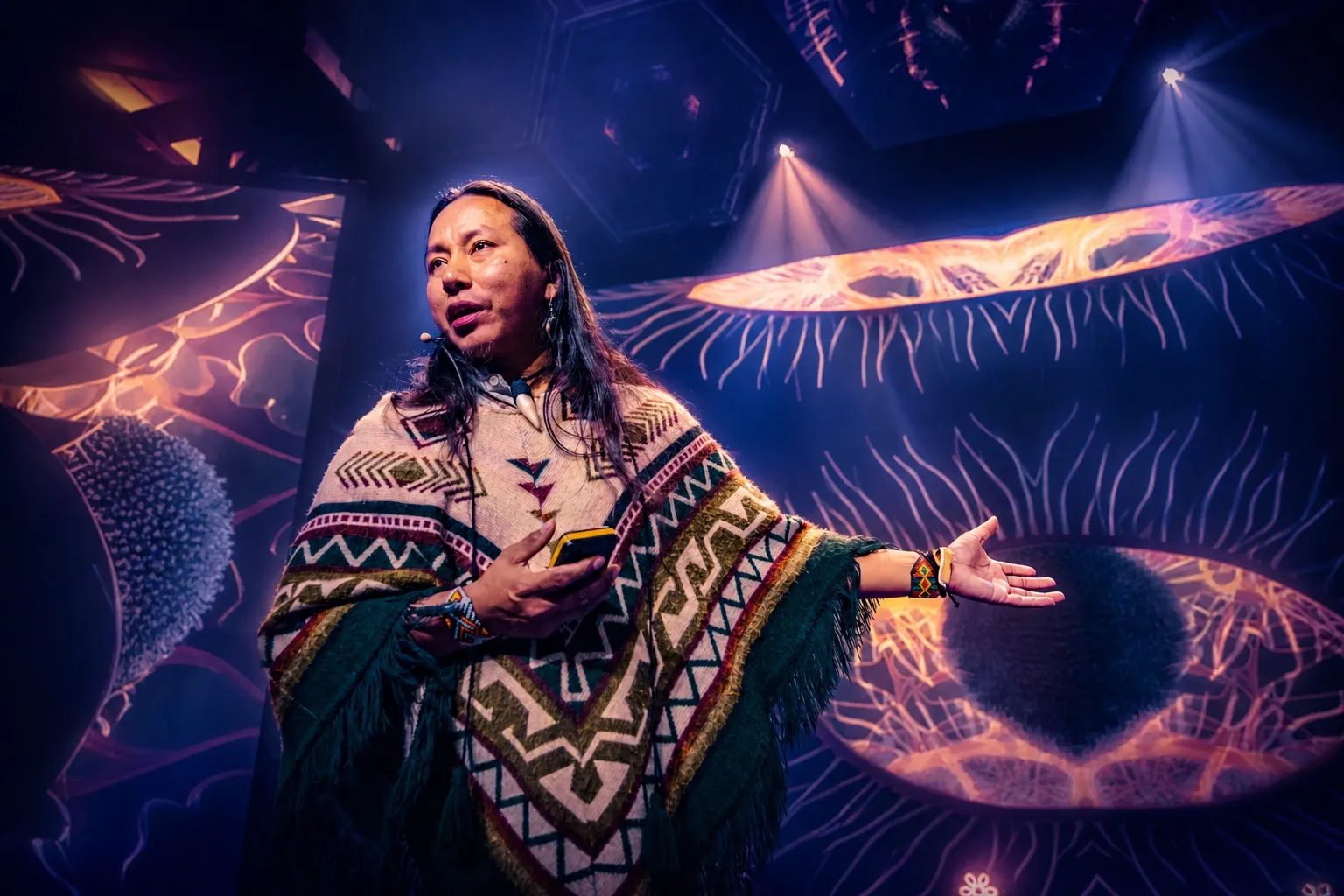
At Biohacker Summit 2023 Amsterdam, Agustin Grefa Offered A Moral Challenge As Much As An Environmental One
On 14 October 2023, at Biohacker Summit 2023 Amsterdam in the Netherlands, Agustin Grefa stood before an audience far from the Ecuadorian rainforest and delivered a message that cut through the language of innovation, wellness and technological progress with startling simplicity: the heart, he said, was the key.
In his talk, Saving the Rainforest, Grefa, a Kichua healer from Ecuador, did not frame the Amazon merely as a threatened ecosystem, nor as an abstract symbol of climate collapse. He spoke of it as a living relative, a spiritual territory, a place where medicine, family, memory and responsibility remained inseparable. His argument was not only that the rainforest must be protected, but that it could not be saved by policy, technology or money alone. It had to be approached with reverence.
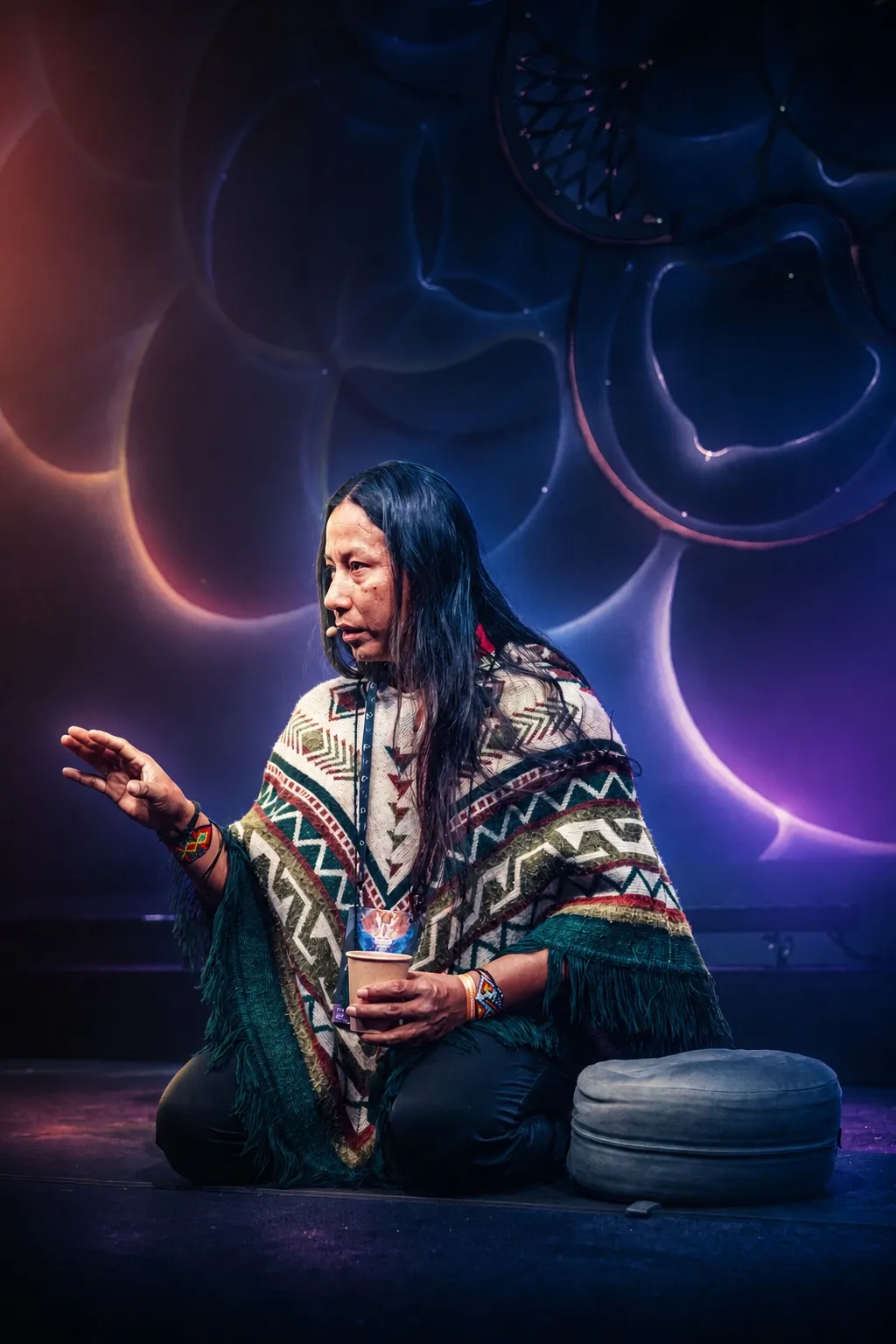
“Our heart is the key to understand all,” he said. “Nature gives us freedom when we live in connection with the spirit.”
A Rainforest Under Siege
Grefa described an Amazon under mounting assault from gold miners, logging companies and the machinery of extraction. He spoke of toxic chemicals entering rivers, of ancestral lands being sold under economic pressure, and of a communal fabric weakened by outside forces that valued profit above continuity.
The devastation, in his telling, was not limited to felled trees and poisoned waterways. It reached into the structure of family life, into the education of children, into the survival of cultural knowledge. When land was lost, so too were the systems that had held communities together.
He warned that miners and timber interests were operating dangerously close to his community, contaminating the river on which local life depended. In a place with a single water source, such damage was not incidental. It was existential.
“If you respect the nature, nature will respect you,” Grefa said. “To have a good life, a good family, and a good community is of much more value than gold.”
The Spiritual Cost Of Extraction
What made Grefa’s speech so arresting was the way he insisted on a language modern environmental debate often avoids. He did not speak only of biodiversity loss or carbon sinks. He spoke of spirit.
For Grefa, a tree was not timber waiting for market value. Gold was not simply a resource beneath the ground. Everything in the jungle possessed energy, purpose and life. To remove these things violently was to disturb a balance older than industry.
“Cutting a tree is like cutting one hair of your head or a finger from your hand,” he said. “It is painful. We must see the spirit that lives there in that tree.”
That imagery was more than poetic. It revealed a worldview in which ecological destruction was also bodily destruction, an injury inflicted on a living whole of which humanity formed only one part. In this understanding, the rainforest did not merely sustain life. It was life.
Wisdom That Demands Practice
If there was a rebuke in Grefa’s address, it was reserved for the ease with which modern societies confuse awareness with action. He returned repeatedly to the distinction between speaking beautifully and living truthfully.
“Go and feel, go and practice. Not just talk,” he urged. “Understanding is easy, but to put into practice what we understood, that is a different level.”
The point extended beyond environmental activism. Grefa spoke of practical responsibility in family life, in community conflict and in spiritual discipline. Real harmony, he suggested, was not achieved through slogans or temporary inspiration. It required difficult conversations, accountability and daily conduct.
This, too, was part of saving the rainforest. A fractured community, he implied, could be as vulnerable as a cleared forest. Protection began not only with territory, but with relationships strong enough to resist division.
Schools In The Jungle, Land In Indigenous Hands
Among the most concrete elements of Grefa’s presentation was his description of indigenous-led efforts to defend the Amazon through land purchase and education. Together with his wife, Michaela, he had been involved in buying sections of rainforest to keep them out of the hands of extractive companies. It was a direct response to the “gold fever” driving outsiders, and sometimes local people under pressure, to sell.
He also spoke of building schools in the jungle, where children could receive modern education without being severed from ancestral knowledge. In these schools, young people would learn not only literacy and formal study, but also herbal medicine, community values and the cultural logic of living with the forest rather than against it.
This was conservation in its deepest sense: not simply preserving land, but preserving the intellectual and spiritual systems that allowed that land to remain alive.
A Call For Collaboration, Not Romanticism
Grefa did not cast indigenous knowledge as a substitute for science, nor the West as an enemy incapable of repair. On the contrary, one of the most striking aspects of his talk was its insistence on collaboration.
He acknowledged the technical capacities of industrial societies and asked for help in confronting pollution and ecological damage. But he also suggested that such expertise, absent spiritual grounding, had helped create the crisis in the first place. What was needed was an exchange: Western technology and indigenous wisdom, each correcting the blind spots of the other.
In that appeal there was no nostalgia for a sealed-off past. There was urgency, realism and a profound refusal to let environmental salvation be reduced to engineering alone.
The Heart As Politics
There was a temptation, perhaps, to hear Grefa’s emphasis on the heart as metaphorical, gentle or inward-looking. But in Amsterdam, it landed as something sharper. The heart, in his framing, was not retreat from politics. It was the beginning of an ethic capable of resisting destruction.
To accept fear, to face it honestly, to speak truth in community, to refuse the seduction of gold, to treat a tree as alive rather than expendable: these were not soft ideas. They were radical demands in a world organised around extraction.
“Life can be so beautiful if you are not afraid to accept who you are, to accept your fear, and to face your fear in many levels of consciousness,” he said.
It was the kind of sentence that could sound abstract until placed beside the facts he offered: rivers poisoned, forests sold, children disconnected from tradition, communities pulled apart by money. In that context, the call to recover the heart became a call to recover moral clarity.
A Final Plea From The Forest
By the close of Saving the Rainforest, Grefa’s message had widened from Ecuador to everywhere. Protect your forest too, he told the audience. The medicine was not only in the Amazon. Every place had its own living system, its own sources of healing, its own obligations.
That was the deeper force of his appearance at Biohacker Summit 2023 Amsterdam. He did not ask the audience merely to admire indigenous wisdom, nor to consume it as spiritual insight detached from consequence. He asked them to act, to support, to rethink what progress meant, and to understand that the destruction of the rainforest was not happening somewhere else. It was entangled with the global appetite for wealth, convenience and endless extraction.
In the end, Grefa offered neither despair nor easy hope. He offered responsibility.
If the rainforest could still be saved, he suggested, it would not be because humanity had learned to master nature more efficiently. It would be because enough people had learned, at last, to listen to it.
Frequently asked questions
What is happening to the forest Agustin Grefa describes?
He described an Amazon under mounting assault from gold miners, logging companies and the machinery of extraction, with toxic chemicals entering rivers, ancestral lands sold under economic pressure, and a communal fabric weakened by outside forces valuing profit above continuity.
Why does he speak of spirit rather than biodiversity?
Because for Grefa, a Kichua healer from Ecuador, a tree is not timber awaiting market value and gold is not simply a resource beneath the ground. Everything in the jungle possesses energy, purpose and life, which makes extraction a spiritual cost as well as an ecological one.
What did he ask of the audience?
Practice rather than applause. Go and feel, go and practice, not just talk, he urged. Understanding is easy, but to put into practice what we understood, that is a different level. He paired the challenge with concrete work: schools in the jungle and land in indigenous hands.
About the event
This recap is part of the Biohacker Summit 2023 Amsterdam series, recorded in Amsterdam on 14 and 15 October 2023. Read the summary of the whole event or join the next edition, HOLOLIFE Summit 2026 Amsterdam, on 14 and 15 November 2026.
In this story
Comments
Loading comments…