Biohacker Summit 2023 Amsterdam
Hyperbaric Hope And The Dream Of Buying Time
By Teemu Arina · · Updated
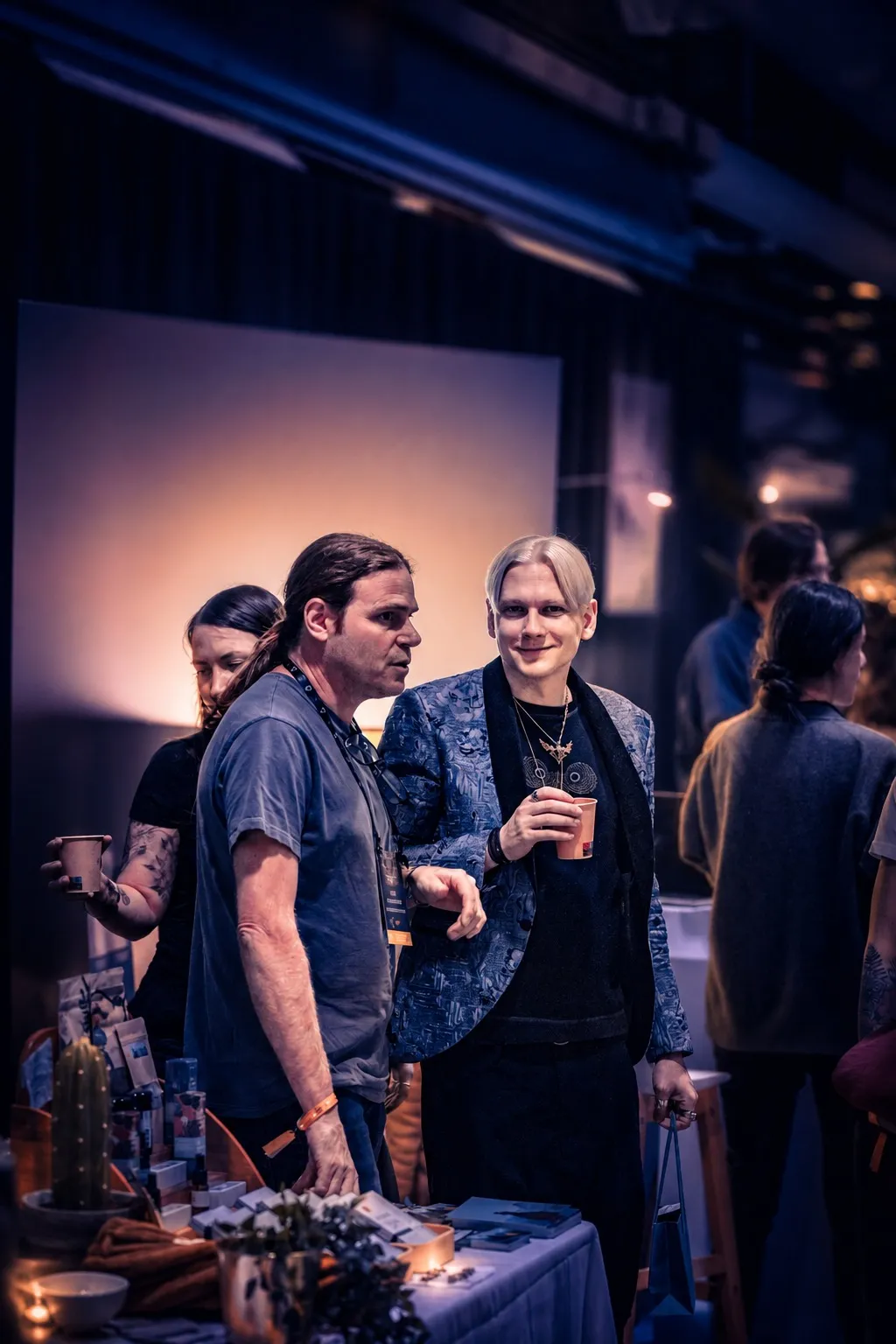
At Biohacker Summit 2023 Amsterdam, Alexandre Tomic And Ovidiu Valentin Ancuța Cast Hyperbaric Oxygen Therapy As A Tool For Longevity, Recovery, And Corporate Survival
In a conference culture often crowded with miracle claims and silicon-polished promises, the session titled “HRV & Telomeres: Hyperbaric Oxygen Therapy For Longevity” at Biohacker Summit 2023 Amsterdam stood out for a different reason. It was not merely selling optimisation. It was selling rescue.
On Saturday, 14 October 2023, in Amsterdam, Netherlands, Alexandre Tomic and Ovidiu Valentin Ancuța made the case that hyperbaric oxygen therapy, or HBOT, belonged not only in clinics but in the modern longevity arsenal: a treatment for hypoxia, a support for recovery, and, if their reading of emerging evidence held, a measurable way to push back against biological aging itself.
Their language was urgent, sometimes dramatic, sometimes evangelical. Yet beneath the fervour ran a clear proposition: oxygen, delivered under pressure, may do more than heal. It may buy time.
The Physics Of Pressure, The Promise Of Oxygen
Ancuța, founder and CEO of Oxyhelp, grounded the session in the mechanics of the treatment. Hyperbaric oxygen therapy works by increasing atmospheric pressure while the patient breathes oxygen, allowing oxygen to dissolve directly into plasma and body fluids rather than relying solely on haemoglobin in red blood cells.
“At three atmospheric pressure, the amount of oxygen dissolved into plasma is enough to sustain life even without red blood cells,” Ancuța said. “Hyperbaric pressure allows us to saturate the body’s liquids with oxygen.”
It was a striking formulation, one aimed at making the invisible visible. Under normal conditions, blood is already nearly saturated through haemoglobin, leaving little room for standard oxygen delivery to do more. Hyperbaric treatment, he argued, changes the equation by forcing oxygen into plasma itself, bypassing the usual transport limits.
For advocates of the therapy, this mechanism is not a footnote. It is the whole point. Cellular hypoxia, in this view, lies at the heart of fatigue, impaired recovery, cognitive fog, organ strain, and a host of chronic declines. More oxygen, under more pressure, becomes not simply supportive care but a physiological intervention with systemic reach.
A Businessman’s Testimony Became A Biohacker’s Mission
If Ancuța supplied the technical frame, Tomic supplied the emotional charge.
The French founder and CEO of Alea introduced himself not as a physician but as a businessman and committed biohacker, someone drawn to tools that convert data, discipline, and experimentation into better outcomes. His route into hyperbaric therapy, however, was not born in a wellness lab. It began with his father’s decline.
Tomic described using a chamber for his father, who was suffering from advanced dementia and severe complications related to diabetes. According to Tomic, the response after the first session was immediate and startling. His father, previously inert and unable to communicate, became animated, vocal, and responsive. Over subsequent sessions, Tomic said, circulation in his father’s legs also visibly improved.
The account was anecdotal, intimate, and impossible to separate from grief. But it was also central to the presentation’s force. Hyperbaric oxygen therapy was presented not as abstract science but as something encountered in extremis, when conventional options had narrowed and hope had become improvisational.
That same sense of necessity shaped Tomic’s account of his own experience during Covid. He described monitoring his oxygen saturation with a pulse oximeter, watching levels fall, then climbing into the chamber for hours at a time to restore them.
“Hyperbaric oxygen therapy allows you to buy time,” Tomic said. “You give the body a level of oxygenation that provides a lifeline until the body eventually finds the right response to fight back.”
It was a phrase that lingered. In an age obsessed with enhancement, buying time sounded less glamorous, and more serious.
The Longevity Claim That Drew The Room In
Still, it was longevity that gave the talk its headline appeal.
Tomic and Ancuța repeatedly returned to studies they said showed that sustained hyperbaric oxygen therapy could alter two of the most closely watched biomarkers in aging science: telomere length and senescent cell burden.
“Studies show we manage to increase telomere length by twenty percent and reduce senescent cells by thirty-seven percent,” Tomic said. “These are key biomarkers that suggest hyperbaric therapy can actually help reverse aging.”
It was the kind of claim that electrifies a biohacking audience because it appears to move beyond mood, performance, or self-reported vitality into the territory of measurable biological change. Telomeres, often described as protective caps on chromosomes, have long functioned as shorthand in public discourse for cellular aging. Senescent cells, meanwhile, are associated with tissue dysfunction and inflammatory burden.
In the telling offered on stage, hyperbaric therapy was not simply anti-aging in the cosmetic sense. It was presented as a candidate intervention in the biology of aging itself.
Ancuța referred to research from Israel indicating that, after a sustained protocol over several months, participants saw telomere extension and a drop in senescent cells. Tomic folded those findings into a broader biohacker worldview, one in which tests, tracking, and stacked interventions are used to shift the body’s age trajectory rather than merely endure it.
Why The Break Mattered As Much As The Treatment
One of the more nuanced ideas in the presentation concerned not constant exposure but strategic interruption.
“A break is as important as the therapy itself,” Ancuța said. “When you stop, the brain sees a delta difference in oxygen intake and creates proteins that improve the immune system and blood circulation.”
This post-treatment pause, he argued, may trigger hypoxia-inducible responses precisely because the body registers the withdrawal from elevated oxygen availability. In other words, the therapy’s value may not lie only in saturation, but also in the contrast between saturation and normal conditions.
That notion gave the talk a more sophisticated rhythm than simple maximalism. More is not always more, they suggested. Timing matters. Stressors and relief matter. Adaptation matters.
For a longevity culture that often treats accumulation as wisdom, it was a reminder that biology still prefers cycles.
From Clinic To Office Floor
The most contemporary part of Tomic’s argument was not about aging at all. It was about work.
He described installing a large hyperbaric chamber in his company environment during the pandemic, framing it as both a humanitarian safeguard and a strategic business decision. In a high-pressure corporate ecosystem, he suggested, keeping key staff alive, functioning, and cognitively sharp was not peripheral to performance. It was performance.
Today, he said, hyperbaric therapy had become part of a wider in-office health architecture that included sauna, cold plunges, gym facilities, and recovery support. Staff were encouraged to use the chamber for sleep deprivation, cognitive fatigue, and rapid restoration.
To some, that may sound like elite excess disguised as wellness infrastructure. To others, it may look like a preview of where executive health is heading: from private treatment to embedded operational tool.
Tomic’s phrasing was blunt. If a company depends on people whose judgment, stamina, and resilience shape millions in value, then recovery is not indulgence. It is risk management.
The Five Pillars Of Staying Alive Long Enough
Tomic did not present hyperbaric oxygen therapy as a singular answer. He set it inside what he called a five-pillar model of longevity.
“To maintain longevity, we need to use the five pillars: sleep, cold plunges, sauna, hyperbaric oxygen therapy, and of course proper food and hydration,” he said.
There was something telling in that list. For all the futuristic aesthetics of the chamber, the framework remained recognisably old-fashioned in one respect: health is cumulative, and the body rarely grants miracles to those who neglect basics.
HBOT, in this account, was powerful precisely because it sat beside sleep, recovery, and nourishment rather than pretending to replace them.
The Seduction And The Limits Of The Longevity Machine
There was no mistaking the theatrical pull of the technology. Tomic described bringing a hyperbaric chamber to industry events, where it looked, by his own account, like a time machine: noisy, cold, misty, dramatic. The image was almost too perfect for the age. A machine you step into and emerge from restored, clear-headed, sharpened against entropy.
Yet the deeper appeal of the session at Biohacker Summit 2023 Amsterdam was not spectacle. It was vulnerability.
Ancuța spoke as a founder shaped by family illness. Tomic spoke as a son, a patient, an employer, and a biohacker trying to impose some order on the randomness of decline. Their message was not merely that hyperbaric oxygen therapy could make healthy people better. It was that, in moments of collapse, better oxygenation might hold the line between deterioration and recovery.
For an audience chasing longevity, that distinction mattered. The fantasy of immortality is adolescent. The discipline of buying time is adult.
Whether hyperbaric oxygen therapy ultimately fulfils the grandest claims made on its behalf will depend on deeper clinical scrutiny, replication, and restraint in interpretation. But in Amsterdam, Tomic and Ancuța gave the field something more compelling than hype. They gave it a story about pressure, breath, and the stubborn human refusal to surrender the body without a fight.
Frequently asked questions
How does hyperbaric oxygen therapy work?
By increasing atmospheric pressure while the patient breathes oxygen, so that oxygen dissolves directly into plasma and body fluids rather than relying solely on haemoglobin in red blood cells. Ancuța, founder and chief executive of Oxyhelp, grounded the session in that mechanism.
What longevity claim did the session rest on?
Tomic and Ancuța returned repeatedly to studies they said showed sustained hyperbaric oxygen therapy could alter two of the most closely watched biomarkers in aging science: telomere length and senescent cell burden.
What brought Alexandre Tomic to the therapy?
Not a wellness lab. The French founder and chief executive of Alea introduced himself as a businessman and committed biohacker, and traced his route into hyperbaric therapy to his father's decline, which gave the session its emotional charge.
About the event
This recap is part of the Biohacker Summit 2023 Amsterdam series, recorded in Amsterdam on 14 and 15 October 2023. Read the summary of the whole event or join the next edition, HOLOLIFE Summit 2026 Amsterdam, on 14 and 15 November 2026.
In this story
Comments
Loading comments…