Ancient fungus, modern healing: How Reishi mushrooms could transform our approach to health and ecology
By Teemu Arina · · Updated

Renowned herbalist Yarrow Willard captivates HOLOLIFE Summit audience with insights into the "mushroom of spiritual potency and immortality"
The ancient healer in our forests
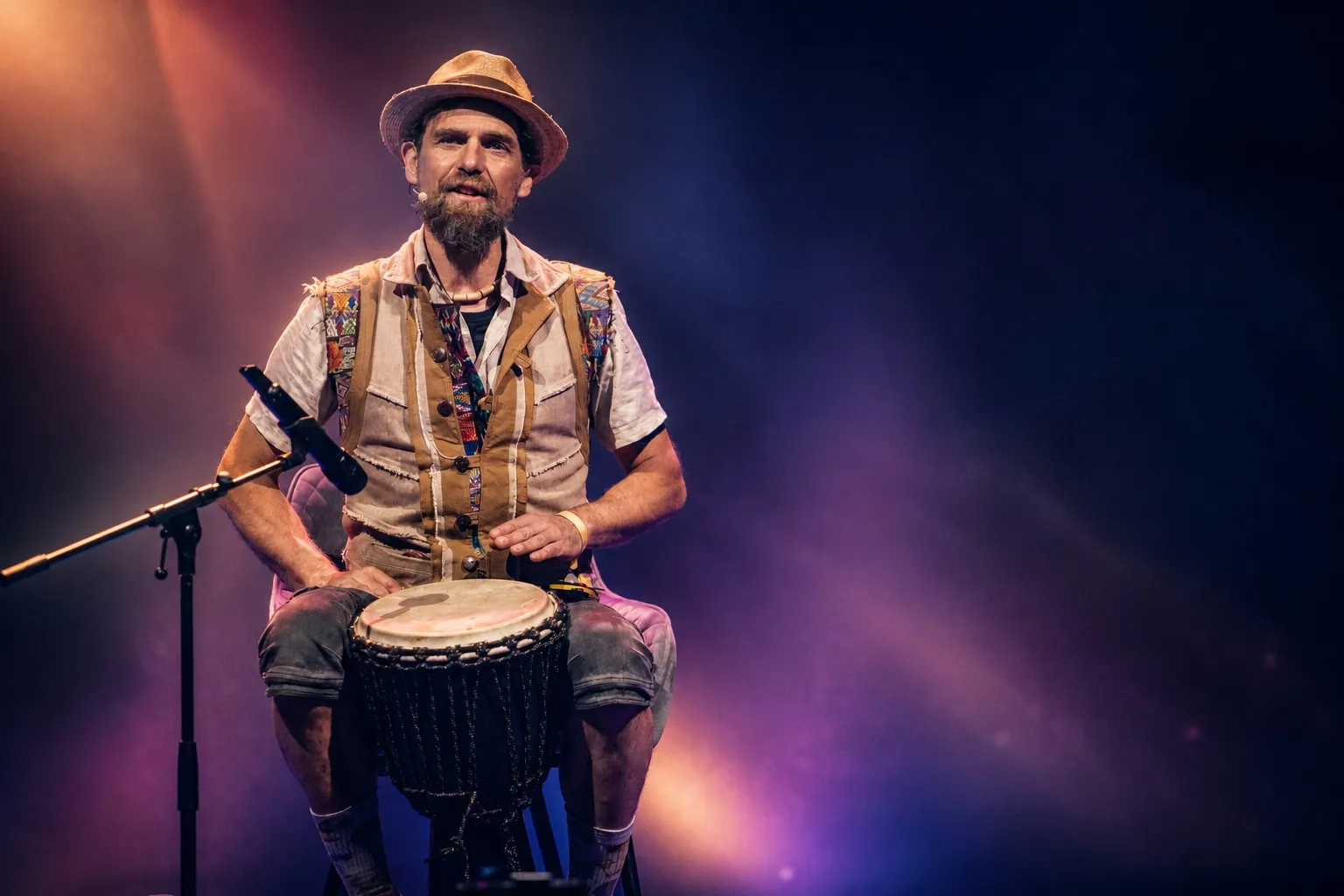
In the historic city of Tallinn, as the HOLOLIFE Summit 2025 Europe reached its midpoint on Saturday, clinical herbalist Yarrow Willard took to the stage with an unusual proposition: what if one of humanity's most powerful medicines has been growing quietly in our forests for millennia, waiting to be rediscovered?
"If I had it my way, I would put a vat of Reishi into everyone's drinking water all over the planet," Willard told the captivated audience gathered in the Estonian capital. "It helps calm down the overwhelm and supports our higher self's coherence."
Known as the "Herbal Jedi" in wellness circles, Willard's passion for Ganoderma lucidum – commonly called Reishi – was evident as he shared both scientific research and personal connection to what he describes as "the mushroom of spiritual potency and immortality."
From royal exclusivity to scientific spotlight
The presentation revealed how Reishi, once reserved exclusively for Chinese royalty and monks over 2,000 years ago, has become the most extensively studied medicinal mushroom on the planet. With over 400 bioactive compounds identified – including 119 triterpenes and complex beta glucans – Reishi's scientific credentials are impressive.
"More money has been spent studying Reishi than any other natural product on the planet—more than ashwagandha, echinacea, or even ginseng," Willard explained, noting the mushroom's adaptogenic, anti-inflammatory, and immunomodulating properties.
What distinguishes Reishi in the growing field of functional mushrooms is its dual capacity to both stimulate under-functioning immune systems and calm overactive ones – making it potentially valuable for conditions ranging from chronic infections to autoimmune disorders.
The ecological intelligence of fungi
Perhaps most compelling was Willard's exploration of Reishi's ecological significance. "In every intact ecosystem around the planet, we find this mushroom," he said. "Every tropical or temperate rainforest where there's biodiversity and complex stability, this mushroom grows. It is the Merlin of the forest."
According to Willard, Reishi appears only in mature forest ecosystems, where it helps regulate the complex communication networks between plants and other organisms through its expansive mycelial networks.
"The Reishi forest wisdom is about decomposing death and bringing it into life," Willard told attendees. "Without death, there is no new life, and Reishi helps us rebuild ourselves like a phoenix from the fire."
Beyond physical health: The spiritual dimension
The presentation ventured beyond conventional medical benefits to explore Reishi's effects on consciousness and spiritual wellbeing. Willard described how the mushroom can shift brain states away from constant "beta wave" activity – the mental chatter of to-do lists – toward more contemplative states.
"Reishi is a shen tonic that helps your candle emit a better quality light," Willard explained, referencing the Chinese medicine concept of shen – the spiritual energy housed in the heart. "It builds your soul and spirit's light, connecting you deeply to your heart and your true potential."
Attendees were invited to sample Danwood Reishi from China's Nine Dragon territory during the presentation, experiencing firsthand the bitter flavor profile that indicates high terpene content – the compounds responsible for many of Reishi's medicinal effects.
Longevity in a time of environmental challenges
In an era of growing interest in longevity science, Willard positioned Reishi as uniquely suited to modern challenges. Research suggests the mushroom may protect telomeres (the protective caps on DNA that shorten with age), promote cellular autophagy, and enhance resilience against environmental stressors.
"My belief is that we live on a polluted planet – full of microplastics, no matter how healthy we eat – and that's okay, because with medicines like Reishi, we build resilience and move toxins through us," Willard said.
For practical application, he recommended daily consumption through powder, tincture, or tea, noting that consistent use for 30-40 days often results in noticeable improvements in energy, skin quality, and stress resilience.
A holistic approach for the future
As the three-day HOLOLIFE Summit continued in Tallinn through the weekend, Willard's presentation stood out for bridging ancient wisdom with cutting-edge science, offering a vision of health that encompasses ecological awareness alongside personal wellbeing.
The clinical herbalist, who co-founded Harmonic Arts and teaches at Wild Rose College, closed his talk with a nod to both Star Trek and Star Wars: "May the forest be with you, my friends. Live long and prosper."
For those seeking to navigate our increasingly complex and stressful world, Willard's message was clear: sometimes the most sophisticated solutions have been growing quietly in our forests all along.
Frequently asked questions
Why is reishi the most studied medicinal mushroom?
Yarrow Willard told the Tallinn audience that more money has been spent studying Reishi than any other natural product on the planet. Researchers have identified over 400 bioactive compounds in it, including 119 triterpenes and complex beta glucans.
What is reishi's ecological role?
Willard called it the Merlin of the forest. It appears in every intact ecosystem he has seen, in tropical and temperate rainforests with biodiversity and complex stability, and only in mature forest ecosystems, where it helps regulate communication between organisms.
What does reishi do beyond physical health?
Willard described it as a shen tonic in the Chinese medicine sense, shifting brain states away from constant beta wave activity, the mental chatter of to-do lists, toward more contemplative states. Research also suggests it may protect telomeres and promote cellular autophagy.
About the event
This recap is part of the HOLOLIFE Summit 2025 Europe series, recorded in Tallinn on 14 and 15 June 2025. Read the summary of the whole event or join the next edition, HOLOLIFE Summit 2026 Amsterdam, on 14 and 15 November 2026.
In this story
Comments
Loading comments…