Beyond H₂O: The hidden science of water vitality captivates HOLOLIFE Summit
By Teemu Arina · · Updated
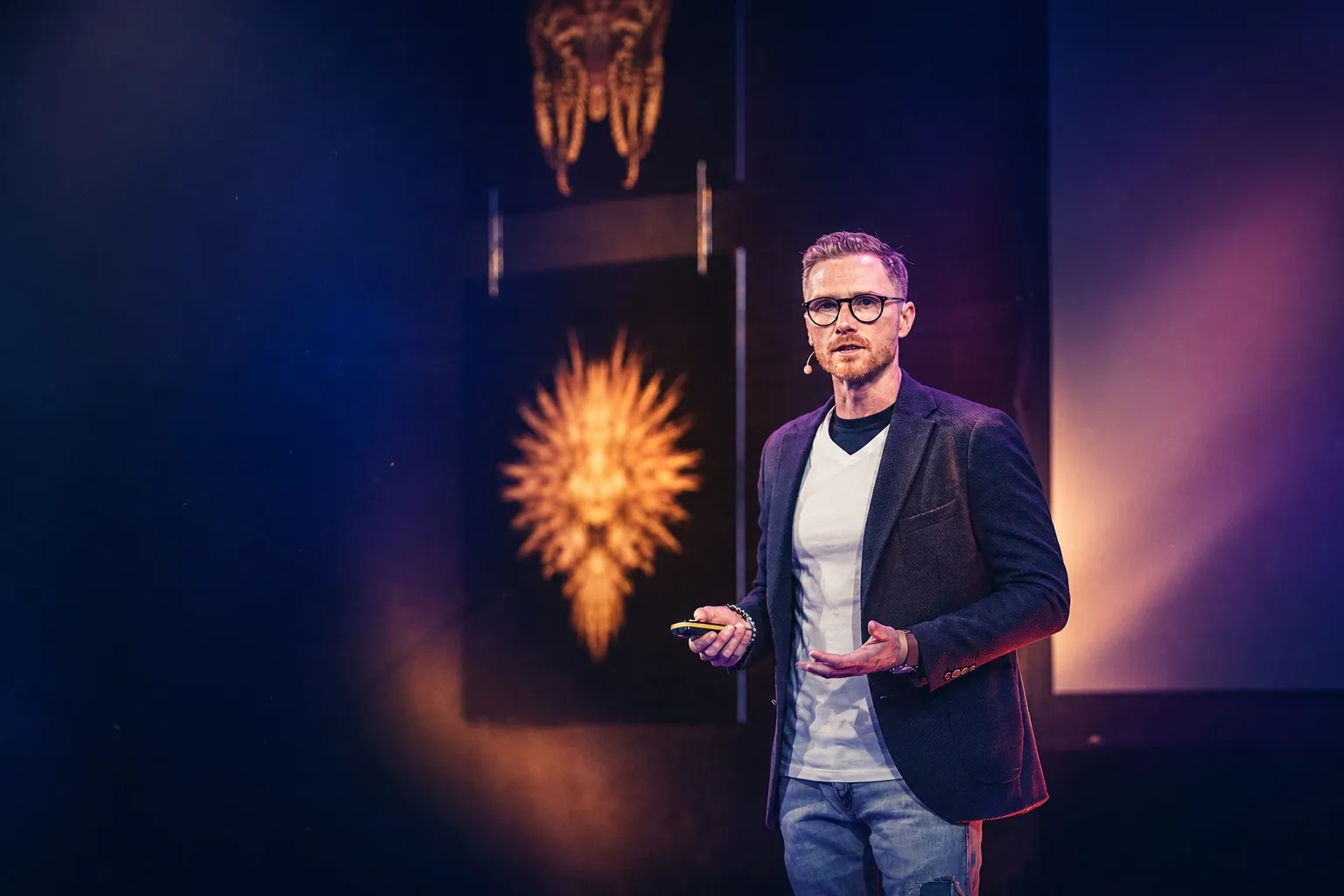
Mechanical engineer Vojtech Cernak challenges conventional understanding of water quality and its impact on health
In a presentation that blended scientific research with practical applications, Vojtech Cernak delivered a compelling argument for reconsidering our relationship with water at the HOLOLIFE Summit in Tallinn, Estonia. Speaking to a packed audience on 14 June, the mechanical engineer and founder of aquaFlow challenged attendees to look beyond basic water chemistry and consider its structural properties for optimal health.
"We have forgotten what real water actually is," Cernak told the audience at the three-day summit focused on holistic approaches to wellbeing. His presentation, titled "Live Water - Awaken Your Vitality," explored how water's structure and energetic properties might be as important as its chemical composition.

The forgotten dimension of water quality
Cernak opened his talk with a striking anecdote about a client whose persistent skin irritation after bathing disappeared immediately after installing a water purification system. "Stories like that always bring me back when I have doubts about what I do," he reflected.
This introduction set the stage for a broader discussion about how conventional understanding of water quality often overlooks important dimensions. Cernak pointed out that many people unquestioningly accept chlorinated tap water as normal, while others place excessive trust in well water that may contain pesticides and other contaminants.
"We eat healthy food, we take supplements, we manage stress and stay active. But we drink more water than we eat," Cernak observed. "So let me ask you, how much are we aware of the quality which we use for drinking and even for showering?"
Beyond filtration: restoring water's vitality
The presentation took a technical turn as Cernak evaluated various water filtration technologies. He cautioned that common household filters, including popular carbon filters and reverse osmosis systems, have significant limitations. Carbon filters can harbour bacteria and become saturated with contaminants, while reverse osmosis—despite its popularity—is considered potentially harmful by some health authorities due to its complete removal of minerals.
"Filtering is not just about removing all the chemicals," Cernak explained. "We need to give back to the water life."
Controversial science meets practical application
Perhaps the most provocative segment of Cernak's talk ventured into territory many conventional scientists might question. He cited researchers like Masaru Emoto, Gerald Pollack, and Nobel laureate Luc Montagnier, who have proposed that water possesses properties beyond its chemical formula—including the ability to carry information and form different structural arrangements.
Displaying microscopic photographs of water crystals from various sources—from mountain streams to tap water—Cernak illustrated stark visual differences that he attributed to water's structural properties. "It is not only about what it is made of, but how it is organized," he argued.
While acknowledging that such theories remain controversial in mainstream science, Cernak made a practical case for their relevance: "Think of carbon, the chemical element. With a particular structure it can be graphite: breakable, dusty, dark. And the same chemical element, but with a different structure, can be a diamond. It is the same with water."
From theory to everyday wellness
Cernak concluded by connecting these concepts to everyday benefits reported by users of water revitalization technologies, including improved taste leading to increased consumption, softer feeling water, and healthier skin.
The talk resonated with the HOLOLIFE Summit's focus on integrating cutting-edge research with practical approaches to health and vitality. Several attendees were seen taking notes on specific filtration recommendations, particularly Cernak's suggestion to replace filter components more frequently than manufacturer guidelines suggest.
As water scarcity and quality become increasingly pressing global concerns, Cernak's perspective offers a nuanced addition to the conversation—one that acknowledges the miracle of modern water infrastructure while suggesting we might still have much to learn from water in its natural state.
"We should be grateful that we have access to drinking water in Europe compared to other countries," he said in closing. "But let's want more. Let's not only survive, but thrive."
The HOLOLIFE Summit 2025 continues through Sunday in Tallinn, featuring speakers on various aspects of holistic health and sustainable living.
Frequently asked questions
What does Vojtech Cernak mean by water vitality?
Cernak, a mechanical engineer and founder of aquaFlow, argued in Tallinn that water quality is usually judged on chemistry alone, and that its structural properties deserve attention too. His talk opened with a client whose persistent skin irritation after bathing disappeared once a purification system was installed.
What are the limits of common water filters?
Cernak cautioned that carbon filters can harbour bacteria and become saturated with contaminants, and that reverse osmosis, despite its popularity, is considered potentially harmful by some health authorities because of what it strips out along with the contaminants.
Whose research does he draw on?
He cited Masaru Emoto, Gerald Pollack and the Nobel laureate Luc Montagnier, who have proposed that water carries information and forms different structural arrangements. This is the contested part of the talk, presented alongside microscopic photographs of water crystals.
About the event
This recap is part of the HOLOLIFE Summit 2025 Europe series, recorded in Tallinn on 14 and 15 June 2025. Read the summary of the whole event or join the next edition, HOLOLIFE Summit 2026 Amsterdam, on 14 and 15 November 2026.
In this story

Comments
Loading comments…