HOLOLIFE Longevity Côte d'Azur
Practical Steps to Win the Race for a Longer Life
By Teemu Arina · · Updated

On 12 March 2026, at Hololife Longevity Côte d'Azur in Nice, France, Teemu Arina delivered a presentation titled Practical Steps to Win the Race for a Longer Life. Yet what unfolded was not a narrow lecture on lifespan extension, nor a glossy endorsement of wellness gadgets. It was a more ambitious proposition: that the next phase of biohacking had to move beyond the body alone and into the deeper terrain of identity, community, spirituality and ecology.
Arina, a pioneer of the biohacking movement and curator of the Biohacker Summit, used the stage to explain why the language and philosophy of the field had been evolving. The old vocabulary, he suggested, had become too small for the moment. Biohacking, once useful as a rallying cry for self-experimentation and optimization, had also become distorted by misunderstanding. It sounded mechanical, even predatory, as if health could be won by breaking into biology rather than learning to live within it.
What he offered instead was a holistic vision, one that sought to integrate the measurable and the immeasurable, the laboratory and the forest, the biomarker and the soul.
Redefining Biohacking Beyond The Body
Arina's central argument was that health could no longer be treated as a purely physical project. To optimize sleep, movement and nutrition while neglecting purpose, belonging and transcendence was, in his telling, to miss the point.
He described the Hololife Summit as an evolution of the Biohacker Summit, a rebranding but also a reconceptualization. The aim was not to abandon science, but to place it inside a larger human framework. Physical resilience remained vital. Cognitive clarity still mattered. But so did the questions that modern health culture often pushed aside: What kind of person are you becoming? What force is guiding your life? What remains of you in other people?
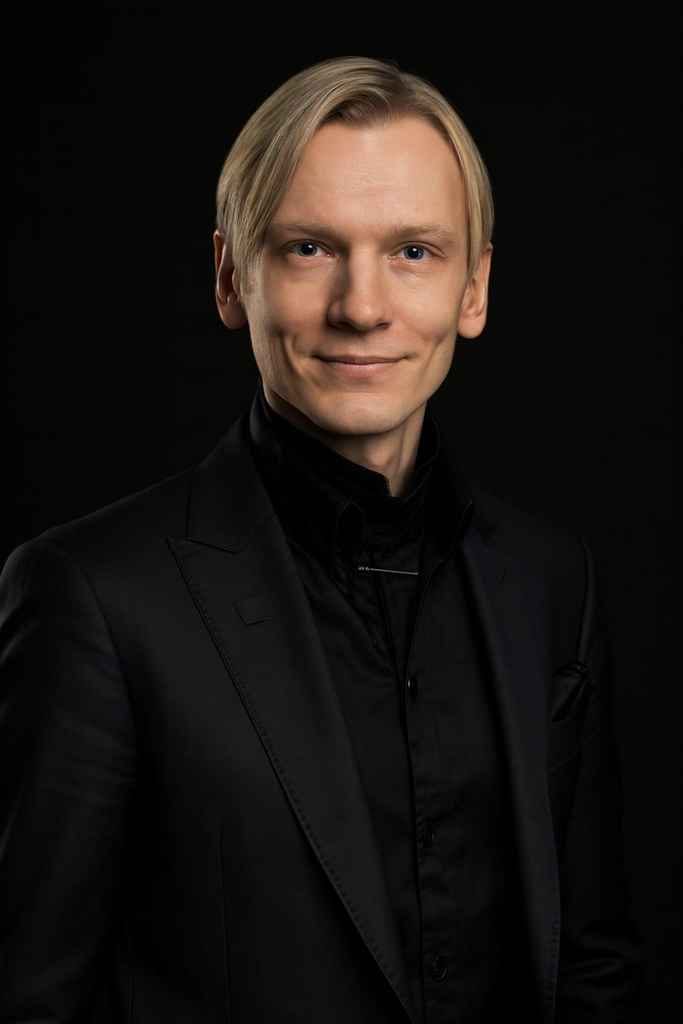
“Your work is not just what you do; it is the legacy that shows in other people and the impact you leave behind. At the journey's end, people will not discuss your professional achievements, but what kind of person you were.”
That line landed as the moral center of the talk. Longevity, in Arina's framing, was not simply a campaign against death. It was a discipline of extending vitality, wisdom and consequence. A longer life without depth, relationship or contribution was not much of a victory.
Spirituality As A Missing Dimension Of Health
One of the most striking features of Arina's address was his insistence that spirituality belonged within any serious conversation about well-being. He made a clear distinction between spirituality and religion, presenting the former as a mode of connection rather than doctrine.
He pointed to traditions such as yoga and meditation, noting that these were not originally conceived as lifestyle accessories or boutique fitness rituals. Their deeper purpose, he said, was alignment: to bring body and mind into a state capable of stillness, awareness and contact with something larger than the self.
“When you get your physical and mental state into alignment, it opens up a channel to something greater. Spirituality is a key component of health; it is the driving force and the goal we are truly trying to achieve in life.”
In a culture saturated with performance metrics, this was a notable inversion. Arina did not reject optimization, but he suggested it should serve awakening rather than vanity. The quantified self, in this model, was useful only if it led to a more conscious self.
Science And Ancient Wisdom On The Same Stage
Arina's broader project was one of synthesis. He spoke of a coming convergence between cutting-edge longevity science and the worldviews that modernity had too often dismissed as primitive, mystical or unscientific. Future Hololife gatherings, he noted, including upcoming summits in Amsterdam and Monte Carlo, were intended to bridge scientific rejuvenation with herbalism, meditation and indigenous knowledge.
This was not presented as nostalgia. It was framed as correction.
The West, he argued, had become accustomed to separating medical science from holistic therapies, as though empirical rigor and ancestral wisdom could not coexist. Yet many of the remedies, compounds and interventions embedded in modern medicine had emerged from the study of plants, ecological systems and traditional practices. Nature, in that sense, was not the opposite of science. It was often science's first teacher.
He invoked older traditions of inquiry, including the alchemists of Europe, to suggest that the pursuit of health once embraced matter and meaning together. The true “philosopher's stone,” he implied, was not an object but an inner state.
Technology As Imitation, Not Escape
If Arina was skeptical of reductionist futurism, he was not hostile to technology. On the contrary, his point was that many celebrated biohacking tools were best understood not as futuristic inventions but as approximations of ancient environmental conditions.
Red light therapy echoed sunset. Cryochambers reproduced cold exposure. Infrared saunas modernised heat rituals that had long existed in communal and spiritual life. Even supplements designed to trigger pathways associated with fasting were, in effect, attempts to chemically imitate what the body had evolved to do on its own.
“The true alchemist is nature itself. As much as you love technology and believe it is the future, never forget your roots. You are part of nature, and the absence of that connection is at the heart of many modern chronic conditions.”
And then, in a line that captured the paradox of the modern wellness industry, he added:
“We are creating technologies to mimic nature and what our bodies have done for millennia. As the modern technological world becomes more intense, the treatment for many of our problems is simply to go back to nature and revisit our lives.”
This was the crux of his critique. Much of contemporary health culture, he suggested, was spending vast sums to recreate conditions that industrial modernity had stripped away in the first place.
The Crisis Of Nature Deficit
Arina's diagnosis of present-day illness was ecological as much as biological. He spoke of “nature deficit disorder” to describe the profound dislocation between human beings and the environments in which their physiology had evolved.
The remedy he proposed was deceptively simple: return. Return to natural light, real darkness, clean air, living soil, cold water, forests, mountains and silence. Return not in a sentimental sense, but as a serious physiological intervention.
“Biohacking is all about restoring the balance of the symbiotic relationship you have with the living world inside and outside of you. By observing nature as a true master, we learn how to build a state of vitality and harmony.”
In Arina's account, the body was never isolated. It was a node in a living network, shaped by microbes, ecosystems, family lines, communities and the quality of its surroundings. To heal the self, one had to repair the relationship between the internal and the external worlds.
A Longer Life Or A Better One
The talk returned repeatedly to a phrase that Arina identified as the guiding theme of the next chapter: “Live Beyond a Lifetime.” It functioned as both slogan and challenge.
For him, the phrase did not simply mean extending biological years. It meant building something durable enough to outlast the body: a legacy of care, knowledge, character and communal uplift. This idea ran through his discussion of the Hololife book series, from Resilient Being to Vital Being, Mindful Being and the forthcoming Transcendent Being. Together, they mapped an increasingly expansive understanding of human optimization, from physical resilience to spiritual and technological transcendence.
What emerged in Nice was a portrait of longevity not as individual preservation, but as intergenerational responsibility. Health was presented as a way of becoming more available to others, more rooted in the world, more capable of transmitting wisdom and stability forward.
The Message From Nice
There was, beneath the talk's language of vitality and innovation, an unmistakable moral appeal. Arina was asking his audience to reconsider what they were really trying to extend. Was it life as duration, or life as depth? Was the goal to outwit mortality, or to inhabit existence more fully while leaving something humane behind?
At Hololife Longevity Côte d'Azur, Teemu Arina made the case that the future of biohacking would not be secured by devices alone. It would require humility before nature, openness to ancient knowledge, seriousness about social bonds and a willingness to treat spirituality as part of health rather than an embarrassment to it.
In the end, his vision was less about hacking life than about belonging to it more completely.
Frequently asked questions
What does Arina mean by biohacking beyond the body?
That sleep, movement and nutrition are necessary but not sufficient; purpose, belonging and transcendence are health variables too, and HOLOLIFE Summit was renamed from Biohacker Summit to make room for them.
What is the nature-deficit crisis?
Modern life indoors and on screens removes the light, temperature, microbial and social inputs the body evolved with. Much of biohacking technology, he argued, is an imitation of those inputs, so getting the originals back comes first.
What are the practical steps he proposed?
Return, as a physiological intervention rather than a sentiment: natural light and real darkness, clean air, living soil, cold water, forests, mountains and silence, plus serious attention to social bonds and spirituality as parts of health rather than add-ons to it.
About the event
This recap is part of the HOLOLIFE Longevity Côte d'Azur series, recorded in Nice on 12 March 2026. Read the summary of the whole day or join the next edition, HOLOLIFE Summit 2026 Amsterdam, on 14 and 15 November 2026.
In this story
Comments
Loading comments…