The nuanced science of light: why finding balance could be key to better health
By Teemu Arina · · Updated
Light therapy pioneer warns against extremes in biohacking community at European health summit
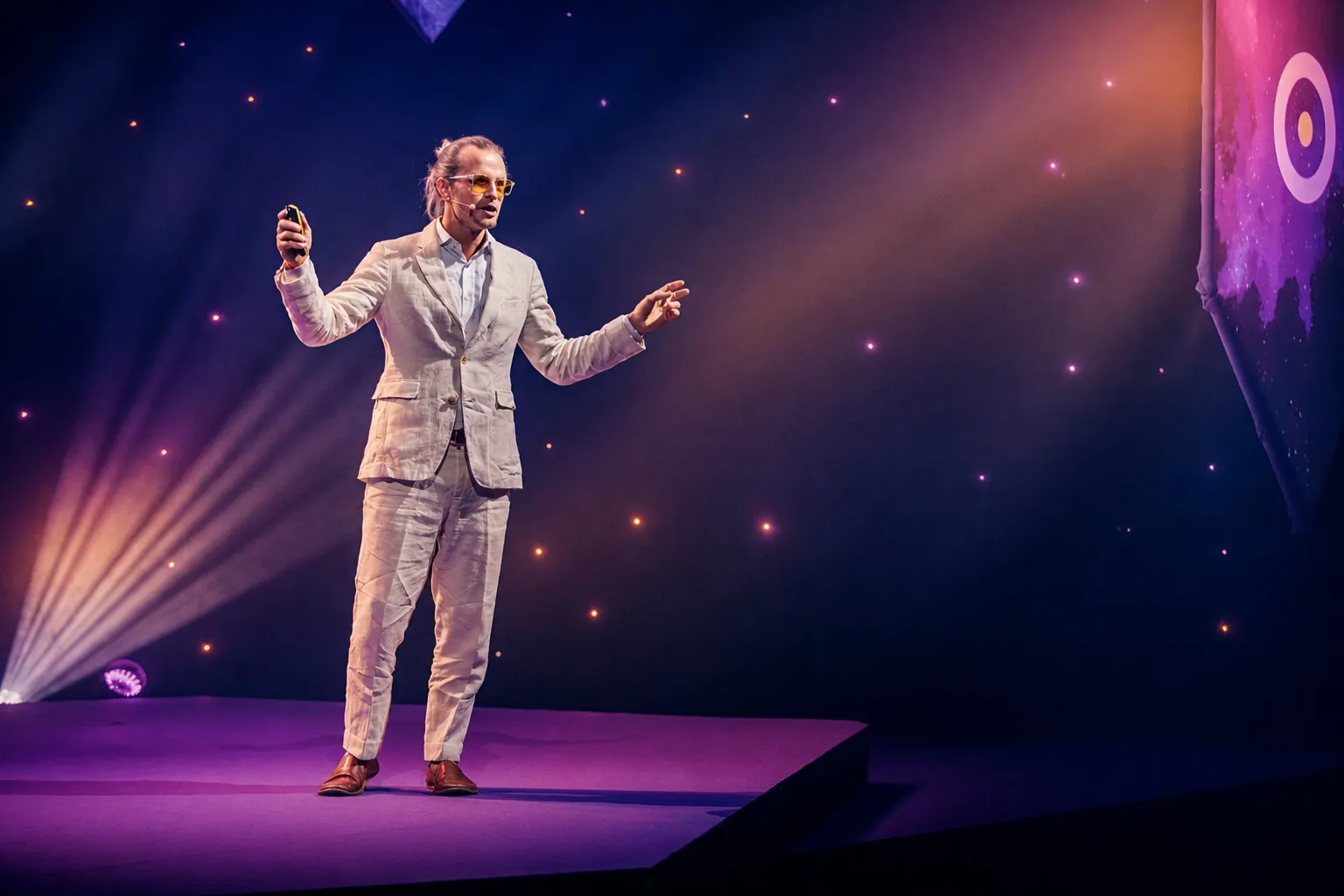
Matt Maruca, founder and CEO of Ra Optics, delivered a compelling presentation on the subtle complexities of light therapy at the HOLOLIFE Summit 2025 Europe in Tallinn, Estonia last Friday. His talk, "Nuance in Light Therapy: Finding the Middle Way," challenged prevailing attitudes about light exposure and protection, suggesting that extremism in either direction may be detrimental to health.
The three-day summit, which ran from June 13-15, brought together leading figures in holistic health and wellness to explore emerging technologies and approaches to wellbeing.
The biological impact of light
Maruca, who developed his expertise through personal health struggles, explained how different wavelengths of light affect human cells in distinct ways. "Ultraviolet light primarily impacts our DNA, while infrared light influences mitochondrial function," he told the audience. "Our bodies are literally beings of light – we emit photons that can be measured."
This biological relationship with light, according to Maruca, has been disrupted by modern living conditions. Most people now spend approximately 95% of their time indoors, receiving insufficient daylight during the day and excessive artificial light at night – a combination linked to increased risk of psychiatric disorders including anxiety, depression, and bipolar disorder.
The problem with modern lighting
"Most modern LEDs flood us with blue light but lack healing near infrared," Maruca stated. "Balanced light, including red and infrared, sustains our cell health."
The presentation included detailed spectral analyses comparing natural daylight with common artificial light sources. While incandescent bulbs (now largely phased out) produced spectra relatively similar to natural light with abundant near-infrared components, modern LED lighting generates pronounced blue light spikes with virtually no near-infrared light.
This imbalance, Maruca argued, creates oxidative stress and disrupts cellular functions, particularly in mitochondria – the cell's energy-producing organelles.
Finding the middle path in sun exposure
Challenging both conventional medical wisdom and extremist views within the biohacking community, Maruca advocated for a nuanced approach to sunlight exposure.
"Sunlight can be healing, but we need to take care of our sunlight exposure; overdosing leads to aging and damage even without sunburn," he cautioned.
Rather than viewing sunlight as categorically harmful (the position of some health authorities) or unreservedly beneficial (a view held by some biohackers), Maruca suggested that optimal exposure depends on numerous individual factors including age, skin type, genetics, health status, and environment.
He also highlighted the varying qualities of light in different natural settings. Chlorophyll-rich environments like forests reflect substantially more beneficial near-infrared light while filtering harmful shorter wavelengths, making them particularly beneficial compared to urban environments.
Innovative solutions for modern light problems
The second half of Maruca's presentation introduced technological solutions to modern lighting challenges, including his company's "Blue Sync" lens technology.
"Blue light protection glasses that block 95-99% of harmful blue light significantly improve melatonin levels and protect eye health versus clear lenses that only block 10%," Maruca explained.
The Blue Sync technology represents a novel approach by selectively blocking damaging ultraviolet and short-wavelength blue light while enhancing beneficial circadian-activating blue light. This selective filtering reportedly improves health outcomes without requiring additional light exposure.
For indoor environments, Maruca emphasized that "Indoor lighting should be hormonally neutral: during the day it shouldn't boost stress hormones unnecessarily, and at night it should not suppress melatonin."
From personal journey to light pioneer
Maruca's journey into light therapy began with his own health struggles as a child. After conventional medical approaches failed to resolve his headaches, gut issues, and allergies, he began researching alternative approaches, eventually discovering the profound impact of light on human health.
This personal experience led to the founding of Ra Optics, which develops innovative light therapy products and works with leading experts in photobiology, including Dr. Alexander Wunsch, who collaborated on the presentation materials.
The future of light therapy
As the HOLOLIFE Summit continues to explore cutting-edge approaches to holistic health, Maruca's presentation underscored the growing recognition of light as a fundamental factor in human wellbeing.
The future direction appears to be increasingly nuanced, moving beyond simple prescriptions toward personalized approaches that consider individual circumstances, environments, and needs. Maruca announced that Ra Optics is expanding into healthy lighting solutions, developing LEDs that emit primarily healing red and near-infrared wavelengths rather than harmful blue light.
For a field that spans from ancient heliotherapy practices to cutting-edge lens technology, finding the middle way – as Maruca advocates – may indeed be the most illuminating path forward.
Frequently asked questions
How do different wavelengths affect the body?
Matt Maruca told the Tallinn summit that ultraviolet light primarily impacts our DNA while infrared light influences mitochondrial function, and that our bodies emit photons that can be measured. His framing is that humans are literally beings of light rather than passive recipients of it.
What is wrong with modern lighting?
Most modern LEDs flood us with blue light but lack healing near infrared, Maruca said, whereas balanced light including red and infrared sustains cell health. He compared spectral analyses of natural daylight with incandescent bulbs, which sat far closer to sunlight than current alternatives.
Should you avoid sunlight or seek it out?
Maruca argued for a middle path against extremes in both directions. Sunlight can be healing, but overdosing leads to aging and damage even without sunburn. His company's Blue Sync lenses block 95-99% of harmful blue light, aimed at protecting melatonin at night.
About the event
This recap is part of the HOLOLIFE Summit 2025 Europe series, recorded in Tallinn on 14 and 15 June 2025. Read the summary of the whole event or join the next edition, HOLOLIFE Summit 2026 Amsterdam, on 14 and 15 November 2026.
In this story

Comments
Loading comments…