Biohacker Summit 2023 Amsterdam
Technology As A Mirror Of Humanity
By Teemu Arina · · Updated
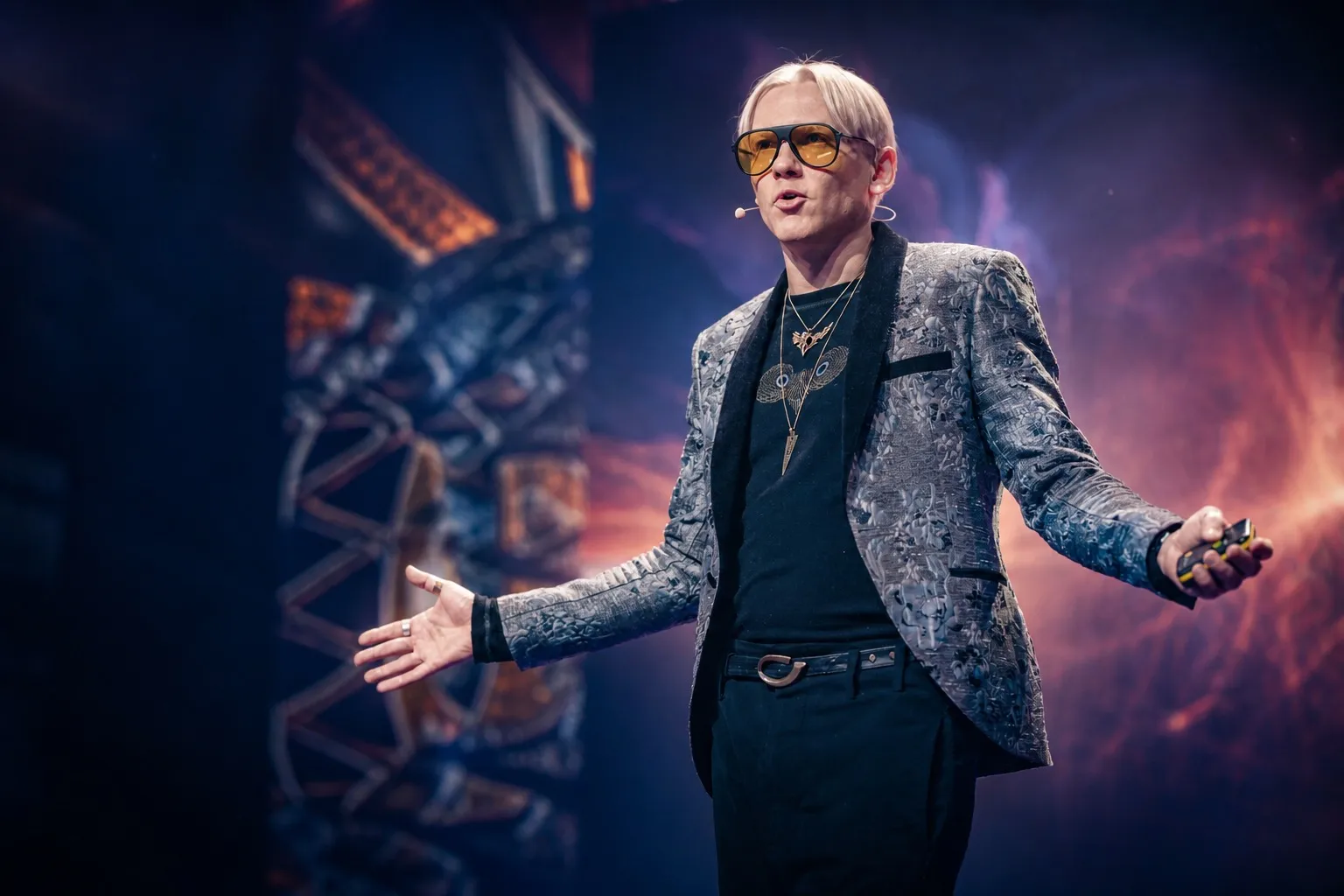
At Biohacker Summit 2023 Amsterdam, Teemu Arina Argued That The Tools We Build Also Build Us
On Saturday, 14 October 2023, at Biohacker Summit 2023 Amsterdam in the Netherlands, the Finnish author, professional biohacker and Biohacker Center co-founder Teemu Arina delivered a presentation with a title that sounded both ancient and urgent: Modern & Ancient Technologies for Expanding Consciousness.
What unfolded was not a standard conference talk about gadgets, optimization or the latest wellness craze. It was a sweeping meditation on artificial intelligence, ritual, ego, suffering and responsibility. Arina’s central claim was deceptively simple: technology is not something outside humanity, but an extension of it. If it unsettles us, that may be because it reflects us too clearly.
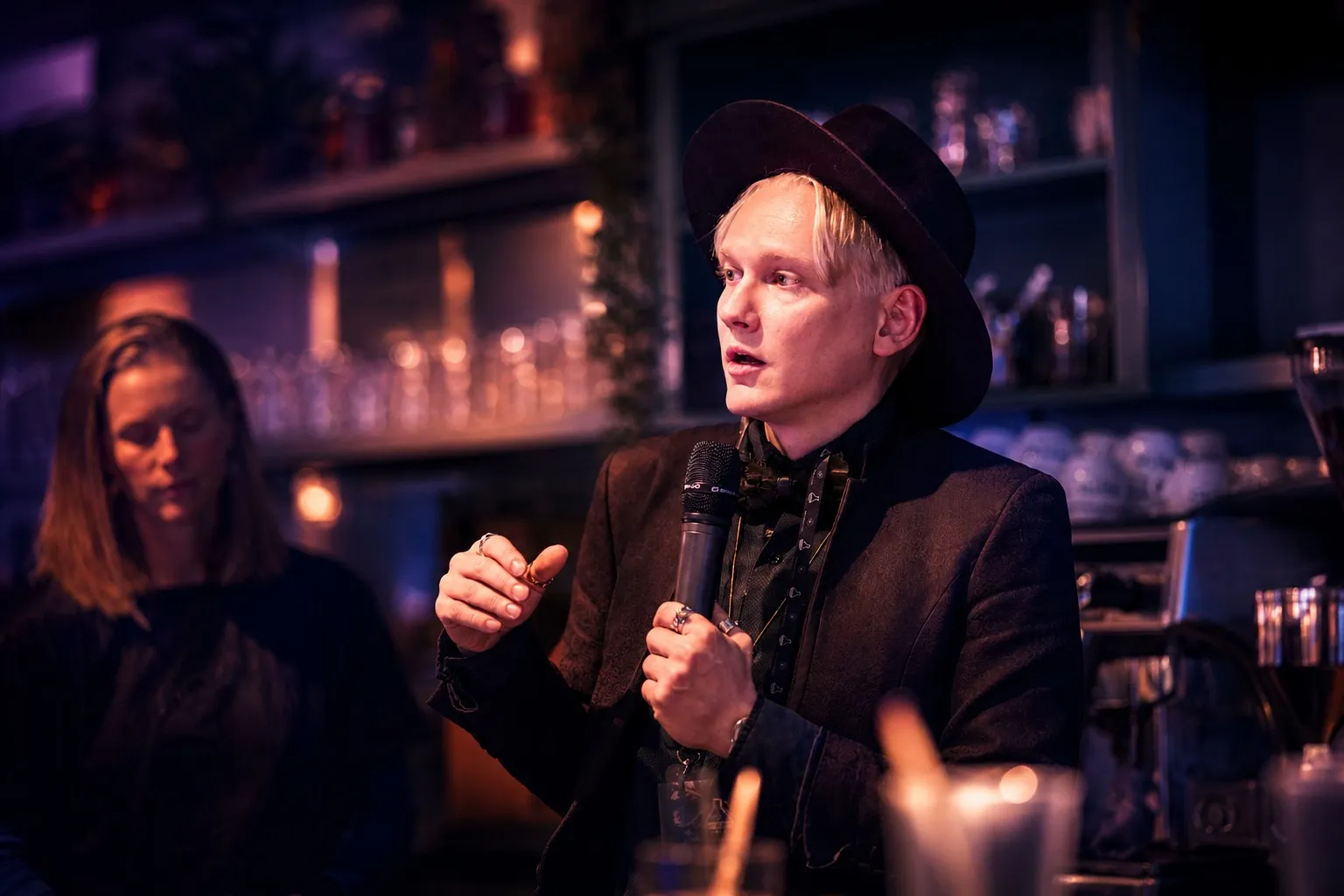
“Technology is not separate from us; it is an extension of us, a mirror of humanity, and a reflection of our collective consciousness,” he said.
AI As Collective Reflection
Arina framed artificial intelligence not as an alien force but as a vast mirror, trained on humanity’s accumulated output, dreams, anxieties and contradictions. In his telling, AI had become a digital expression of the collective psyche, absorbing what human beings placed into the network and returning it amplified.
That idea carried both wonder and warning. If AI mirrored humanity, then the quality of the reflection depended on the quality of the material fed into it. Arina asked whether the digital sphere was being nourished by wisdom, culture and insight, or by vanity, narcissism and an endless economy of self-display.
His language moved easily between the technological and the spiritual. AI was compared to a “digital noosphere”, an electronic realm of connected minds. The internet, in this account, was less a machine than a nervous system. Social media was not merely a marketplace of attention but an arena in which humanity rehearsed what it wanted to become.
Responsibility In The Age Of The Feed
The most provocative thread in the talk concerned responsibility, a word Arina broke down to its moral core as the “ability to respond”. Every post, every image, every cultural gesture uploaded into the digital commons, he suggested, participated in shaping the systems that increasingly shape us back.
This was not a neutral process. A civilisation that fed its machines with lower impulses should not be surprised, he implied, if those same impulses came roaring back in automated form.
For Arina, the challenge was not only technological but civilisational. Humanity had built networks capable of linking minds across continents, but had not yet shown that it possessed the maturity to use them well. The question hanging over the room was not whether technology would evolve, but whether the humans behind it would.
Ancient Practices In A Modern Vocabulary
From there, Arina widened the frame. Biohacking, as he described it, was not merely the pursuit of performance metrics or bodily efficiency. It was also a contemporary language for something much older: the disciplined expansion of consciousness through stress, ritual and self-confrontation.
He pointed to practices with deep ancestral roots, including meditation, fasting, plant medicine, drumming, dance, sleep deprivation, thermal extremes, breathwork, isolation, sauna and ice baths. These were not lifestyle accessories in his account. They were initiatory technologies, methods by which human beings had long tested the limits of perception and resilience.
The body, in this view, was not a machine to be endlessly upgraded but a gateway. Biological integrity mattered. Circadian rhythm mattered. Air, water, food and the patterning of daily life mattered. Yet beyond optimisation lay a larger aim: to recover a relationship between discipline, embodiment and meaning.
The Virtual Temple And The Ancient Stone Circle
One of the speech’s most memorable motifs was Arina’s linking of old sacred spaces with modern digital infrastructure. Stone circles, temples, drums, scrolls and sacred fires found their analogues in servers, platforms, archives and global networks.
“Pyramids channeled the energies of the old, and now data centers channel today’s energies,” he said. “Both are nexus points of our collective evolution.”
It was an audacious comparison, but it captured the philosophical core of the talk. Human beings had always constructed technologies, whether monumental or invisible, to store memory, synchronize experience and extend awareness beyond the individual self. Today’s cloud architecture may look secular, but it serves many of the same functions once served by ritual sites: gathering, transmission, symbolic order, collective imagination.
The Peril Of The Avatar
Arina was especially sharp on the psychological dangers of digital identity. The online self, he argued, often hardens into an avatar, an idealised fragment mistaken for the whole person. What begins as performance can become entrapment.
He warned that social media encourages identification with a limited version of the self, one shaped by followers, expectations and public projection. The distance between that curated image and inner reality can become intolerable.
Behind the polished persona, Arina asked, who remained? Behind the certificates, the brand, the accomplishments and the rehearsed biography, who was actually present?
It was one of the talk’s most resonant questions, not least because it touched a raw contemporary truth: many people now live under the pressure of becoming legible, marketable and permanently visible, even as that visibility erodes authenticity.
Suffering, Surrender And The Search For Love
At the emotional centre of the presentation was a reflection on pain. Arina argued that much of human suffering is magnified by imagination, by regret over the past and anxiety about the future.
“We suffer very little in reality; we usually suffer in our own imagination, through the regrets we have about the past and the anxiety we feel for the future,” he said.
His answer was not avoidance but surrender. Drawing on ceremonial and contemplative traditions, he suggested that fleeing pain only tightens its hold, while entering it fully can transform its meaning.
“If you go into pain surrendering and ready to die, what you find is love. There is absolutely nothing there to be afraid of.”
That language, mystical to some and therapeutic to others, formed part of his broader argument that consciousness expands not through distraction but through encounter: with fear, with mortality, with ego, with what lies beneath the surface of the self.
Human Becomings, Not Human Beings
Again and again, Arina returned to one phrase: human becoming. It was his preferred antidote to static identity and spiritual complacency. A person was not a finished product but an unfinished process, defined less by status than by response.
Meditation and mindfulness, he suggested, cultivate precisely that gap between stimulus and reaction. In that gap lies character. In that gap lies freedom. The point was not to eliminate difficulty but to change the manner in which one met it.
Here Arina drew on stoic philosophy as well as the ethical ideal he associated with the samurai: the disciplined refusal to act from uncontrolled impulse, the cultivation of restraint, dignity and awareness under pressure. Real responsibility, he argued, was not domination but composure.
No Shortcuts To Enlightenment
Psychedelics also entered the conversation, though not as miracle cures. Arina described them as possible initiatory tools capable of inducing ego dissolution or symbolic encounters with death. Many traditions, he noted, had long used altered states to mark thresholds in human development.
But he was equally clear about the limits of this path. Psychedelics, he said, were not a shortcut to wisdom. The fantasy of instant enlightenment belonged to the same cultural logic as fast food: speed without depth, consumption without integration.
“There are no shortcuts to the process of enlightenment or becoming aware,” he said. “It is an iterative process that is never ending and always evolving.”
The line landed because it cut through both mysticism and modern self-improvement culture. Transformation, in Arina’s account, remained slow, humbling and unfinished.
A Call To Feed The Future Better
By the end of the session, Arina’s argument had become something larger than a meditation on technology or consciousness alone. It was a plea for moral seriousness in an age of infinite projection. If digital systems were extensions of the human nervous system, then the condition of those systems depended on the condition of the people using them.
That made the stakes collective. The future would not be decided only by engineers or platforms, but by what ordinary people chose to reward, repeat and revere. The tools were already here. The question was what kind of humanity they would be allowed to mirror.
At Biohacker Summit 2023 Amsterdam, Teemu Arina offered no easy optimism and no apocalypse either. Instead, he proposed a more difficult task: to become worthy of the technologies we have made by becoming more conscious, more disciplined and less enthralled by the masks we wear.
In an era obsessed with artificial intelligence, his deepest concern lay elsewhere. The real frontier, he suggested, was still the oldest one of all: what it means to become fully human.
Frequently asked questions
How does Teemu Arina describe artificial intelligence?
As a vast mirror trained on humanity's accumulated output, dreams, anxieties and contradictions, a digital expression of the collective psyche that absorbs what we place into the network and returns it amplified. The idea carries both wonder and warning.
What does he mean by responsibility?
He broke the word down to its moral core as the ability to respond. Every post, image and cultural gesture uploaded into the digital commons participates in shaping the systems that increasingly shape us back, which makes the process anything but neutral.
Which ancient practices does he count as technology?
Arina described biohacking as a contemporary language for something much older, the disciplined expansion of consciousness through stress, ritual and self-confrontation, pointing to practices with deep ancestral roots including meditation, fasting, plant medicine and drumming.
About the event
This recap is part of the Biohacker Summit 2023 Amsterdam series, recorded in Amsterdam on 14 and 15 October 2023. Read the summary of the whole event or join the next edition, HOLOLIFE Summit 2026 Amsterdam, on 14 and 15 November 2026.
In this story
Comments
Loading comments…