Biohacker Summit 2023 Amsterdam
Medicines From The Forest: Ancestral Wisdom And Science
By Teemu Arina · · Updated
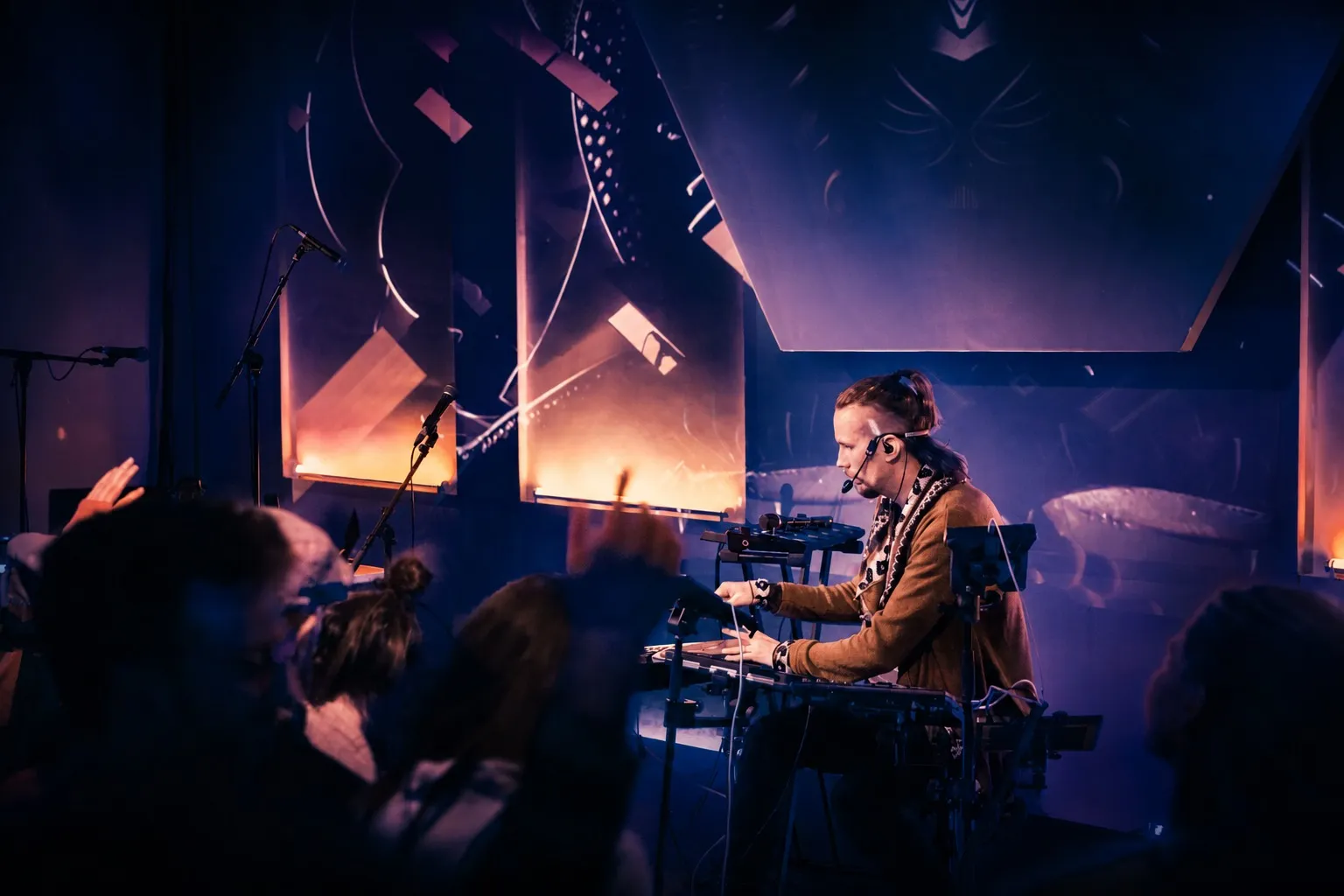
At Biohacker Summit 2023 Amsterdam, Rita Castro Traced The Living Bridge Between Indigenous Brazilian Practice And Modern Research
In Amsterdam, at the Biohacker Summit 2023, Rita Castro stood before an audience and asked them to reconsider what medicine meant. Not as a pill, not as a patent, and not merely as a chemical mechanism, but as a relationship: between body and spirit, forest and community, memory and science.
Castro, a Brazilian nutritionist, biohacker and researcher with deep personal ties to indigenous traditions, used her presentation, Medicines From The Forest: Ancestral Wisdom & Science, to map a territory too often flattened by western curiosity. These were not exotic substances, she suggested, nor wellness commodities stripped of origin. They were living practices, safeguarded by peoples whose knowledge had long been dismissed and was only now beginning to receive the respect it deserved.
“The true benefit of ancestral knowledge is finally coming to light and is starting to receive the respect that it deserves,” Castro said.
A Knowledge System Larger Than Substances
From the outset, Castro insisted that “medicines from the forest” referred to something far broader than a set of psychoactive compounds. The phrase, she explained, emerged from indigenous movements in Brazil, particularly among Huni Kuin and Yawanawa lineages, and came to describe a body of ceremonial and healing practices carried beyond the village and into wider society.
Its roots lie in the Huni Kuin word dao, a term that holds a dual meaning: remedy and poison. In that ambiguity lies a philosophy. Power heals, but power also demands discipline.
For Castro, forest medicine included Ayahuasca, Hape, Kambo and Sananga, but it also encompassed music, storytelling, prayer, body painting, herbal baths and dietas, the intentional dietary and spiritual regimens used for healing and elevation. In other words, the medicine was not only in the plant or secretion, but in the culture that held it, interpreted it and gave it purpose.
“Medicines from the forest are not only about plants or substances; they include practices like art, music, storytelling, and prayers,” she said.
That distinction mattered. It challenged the habit of modern biohacking culture to isolate active ingredients while ignoring context. In Castro’s framing, context was not supplementary. It was the thing itself.
Where Spiritual Knowledge Met The Laboratory
Castro’s central argument was not that science should replace ancestral systems, nor that indigenous knowledge required scientific validation in order to matter. Rather, she described a moment of convergence, in which modern research had begun to investigate what indigenous communities had long understood through ritual, observation and lived experience.
“Indigenous methods involve receiving messages from the spiritual realm, and science is increasingly studying these methods and uncovering surprising results,” she said.
In that overlap, she located both promise and tension. Researchers around the world, she noted, had increasingly turned their attention to these substances and practices, exploring their effects on neuroplasticity, emotional regulation, trauma and immunity. Yet the risk of extraction remained clear: knowledge could be celebrated while the people who protected it were sidelined.
What Castro offered instead was a model of reciprocity, one in which scientific inquiry and ancestral wisdom could stand in dialogue without one consuming the other.
Ayahuasca As Sacred Technology
No medicine occupied more space in Castro’s talk than Ayahuasca, the Amazonian brew now known globally, though often imperfectly. She described it as both difficult to define and impossible to reduce. Across indigenous and religious traditions, she said, there were more than 5,000 recipes and preparations, but the vine Banisteriopsis caapi remained the foundation.
The most widely recognised preparation combines Banisteriopsis caapi with Psychotria viridis, a leaf containing DMT. The vine’s harmala alkaloids, including harmine, harmaline and tetrahydroharmine, make the psychoactive experience possible and, increasingly, scientifically intriguing.
“Ayahuasca is revered as a powerful tool for spiritual growth, healing, and connection with the natural world,” Castro said.
She spoke of its place across Huni Kuin and Yawanawa traditions, as well as within Brazil’s Ayahuasca religions such as Santo Daime, União do Vegetal and Barquinha. Each tradition, she noted, carried its own rituals, intentions and cosmology. That variety was not a complication to be solved, but evidence of a living and adaptive tradition.
Beyond Psychedelia, Toward Healing
What has made Ayahuasca newly legible to scientific audiences is not only its ability to alter consciousness, but its potential therapeutic implications. Castro pointed to research suggesting possible antidepressant, neuroprotective and neurogenic effects, as well as benefits for emotional processing, memory formation and cognitive flexibility.
She also referenced studies examining Ayahuasca in relation to depression, anxiety, PTSD and addiction, including substance dependencies involving alcohol and opioids. Importantly, she urged the audience not to collapse Ayahuasca into DMT alone. The brew’s effects, she said, were shaped by a constellation of compounds, especially the alkaloids in Banisteriopsis caapi, some of which had also been studied for immune and anti-parasitic properties.
This was not a miracle cure, and Castro did not present it as one. But she did argue that the western medical imagination had only begun to grasp what these traditions had preserved in practice for generations.
Hape, Kambo And Sananga In A Holistic System
Castro then turned to three other forest medicines, each carrying a different relationship to body, ceremony and endurance.
Hape, a sacred tobacco snuff typically made from powdered tobacco and tree ash, was described as both cleansing and grounding. Traditionally used by shamans in Brazil and Peru, it has been employed to sharpen focus, clear respiratory passages, prepare the mind for intention and dispel what many indigenous frameworks understand as heavy or negative energy.
Kambo, derived from the skin secretions of the Phyllomedusa bicolor frog, occupied a harsher category: physically difficult, often intense, but culturally valued for purification, stamina and immune support. Castro noted that its bioactive peptides had begun to attract scientific attention, though research remained relatively limited.
Sananga, applied as eye drops made from the juice of root bark, was framed not merely as a treatment for physical discomfort such as headaches or eye problems, but as a tool for spiritual clarity. In some Huni Kuin ceremonies, she said, it was used toward the end of ritual work, when sight was understood not simply as optical, but moral and metaphysical.
Together, these medicines formed a system in which purification, insight, resilience and healing were woven together rather than segmented into separate disciplines.
Reverence, Risk And The Ethics Of Use
If Castro’s talk carried a warning, it was this: none of these medicines should be mistaken for recreational tools or detached from the cultures that shaped them.
“It is imperative to approach this knowledge with reverence, caution, and respect for the cultures that have safeguarded its wisdom,” she said.
She stressed contraindications, potential risks, the need for proper setting, experienced guidance and serious integration. This was a language not of casual experimentation, but of responsibility. The current global appetite for psychedelics and plant medicine, she implied, had produced as much distortion as discovery.
Her call was therefore ethical as much as therapeutic. To engage with forest medicine meant more than pursuing personal transformation. It meant recognising community, protecting the forest, and preserving the reciprocal bond between humanity and nature that these traditions had always insisted upon.
A Forest Under Pressure, A Wisdom Long Ignored
There was a quiet political force beneath the presentation. Castro began by honouring her ancestors and recalling how indigenous heritage in Brazil had been demeaned for centuries in the aftermath of colonisation. Her talk, then, was not only about healing modalities. It was also about historical redress.
The growing western fascination with psychedelics has often framed discovery as if it were new. Castro’s presentation at Biohacker Summit 2023 Amsterdam reminded the audience that much of what is now hailed as frontier science has long existed as frontier memory, held in song, ritual and forest life.
What science has lately begun to measure, indigenous peoples had already learned to respect.
And perhaps that was the sharpest lesson of all: that the future of medicine may depend not only on innovation, but on humility.
Frequently asked questions
What does medicines from the forest mean?
Something far broader than a set of psychoactive compounds. Rita Castro explained that the phrase emerged from indigenous movements in Brazil, particularly among Huni Kuin and Yawanawa lineages, describing ceremonial and healing practices carried beyond the village into wider society.
How does she relate indigenous knowledge to science?
Not as something requiring scientific validation to matter. Castro described a moment of convergence instead, in which modern research had begun to investigate what indigenous communities had long understood through ritual, observation and lived experience.
How many ayahuasca preparations exist?
Castro said that across indigenous and religious traditions there are more than 5,000 recipes and preparations, though the vine Banisteriopsis caapi remains the foundation. She described the brew as both difficult to define and impossible to reduce.
About the event
This recap is part of the Biohacker Summit 2023 Amsterdam series, recorded in Amsterdam on 14 and 15 October 2023. Read the summary of the whole event or join the next edition, HOLOLIFE Summit 2026 Amsterdam, on 14 and 15 November 2026.
In this story
Comments
Loading comments…