Biohacker Summit 2023 Amsterdam
Lighting Up the Gut-Brain Connection
By Teemu Arina · · Updated
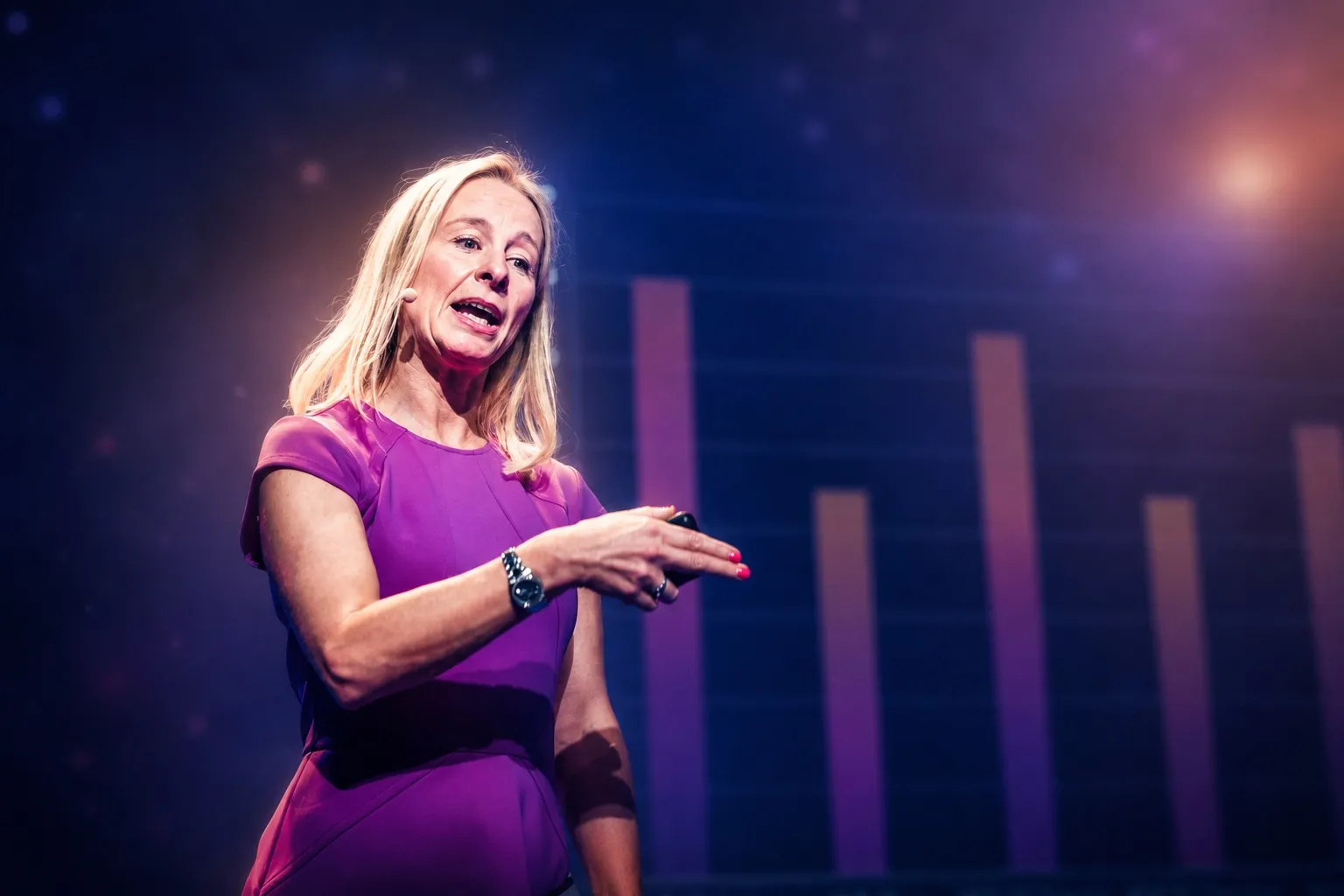
At Biohacker Summit 2023 Amsterdam, Sarah Turner Argued That The Future Of Brain Health May Lie As Much In The Belly As In The Skull
On Saturday, 14 October 2023, at Biohacker Summit 2023 Amsterdam in the Netherlands, Sarah Turner stepped onto the stage with a proposition that sounded at once ancient and cutting-edge: if we want to understand consciousness, cognition and mental wellbeing, we may need to stop thinking of the brain as a solitary monarch and start seeing it as part of a restless biological federation.
Turner, a UK-based neuroscience-trained researcher, CEO and co-founder of CeraThrive, and a specialist in photobiomodulation, devoted her presentation, Lighting Up the Gut-Brain Connection, to the idea that the mind is not simply housed in the head. It is shaped, she argued, by a conversation between brain, gut, microbiome and nervous system, with light emerging as a tool to influence that dialogue.
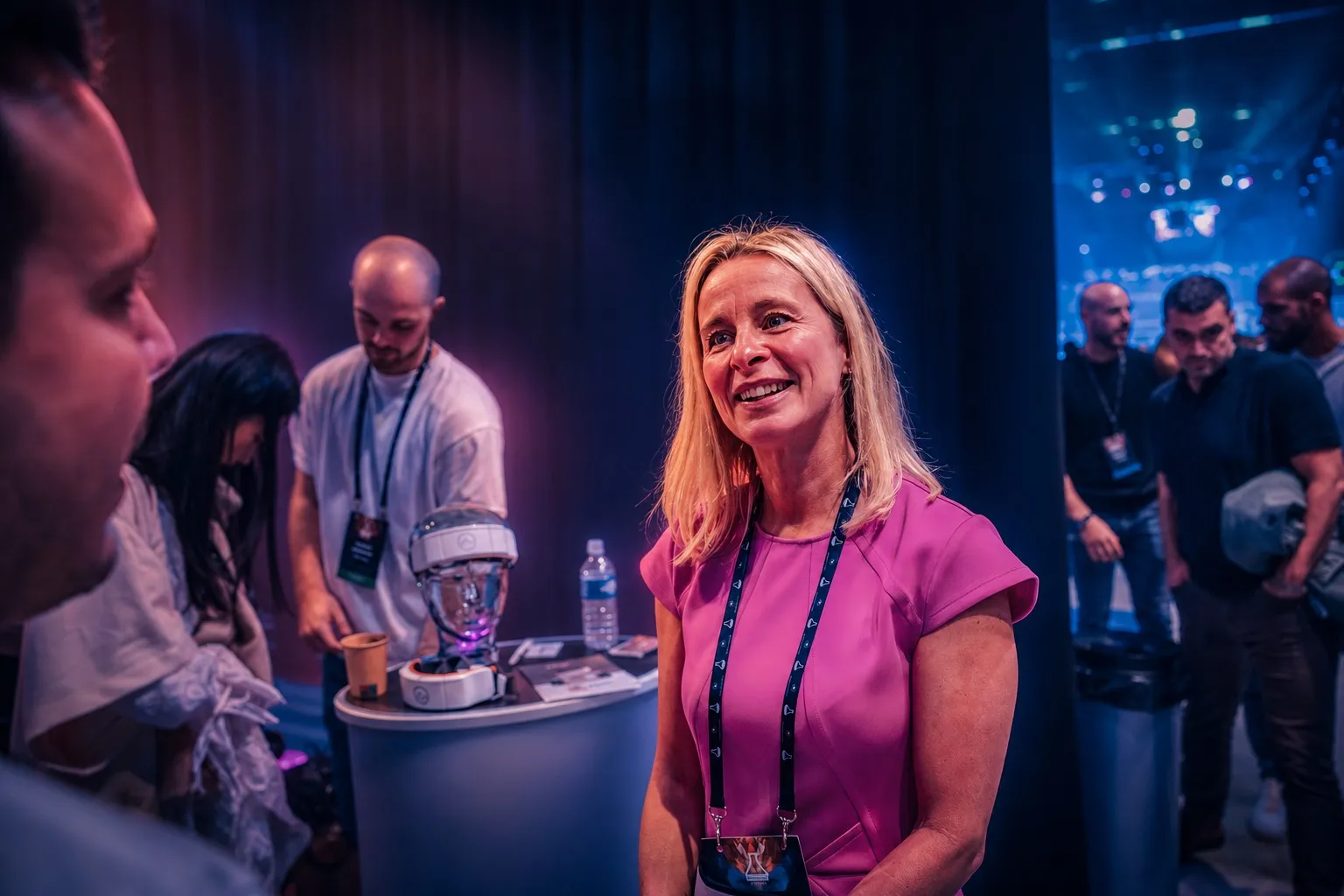
Her thesis was bold but elegantly framed: red and near-infrared light may improve brain function not only by shining through the skull, but by acting through the gut as a systemic bridge to the brain.
A Case For The Body As A Thinking System
Turner began by challenging one of neuroscience’s most culturally entrenched assumptions: that consciousness is something experienced exclusively in the brain. Yes, she acknowledged, the brain is central. But it is not alone.
“The gut is an organ that has neurons and neurotransmitters and processes information,” she said. “We should think of the microbiome as an integral part of our immune system and a vital communicator with the brain.”
This was the intellectual heart of her talk. The gut, often simplistically reduced to digestion, was recast as a sensory and signalling organ in its own right. Through the vagus nerve and a stream of biochemical messengers, it communicates continuously with the brain. Emotion, stress, instinct and even decision-making may be less purely cerebral than modern life encourages us to believe.
“We experience our emotionality through our bodies,” Turner said. “There is a huge interconnected system between mind and body, and we need to shine a light on that connection.”
It was a line that worked both metaphorically and literally.
How Light Entered The Picture
Turner’s route into this field was not accidental. Drawing on a background in pharmaceutical science, electrostatics, neuroscience and structured water research, she described a career shaped by one recurring question: how do physical forces alter physiology?
That question eventually led her to transcranial photobiomodulation, a therapy that uses red and near-infrared light to affect brain function. The mechanism, as she outlined it, rests largely on the mitochondria, the energy-producing structures inside cells. When exposed to specific wavelengths of light, mitochondria may increase production of ATP, the molecule often described as the cell’s energy currency. Light exposure may also trigger nitric oxide release, improving blood flow, while reactive oxygen species act in cell signalling.
The result, Turner argued, can be more than subtle.
Referring to work she observed during dementia-related data collection in 2018, she described visible changes in people with significant cognitive decline. There were improvements in reaction time, engagement and social interaction. Some patients, she said, regained abilities that had seemed to slip away.
“People started to get their opinions back and were able to function in a way that was much more adaptive,” Turner said. “It is profound to see people behave rationally and get their lives back through these targeted light therapies.”
The Problem With The Skull
Yet if the promise of transcranial photobiomodulation is real, Turner argued, so too is its practical limitation. Getting light to the brain is difficult.
Hair, connective tissue and the cranium itself all obstruct penetration. By her account, only a tiny fraction of light applied to the scalp may actually reach the brain. That does not render the therapy ineffective, but it does impose a ceiling on its efficiency.
This constraint became the turning point in her presentation. If direct delivery is limited, then perhaps the route to the brain need not be exclusively direct.
Turner pointed to the systemic effects of red light therapy, citing evidence that illuminating one part of the body can produce changes elsewhere. In animal studies, she noted, wounds improved even when the light was applied to a different, shielded area. That phenomenon suggested that light’s effects may travel through circulation, signalling or other body-wide pathways.
For Turner, the implication was clear: the gut might be one of the most important secondary targets.
The Gut As The Second Brain
If the first half of the talk was about the mechanics of light, the second half was about the politics of the body. Who, exactly, is in charge?
Turner described the microbiome as an “invisible organ”, one deeply entangled with immunity, neurochemistry and behaviour. She invoked the concept of the holobiont, the idea that a human being is not a singular organism in any simple sense, but a living consortium of human and microbial life.
“How many of our decisions are actually other organisms in our body with their own agenda?” she asked. “We are more than just individuals; we are a holobiont, a collection of organisms hopefully working in harmony together.”
It was one of the most provocative moments of the session, and perhaps the one that most neatly captured the summit’s fascination with consciousness. Turner illustrated the point with the now-famous example of Toxoplasma gondii, a parasite known to alter rodent behaviour so dramatically that mice can lose their fear of cats. The example was extreme, but that was precisely its force. Biology, she suggested, is not a tidy hierarchy. It is a negotiation.
Why The Gut Might Amplify Brain Therapies
The most consequential claim in Turner’s presentation was that treating the brain and gut together may work better than targeting either alone.
She referred to an animal study in which light delivered to the gut produced benefits, light delivered to the head produced benefits, and combining the two generated a stronger, synergistic effect. For neurodegenerative conditions such as Alzheimer’s, this dual-target approach appeared to amplify outcomes.
That finding helped shape Turner’s own work on dual-device systems designed to illuminate both the head and the gut. In her account, the rationale is straightforward: one device supports direct brain effects, including possible brainwave modulation, while the other acts through the microbiome and gut-brain axis to reinforce systemic change.
This emerging field, she said, is increasingly described as photobiomics: the use of light to alter microbial ecology and, by extension, influence brain health.
There was also a more speculative but intriguing layer to her thinking. Turner noted that at wavelengths above 900 nanometres, water becomes a chromophore, meaning it can absorb light. Given that the brain is composed largely of water, she asked whether certain wavelengths, including 940nm and 1070nm, might help “structure” that water in therapeutically meaningful ways.
“If we can structure water with light, can we structure the brain using light?” she said. “Photobiomodulation uses targeted light of specific wavelengths and frequencies to have a profound effect on brain function.”
A Holistic Vision Of Mental Wellbeing
What distinguished Turner’s talk was not simply its technical content, but its insistence on a broader reframing of mental health. She was not presenting light therapy as a miracle gadget for sharper focus or better sleep, though such language often hovers around the biohacking world. Her argument was deeper: effective treatment for neurodegeneration, cognitive decline and emotional dysregulation may depend on seeing the body as an integrated ecology rather than a collection of isolated parts.
In that framing, the gut was not ancillary to the brain. It was part of the same story. The microbiome was not a wellness buzzword. It was a physiological actor. Light was not merely a surface-level intervention. It was a means of altering energy production, blood flow, signalling pathways and perhaps even the microbial environment that shapes the mind.
By the close of the presentation, Turner had arrived at a vision of therapy that was both futuristic and oddly humbling. The self, in her telling, was not a sealed-off intelligence directing a body from above. It was an emergent property of systems in dialogue.
That may be why her message resonated beyond the technical specifics of wavelengths and devices. In a conference devoted to expanding consciousness, Turner’s most compelling suggestion was that consciousness may already be more distributed, embodied and shared than we care to admit.
And if that is true, then lighting up the brain may never be enough. We may also have to light the pathways that lead to it.
Frequently asked questions
Why does Sarah Turner say the brain is not alone?
Because the gut thinks too. The gut is an organ that has neurons and neurotransmitters and processes information, she said, arguing that the microbiome should be treated as an integral part of the system rather than consciousness being experienced exclusively in the skull.
What is transcranial photobiomodulation?
A therapy using red and near-infrared light to affect brain function. Turner came to it from a background spanning pharmaceutical science, electrostatics, neuroscience and structured water research, shaped by one recurring question: how do physical forces alter physiology?
What limits light reaching the brain?
The skull. Hair, connective tissue and the cranium all obstruct penetration, and by Turner's account only a tiny fraction of light applied to the scalp may actually reach the brain. That does not make the therapy ineffective, but it imposes a ceiling, which is why she looks to the gut.
About the event
This recap is part of the Biohacker Summit 2023 Amsterdam series, recorded in Amsterdam on 14 and 15 October 2023. Read the summary of the whole event or join the next edition, HOLOLIFE Summit 2026 Amsterdam, on 14 and 15 November 2026.
In this story

Comments
Loading comments…