Biohacker Summit 2023 Amsterdam
Multi-Color Photobiomodulation Brought The Future Of Light Therapy Home
By Teemu Arina · · Updated
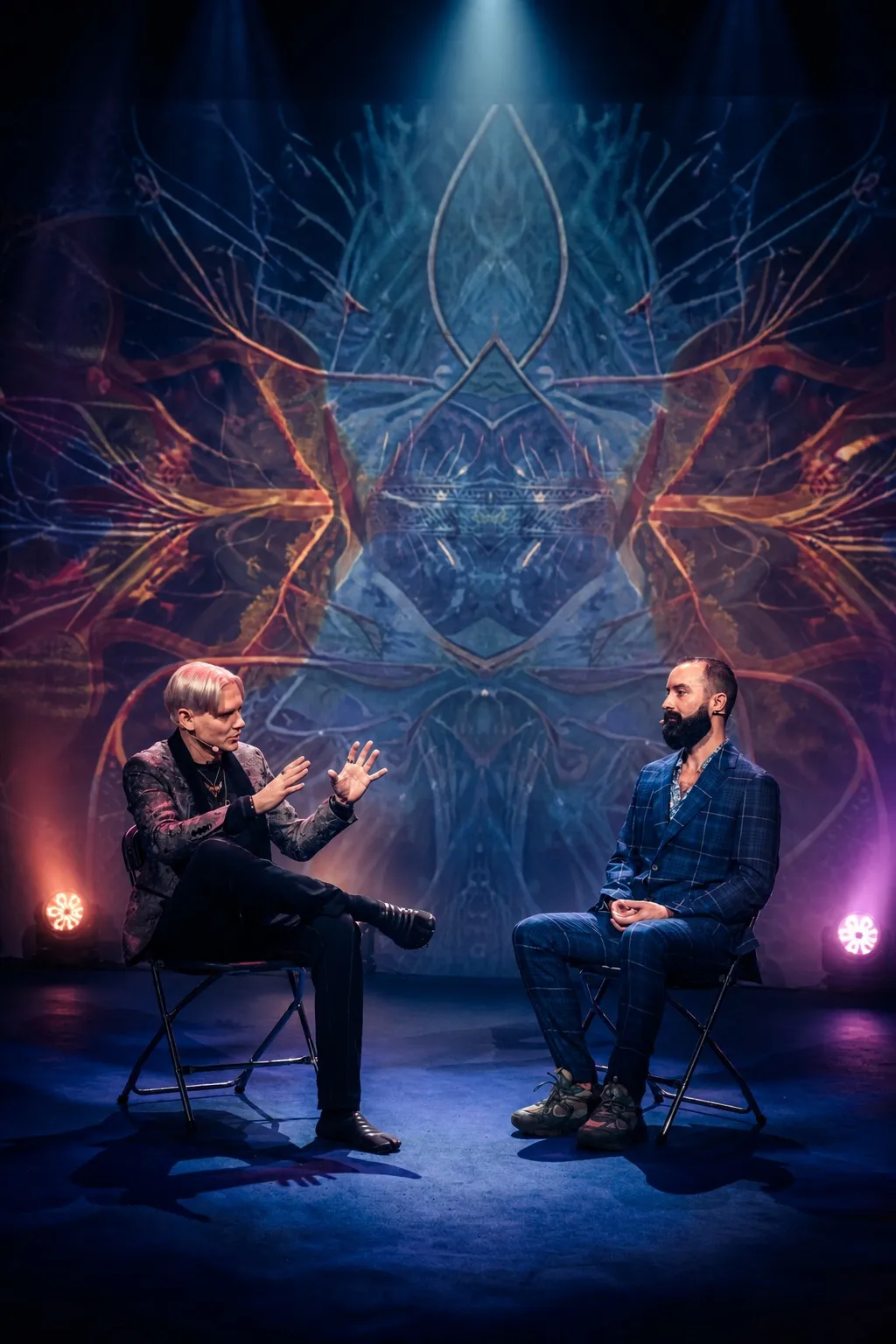
At Biohacker Summit 2023 Amsterdam, Martin Junggebauer Argued That The Most Exciting Frontier In Photobiomodulation Was No Longer The Clinic Alone, But The Living Room
Light, in Martin Junggebauer’s telling, was never merely illumination. It was architecture. Biology’s oldest organiser. The original conductor of rhythm, repair and survival. Standing before the audience at Biohacker Summit 2023 Amsterdam on 14 October 2023 in the Netherlands, Junggebauer unfolded a case for “Photobiomodulation Therapy & Technologies for Home Use” that was at once scientific, commercial and quietly utopian: a future in which sophisticated light-based interventions moved from specialist medical settings into daily personal practice.
Junggebauer, a German expert in photobiomodulation and photodynamic therapy, came with the credentials to command the room. A co-author of the book Medical Low-Level-Laser Therapy: Foundations and Clinical Applications, and of an in vivo study on antimicrobial photodynamic therapy for malaria, he has spent years at the intersection of light medicine, neuroscience and mental health. His central claim in Amsterdam was that photobiomodulation, or PBM, had outgrown its popular branding as little more than red-light wellness culture. The true story, he suggested, was broader, more evidence-based and potentially more disruptive.
“All life developed in light,” Junggebauer said. “As biohackers, we fully understand how important light is for our well-being and our biology, and how it organizes our body to switch on specific functions at the right time.”
Beyond Red And Infrared, A Full Spectrum Vision Emerged
The phrase photobiomodulation has often been flattened into shorthand for red and near-infrared panels, the kind that now populate gyms, clinics and the social feeds of longevity enthusiasts. Junggebauer pushed against that simplification. Red and infrared remained foundational, he acknowledged, particularly in relation to mitochondrial function and cytochrome c oxidase, but they were only part of the picture.
Ultraviolet and blue light, he said, offered antimicrobial potential. Green and yellow appeared to open other physiological doors, from oxygenation to detoxification and hormonal balance. If the public narrative around PBM had become monochrome, Junggebauer’s presentation attempted to restore colour.
“Photobiomodulation is much more than just red and infrared light therapy,” he said. “We can also use ultraviolet, blue, green, and yellow light to target inflammation and improve our overall health.”
This was not framed as speculative futurism alone. Junggebauer pointed repeatedly to the swelling body of literature behind the field. By his count, more than 7,000 PBM studies had been published by 2022, with roughly 2,200 conducted in humans. The annual growth in publications, he argued, reflected not passing fashion but a maturing discipline now studied by universities, clinicians and institutions as prominent as NASA.
A Therapy That Moved From Margins Toward Medical Legitimacy
Part of the force of Junggebauer’s argument lay in how firmly he placed PBM within mainstream medical recognition. He highlighted landmark research, including a 2009 Lancet publication on chronic neck pain, and pointed to subsequent recommendations from the World Health Organization for certain pain-related uses. PBM, in his account, had already crossed a threshold. It was no longer simply something discussed in wellness circles or self-optimisation forums. It had entered the language of evidence.
He also leaned on a curious marker of efficacy: sport’s prohibition system.
“Intravenous photobiomodulation is on the doping list because it can significantly enhance performance,” he said. “What better proof for a therapy could you have than it being on the doping list?”
The line drew its power from inversion. A therapy controversial enough to be banned in elite competition, he implied, had already demonstrated that it could alter human performance in measurable ways. The remark was provocative, but it served his wider point: light therapy had become impossible to dismiss as fringe.
Inside The Mechanism, Cells Turned Light Into Capacity
At the cellular level, Junggebauer described PBM as a process that begins with light absorption and unfolds into a cascade of biological effects. Mitochondria, through cytochrome c oxidase, respond by increasing ATP production, the energy currency on which cells depend. Nitric oxide is photo-dissociated, improving blood flow. In the brain, these changes may also support the glymphatic system, helping clear metabolic waste and toxic byproducts.
He presented the body not as a machine occasionally exposed to light, but as a light-sensitive organism rich with receptors and responsive interfaces. Beyond mitochondria, he noted, photoreceptive properties are found throughout the bloodstream and in the interfacial water of cellular membranes. Such claims widened the conceptual frame of PBM from local tissue treatment to systemic signalling.
Blue light, he said, may activate telomerase, the enzyme associated with maintaining telomeres and slowing cellular ageing. Green light may improve oxygenation and recovery. Yellow light, though backed by less data, appeared to have detoxifying effects and influence serotonin indirectly. Across these wavelengths, the recurring themes were inflammation control, metabolic support and resilience.
The Battle Against Infection Was Recast In Light
Among the more striking parts of Junggebauer’s presentation was his discussion of antimicrobial photodynamic therapy, a subfield of PBM that uses light, often with photosensitising compounds, to target pathogens. Here he turned to work close to home, citing a study he had co-authored on the treatment of malaria caused by Plasmodium falciparum using ultraviolet and blue light protocols.
The implications, as he presented them, stretched well beyond one disease. In an age of mounting antimicrobial resistance, light-based interventions could become part of the search for alternatives to failing drugs. Bacteria, fungi, parasites and viruses all entered the frame.
This was one of the moments when the summit’s biohacking language gave way to something more urgent. If the antibiotic era is under pressure, then technologies once coded as experimental or niche begin to look less like luxuries and more like strategic necessities.
Home Devices Became The Most Seductive Promise
Yet the emotional and commercial centre of the talk was not hospital medicine. It was domestic portability. Junggebauer’s central question was not only whether PBM worked, but whether it could be made practical, safe and effective for home use.
He argued that it could. Reviews, he said, suggested that home-use PBM devices appeared both effective and safe when properly used. He described the therapy as generally free of side effects if protocols were followed and devices were appropriate. That assurance is crucial in a market increasingly crowded with consumer light products making broad claims.
The most prominent example he offered was the Endolite Band, a wearable device designed to mimic some of the effects of intravenous photobiomodulation by delivering multiple wavelengths over arteries close to the skin’s surface. Blue, green, yellow, red and infrared light were all built into the band, which he presented as a practical daily tool aimed at performance, recovery and autonomic regulation.
The evidence he shared was preliminary and not framed as a tightly controlled medical trial, but it was designed to appeal directly to the summit audience. Users reportedly wore the device for an hour a day over eight weeks without changing diet, sleep or exercise routines. Average gains were reported in bench press, squat, shoulder press and running performance. Data from clinic samples also suggested a shift toward increased parasympathetic activity and reduced sympathetic activity during the device’s relax mode, alongside improvements in blood oxygenation.
This was the language of the contemporary optimisation economy: power output, nervous system balance, sleep quality, daily energy. The home had become the laboratory. The wrist or arm had become the access point.
The Brain Was The Final Frontier
If wearable light for circulation and exercise drew interest, Junggebauer reserved his greatest emphasis for the brain. Infrared helmets, he said, represented one of the most promising applications of PBM, not only for disease treatment but for prevention and enhancement.
“Infrared light is not only a treatment for neurodegenerative diseases, it is also the perfect tool to prevent getting neurodegenerative diseases in the first place,” he said.
He pointed to data on neurodegenerative disease, depression, anxiety, headaches, migraine and autism spectrum disorder, while also underlining a theme that spoke directly to a healthy, ambitious audience: cognition. Brain-targeted PBM, he argued, could improve attention, memory and overall cognitive performance even in young, healthy individuals.
“Photobiomodulation can improve cognitive performance in young, healthy individuals,” he said. “It is an incredible tool for all of us to improve our cognitive function, attention, and memory.”
The proposed mechanisms were familiar by this stage of the talk but newly focused: more ATP, better cerebral blood flow through nitric oxide, reduced neuroinflammation, support for glymphatic clearance, and stimulation of brain-derived neurotrophic factor, or BDNF, a protein associated with neurogenesis and synaptogenesis. In the broadest sense, PBM was presented as a means of helping the brain energise itself, clear itself and rewire itself.
Testimony Sat Beside Data, And The Message Was Personal
Like many presentations in the frontier spaces between medicine and wellness, Junggebauer’s talk balanced scientific literature with anecdote. A testimonial from US veteran Luis Romeo described the use of a PBM helmet as transformative, improving mood, work ethic and social interaction after years of depression and destructive behaviour. Junggebauer acknowledged the power of such stories, not as replacements for research but as reminders of why the science matters.
That combination of peer-reviewed evidence and human narrative gave the presentation its particular tone. It was not merely a technical update on wavelengths and devices. It was also an argument that the management of pain, performance and even mental suffering might increasingly involve forms of light delivered not by institutions alone but by tools people use themselves.
A Biohacking Dream Sought Scientific Respectability
There was, inevitably, a tension running through the session. PBM was described simultaneously as rigorously evidence-based medicine and as a “biohack.” It was invoked in the same breath as WHO recommendations, NASA research, sports performance and daily meditation. This blending of registers is part of what makes the field so attractive and so contested. It offers the seductive possibility that advanced therapeutic science can be miniaturised, aestheticised and woven seamlessly into personal routine.
Junggebauer embraced that possibility fully. Light, in his framing, was not simply treatment after injury or decline. It was maintenance, prevention, enhancement and perhaps even a subtle tool for consciousness itself. He spoke of using external light to influence “inner light,” an image that might sound mystical were it not embedded in graphs, reviews and device specifications.
By the end of the session at Biohacker Summit 2023 Amsterdam, the message was clear. Photobiomodulation, as Martin Junggebauer presented it, had moved beyond the red glow of spa culture. It had become a multicoloured proposition about human capability, one rooted in mitochondria and marketing alike. Whether all of its claims will withstand the long scrutiny of clinical science remains an open question. But in Amsterdam, light was no longer passive background. It was offered as medicine, mechanism and method for living.
Frequently asked questions
Is photobiomodulation only about red and near-infrared?
Martin Junggebauer pushed against that simplification. Red and infrared remain foundational, particularly in relation to mitochondrial function and cytochrome c oxidase, but in his account they are only part of a fuller spectrum worth using.
How mainstream is the therapy now?
Junggebauer placed it firmly inside medical recognition, highlighting landmark research including a 2009 Lancet publication on chronic neck pain, and pointing to subsequent recommendations from the World Health Organization for certain pain-related uses.
What happens at the cellular level?
He described a process that begins with light absorption and unfolds into a cascade: mitochondria respond through cytochrome c oxidase by increasing ATP production, the energy currency cells depend on, with nitric oxide photo-dissociated as part of the same sequence.
About the event
This recap is part of the Biohacker Summit 2023 Amsterdam series, recorded in Amsterdam on 14 and 15 October 2023. Read the summary of the whole event or join the next edition, HOLOLIFE Summit 2026 Amsterdam, on 14 and 15 November 2026.
In this story
Comments
Loading comments…