From bodyhacking to soul work: biohacking's evolution takes centre stage in Tallinn
By Teemu Arina · · Updated
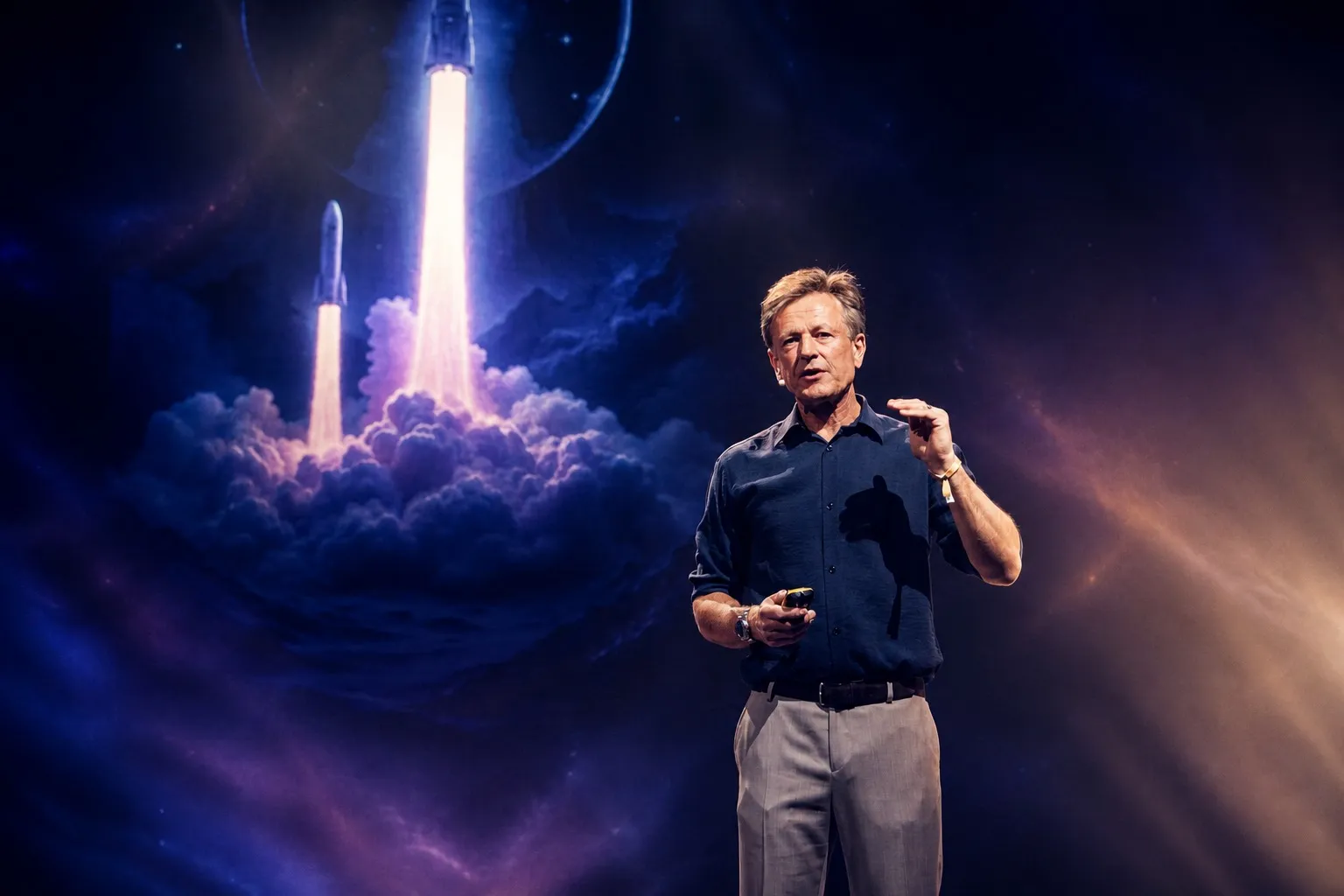
Biohacking pioneer Eduard de Wilde charts path beyond physical optimisation at HOLOLIFE Summit
The future of human potential lies not just in optimising our biology but in transcending it, according to biohacking expert Eduard de Wilde. Speaking at the HOLOLIFE Summit 2025 in Tallinn, Estonia on Saturday, de Wilde presented a comprehensive vision of what he calls "Biohacking 3.0" – a framework that expands the movement beyond physical enhancement into psychological and spiritual realms.
"Biohacking is evolving, but the principles remain the same," de Wilde told the audience gathered at the three-day summit dedicated to human enhancement technologies. "The idea is to improve your biological setup by experimenting, collecting data, and trying to figure out what's good for you – to have a personalised approach and then build on that."
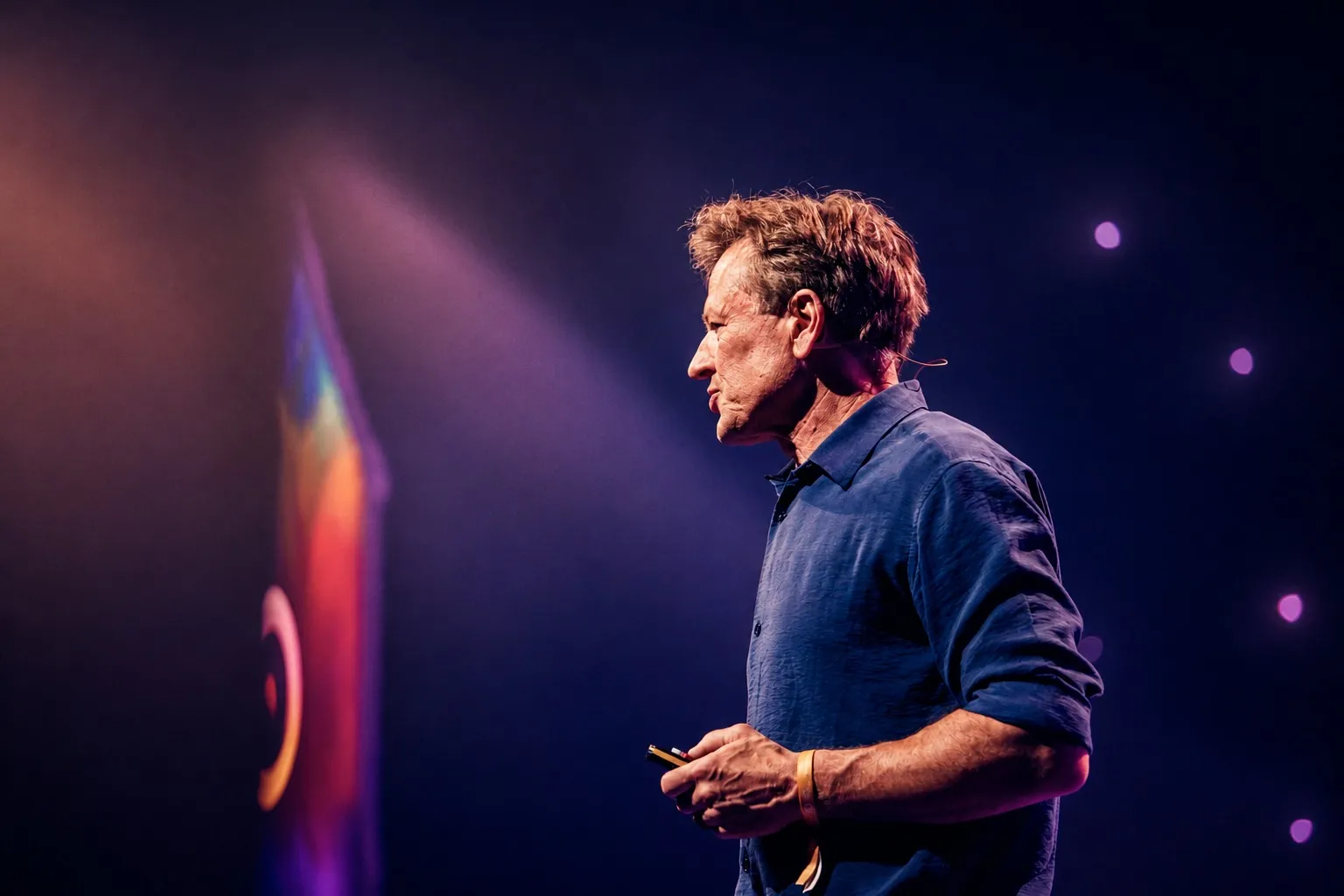
The three waves of biohacking
De Wilde, founder of European biohacking platform LiveHelfi.com and functional food brand Noordcode, outlined how biohacking has evolved through distinct phases since its emergence in the early 2000s.
The first wave, Biohacking 1.0, focused primarily on human-machine integration. This included early adopters implanting RFID chips in their hands and pioneers like Livio Babitz, who implanted a device in his chest that vibrated when facing north to create an artificial "north sense" – essentially adding a new sense to human capability.
Biohacking 2.0, where de Wilde suggests most current practitioners remain focused, centres on optimising biology and cognitive function through interventions ranging from sleep enhancement to longevity protocols. This level, he explained, has been exemplified by figures like Bryan Johnson with his Blueprint protocol – focused on extending lifespan through rigorous measurement and biological optimisation.
"But the real question is, does optimising your body and mind make you happy?" de Wilde asked. "That's where Biohacking 3.0 enters."
Beyond optimisation: the five pillars approach
At the heart of de Wilde's framework is what he terms "the five pillars of thriving" – a structure reminiscent of Maslow's hierarchy of needs but applied specifically to biohacking.
"It's like a Maslow pyramid," he explained. "The basics should be in place: self-care. Then you talk about self-optimisation. When you have that, you can talk about self-mastery. Then, self-actualisation. The holy grail is self-realisation, which is what we maybe all should aim for."
This approach represents a significant shift from biohacking's early focus on technology and physical enhancement to a more integrated view that incorporates psychological and spiritual dimensions.
Mastering the self: the cornerstone of advanced biohacking
According to de Wilde, the entry point to Biohacking 3.0 begins with self-mastery across four domains: mind, nervous system, emotions, and relationships.
"Mind mastery is about attention, avoiding distractions, and focusing on deep work," he said. "Nervous system mastery involves learning to regulate your stress response using tools like coherence breathing. Emotional mastery means applying techniques like the ninety-second rule – giving yourself time before reacting to emotional triggers."
For relationship mastery, de Wilde cited stoic philosophy as particularly valuable: "Stoicism helps tremendously – focus on what you can control and let go of what you cannot."
From trauma to transformation
Perhaps most striking was de Wilde's candid discussion of his personal journey through what he terms "ego hacking" – confronting addiction, trauma, and psychological "shadows."
He described participating in neurofeedback training called "Forty Years of Zen" with Dr. James Hart. "I thought it was about raising IQ, but it turned out to be about resolving traumas," de Wilde shared. "Over five days, around 150 traumas resurfaced and were addressed. It gave me profound relief and has made a big difference in how I approach life."
This work of psychological healing, according to de Wilde, is essential for reaching self-actualisation and ultimately self-realisation – the pinnacle of his biohacking framework where one experiences connection with something larger than oneself.
The future integrates technology, biology and spirituality
While many tech conferences focus primarily on the next gadget or supplement, de Wilde's presentation stood out for its integration of ancient wisdom traditions with cutting-edge science. He predicted that biohacking's future would continue to see advances in human-machine integration and biological optimisation, but with growing emphasis on spiritual dimensions.
"The future of biohacking will bring increased human-machine integration, ongoing optimisation, and a deepening of the spiritual aspects – eventually merging all together," he concluded.
As the HOLOLIFE Summit continues through Sunday in Tallinn, de Wilde's vision of Biohacking 3.0 offered attendees a provocative reminder that the ultimate frontier may not be external technology but the largely unmapped territory of human consciousness itself.
Frequently asked questions
What are the three waves of biohacking?
Eduard de Wilde traced the movement from Biohacking 1.0, focused on human-machine integration with implanted RFID chips and pioneers such as Livio Babitz, through to what he calls Biohacking 3.0, which extends beyond physical enhancement into psychological and spiritual territory.
What are the five pillars of thriving?
Self-care, self-optimisation, self-mastery, self-actualisation and, at the top, self-realisation. De Wilde described the structure as a Maslow pyramid applied to biohacking: the basics have to be in place before the higher levels mean anything at all.
Where does Biohacking 3.0 actually start?
With self-mastery across four domains: mind, nervous system, emotions and relationships. De Wilde described mind mastery as attention and deep work, nervous system mastery as regulating the stress response with tools like coherence breathing, and emotional mastery as techniques such as the ninety-second rule.
About the event
This recap is part of the HOLOLIFE Summit 2025 Europe series, recorded in Tallinn on 14 and 15 June 2025. Read the summary of the whole event or join the next edition, HOLOLIFE Summit 2026 Amsterdam, on 14 and 15 November 2026.
In this story

Comments
Loading comments…