Biohacker Summit 2023 Amsterdam
When “Just Breathing” Is Not Enough
By Teemu Arina · · Updated
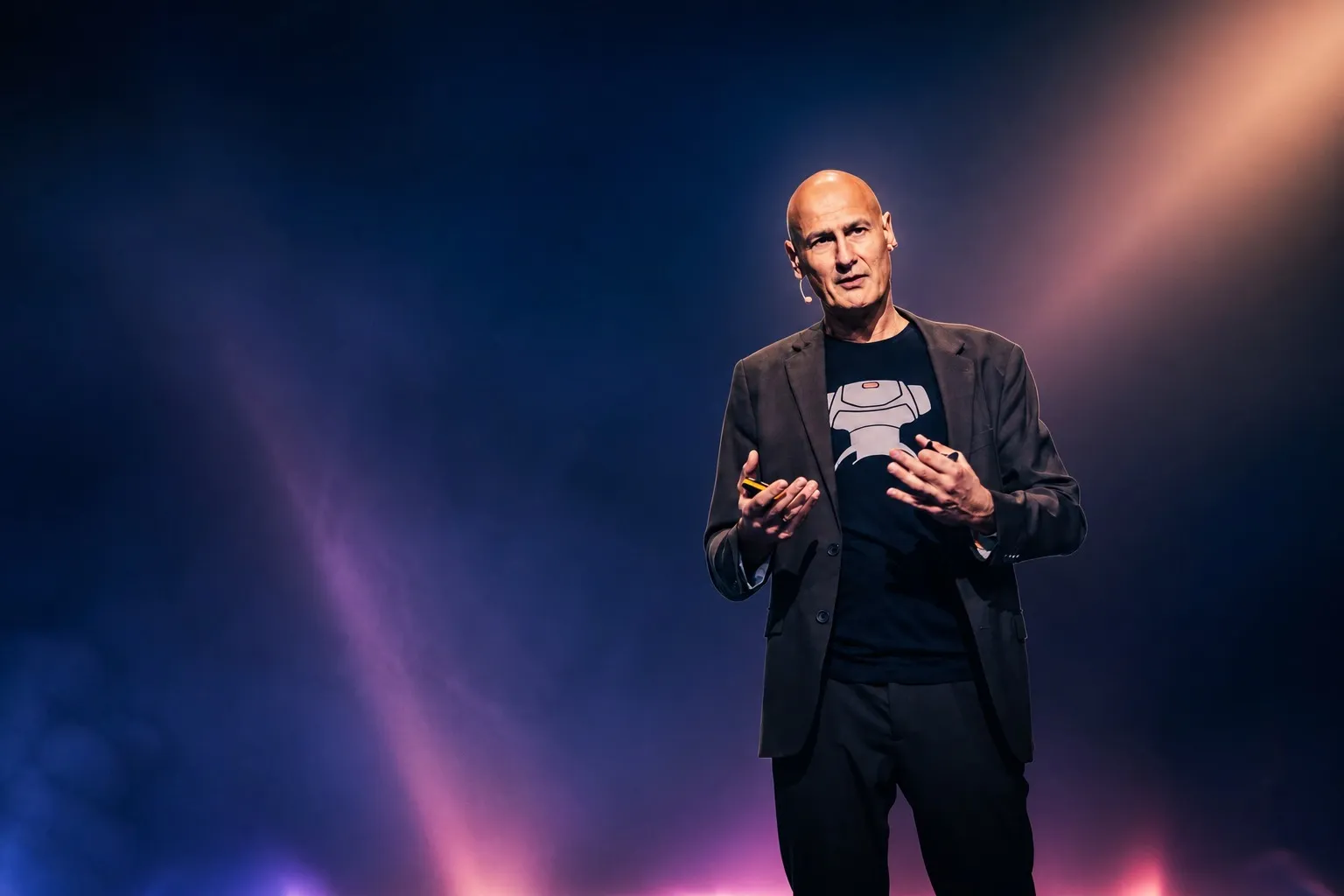
Christian Poulsen’s Case For Training The Breath At Biohacker Summit 2023 Amsterdam
On a Saturday in Amsterdam, inside the high-voltage world of Biohacker Summit 2023 Amsterdam, Christian Poulsen took one of the most ordinary acts of human life and made it feel newly urgent. His presentation, When “Just Breathing” Is Not Enough: Training For Respiratory Power & Vital Capacity, argued that breathing should no longer be treated as a passive background function, but as a trainable system that shapes strength, stress, ageing and, perhaps most provocatively, longevity itself.
Poulsen, the Danish founder of Airofit and a familiar figure in biohacking circles, did not begin with abstraction. He began with bodies. The audience was asked to inhale fully through the nose, hold the breath, tense the muscles, and release. Three rounds. Simple, almost theatrical. Yet it was enough to sharpen the room’s attention to the point he would return to throughout the session: oxygen is not merely consumed, it is distributed, directed and, to some extent, managed.
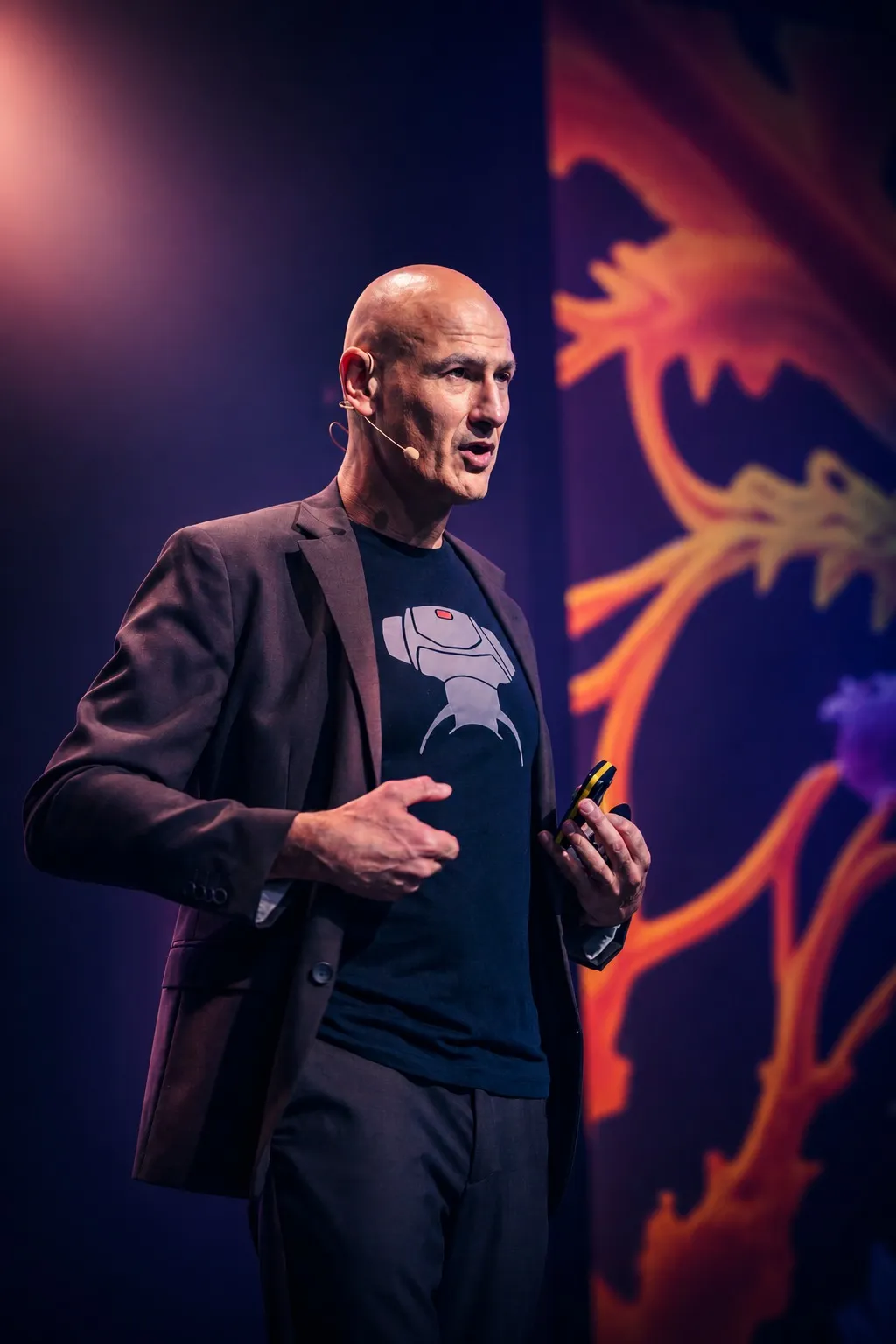
By the time he reached his conclusion, Poulsen’s message had settled into a clear refrain. You can train your respiratory system, he said, and you should.
Breathing As Operation, Power And Size
Poulsen organised his talk around three elements: operation, power and size.
Operation meant mechanics. How one breathes matters, he argued, not only for physical efficiency but for mental state. The distinction between shallow, upper-chest breathing and deeper diaphragmatic breathing was presented as foundational. So too was nasal breathing, which he linked to familiar physiological benefits including nitric oxide production, filtration and humidification of air.
But the more arresting claim lay in what he described as the two-way relationship between breathing and emotion. Breathing patterns, he said, do not merely reflect inner states such as stress, calm or anxiety. They can also help induce them.
“Physical health is closely connected to breathing, and mental health is too,” Poulsen said. “If you can get your diaphragm muscle to move, you have the beginning of releasing tension and stress.”
It was a line that landed because it translated a wellness cliché into anatomy. Anxiety, he suggested, is not only a story told by the mind. It is also felt in the solar plexus, where the diaphragm sits just behind the tension many people experience as pressure or tightness. To retrain breath, in this view, is to create leverage over distress from the body upward.
The Promise Of A Trainable Diaphragm
From there, Poulsen moved to power, and to the commercial as well as scientific heart of his work: Airofit, a resistance-based breathing training system linked to a smartphone app. The device, he explained, measures inspiratory and expiratory strength along with vital capacity, then guides users through structured training patterns. He said the system includes 17 different breathing patterns and personalised sessions designed around individual measurements.
The central proposition was refreshingly blunt. Breathing muscles are muscles. Therefore, they can be trained.
Poulsen cited research conducted with Metropolitan University of Manchester, where ultrasound was used to measure muscular adaptation during targeted respiratory training. According to the findings he presented, six weeks of training increased diaphragm thickness by 30% and abdominal muscle thickness by 25%. The range of motion of the diaphragm, he added, rose by an average of 18%.
For a culture obsessed with metrics, these numbers gave breathwork a harder edge. This was not framed as mysticism, nor even as mindfulness, but as conditioning.
And Poulsen was careful to connect those measurements back to everyday life. Stronger breathing muscles, he argued, are not only for elite sport or performance laboratories. They matter for ordinary movement, for stress tolerance, for energy, for the humble but decisive acts that make up a life.
“Breathe right to achieve better mental and physical wellness,” he said. “Stronger breathing muscles provide the performance needed to enjoy life to the fullest, from climbing stairs to playing with your grandkids.”
The Seductive Claim Of Younger Lungs
If the first half of the presentation was about mechanics and muscular adaptation, the second was about ageing.
Poulsen said Airofit’s user database, which he described as the largest breathing database in the world, shows a familiar arc: vital capacity peaks between the ages of 18 and 30, then declines as muscles weaken and tissue stiffens. That deterioration, he argued, is not simply a marker of age but a modifiable condition.
His most headline-friendly assertion was also his boldest. With five minutes of daily training for four weeks, he said, users could increase accessible vital capacity by 30%.
“You can get twenty years younger lungs in only four weeks if you do the training for five minutes a day,” Poulsen said. “This capacity prolongs the good life for yourself and your family.”
It was the kind of claim that drew the room in because it married aspiration with arithmetic. Four weeks. Five minutes a day. Twenty years younger. The language of biohacking thrives on exactly this compression, turning long anxieties about decline into manageable protocols.
Yet Poulsen grounded the appeal in something larger than vanity. Lung function, he noted, correlates closely with expected lifespan, citing large studies linking pulmonary performance to longevity. In that sense, his case was not merely that better breathing helps one feel better. It was that better breathing may help one live better, and perhaps longer too.
“There is a close correlation between your lung function and your expected lifespan,” he said. “Better breathing is the best shortcut to a longer and higher quality life.”
Breath As A Shortcut, Not A Miracle
One of the more interesting tensions in Poulsen’s talk was its effort to balance ambition with accessibility. This was a biohacking presentation, certainly, full of data points, devices and claims of measurable transformation. But it was also a plea for attention to something elemental.
Breathing, in his framing, is both primal and neglected. It is free, constant and indispensable, yet rarely trained with the seriousness people apply to cardiovascular fitness, strength or diet. His argument was that this neglect has blinded many to an obvious opportunity.
He also touched on a cultural history of breath as a means of emotional access, referring to actors in the 1970s, including Robert Redford, who used breathing patterns to enter emotional states more quickly in the faster tempo of television production. The anecdote was a curious but revealing detour. It reinforced his larger claim that breath is not passive. It is a lever.
That insistence gave the session its force. Poulsen did not promise that breathwork would erase the causes of suffering. He said, instead, that it could create room within it. A better regulated system, stronger muscles and larger capacity might not remove pain, stress or ageing, but they could change how a person meets them.
A Familiar Biohacker Dream, Delivered With Conviction
At Biohacker Summit 2023 Amsterdam, where grand promises are seldom in short supply, Christian Poulsen’s presentation stood out because it tethered an ancient instinct to modern performance language. His thesis was expansive but disciplined: breathe deeply, breathe nasally, strengthen the diaphragm, expand capacity, lengthen life.
Some of the claims will invite scrutiny, as bold physiological promises always should. But the appeal of the talk did not rest on hype alone. It rested on the persuasive idea that one of the body’s most overlooked systems may also be one of its most trainable.
By the end, Poulsen had turned breathing from metaphor into method. Not serenity, but system. Not simply air in and air out, but operation, power and size.
“You can train your respiratory system and you should train your respiratory system,” he told the audience. “Do that because you are worth it.”
In a conference devoted to optimising human potential, it was a fitting challenge. The future, Poulsen implied, might not begin with a pill, a patch or a sensor. It might begin with the next breath, done properly.
Frequently asked questions
How does Christian Poulsen structure breath training?
Around three elements: operation, power and size. Operation means mechanics, and he argued how one breathes matters for mental state as well as physical efficiency, drawing the distinction between shallow upper-chest breathing and deeper diaphragmatic breathing, and favouring nasal breathing.
What does the Airofit system measure?
Inspiratory and expiratory strength along with vital capacity, then guides users through structured training patterns. Poulsen said the resistance-based system includes 17 different breathing patterns linked to a smartphone app.
When does lung capacity peak?
Poulsen said the company's user database, which he described as the largest breathing database in the world, shows vital capacity peaking between the ages of 18 and 30 before declining as muscles weaken and tissue stiffens, a decline he argues is partly trainable.
About the event
This recap is part of the Biohacker Summit 2023 Amsterdam series, recorded in Amsterdam on 14 and 15 October 2023. Read the summary of the whole event or join the next edition, HOLOLIFE Summit 2026 Amsterdam, on 14 and 15 November 2026.
In this story
Comments
Loading comments…