HOLOLIFE Longevity Côte d'Azur
Metabolic Flexibility: The Clinical Case for Inverting the Food Pyramid
By Teemu Arina · · Updated

Jan Gorczynski Made A Provocative Case For Turning Dietary Orthodoxy Upside Down At Hololife Longevity Côte d'Azur
At Hololife Longevity Côte d'Azur in Nice, France, on 12 March 2026, entrepreneur and wellness founder Jan Gorczynski delivered one of the day’s most combative talks, arguing that modern nutrition guidance had failed the public and that the time had come to rethink the food pyramid from the ground up.
In his presentation, “Metabolic Flexibility: The Clinical Case for Inverting the Food Pyramid,” Gorczynski rejected the familiar dietary hierarchy that had long placed grains and carbohydrates at the base of daily eating. In its place, he proposed a model built first on healthy fats and protein, supported by fibre-rich greens and collagen, with carbohydrates used more selectively and strategically.
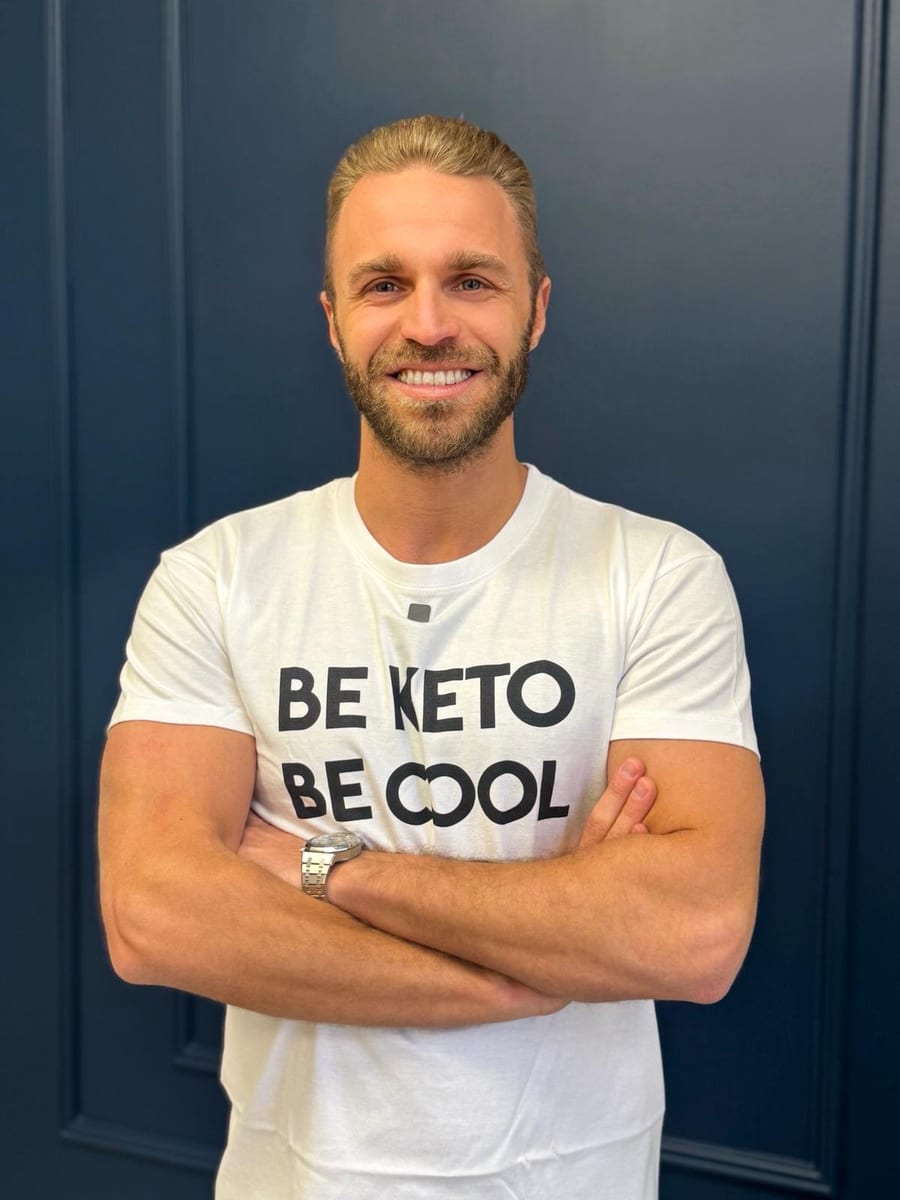
The speech was part manifesto, part market argument, and part personal plea. It was also a sharp reflection of the broader mood running through the event, where prevention, healthspan and self-experimentation repeatedly overshadowed conventional healthcare narratives.
The Argument Against Nutritional Orthodoxy
Gorczynski did not ease into his thesis. He said he had spent years troubled by what he described as false dietary narratives, and he used the platform in Nice not to sell products but to challenge the assumptions that had shaped public health advice for generations.
He traced the roots of the problem back to the late 1960s, arguing that research linking sugar to heart disease had been sidelined while fat was made into the dietary villain. He pointed to the influence of institutional guidance, including the USDA food pyramid, and criticised what he saw as conflicts of interest in nutrition policy.
For Gorczynski, the consequences were visible everywhere: soaring obesity, type 2 diabetes and widespread metabolic syndrome. These outcomes, he suggested, were not random but the result of a long-running nutritional experiment that had gone badly wrong.
What He Meant By Metabolic Flexibility
The core of the presentation rested on a simple distinction. Most people, Gorczynski argued, were metabolically rigid, dependent almost entirely on glucose for energy. The healthier alternative was metabolic flexibility, the capacity to move between glucose and fat, or ketones, as fuel sources without dramatic energy swings.
He described this flexibility as foundational to stable energy, sharper focus and lower chronic inflammation. In his framing, chronic inflammation stood as one of longevity’s greatest enemies.
Rather than promoting an absolutist keto doctrine, he made a more nuanced case. The goal, he said, was not to eliminate one fuel source forever, but to train the body to use both efficiently. That capacity to switch, he suggested, was where resilience began.
The Food Pyramid, Turned On Its Head
Gorczynski’s “inverted food pyramid” placed healthy fats and protein at the base, followed by greens, fibre and collagen as structural support. Carbohydrates remained in the model, but only as strategic carbohydrates, reserved for periods of intense exercise or athletic output.
It was a framework designed not only to lower insulin volatility but also to support what he described as the body’s “engine” and “chassis”: metabolism on one side, structural integrity on the other.
The language was vivid and often personal. Reflecting on a torn ligament from boxing, he linked recovery and resilience to adequate protein and collagen intake, folding anecdote into a wider commercial and nutritional message.
A Speech That Mixed Science, Frustration And Salesmanship
That the speaker was also the founder of BEKETO and The Collagen Company was never far from view. Gorczynski, whose brands operate across the UK and EU, referenced his business repeatedly, noting its rapid expansion to nearly 200 products and a presence in about 30 countries. Yet the commercial element sat alongside genuine anger.
He returned more than once to the idea that the public had been misled for decades. If dietary advice could be reversed so dramatically, he asked, who would be held accountable for the damage already done?
It was one of the talk’s most striking undercurrents: not simply that nutritional guidance had changed, but that few institutions, in his view, had reckoned honestly with the cost of getting it wrong.
Questions From The Room
The discussion that followed broadened the scope of the talk. Audience members asked about keto-friendly snacks, breathing aids and the use of ketogenic approaches in elite sport.
On athletic performance, Gorczynski rejected the claim that keto and high performance were incompatible. He argued instead for targeted carbohydrate use around training, especially for intense output, while maintaining a largely low-carb metabolic base. The point was endorsed in discussion from the room, including anecdotal references to professional athletes and teams adopting such approaches.
Questions about sweeteners prompted a more careful answer. Gorczynski distinguished between sugar alcohols and standard sugars, while also warning that even sweet, carb-free products could provoke insulin responses through neurological association. The message, again, was moderation rather than licence.
Quotes
“I want to make the case for inverting the food pyramid.”
“You need to teach your body to switch from one source of fuel to another easily.”
“If your metabolism is rigid, and this is 95 per cent of the society, you have energy crashes and you have chronic inflammation.”
“I was asked today what is the one thing that one tip I would give for people that want to live healthier and they’re just starting out. I would say cut sugar.”
“It’s not the lifespan that matters. It’s the healthspan.”
Habits You Can Learn
- Cut sugar first if you want one immediate nutritional change.
- Train your body to become metabolically flexible rather than relying only on glucose.
- Build meals around protein and healthy fats rather than refined carbohydrates.
- Use carbohydrates strategically, especially around intense exercise.
- Pay attention to sleep, recovery and inflammation, not only calories.
- Be cautious with snacks and sweeteners, even low-carb ones.
Frequently asked questions
What is metabolic flexibility?
The body's ability to switch easily between burning carbohydrates and burning fat. Gorczynski argued that most people are metabolically rigid, locked into glucose, which shows up as energy crashes and chronic inflammation.
What does inverting the food pyramid mean?
Building meals on healthy fats and protein, supported by fibre-rich greens and collagen, with carbohydrates used selectively, for example around intense exercise, instead of grains at the base.
What is his one tip for beginners?
Cut sugar first. He called it the single change that does the most for someone starting out, ahead of any supplement or protocol.
About the event
This recap is part of the HOLOLIFE Longevity Côte d'Azur series, recorded in Nice on 12 March 2026. Read the summary of the whole day or join the next edition, HOLOLIFE Summit 2026 Amsterdam, on 14 and 15 November 2026.
In this story

Comments
Loading comments…