
Closing — AI demo, reflecting on insights of the day
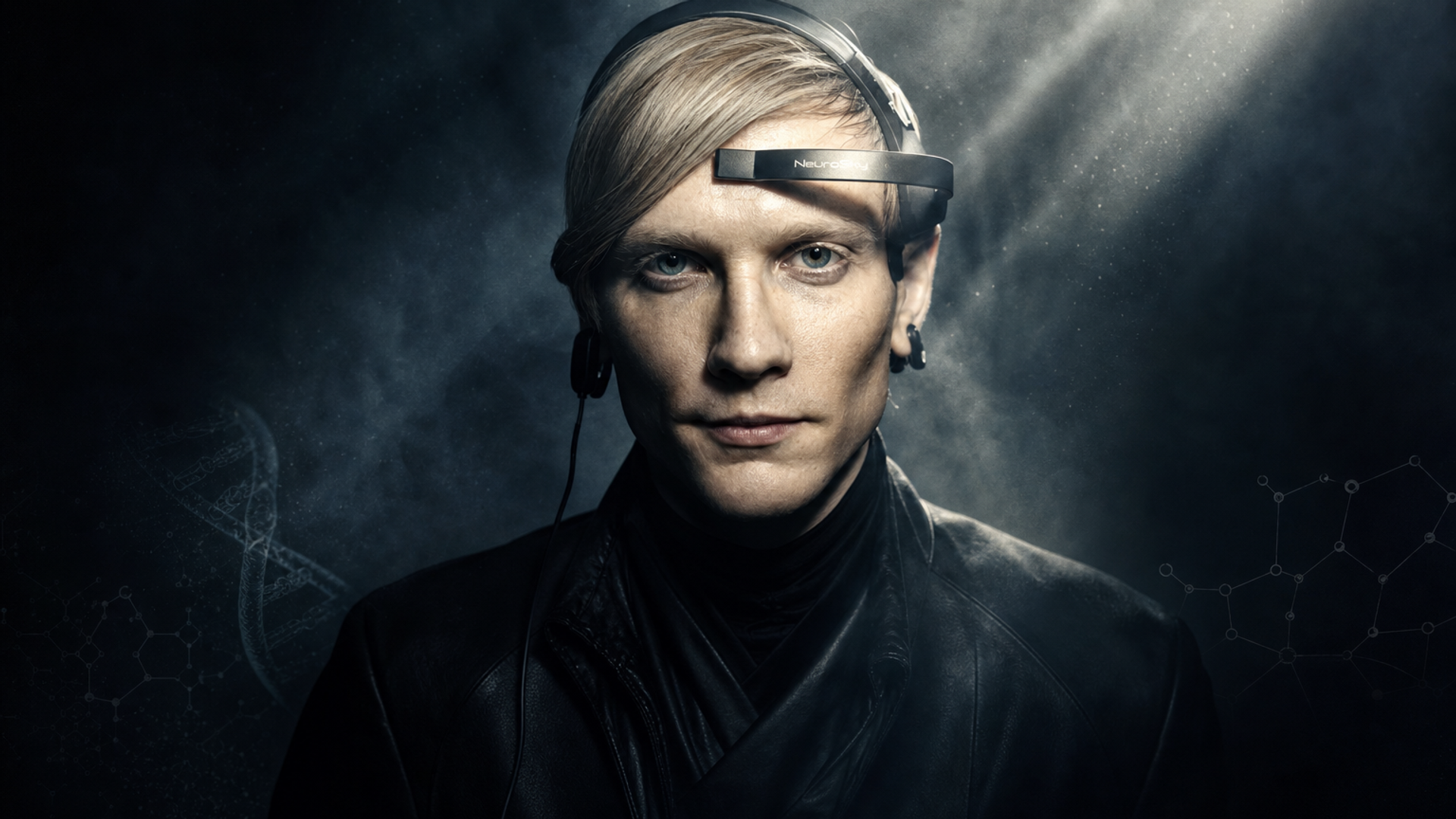
Speaker biography
Teemu Arina has a professional career of two decades as a technology entrepreneur, author, and professional speaker. Mr. Arina is one of the forefront figures of the biohacking movement. He is the co-author of the bestselling Biohacker's Handbook series, curator of HOLOLIFE Summit, and co-founder of the HOLOLIFE Center. Mr. Arina has received the Leonardo Award (under the patronage of the European Parliament and UNESCO 2015), was selected as Top 100 most influential people in IT (2016 TIVI), and was awarded the Speaker of the Year (Speakersforum 2017), and Leadership Trainer of the Year (Turku School of Economics 2018).
The following text is generated with artificial intelligence. Accuracy is not guaranteed.
Optimizing Humanity: The Intersection Of AI, Well-Being & Smarter Work
“The ultimate biohack is to learn what you don't need to control.”
— Teemu Arina
Description
The event explored "Smart" themes—Self, Society, Work, and Cities—emphasizing data-driven optimization and AI integration. Discussions transitioned from traditional biohacking to holistic self-expression, advocating for a balance between technological control and trusting digital twins. By leveraging ambient intelligence and machine-learning, professionals can offload routine tasks to focus on creative innovation. Ultimately, the conference highlighted the importance of human-centric adaptation, experimental learning, and letting go of the steering wheel to embrace the potential of future-ready, AI-assisted living and work environments.
Summary
- AI serves as a powerful tool for optimizing health, work, and urban environments by transforming vast data into actionable context.
- Creating a "digital twin" can automate routine tasks, allowing individuals more freedom to focus on creativity and personal passions.
- Health optimization is moving toward a digital approach, focusing on understanding personal body data rather than just treating disease.
- The ultimate goal of self-optimization is learning to trust automated systems and knowing when to "let go of the wheel" to avoid excessive control.
- Embracing technology requires a mindset shift: experimenting, making mistakes, and learning to work smarter rather than just harder.
Key points
- The role of the "expert" is evolving, as AI allows beginners to perform complex engineering tasks that were previously reserved for senior-level professionals.
- "Biohacking" should be reframed as a form of self-expression and life-long learning, rather than being viewed through a medical lens of disease management or dangerous shortcuts.
- Modern productivity is shifting from humans actively prompting technology to a more ambient state where AI proactively offers suggestions and data-driven insights.
- The transition toward AI-integrated professional roles is redefining traditional creative identities, necessitating a willingness to experiment with new digital tools.
- Overcoming the psychological need for control is a critical aspect of personal growth, as true efficiency involves learning when to rely on automated processes versus human intervention.
Things to learn
- Embrace a "beginner’s mindset" by viewing learning as an act of playing, experimenting, and allowing yourself to fail without the pressure of needing senior-level expertise.
- Cultivate a "human-centric" approach to data by focusing on the input-process-output loop of your own body to gain deeper self-awareness.
- Practice "mindful surrender" by distinguishing between tasks that require your direct control and those that can be safely delegated to automated systems.
- Reframe your relationship with technology so that it becomes an active partner—shifting from you manually prompting the AI to the AI providing you with actionable suggestions.
- Prioritize "life-long self-expression" over narrow performance metrics, ensuring that personal optimization serves your own passions rather than just reacting to external demands.
Notable quotes
- “Growing up is part of learning to play again, to experiment, and to make mistakes.”
- “We are wasting our core by working our asses off, but AI can help us focus on our dreams instead.”
- “We shouldn't just prompt AI, we need to reach a point where AI starts prompting us.”
- “It is time for us to be honest with ourselves and stay true to who we are.”
- “Make your own mistakes, not someone else's.”
Questions to ask
- How are you planning to use AI to replace yourself?
Keywords
“THE ULTIMATE BIOHACK IS TO LEARN WHAT YOU DON'T NEED TO CONTROL.”
TEEMU ARINA
Magazine article
Closing Reflections At NextM 2026: Embracing AI for a Human-Centric Future
Teemu Arina, a thought leader in the intersection of technology and humanity, delivered a powerful closing presentation titled “Closing — AI Demo, Reflecting On Insights Of The Day.” His remarks not only encapsulated the day’s discussions but also offered profound insights on the future of artificial intelligence in our personal and professional lives.
Exploring The Themes: Self, Society, Work, And Cities
The event revolved around the "Smart" themes of Self, Society, Work, and Cities. Arina emphasized the necessity of embracing data-driven optimization alongside AI integration, advocating for a balance that encourages holistic self-expression rather than dictates control. “Growing up is part of learning to play again, to experiment, and to make mistakes,” Arina remarked, reinforcing the vital point that growth should involve exploration and creativity rather than rigid adherence to performance metrics.
Harnessing AI: Freedom To Innovate
One of the standout concepts from Arina’s presentation was the notion of creating a “digital twin” - an AI counterpart designed to handle routine tasks. This tool enables individuals to reclaim their time and concentrate on their passions. “AI can help us focus on our dreams instead of working ourselves to the bone,” he stated, highlighting the transformative potential of technology when leveraged for individual benefit.
The conference urged participants to rethink their engagement with technology. “We should not merely prompt AI, but reach a point where AI begins prompting us,” Arina challenged, calling for a future where machines facilitate human creativity rather than just serve as tools.
A Paradigm Shift In Health Optimization
Arina also touched upon the evolving landscape of health optimization, moving from a traditional medical focus to a digital, data-driven approach. The insight that understanding personal body data is more beneficial than merely treating diseases garnered significant attention. “The ultimate biohack is to learn what you don't need to control,” he stated, encouraging attendees to rethink the relationship they have with their own health.
This shift represents a deeper understanding of the self, moving beyond surface-level metrics to a more intimate connection with one’s bodily data.
The Courage To Experiment And Learn
Throughout his address, Arina emphasized the importance of a growth mindset. He articulated that the modern challenges necessitate a departure from the desire for control. “Make your own mistakes, not someone else's,” he urged, drawing attention to the necessity for individual accountability in a rapidly changing world.
The integration of AI into creative industries, as discussed during the conference, demands that professionals remain open to experimenting with new digital tools. The insights shared during the event underscored an imperative: that embracing technology requires a willingness to innovate and adapt.
Arina’s reflections offered both a personal and collective vision for the future. “A lot of what we do today is new, and dealing with these technologies can be quite exciting,” he noted in a moment of gratitude towards all participants and partners involved in bringing the conference to life.
The ultimate takeaway from Arina’s presentation is clear: as we step into an era shaped by artificial intelligence, we must cultivate a mindset that welcomes experimentation, values self-expression, and learns to trust in the systems designed to augment our human potential.