
Opening keynote — setting the scene
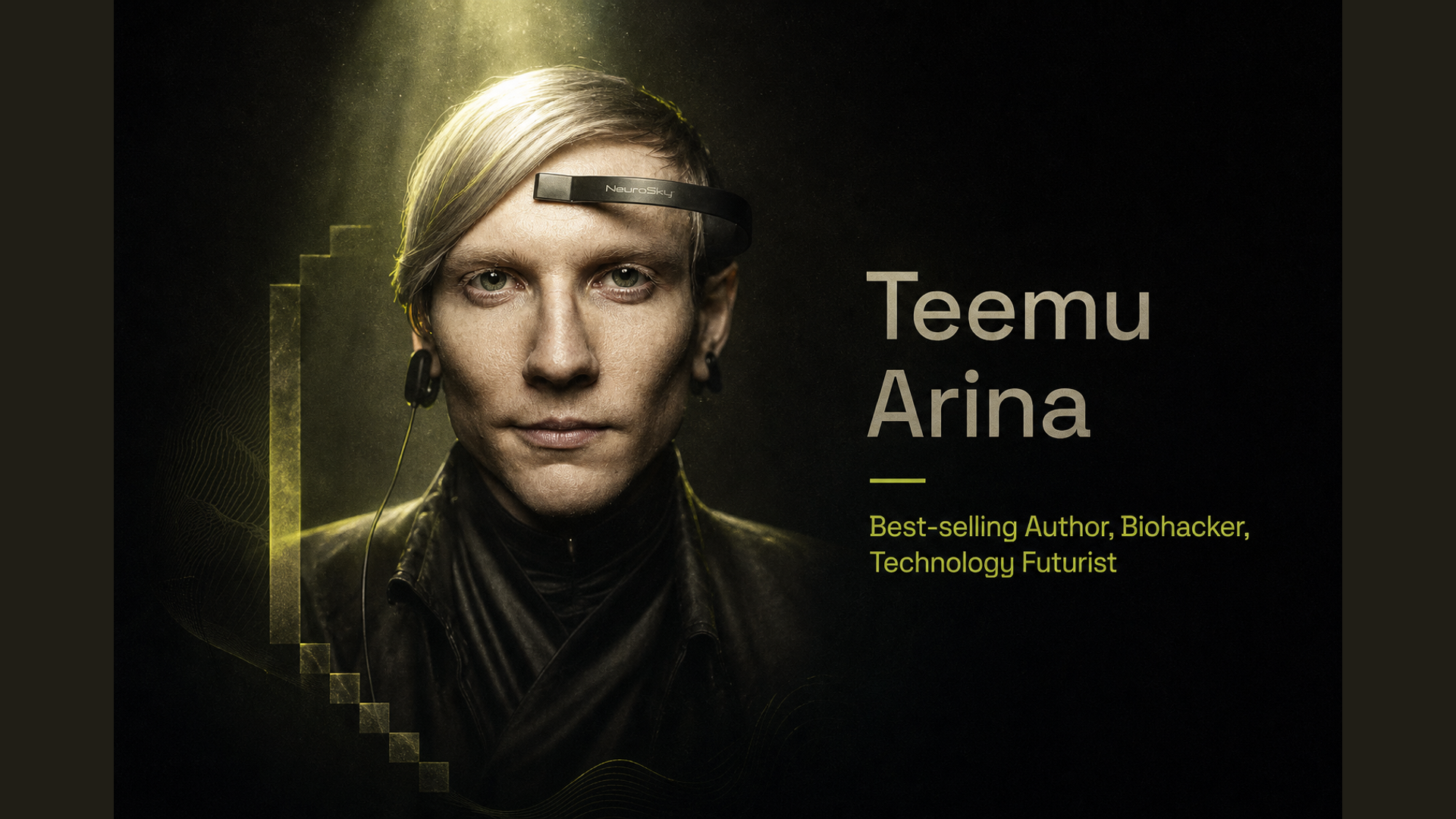
Speaker biography
Best-selling Author, Biohacker, Technology Futurist
The following text is generated with artificial intelligence. Accuracy is not guaranteed.
Integrating Human & Artificial Intelligence: A Roadmap For Smart Work & Health Optimization
“The smartest future will not belong to those with the most data, but to those who turn diverse data into better decisions while keeping humans healthy, creative, and adaptive.”
— Teemu Arina
Description
Artificial intelligence, serving as an ambient, decentralized orchestrator, transforms raw, unstructured data into actionable insights, effectively streamlining organizational sense-making. By integrating biological health metrics—quantified through biomarkers—with digital task agents, individuals shift from information overload to refined decision-making. This man-machine symbiosis prioritizes human well-being and creative flow, using ethical design to replace repetitive workflows. Ultimately, the future belongs to those who leverage adaptive technology to harmonize biological and corporate ecosystems, moving beyond mere data accumulation toward intuitive, intelligent, and sustainable outcomes.
Summary
- Leverage AI agents as a collaborative team to automate routine tasks, manage projects, and optimize business decision-making processes.
- Shift from manual content creation to using AI for real-time sense-making, turning vast amounts of unstructured data into actionable insights.
- Prioritize human health and biological equilibrium; technology should serve as a tool for alignment and flow rather than just increasing productivity.
- Adopt a "less is more" philosophy by using AI to remove unnecessary complexity, focusing only on the 10-20% of work that generates the highest value.
- Combine human ethics, taste, and critical questioning with AI’s processing power to move beyond data collection toward smarter, more conscious outcomes.
Key points
- Treat your professional life as a "corporate athlete" by balancing high-performance AI integration with disciplined recovery and adherence to natural circadian rhythms.
- Develop personal "digital twins" of your workflow by feeding AI agents your past communication and operational history to mimic your business logic and strategy.
- Transition from viewing AI as a mere productivity tool to seeing it as a partner that manages ambient environments and complex data ecosystems around you.
- Replace ineffective, disorganized traditional business meetings with AI-orchestrated sessions where agents arrive "prepared" by analyzing data in advance.
- Cultivate the skill of "prompt engineering" as the new essential form of leadership, where the quality of your output is determined by your ability to ask the right questions rather than your manual output.
Things to learn
- Cultivate self-awareness by treating your body as a high-performance, biological computer that requires consistent monitoring and homeostasis to maintain cognitive clarity.
- Master the art of "sense-making" by building personalized systems that automatically organize your digital environment, such as cleaning up files and structuring chaotic data folders based on content.
- Shift your role from being a laborer to a "curator" of taste and ethics, focusing on adding the human touch and aesthetic judgment that AI lacks.
- Implement continuous feedback loops in your daily routine, using real-time data to adjust your habits and decisions rather than blindly accumulating more information.
- Practice "architectural thinking" by designing your home and workspace as machines that sense and adapt to your needs, fostering an environment of ambient, automated support.
Notable quotes
- “If you are a CEO and you don't know how to program or write code, you are already 100 years behind.”
- “It is not about replacing yourself; it is about man-machine interaction to produce more beautiful art and better results.”
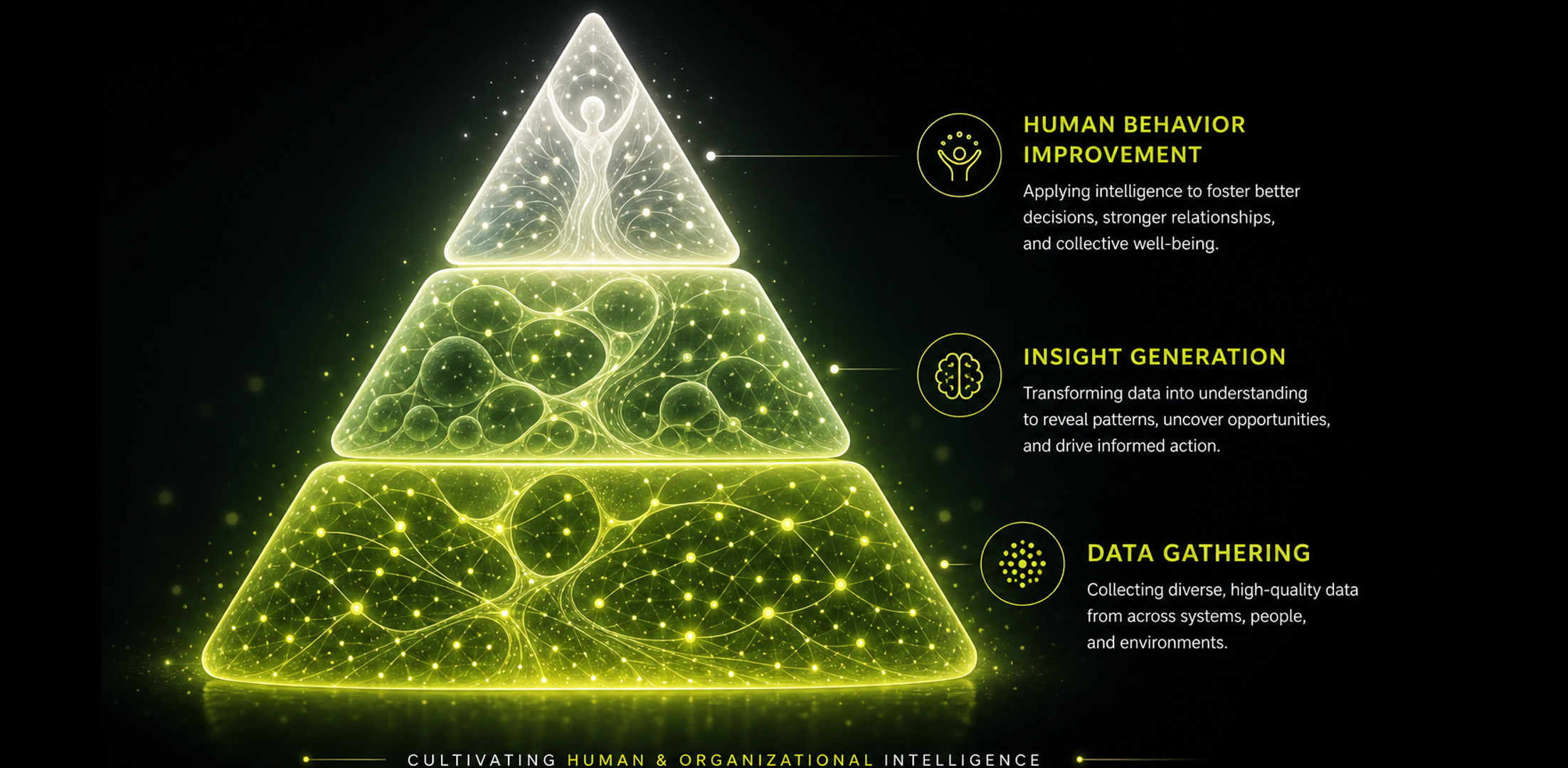
- “Smart means collecting data, smarter means turning data into insight, and smartest means using insights to improve behavior, decisions, and outcomes.”
- “You don't want to have more, more, more; you want to intelligently decide what to hack away so that you can unravel the beautiful statue inside the rock.”
- “Intelligence without ethics can become control, as humans must provide the intelligent design direction while AI takes care of the rest.”
Questions to ask
- How does the transition from human-led to AI-orchestrated teamwork fundamentally reshape the interpersonal dynamics, mentorship, and creative friction typically found in human-to-human collaboration?
- When AI agents are trained on a company's historical communication data to define "operational DNA," how do you prevent the system from institutionalizing past biases or inefficient habits rather than evolving into a more innovative model?
- As technology becomes "ambient" and embedded in our environment, what specific mechanisms can be designed to ensure that the user retains cognitive sovereignty and the ability to disconnect from the "feedback loop"?
- Beyond the optimization of biomarkers, how should the evaluation of "human performance" shift to prioritize non-quantifiable traits like empathy, intuition, and ethical judgment in an increasingly automated workplace?
- If "taste" remains a uniquely human contribution in a world of AI-generated content, how do we educate and refine that sense of taste to ensure it doesn't atrophy as we rely more on machine-curated outputs?
Keywords
Magazine article
The Future of Work: Embracing AI to Harmonize Human Experience
Teemu Arina, a renowned biohacker and thought leader in the integration of technology and human biology, delivered an enlightening opening keynote titled "From Artificial Intelligence to Human Intelligence". His presentation set the stage for an engaging exploration of how artificial intelligence (AI) can revolutionize not just the workplace but also our individual well-being.
Arina eloquently articulated the powerful intersection of human and artificial intelligence. He emphasized that AI should serve as an ambient, decentralized orchestrator that transforms unstructured data into actionable insights, allowing professionals to move beyond the suffocating confines of information overload. This integration of biological health metrics with digital task agents, he argued, opens a pathway for refined decision-making that prioritizes human well-being.
"If you are a CEO and you don't know how to program or write code, you are already 100 years behind," Arina stated, underscoring the necessity for leaders to engage with technology directly. AI, he insisted, is not merely about duplicating human tasks but enhancing human creativity and productivity through collaboration.
Smart Work, Health, and Ethics
Arina’s presentation highlighted an essential philosophy: the "less is more" approach. By harnessing AI to streamline operations and eliminate unnecessary complexity, organizations can focus on the 10-20% of efforts that yield the most significant results. "You don't want to have more, more, more; you want to intelligently decide what to hack away so that you can unravel the beautiful statue inside the rock," he proclaimed, emphasizing the need for clarity in a data-saturated world.
Moreover, Arina drew attention to the ethical dimensions of technology, warning that "intelligence without ethics can become control." He insisted that human guidance is vital in designing systems that lead to sustainable and constructive outcomes.
The Role of AI in Decision Making
During the session, Arina introduced his concept of "digital twins," which mimic an organization's strategic logic by processing historical communication and operational data. This innovative approach proposes that, instead of traditional meetings dominated by unprepared participants, companies could hold AI-orchestrated sessions where agents engage with data gathered in advance, producing actionable strategies in real time.
Arina's insights offered a new perspective on leadership. "The smartest future will not belong to those with the most data, but to those who turn diverse data into better decisions while keeping humans healthy, creative, and adaptive," he noted, advocating for a shift towards "prompt engineering" – the practice of framing the right questions to elicit meaningful responses and insights.
Harmonizing Biology and Technology
In his keynote, Arina skillfully articulated the need to integrate biological and technological ecosystems, promoting a vision of smart cities and workplaces as environments that respond thoughtfully to human and environmental cues. "Evolution of intelligence is about making sense of our surroundings, extracting meaningful insights from data, and applying those insights to enhance life," he elaborated.
Closing his presentation with a powerful statement, Arina reminded the audience of the profound responsibility that accompanies advancements in AI: "Our real true role is to learn to ask better questions." This call to action invites individuals and leaders to embrace the future with a sense of curiosity and ethical responsibility.
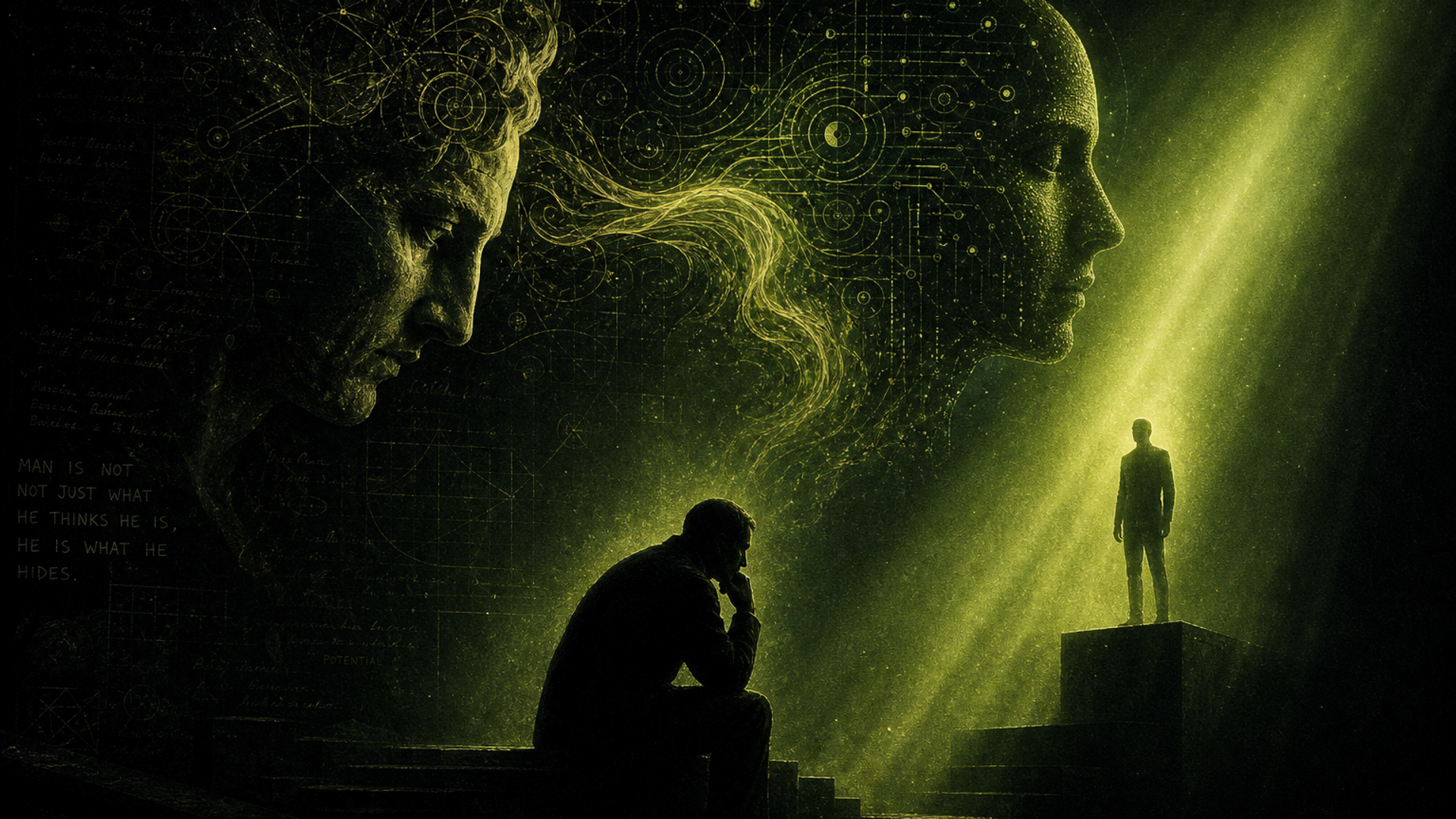
“INTELLIGENCE IS THE ABILITY TO SENSE, INTERPRET, DECIDE, ADAPT, AND ACT.”
TEEMU ARINA
CURATOR, PROFESSIONAL BIOHACKER, AUTHOR, CO-FOUNDER @ HOLOLIFE CENTER
Social posts
Copy generated post templates for each platform.