
WPP Media Keynote — Smart Work

The following text is generated with artificial intelligence. Accuracy is not guaranteed.
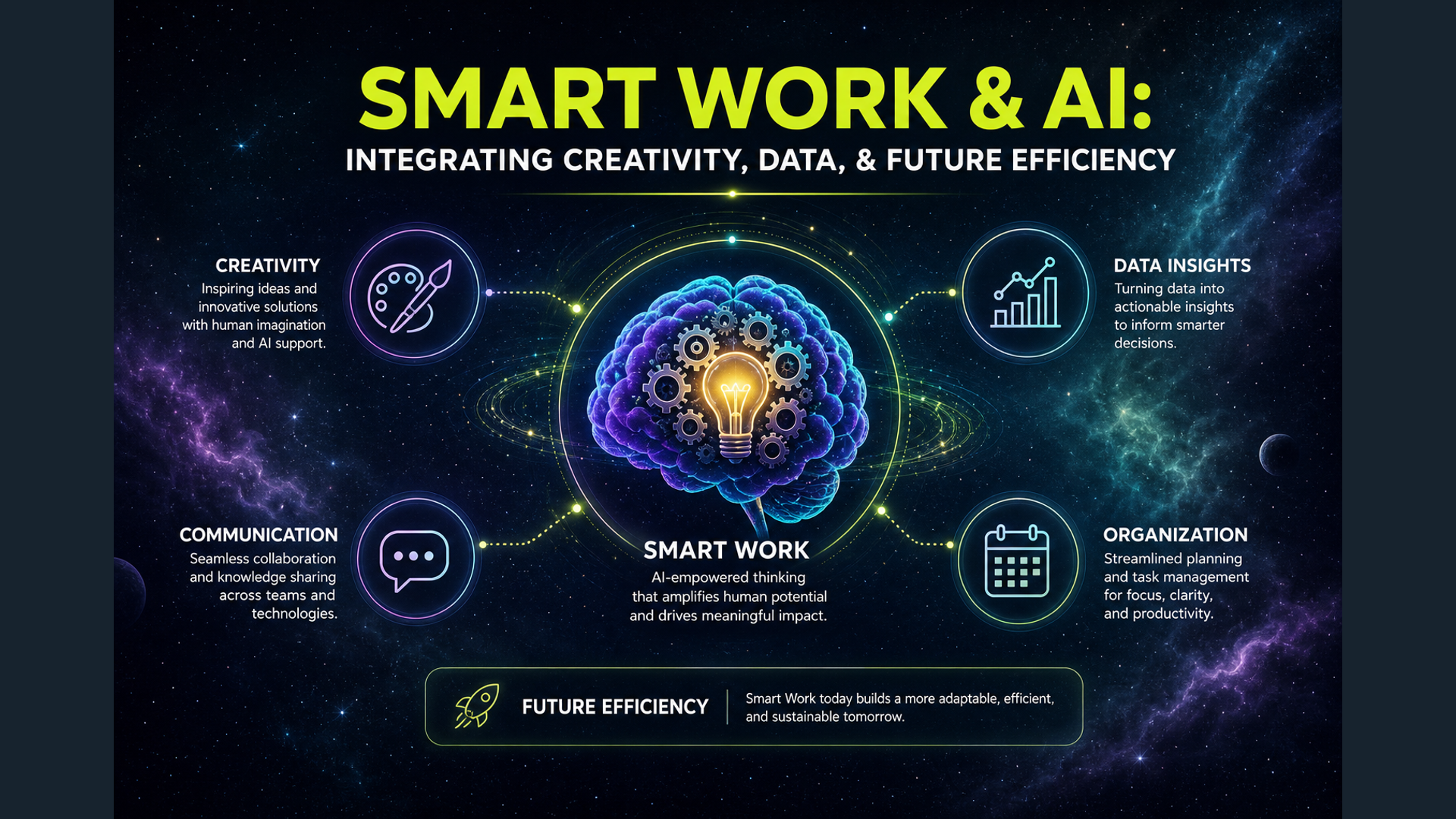
Smart Work & AI: Integrating Creativity, Data, & Future Efficiency
“Smart work is mainly about working hard for the love of it, but above all, working smart to ensure you are really tapping into your creativity.”
— Fabian van den Berg, Guus Beekmans, Jasper Kuipers
Description
Integrating creative workflows with evolving AI technologies facilitates smarter operational efficiency and cross-functional connectivity. By transitioning from manual legacy processes to automated database synthesis, organizations can optimize e-commerce logistics and strategic decision-making. Future-focused models require balancing human intuition with high-speed data processing to streamline industry-wide standards. As digital infrastructures like Estonian-inspired administrative frameworks scale, shifting scheduling demands provide newfound space for innovation, ensuring that evolving technical toolkits align with broader professional objectives and sustainable growth in a rapidly digitizing landscape.
Summary
- Work smarter by focusing on creativity and personal engagement rather than just repetitive tasks.
- Leverage AI tools to analyze vast datasets and make connections that exceed human capacity.
- Prioritize clear communication and transparency to ensure all team members are aligned on goals.
- Balance the integration of new technologies with practical, human-centered professional workflows.
- Maintain organizational focus by streamlining schedules and managing incoming information efficiently.
Key points
- Professional success is increasingly tied to the ability to synthesize disparate information sources and databases into a unified, accessible organizational view.
- Effective leadership in a modern, tech-driven workplace involves acting as a facilitator who helps teams interpret complex outputs from automated systems.
- Embracing a culture of continuous adaptation is essential, as software models and digital infrastructure evolve at a pace that requires constant learning and realignment.
- Strategic decision-making benefits from delegating data processing to AI, allowing human effort to be redirected toward creative interpretation and meaningful interpersonal connection.
- Operational stability requires establishing clear protocols for handling internal communications and project workflows to avoid becoming overwhelmed by the high volume of incoming digital data.
Things to learn
- Cultivate an "always-on" mindset that treats work as a continuous process of discovery and strategic refinement.
- Practice active knowledge management by documenting and centralizing team insights to ensure organizational continuity.
- Foster collaborative environments by balancing structured professional objectives with informal, human-centric interactions.
- Adopt a proactive stance on emerging digital tools to stay ahead of the rapid, inevitable evolution of industry standards.
- Develop the skill of distilling complex, multifaceted data into actionable narratives that guide collective decision-making.
Notable quotes
- “The most important thing you can do right now is to take a close look at exactly what you are doing with your work.”
- “AI can make more connections than humans can simply because it is capable of processing more data than we are.”
- “Focus on what you are really into because that is where your true value lies.”
- “Knowledge is power and having it at your disposal allows you to turn ideas into reality.”
- “Choose ideas that are actually ready to be implemented, but do so in a way that allows everyone to contribute in their own unique manner.”
Questions to ask
- Given the shift toward AI-integrated workflows, what specific human-centric skills or intuitive judgments are becoming more essential to maintain alongside these automated systems?
- As we look toward 2034, how can we balance the efficiency of data-driven decision-making with the need to preserve the unique, spontaneous "storytelling" culture within our teams?
- Since you mentioned that AI can identify patterns beyond human perception, what is the best way for team members to validate or interpret these insights before they influence strategic direction?
- How can we foster a culture where employees feel empowered to move from executing tasks to proactively designing the "smart work" processes that define our future projects?
- Beyond the technical implementation of new tools, what internal feedback loops should we establish to ensure that the "knowledge power" we are aggregating remains accessible and actionable for every department?
Keywords
Magazine article
Smart Work & AI: A New Era in Efficiency
Among the standout presentations was the WPP Media Keynote titled "Smart Work," delivered by speakers Fabian van den Berg, Guus Beekmans, and Jasper Kuipers. Their engaging discussion centered on the intersection of creativity, data, and artificial intelligence, and how these elements can synergistically enhance operational efficiency.
Embracing Change: The Need for Smart Work
In an era marked by rapid technological advancement, the concept of "smart work" emerged as a central theme. Van den Berg emphasized that the most crucial step for individuals and organizations is evaluating their current workflows. “The most important thing you can do right now is to take a close look at exactly what you are doing with your work,” he stated, illustrating that self-analysis is key to progress.
The panel explored the notion that artificial intelligence has an unparalleled capacity for making connections across vast datasets that human cognition simply cannot match. Beekmans articulated, “AI can make more connections than humans can simply because it is capable of processing more data than we are.” This capability frees up human intelligence to focus on creative endeavors rather than repetitive tasks, a paradigm shift that could redefine professional roles in various industries.
Balancing Technology and Human Touch
Kuipers focused on finding harmony between technological integration and human-centered workflows. He posited that, “Work smarter by focusing on creativity and personal engagement rather than just repetitive tasks.” The concept of innovation should not merely be rooted in technology but also in maintaining connections and transparency within teams. “Knowledge is power; having it at your disposal allows you to turn ideas into reality,” he emphasized, underscoring the importance of collaboration.
The discussion also touched on the necessity of adapting organizational structures to accommodate new technologies while fostering an environment that encourages participation and diverse contributions. Beekmans succinctly stated, “Choose ideas that are actually ready to be implemented, but do so in a way that allows everyone to contribute in their own unique manner.”
Pioneering Future Work Environments
The speakers underscored that future-focused organizational models are essential in navigating the complexities of an increasingly digital landscape. Their insights painted a vivid picture of a future where administrative frameworks—drawing inspiration from Estonia’s efficient systems—could streamline e-commerce logistics and decision-making processes.
Kuipers highlighted the shift in scheduling demands that now allows room for innovation, asserting that “these days, it is possible to get these suitcases, and it makes perfect sense to make the largest sizes.” This notion reflects the necessity for organizations to adapt their operational strategies to foster creativity and boost efficiency.
They reminded attendees that effective leadership in today’s tech-driven workplaces involves acting as facilitators who help teams interpret complex outputs from automated systems.

PROFESSIONAL SUCCESS IS INCREASINGLY TIED TO THE ABILITY TO SYNTHESIZE DISPARATE INFORMATION SOURCES AND DATABASES INTO A UNIFIED, ACCESSIBLE ORGANIZATIONAL VIEW.
FABIAN VAN DEN BERG
Social posts
Copy generated post templates for each platform.