
Smart Cities — Coding the Curbs
Speaker biography
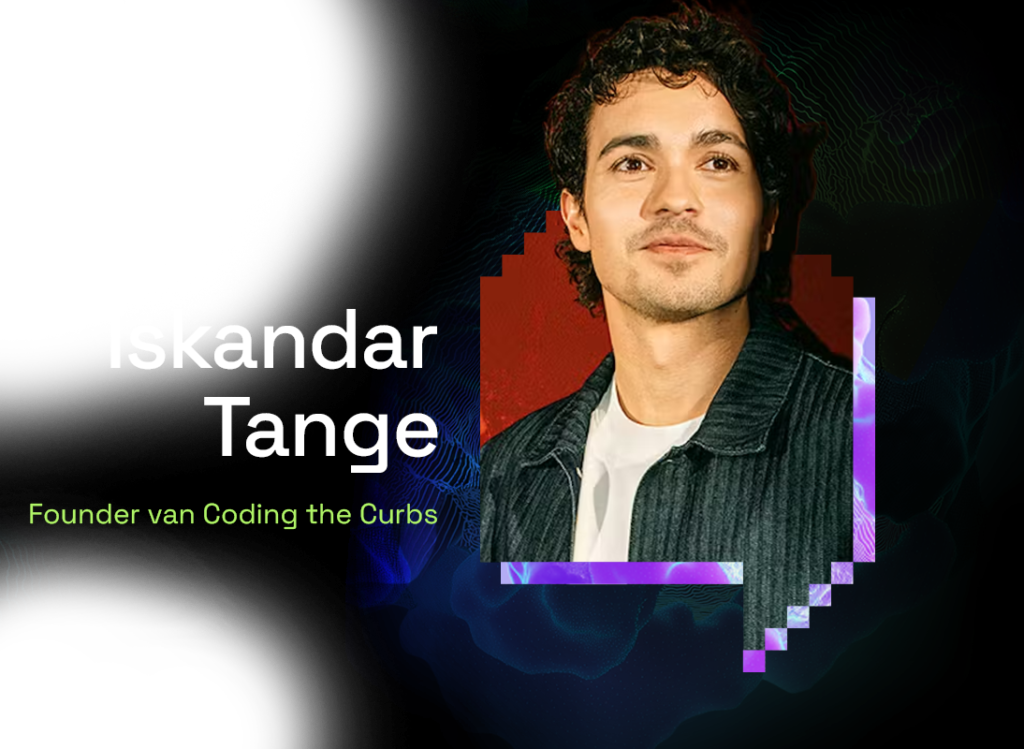
Iskandar Tange is the founder of Coding the Curbs, an initiative that digitizes the complex rules and real-time availability of curb space. It streamlines urban planning and mobility through data, enabling more efficient use and management of public space for applications such as smart cities and autonomous vehicles.
The following text is generated with artificial intelligence. Accuracy is not guaranteed.
Depth In Urban Innovation: Smart Cities & The Future Of Mobility
“I like to throw people into the fire. They usually learn to fly. It’s like birds; you push them out, and they will not crash.”
— Iskandar Tange
Description
Urban centers are evolving into hyper-efficient, digitized systems, rapidly accelerating their rhythm through advanced infrastructure and data-driven mobility. Smart city initiatives, inspired by global models from Beijing to Barcelona, leverage AI and autonomous technology to optimize transportation and public space. This transition addresses infrastructure pressures and shifting resident needs while navigating the complexities of modern urbanization. Ultimately, these adaptive, technology-integrated environments aim to replace traditional, static urban planning with responsive, rhythmic systems capable of balancing daily flux with long-term accessibility.
Summary
- Emphasize the importance of "depth" in questioning and critical thinking when exploring new opportunities and systemic challenges.
- View cities as complex, well-organized systems that are evolving rapidly through infrastructure, transportation, and digital integration.
- Utilize technological advancements and AI to optimize urban mobility, improve accessibility, and manage the growing demands of modern city life.
- Transition toward "active cities" where technology facilitates human rhythm, collaboration between officials and citizens, and adaptive, real-time problem solving.
- Acknowledge that urban environments require flexible, long-term strategies that account for changing patterns, seasons, and evolving societal needs.
Key points
- Adopt a "sink or swim" mindset in professional development to encourage rapid learning and innovation under pressure.
- Recognize that urban planning must move away from rigid, school-style digital models toward independent, localized problem-solving.
- Observe that the rapid digitization of cities, such as the implementation of quiet electric transportation, fundamentally changes the invisible rhythm of daily life.
- Understand that urban infrastructure must move beyond static design to support dynamic, seasonal shifts in usage, such as retail surges like Black Friday.
- Leverage cross-cultural insights, such as observing rapid technological adoption in major global centers like Beijing, to inform local urban improvement strategies.
Things to learn
- Cultivate a "first-principles" approach to problem-solving by asking penetrating questions instead of accepting surface-level realities.
- Embrace the "sink-or-swim" methodology in team development, trusting that providing high-stakes challenges fosters faster, more authentic skill acquisition.
- Practice active fact-checking and AI integration during professional presentations to ensure the accuracy and adaptability of real-time communication.
- View systemic issues not as static problems to be fixed, but as living, evolving rhythms that require constant observation of subtle, underlying changes.
- Prioritize human-centric urban design where digital tools are used to harmonize with, rather than override, the natural flow and seasonal pulse of a community.
Notable quotes
- “When people are given a new opportunity, the very best thing we can do is ask a question.”
- “My job is to make your own mistakes, not someone else’s.”
- “The big city is a well-organized system—a system in love.”
- “Technology serves to facilitate the rhythm of our lives.”
- “It is a learning process.”
Questions to ask
- How do we balance the efficiency of a digitized, algorithm-driven urban rhythm with the human need for serendipity and unplanned social interaction?
- What specific mechanisms can ensure that the "active city" model remains inclusive and accessible to those who are less digitally integrated?
- In what ways does the transition to smart, electric, and quiet mobility infrastructure alter the psychological relationship between citizens and the public space they inhabit?
- As urban environments become more responsive to real-time data, how do we define and protect the "rhythm of the individual" against the demands of a system that is constantly optimizing for the masses?
- If a city is viewed as a system in love, how can technology be designed to actively foster empathy and emotional connection rather than just managing logistical flows?
Keywords
Magazine article
Smart Cities: Coding The Curbs
Tange opened his presentation by emphasizing the need for depth in questioning the role of technology in urban settings. He urged attendees to look beyond surface-level understanding and encouraged a culture of curiosity—“When people are given a new opportunity, the very best thing we can do is ask a question.” This fundamental mindset is crucial for exploring the systemic challenges cities face, as urban environments continue to evolve rapidly.
As he elaborated on the intricacies of urban life, Tange likened cities to a well-organized system, stating, “The big city is a well-organized system—a system in love.” This metaphor encapsulates the harmony that can be achieved when technology and human behavior are thoughtfully integrated. Tange’s insight offered an engaging narrative as he navigated through an urban landscape that demands transformative solutions to transportation, public space utilization, and infrastructure management.
The Integration of Technology in Mobility
In distinguishing the modern challenges faced by cities, Tange highlighted the staggering presence of approximately 10 million cars on the streets of the Netherlands, pressing the need for an innovative approach to urban mobility. He discussed the evolution from conventional vehicle usage to a dynamic, interconnected ecosystem facilitated by AI transportation models. “Today it is all about smart, smarter, smartest,” he asserted, emphasizing that the future of urban mobility hinges on our ability to adapt technology to facilitate natural rhythms of city life.
Lessons from Global Models
Tange drew parallels between successful urban strategies in cities worldwide, such as Beijing and Barcelona, to demonstrate how adaptable, technology-integrated environments can provide solutions that benefit residents and visitors alike. Reflecting on how cities like Barcelona have implemented shared spaces and innovative transportation options, Tange suggested that urban planning must adopt a flexible mindset to navigate the seasonal and daily fluctuations in citizen behavior.
The Pursuit of Active Cities
The ultimate goal Tange posited was the creation of ‘active cities’—environments that use technology to enhance human interactions and facilitate urban solutions in real-time. He maintained that the integration of technology should not overshadow the natural rhythms of community life but should instead harmonize with them. “Technology serves to facilitate the rhythm of our lives,” he stated, encapsulating the essence of what a smart city should achieve.
Concluding his presentation, Tange acknowledged that the journey towards smart cities involves learning and adaptation. “It is a learning process,” he remarked, reinforcing the idea that future growth in urban areas relies not only on technology itself but on the willingness of communities to embrace change and innovation together.