
Building Adaptive Organizations for the AI Age

The following text is generated with artificial intelligence. Accuracy is not guaranteed.
Leading Through Transformation: Why Agility, Curiosity & Ownership Drive Success
“My job is to help you make your own mistakes, not someone else's.”
— Phil Lebrun
Description
Traditional organizational transformation often fails due to rigid, siloed management and outdated "tin man" structures that stifle adaptability. Instead, shifting to an agile, "Day One" mindset prioritizes clarity, ownership, and curiosity. By embracing complex systems thinking and single-threaded leadership, companies can move away from excessive bureaucracy toward decentralized, agentic workflows. Emphasizing small-scale, rapid decision-making—informed by data rather than absolute certainty—allows teams to test hypotheses, learn continuously, and maintain competitive innovation in the era of AI.
Summary
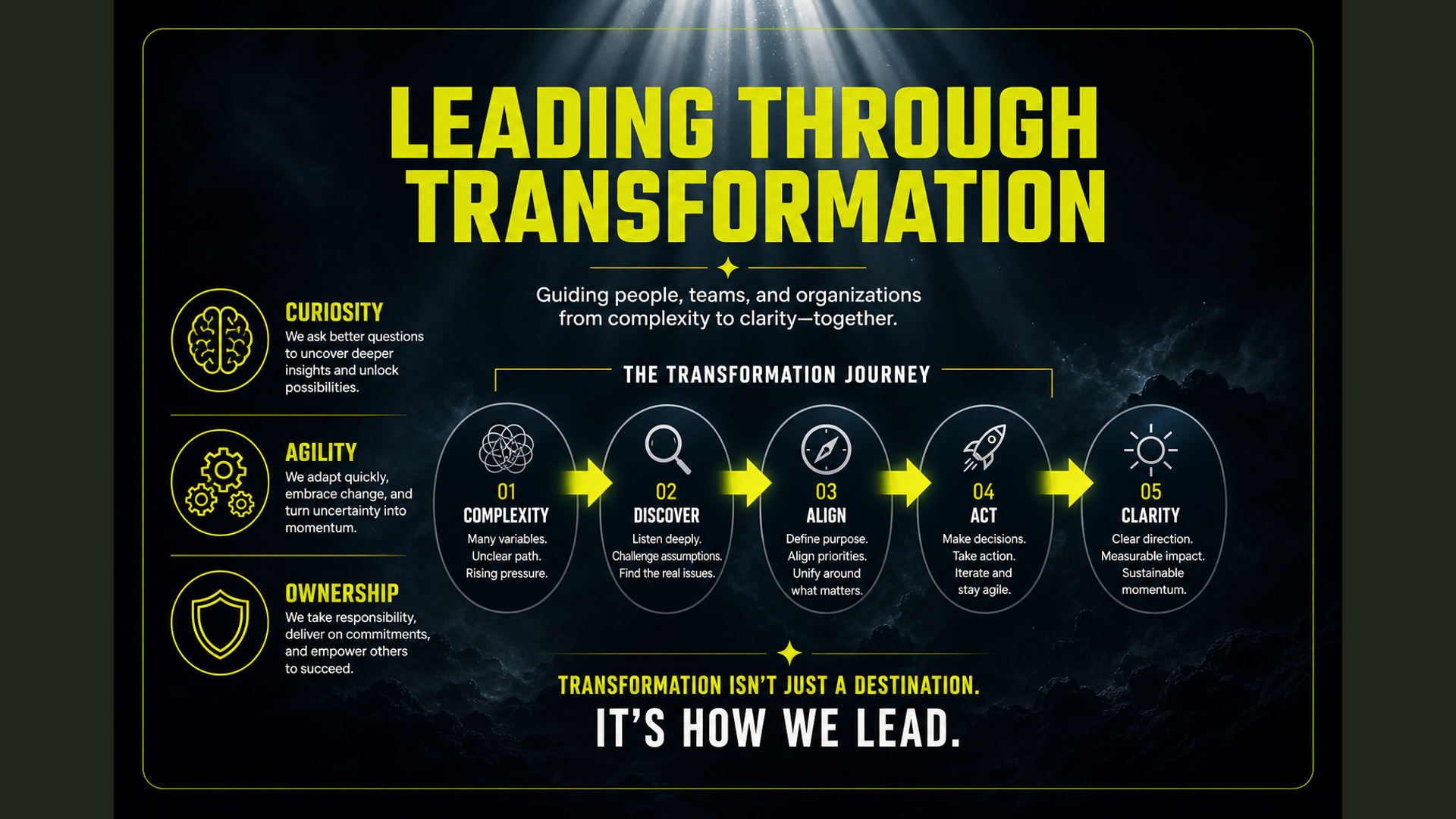
- Transformation is not a mechanical process; organizations are complex systems where small changes have unpredictable, cascading effects, requiring an adaptive "Day One" mindset.
- Leaders must replace complex, bureaucratic processes with "single-threaded" ownership, where individuals are empowered to make smaller, faster, and more frequent decisions.
- Effective organizational change relies on extreme clarity of purpose and a focus on one or two key priorities rather than a "tyranny of and" that dilutes focus and productivity.
- Psychological safety and an experimental culture, where hypotheses are tested rather than feared, are essential for overcoming loss aversion and encouraging innovation.
- Curiosity is a vital leadership trait; leaders should foster an environment where asking questions is prioritized over having all the answers to drive continuous improvement.
Key points
- Most organizational transformations fail because they apply 19th-century mechanical logic and rigid standards to complex, modern environments that require fluid adaptability.
- Organizations should emulate the "octopus" model of decentralized intelligence, where individual teams act with autonomy and possess the agency to respond to their specific environment.
- Multitasking is a cognitive fallacy; true strategic leadership involves the discipline to prune non-essential activities and focus intensely on a single, primary objective.
- The quality of decision-making improves when managers choose to act on 70% of available information, as this threshold allows for agility and the necessary permission to pivot if circumstances change.
- Innovation requires "thinking big" by first tackling the most critical, high-risk assumptions—such as the "monkey and the pedestal" analogy—rather than wasting resources on secondary preparations.
Things to learn
- Practice "Day One" thinking by constantly searching for improvements and refusing to assume that current successes are the final version of what is possible.
- Act as a "single-threaded leader" by taking personal responsibility for outcomes across the entire organization rather than just within your specific function.
- Replace the "tyranny of and" by courageously saying no to secondary tasks to maintain intense focus on a primary objective.
- Normalize failure by framing initiatives as experiments and hypotheses rather than absolute plans, which removes the stigma and fear of being wrong.
- Adopt a "child-like" approach to work by asking more questions than you give answers, acknowledging that complex systems require discovery rather than expert certainty.
Notable quotes
- “The biggest barrier in most organizations today with the technology we have is lack of imagination.”
- “Change isn't mechanical, it is complex; you change one thing and it has second, third, fourth, and fifth order effects.”
- “Feedback is one of the most powerful forms of fuel for innovation.”
- “The only true failure in experimentation is not letting people try.”
- “When you think big, try to solve the biggest assumption or the biggest problem first.”
Questions to ask
- How can leaders foster an environment where "curiosity" is incentivized and rewarded, even when it leads to ideas that diverge from the established strategic roadmap?
- In what ways can middle management be repurposed from a "reporting and control" function to a "coaching and capability-building" function to better support agentic workflows?
- Beyond the initial adoption of new technologies, what specific mechanisms can be implemented to ensure that feedback loops remain active and continuous rather than decaying back into static, annual processes?
- How can organizations reconcile the need for long-term strategic coherence with the rapid, decentralized decision-making required for an "agile" and adaptive culture?
- What structural changes allow for the integration of cross-functional "pigs" (fully committed owners) without creating new, competing silos that hinder organizational agility?
Keywords
Magazine article
Building Adaptive Organizations For The AI Age
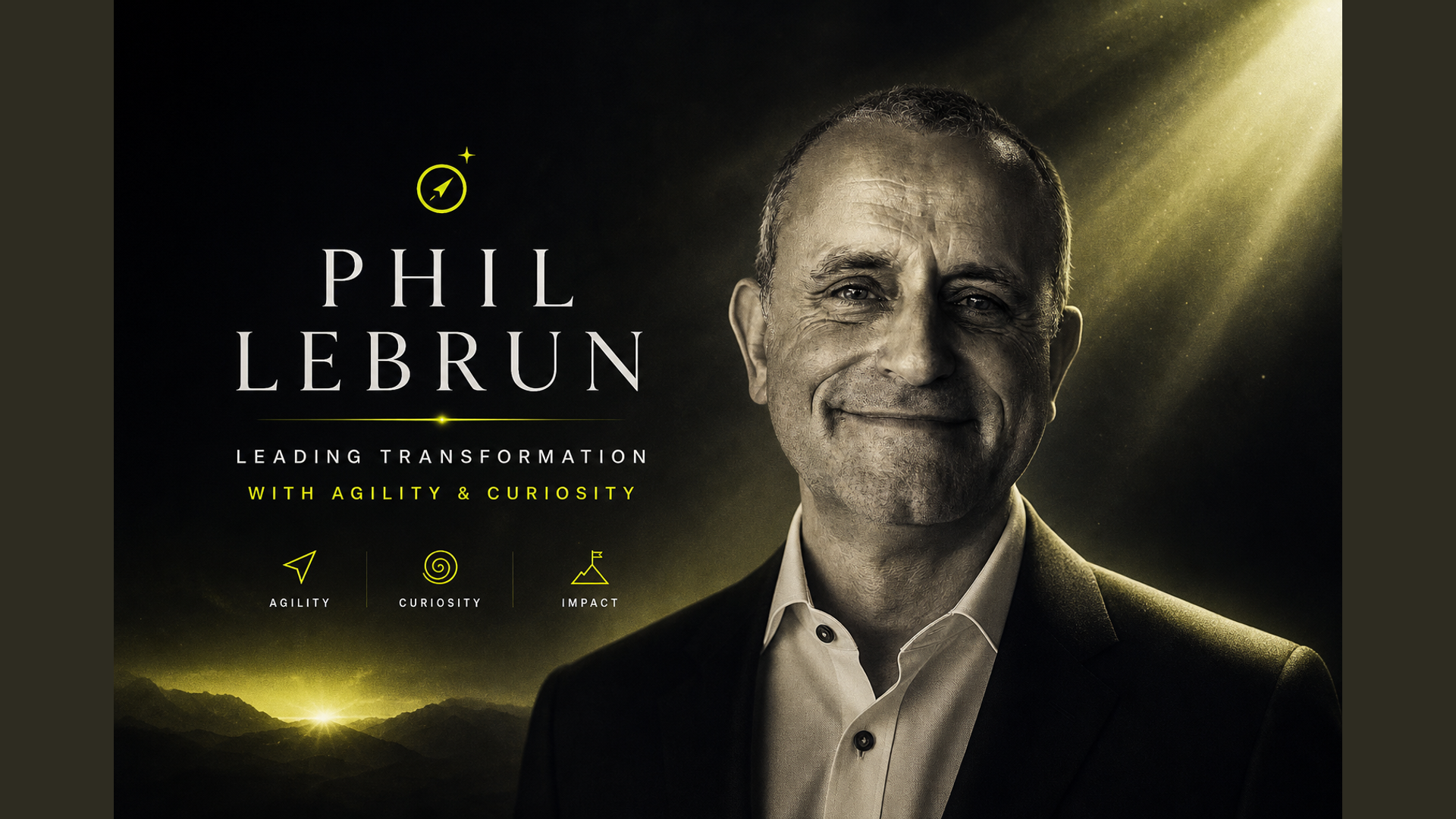
Phil Lebrun is the head executive humanist at Amazon. His talk, titled "Building Adaptive Organizations for the AI Age," addressed the significant challenges organizations face in today’s rapidly evolving technological landscape. With a firm emphasis on agility, curiosity, and ownership, Lebrun critically examined the pathways for successful transformation in the age of artificial intelligence.
The Mistakes of Traditional Transformation
Lebrun began by dissecting the failures inherent in traditional organizational transformation. He argued that many companies operate under outdated "tin man" structures—rigid hierarchies that stifle creativity and responsiveness. "The biggest barrier in most organizations today with the technology we have is lack of imagination," he stated, underscoring how essential creative thinking is for innovation. Unfortunately, many companies continue to employ excessive bureaucratic processes, often leading to stagnation and diminished adaptability.
Emphasizing Complexity Over Mechanics
Describing organizations as complex systems, Lebrun highlighted that simple mechanical adjustments do not yield proportional results. He noted that changing one element in a large organization can produce unforeseen effects throughout the system. His comparison to the unpredictable outcomes of "Tin Man" organizations illuminated the perils of ignoring the intricate relationships within teams. Instead, he advocated for a departure from rigid traditions, urging that organizations embrace decentralized decision-making processes.
The Octopus Metaphor: Adaptability in Action
Using the metaphor of the octopus—a creature known for its adaptability and decentralized intelligence—Lebrun illustrated effective organizational strategies. He emphasized the need for teams to operate autonomously, suggesting that an organization should encourage independent thought and action similar to how an octopus's arms can function without reliance on a central brain. "Two-thirds of an octopus's neurons are located in its arms," he remarked, showing how essential it was for organizations to foster a culture of curiosity and experimentation.
Redefining Leadership for the Future
The discussion transitioned to redefining leadership within organizations. Lebrun proposed the concept of "single-threaded leadership," where individuals take personal responsibility for their contributions to the organization's success. This approach requires leaders to prioritize clarity of purpose over a "tyranny of and," focusing on a few key initiatives rather than spreading efforts too thinly across multiple objectives.
Creating Safe Spaces for Innovation
Phil Lebrun emphasized the critical nature of psychological safety in fostering innovation. He argued that organizations must cultivate environments where team members feel secure in voicing their ideas without fear of retribution. "Feedback is one of the most powerful forms of fuel for innovation," he stated, reinforcing the importance of regular communication and openness to failure in the pursuit of new ideas.
Concluding his presentation, Lebrun urged attendees to adopt an experimental mindset, encouraging them to embrace failure as part of the innovation process. "The only true failure in experimentation is not letting people try," he said, advocating for a cultural shift where questions and creativity are prized over rigid answers.

“MY JOB IS TO HELP YOU MAKE YOUR OWN MISTAKES, NOT SOMEONE ELSE'S.”
PHIL LEBRUN
Social posts
Copy generated post templates for each platform.